It began with a ceremonial procession of the Grama Devata (with Utsava Murthy) and installation of the same at the Puja Sthala.
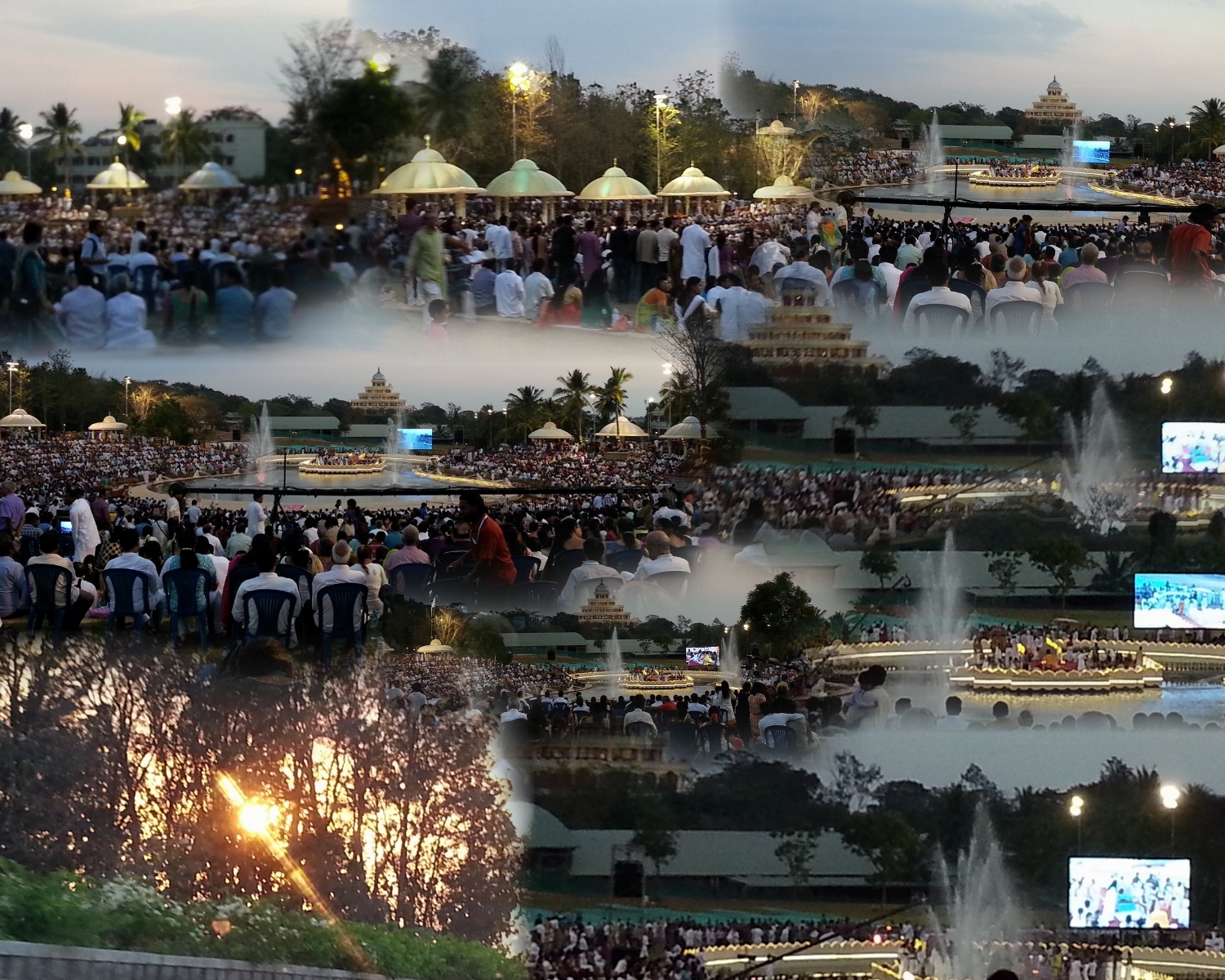
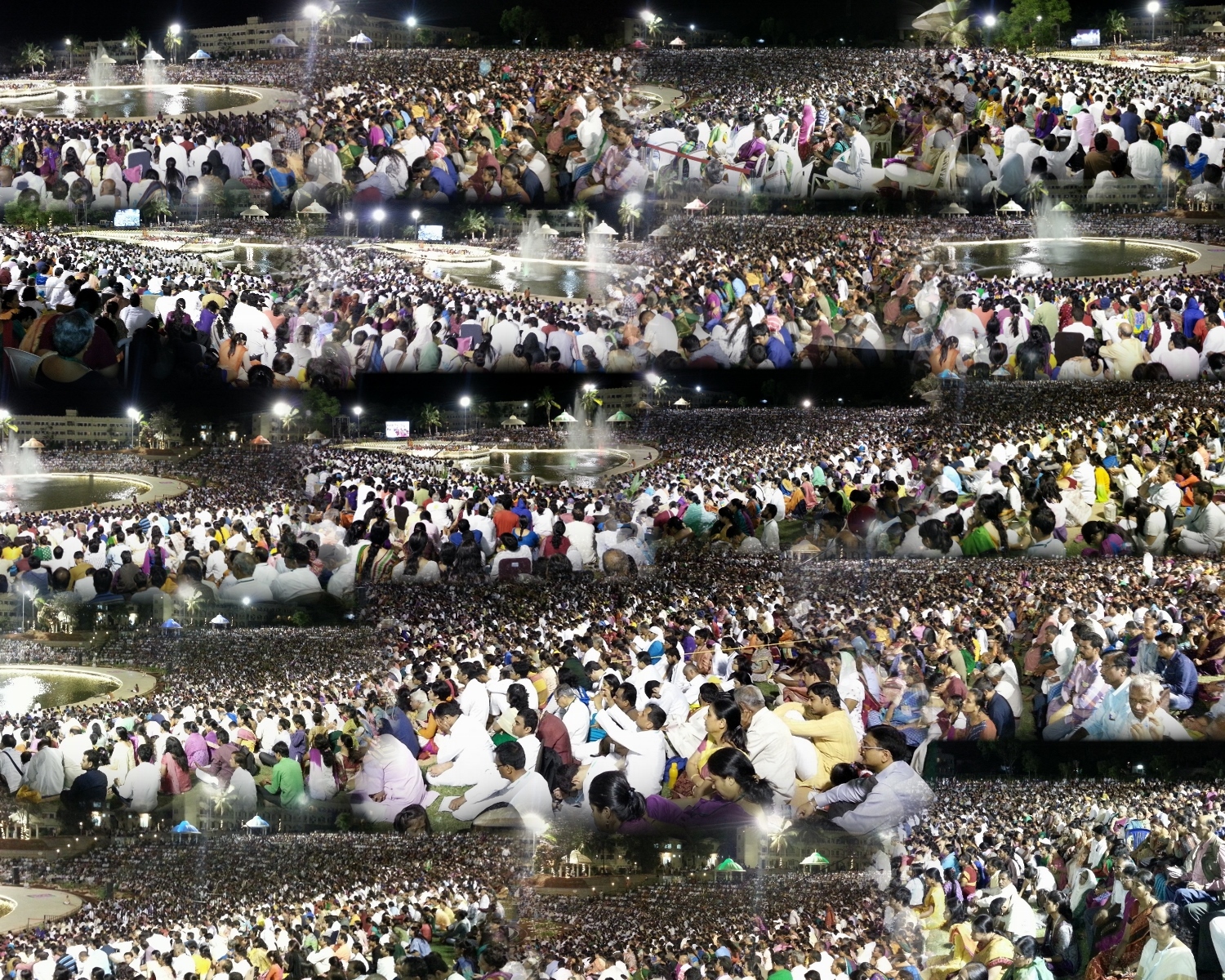
It was a sea of humanity at The Art of Living International Centre, gathered in a scale bigger than ever before. It drew devotees from 61 countries. The live webcast had more than 20,000 viewers connected via 6ooo connections with footprints of 104 countries.
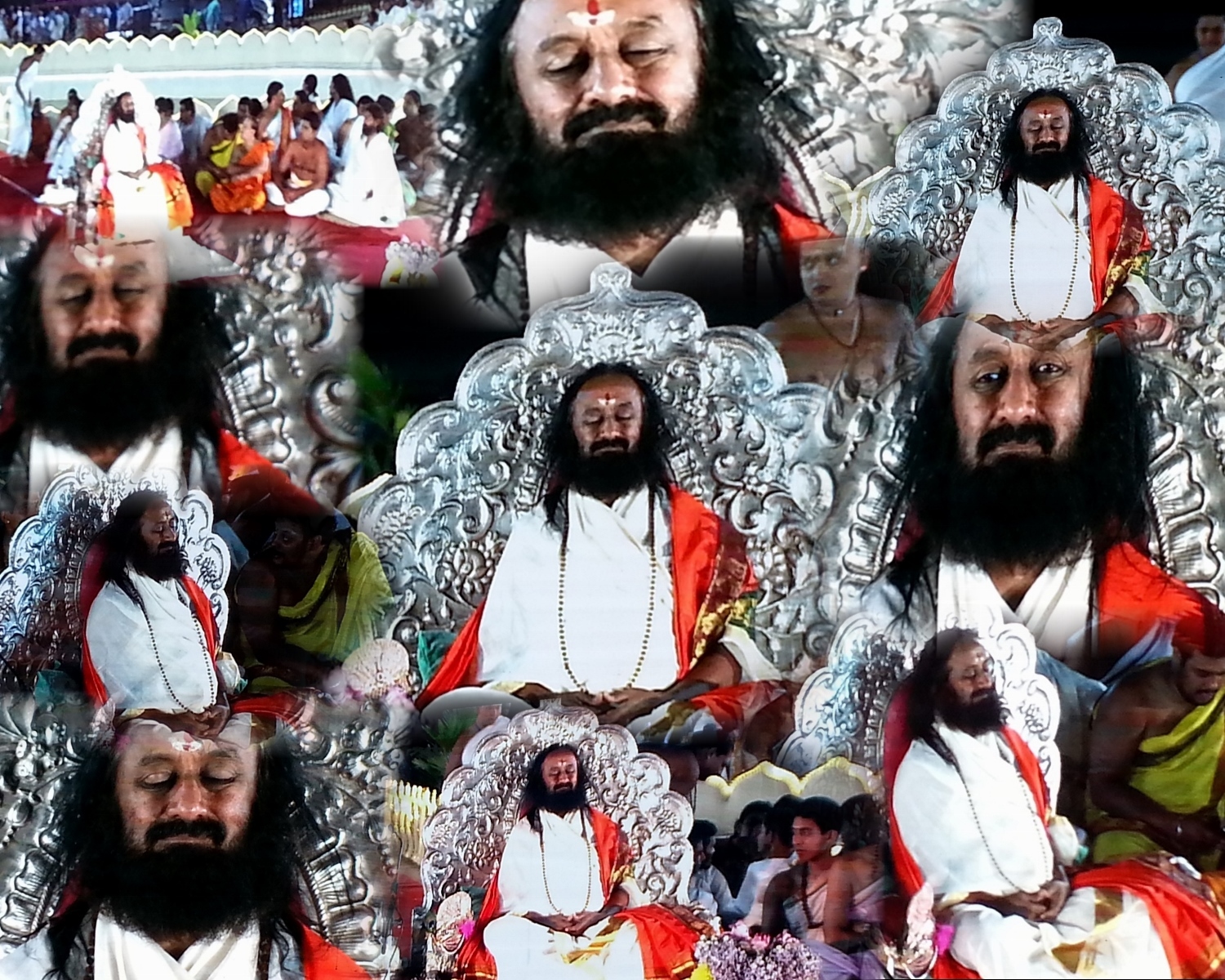
Starting with a blissful meditation, it was time for the highlight of the evening, the auspicious Maha Rudrabhishekam, performed by Sri Sri. While the atmosphere was filled with the sacred chants, the diverse gathering meditated for the well-being of humanity. This was followed by an evening of music, meditation and wisdom.
With the Rudram chants of young pandits reverberating in the entire place, it was a perfect setting for an evening to soak in bliss, evening for Bhajans, evening for delving deeper into the self.
On the significance of Shivratri, Sri Sri said, “One of the factors that affect the mind and its moods is time. Our individual minds follow the rhythm in Nature. For example, the sunrise has a different feeling associated with it than sunset. In the same way, certain days are more conducive for spiritual practice.”
On Shivaratri, the matter and consciousness unite. The subtle and gross worlds come together. And that is the celebration. Shiva is everywhere; there is no place where Shiva is not there. There is not even an atom where Shiva is not there.
When we violate the laws of nature, that is when disturbance and anger happens in nature. All the floods, forest fires, calamities are nothing but the anger of the nature. Nature’s fury. And nature’s fury can only be calmed by the transcendental divine consciousnesses, that is Shiva. Shiva alone can calm down the fury of the nature.
Three types of disturbance are counted: soul, mind, and nature. These disturbances manifest as droughts, earthquakes, floods, and calamities of nature. At another level, these disturbances manifest as restlessness within and lack of direction. When you are in such a situation in life, there is no peace inside and there is no happiness or joy.
Shivaratri is the night when we pray for us to be free from all types of misery: physical, mental, emotional, social, and natural calamities. And bestow peace and wisdom to everyone. Namah means the mind coming back to its center. Manah means the mind going outward. Namah is the opposite. Going back to the origin. The secrets of nature are hidden. Now, we now wifi. But the secret of wifi was there from long time, but it was hidden. It is the blessing of divine that science is developing.
That is what the Vedas say, through your blessing that science gets manifested. Secrets of nature are revealed. Mantras means the secrets in the nature. Shiva is within the mantras. Shiva, you are hidden within the mantras, where no one can reach. And you are the source of all thoughts, positive or negative thoughts that rise in me. You protect us. Kaksha also means the unfathomable universe, which nobody can reach. The secrets of that universe only you can reveal to us.
With this prayer, we pray with our heart and soul for peace in the world, society, happiness in the individual, progress of knowledge and society. Yagyas are done using the five elements from thousands of years. Shivaratri, we perform this yagya from morning to the early hours of the next morning. This morning also we had a pooja.
Divine accepts you however you are. That is why we offer flowers, thorns, leaves in the pooja to signify that God accepts you the way you are.
If you are a fruit or flower, whatever stage of evolution you are (at), the one consciousness accepts you. And that is truth and that is beauty. The synonyms of Shiva are truth and beauty.
Benevolence, truth, and beauty are inseparable.
Know that god accepts you and rest deeply. This is meditation. When you come out of meditation, then work with determination. This is the meaning of Rudra.
Our body is the bow and the mind is the arrow of this bow. The arrow should hit the aim: the eternal consciousness (parama tattva). Our mind should be centered on reaching this goal, then the purpose of this body is fulfilled.
Today is the celebration of nature rejoicing the presence of benevolence, truth, and beauty.
Everyone is enjoying? Thousands of us here and many people have joined us on webcast. All of us collectively when we meditate, we create an electrifying field which will eliminate all negativities and uplift human spirit. Very nice.
Shiva means the most beautiful. Aghora is a word for Shiva, which means most beautiful.
ViruPaksha means there is no form, but there are eyes. Even when you close your eyes, you can still see. Everyone has this third eye, which sees. Not just one, but thousands of eyes. Eyes everywhere.
He further added, ” Shivaratri is one of the most significant days to meditate and come in touch with the deepest aspect of our consciousness. It is associated with India but the phenomenon is universal and that is why so many people from all over the world come here to experience it.”
Lord Shiva is one whose worship is simplest of all – He accepts flowers or thorns, leaves or stalks. He is calmness personified as also fierce in His form. Truth, Benevolence and Beauty (Satyam, Shivam, Sundaram) is His personification – attributes that are inseparable. By honoring the truth, appreciating the beauty and worshiping Shiva tattva is the easiest route to elevation of one’s life. Lord Shiva accepts you as you are – knowing this and going withing is Definition. Moving from state of “This should be” & “That shouldn’t be” towards “Let It Be”! Accepting what is as it is… is the Mantra for Bliss.
The Bhajans as always was enchanting and elevating the positive atmosphere – obviously with Dr Manikantan-ji, Dr Nisha Manikantan-ji, Srinivas-ji, Shalini-ji, Chitra Roy-ji and others.
Enthusiasts from all over India and abroad – Argentina, China, Brazil, Oman, Kuwait, Lithuania, Bulgaria, Russia, Taiwan were a part of the festivities.
This journey in Art of Living and walking to keep pace (or sprinting) with His Holiness Pujya Gurudev Sri Sri Ravi Shankar has never ceased to Amaze me (I am sure many who have been here would feel the same)
From the Old Ashram which in those days was considered to huge enough to accommodate the entire AOL family, was not enough to take in a minuscule percentage of the Ever-growing One World Family, that it is today.
Amphitheater in the Old Ashram
Then came the Vishalakshi Mantap and the Amphi Theater which we thought would definitely cater for ever expanding family atleast for 50 years, and Lo! It was rendered too small even for a weekend Satsang these days.
Vishalakshi Mantap – The Temple of MeditationAmphitheater in Front of Vishalakshi Mantap
Action moved to the Yagyashala (which was further extended) and even that today appears to be like a One-Room Tenement accommodating 30 member family in a Metro.
Yagyashala
And came up the Marquee Location in the Art of Living International Ashram, Gurupaduka Vanam last year. I was certain that it would be enough “for ever”
Gurupaduka Vanam – Eve of Shiva Ratri 2013Gurupaduka Vanam – Eve of Shiva Ratri 2013 – 260 Gram Devata Pujas
I ate the humble pie in exactly an year. From comfortable crowd that was accommodated last Shivaratri, every inch of the front stage and back stage was packed with sea of Humanity. Shivaratri 2014 saw record crowds participating in the Maha Rudrabhisheka – 75 countries, and every single state (29) of India was represented here. Presenting Shivaratri 2014 in 4 Collages below:
ॐ नमः शिवाय भीमाशंकराय। सह्याद्रिवासिने डाकिनीविनाशनाय॥
Bheemana Amavasye is the Amavasya or New Moon Day of Ashada month in the Hindu calendar, marking the final day of the month. Believers hold that on this sacred day Bhagwan Shiva was deeply moved by the devotion of Devi Parvati and accepted Her as His wife. The festival is widely celebrated as Bhimana Amavasya in Karnataka and many other states. It is also known as Pati Sanjeevini Vrata or Jyothi Bhimeshwara Vrata. People observe this festival for the well being and prosperity of all male members in a family.
The festival is dedicated to Bhagwan Shiva and Devi Parvati. Unmarried women pray for the good health and well being of their brothers, father, and all male relatives. Married women observe this vrata for the long life of their husbands. Married women carry out this ritual for nine consecutive years after marriage. In the ninth year, they gift a pair of sacred lamps to their brothers or a Brahmin.
Preparations and Puja Setup
Traditionally, women make two sacred lamps using Red Clay, believed to represent Kalikamba, or Thambittu wheat flour paste. One lamp symbolizes Bhagwan Shiva and the other represents Devi Parvati, who is worshiped as the Supreme Mother and the source of every other Devi. Devotees install these lamps on a bed of grains, typically Rice, facing east.
Traditional Red Clay Lamps replaced with Silver ones
Puja begins by tying a Turmeric Root to the right lamp of the Deity picture, which is the lamp on our left as we face it, signifying Devi Parvati. The altar installation also incorporates representations of Surya Dev, Chandra Dev, and a sacred water pot called Kumbha.
Women light the lamps and offer a nine stranded thread called Gejje Vastra along with Sandal paste or Gandha, which is an essential offering for this puja. The sacred Tambula offering includes nine Betel leaves, nine Betel Nuts or Bettada Adike, and a fresh coconut.
Gowri Dhara
Women also place Gowri Dara or Rakshe, which is a thread smeared with Turmeric paste, alongside the Puja Samagri. Married women use a nine stranded thread with nine knots, while unmarried women use a five stranded thread with five knots. During Granthi Puja, women perform a specific puja for each strand with offerings, and female family members later tie these sacred threads around their wrists.
Please note that variations exist in these practices depending on regional traditions and family customs.
Puja and Rituals
After the mandatory Ashtottara Puja of Bhagwan Ganesh to remove all obstacles, devotees worship Bhagwan Shiva and Devi Parvati. Uma Maheshwara Ashtottara Puja is performed with devotion, and the Gowri Dara is tied around the wrists. At this stage the main part of the Puja is complete, and everyone pays respect to the lady performing the rituals.
All set. The main part of Puja done. Respects to this Lady
Daughter gets her Rakshe tied. Along with Blessings that None else can give her
Naivedya offerings include Karjura or Dates, Cosambari, and usual seasonal fruits. Families prepare traditional Kadubu filled with coins, staple food grains, and dry fruits, which is called Bandhara or Treasure Chest to symbolize abundance. Post puja, this Bandhara is placed on either side of the house threshold or Hosilu. Male family members crush these sweet cakes using their elbows, signifying an abundant flow of material and spiritual wealth into the home. Afterwards, the wife performs an Arati to her husband praying for his health and long life.
I get an Arti today 🙂
Traditional Festive Feast
After the rituals comes the much awaited part of the festival, which is the grand feast. Typical items served at home include Chitranna or Lemon Rice, Cosambari, Groundnut Chutney Pudi, Midi Uppinakayi or Tender Mango Pickles, Appala or Pappad, Majjige Menasinakayi or Fried Curded Chilly, Hoorna Saaru or Rasam, and sweet Kaayi Holige or Obbattu.
Traditional Fare, (except Pappad & Fried Curded Chillies) which is usually not made on this festival
The Batting Begins 🙂
Legend of Susheela and Dead Prince
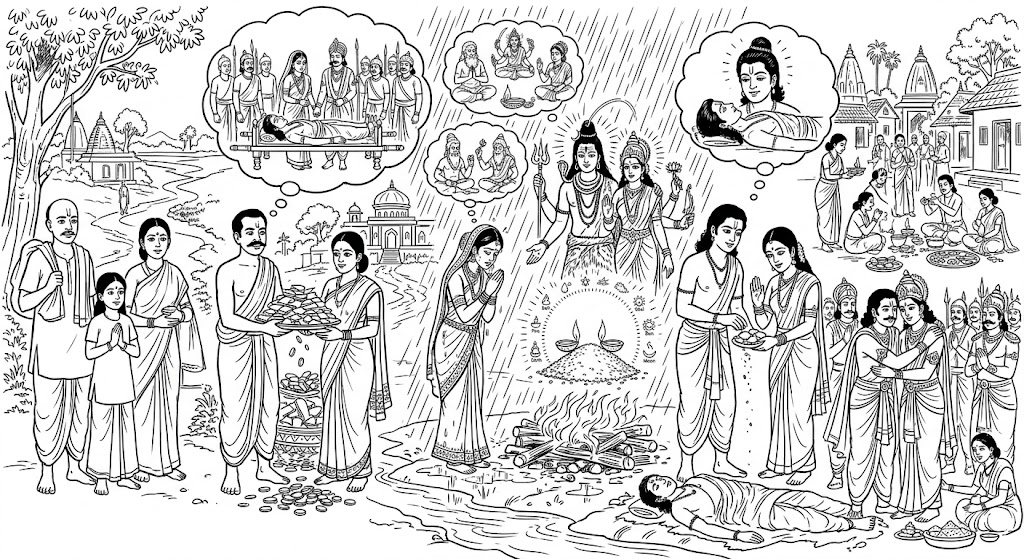
A pious Brahmin couple living in Saurashtra decided to undertake a pilgrimage to Kashi, as praying to Mahadeva there was considered a crucial lifetime duty. In those days, traveling to Kashi was a perilous journey, and people were never sure if they would return safely. Therefore, they decided not to take their young daughter Susheela along. They placed Susheela under the care of their married son and asked him to get her married and well settled in case they did not return from Kashi.
Years rolled by with no news or sign of the parents returning. The son and his wife were greedy to possess the family property and did not want to spend any money on getting Susheela married. In those times, it was a moral obligation and societal norm that the son inheriting property must shoulder the responsibility of marrying off his sisters.
During this period, Saurashtra was ruled by an able and righteous king named Vajrabahu. He had a son named Prince Jayasheela, who suddenly died due to a strange illness. King Vajrabahu was deeply worried about who would fulfill the ritualistic requirements of Tilodaka for his forefathers. The palace astrologer discovered a remedy and suggested marrying the dead prince off before cremation to keep the Pitrus satisfied.
King Vajrabahu made a royal proclamation across his kingdom that whoever agreed to marry the deceased prince would receive vast rewards including gold coins, a palatial home, agricultural land, and enough food grains to last three generations.
The greedy brother and his wife had no concern for Susheela and convinced her to accept the offer, arguing that she would become a Princess even if widowed right after marriage. They also emphasized that it would help the family financially and raise their status in society. Though Susheela resisted and pleaded desperately with her brother, he forced her to agree and took her to the King. The marriage was solemnized between the helpless Susheela and the dead Prince Jayasheela. The brother collected all royal rewards from the King and left.
Divine Appearance on the Bhagirathi Riverbank
Immediately after the wedding, King Vajrabahu, the newly wed Susheela, the army, and all courtiers took the prince body to the banks of River Bhagirathi for cremation. Susheela, decked in full bridal glory with Haridra Kumkuma or Turmeric and Vermillion, was asked to perform Agni sparsha and light the funeral pyre. Praying fervently to Maa Parvati and Bhagwan Parameshwara, she set fire to the pyre.
Providentially, torrential rain began to fall as soon as the pyre was lit. It rained incessantly and turned pitch dark with no signs of the storm subsiding. King Vajrabahu asked Susheela to return to the palace since she was now the princess, but Susheela refused, stating her place was with her husband, and she stayed back beside the body.
The King and the rest of the gathering left the young bride all by herself and returned to the palace. Susheela sat grieving beside her husband body in the dark forest. As fear set in, she began praying to Shiva Parvati, cursing her fate and thinking this tragedy would not have happened if her parents were present.
Susheela beseeched with tears, asking O Parameshwara, You have blessed Markandeya with immortality, restored life to Agni Manmatha, and blessed Shwetavahana and Brighu Putra Chyavana Rishi with long life. What sin have I committed to undergo this terrible situation. Please show some compassion towards me.
Bhagwan Shiva, who is always on the side of His devotees, appeared before her along with Maa Parvati. Susheela immediately sought the blessings of Sowbhagya, Sumangali, and Wealth.
Bhagwan Shiva Directives on Jyotirbhimeshwara Vrata
Bhagwan Shiva then told her that They would teach her a vrata to observe diligently with utmost sincerity. On the Amavasya Tithi of Ashada month, one must take a ritualistic bath, clean the Puja sthala, and install Uma Maheshwara on a Peetha or pedestal. On a heap of rice, one should install two Ghee Lamps to worship Him. Bhagwan Shiva explained that in such a lamp He resides as Ashtamurti.
As described in the Shiva Purana, Ashtamurti represents eight distinct attributes of Bhagwan Shiva. Sharva represents Earth holding the entire universe of mobile and immobile beings. Bhava represents Water which is the lifeline of the world. Rudra represents Fire symbolizing perfection and destroying all imperfections. Ugra represents Air holding the outer and inner universe and throbbing by itself. Bhima represents Ether pervading everything and affording space to all, whose decomposition results in groups of elements. Pashupati represents Soul supporting individual souls and breaking the bondage that encircles them. Ishana represents Sun brightening the entire universe and moving in the heavens. Mahadeva represents Moon whose nectar like rays strengthen and fatten the universe to satiety.
Bhagwan Shiva continued explaining that He exists in the lamp in its unbiased purest form. He added that alongside this lamp, another lamp must be kept with a Turmeric Stick attached to represent His consort, Shakti or Parvati. Because His favorite moon exists as part of Ashtamurti, His luminous form is also known as Bhimeshwara.
Bhagwan Shiva instructed her to assume the lamp as Himself and worship with utmost sincerity for nine years, offering Kadubu rice cakes, Sandalwood, and flowers, along with doing charity for Brahmins. He promised that after nine years her husband would certainly return to life and she would become Sowbhagyavati.
Miracle and Awakening of the Prince
Susheela had to manage with whatever was available around her in the wilderness. Instead of real rice cakes, she made Kadubu out of mud, created lamps from clay, used Banyan leaves as Betel leaves, and Banyan fruits as Betel nuts. She gathered wild grass to use as flowers and sincerely began her vrata vows.
While she was performing worship, a young couple arrived and expressed curiosity about her actions. Susheela explained her plight and misfortune. Since she was alone, there was no male member present to break the mud Kadubu. The young man offered to break the mud cake for her, and as he broke it he blessed her saying Dheegha Sumangali Bhava, meaning may you be a happily married woman for a long time and may your husband stay alive for your entire lifetime.
With a sad face Susheela smirked and asked how that was possible when her husband lay dead on the pyre. The young couple pointed toward the prince and told her that he was merely in deep sleep and asked her to wake him up. When Susheela looked at the prince, she was shocked to see him opening his eyes slowly as if waking from sleep. She could not believe her eyes, and when she turned around to thank the young couple, they had vanished.
Her puja bore fruit and the Prince was brought back to life. Susheela offered her heart felt gratitude to Uma and Maheshwara mentally and explained everything to her husband. Upon learning the news, King Vajrabahu was elated and rushed to the banks of Bhagirathi to see his son alive. He embraced the couple heartily and expressed immense gratitude to Uma Maheshwara. The King ensured that the glory of observing this vrata on Ashada Amavasya, known as Jyotirbhimeshwara Vrata or Bheemana Amavasye, was spread far and wide.
Continuing Traditions and Modern Observances
To this day, married and unmarried women worship Uma and Maheshwara on this day for the happiness, prosperity, and health of the men in their family. Married women also pray for a deep marital bond like that of Parvati and Shiva.
Another central tradition is preparing sweet Kadubu or Tambittu, made out of rice, peanuts, and chickpea flour with coins or jewels hidden inside. In the evening at the end of the vrata, male members break these cakes to retrieve the coins, a process known as breaking of Bhandara or treasure chest.
Bhandhara (Treasure Chest) – Tambittu with coins inside
May the blessings of Bhagwan Shiva be showered in abundance on everyone. This festival also launches month long Shravan Maasa Rudra Pujas and Satsangs conducted by the Art of Living Pundits, founded by His Holiness Pujya Gurudev Sri Sri Ravi Shankar, across various locations. A friend named Sindhu under the handle agnyaa on Twitter has also written blog posts detailing Bhimana Amavasya.
The traditional sacred chant associated with this day is
Mrityunjaya Rudraya Neelakanthaya Sambhave Amriteshaya Sharvaya Mahadevaya Te Namaha.
Significance of Tilodaka and Tarpana
The sacred invocation chanted during this ritual is Vasurudraditya swaroopanam asmat Pitru Pitamaha Prappitamaha aavahayami.
Forefathers are believed to reside in Pitru Loka for some time after their death until they take rebirth, reach Deva Loka, or attain Mukti. Pitru Loka is inhabited by three generations of ancestors, namely Vasu representing Father, Rudra representing Grandfather, and Aditya representing Great Grandfather.
Pitru Loka is situated on the other side of the moon, which gets exposed to the sun only on Amavasya or New Moon day. This day marks the official meal time for Pitrus. All offerings made through Tarpana by descendants serve as the only source of nourishment to feed the Pitrus. If ancestors are left displeased, their curse is believed to affect the family line by preventing future male progeny.