Adhika Maasa: Gift of Purushottama

Adhika Maasa represents a profound intersection of ancient astronomical mathematics and deep spiritual philosophy within Sanatana Dharma’s culture. Its origin lies in fundamental difference between solar and lunar calendars, which operate on distinct cycles.

Adhika Maasa Graphically Explained

While a solar year spans roughly three hundred sixty-five days, a lunar year concludes in about three hundred fifty-four days, leaving an annual eleven-day deficit. Over a period of approximately thirty-two and a half months, this discrepancy accumulates into a full thirty-day month, prompting Hindu astronomers to insert an extra lunar month to keep seasonal festivals from drifting out of their proper times of year. Sankramana, also widely known as Sankranti, signifies precise astrological moment when sun transits from one zodiac sign, or rashi, into the next. Within solar calendar framework, this movement occurs approximately every thirty days, marking commencement of a new solar month and dividing the year into twelve distinct transits. Each transition is named after the zodiac sign the sun enters, such as Makara Sankranti when the sun moves into the constellation of Capricorn. These moments are traditionally viewed as vital cosmic resets that align human activity with seasonal shifts, rendering them highly auspicious periods for spiritual purification, charity, and ancestral rituals, while conversely serving as the crucial markers whose absence defines the occurrence of an extra month like Adhik Maasa. Astrologically, Adhika masa occurs when a lunar month passes entirely without a solar transit, meaning the sun does not move into a new zodiac sign. This lack of planetary movement led ancient texts to initially label it Mal Maasa, meaning an unaligned or unclean month, because it possessed no ruling zodiac sign, no presiding deity, and no apparent purpose in daily worldly affairs.

Dejected by its perceived worthlessness, the personified month sought refuge with Lord Vishnu in Vaikuntha, weeping over its rejection by humanity. Moved by compassion, Vishnu adopted the extra month, bestowed his supreme name upon it, and transformed it into Purushottam Maasa. He blessed this period with spiritual potency superior to all standard months, decreeing that selfless devotion practiced during this time would yield immense inner growth. Because it lacks a solar transit, the month represents a cosmic pause, prompting people to suspend desire-driven milestones like weddings, business ventures, or housewarmings. Instead, the focus shifts entirely toward internal purification, with devotees prioritizing selfless actions, fasting, scriptural reading, and charitable giving without expecting any material reward.

Unique status of this month as a period existing outside ordinary boundaries is further illustrated in classical legends, a couple of which is related here.

One notable legend involves King Nahusha, whose material arrogance during this sacred month led to his downfall and transformation into a serpent, serving as a timeless warning against feeding the ego when cosmic energies call for humility. His downfall provides a stark illustration of how spiritual discipline of Purushottam Maasa must be respected to maintain moral alignment. Having accumulated immense merit through rigorous penances and virtuous governance on Earth, Nahusha was chosen by celestial sages to temporarily occupy the throne of Indra, King of Devas, who had gone into hiding to atone for a sin. This sudden elevation to ultimate cosmic authority intoxicated Nahusha with pride, blinding him to his earthly wisdom. When the sacred period of the extra month arrived, a time designated strictly for dissolution of ego and performance of selfless deeds, the king chose instead to indulge in unprecedented sensory pleasures and demand absolute subservience from the universe. His arrogance culminated in an outrageous demand to be carried through the heavens in a palanquin borne by the revered Saptarishi, the seven great sages of Hindu tradition. As the sages walked, Nahusha, consumed by impatience and desire, repeatedly kicked the eminent Sage Agastya, urging holy men to move faster. The physical assault, committed during a sacred period meant for absolute humility and reverence, instantly shattered king’s accumulated spiritual merit. Agastya immediately pronounced a curse, casting the proud ruler out of the heavenly realms to dwell on Earth as a serpent (a legless creature) for thousands of years, demonstrating that when the cosmic window for inner reflection is treated with material arrogance, even the highest spiritual achievements can be utterly undone.

In contrast to Nahusha’s moral collapse, destruction of demon king Hiranyakashipu highlights how this unique month functions as an instrument of divine justice operating outside ordinary temporal laws. Hiranyakashipu had attained near-invincibility by extracting a highly complex boon from Brahma, carefully designing conditions that seemed to eliminate every possible vulnerability to death. He specified that his demise could not be brought about by any human, animal, or demigod, nor could it occur indoors or outdoors, during day or at night, or by any weapon forged by hand. To seal his immortality against time itself, the tyrant explicitly demanded protection across all twelve months of the year, confident that he had successfully blocked every path to his destruction.

This absolute immunity fuelled a reign of terror, during which Hiranyakashipu sought to eradicate the worship of Vishnu, eventually attempting to murder his own young son, Prahlada, who remained a steadfast devotee of the Vishnu (preservation) aspect of the cosmos. To honour absolute faith of the child while fully respecting the parameters of Brahma’s boon, Vishnu manifested as Narasimha, an avatara possessing body of a man and head of a lion. He confronted Hiranyakashipu at twilight, an hour that was neither day nor night, and held him on His lap on the threshold of the palace doorway, a location neither indoors nor outdoors. Using bare claws instead of a weapon, Narasimha flawlessly utilized Adhik Maasa, the thirteenth month that sat completely outside the standard twelve-month calendar protected by the boon, as a divine loophole that bypassed ordinary earthly laws. Through this act, extra month became the literal space where human cleverness ended and cosmic balance was restored, serving ultimately as a built-in period for the human mind to slow down, hit pause on material ambitions, and consciously reorient toward internal growth and spiritual alignment.

Yes, Sir or Oh, No! Toxicity Lessons

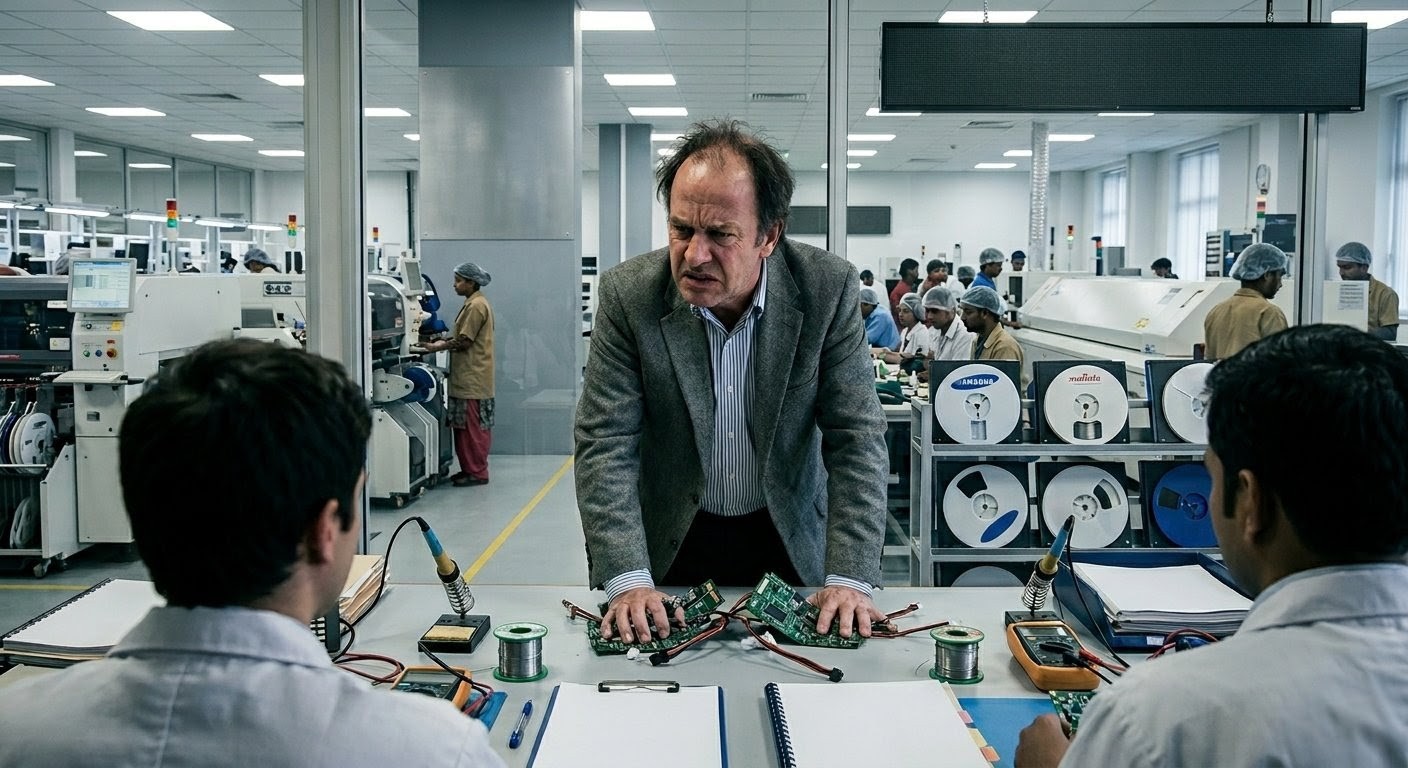
The manufacturing plant on the outskirts of Mysore, near the Nanjangud industrial area, buzzed with the sound of automated pick-and-place machines. Inside the high-precision Surface Mount Technology division, however, the atmosphere was thick with tension. At the center of this tension was Ramanjaneya, the plant’s production manager. To some in the leadership, he was a reliable asset, but his rise to the top was entirely accidental. Ten years ago, Ramanjaneya’s world had been delightfully simple: a desk, a micrometer, and a mountain of incoming components. As an Incoming Parts Inspector, success meant matching a physical part to a blueprint. If the dimensions matched, it passed. There were no shades of grey and no people management.

Then, a chaotic organizational purge hit the company. The department head resigned, senior supervisor took a job abroad, and a hiring freeze locked the team size. Finding himself the last man standing, Ramanjaneya was handed the manager’s cabin for one simple reason, he was a ultimate Yes-Man for his Manager. While others argued about bandwidth or quality protocols, Ramanjaneya just nodded, becoming the friction-free gear the top brass wanted.

Just say Yes

Now, tasked with setting up a new assembly line for advanced medical electronics, his deep-seated technical inadequacy caught up with him. Knowing he lacked true engineering expertise, he personally interviewed and selected every technician and quality inspector, purposely seeking out quiet, unassuming individuals from local polytechnic colleges. In his mind, he was building a compliant team that would blindly follow his instructions, ensuring he kept absolute control and hid his own limitations.

The strategy collapsed during the very first trial run. One of his handpicked test engineers, a young man with a sharp eye for detail, noticed a recurring calibration defect in the soldering oven. He quickly adjusted the thermal profile, preventing a massive batch of printed circuit boards from warping and saving the company lakhs of rupees. When the plant director publicly praised his quick thinking during the weekly Gemba floor walk, Ramanjaneya felt a wave of intense insecurity. He didn’t see an asset but a dangerous rival who could expose the fact that he was just an inspector playing the role of a manager. Almost overnight, Ramanjaneya transformed into a saboteur. He began assigning this engineer to basic component sorting, publicly reprimanded him for minor dress-code violations in front of the entire shift, and deliberately altered his machine logs to make her work look sloppy. Unable to handle the constant hostility, he resigned within a month. Ramanjaneya smoothly told the HR department that he lacked the stamina for the works.

The cycle continued with the next few recruits. A skilled component specialist who suggested a better inventory tracking system was immediately isolated and forced to do manual packing work until he, too, walked out.  Ramanjaneya’s incompetence made him paranoid, driving him to systematically destroy the very talent he had selected. He wanted yes-men to cover his flaws, but the moment their competence shone through, his fragile ego felt threatened.

As the production delays worsened, Ramanjaneya scrambled to protect himself during the monthly review meeting with the Corporate Team. Standing before the projection, he projected a massive spreadsheet of missed targets and pointedly shifted the blame onto the very technicians he had driven away. He claimed that the local polytechnic graduates lacked the basic work ethic required for high-precision electronics manufacturing and accused his former test engineer of gross negligence that supposedly damaged a calibration sensor. By painting his subordinates as reckless, incompetent, and undisciplined, his practiced habit of telling leadership exactly what they wanted to hear worked once again. He successfully managed to divert attention from his own operational failures, convincing senior management that he was simply a victim of a poor workforce. In any other professional organisation a Manager blaming his subordinates, would be the first one to get the sack, even if he was right.

By the start of the monsoon season, however, this strategy began to crumble. The state-of-the-art assembly line sat completely idle, surrounded by empty workstations, while Ramanjaneya paced his cabin alone, the old comfort of his “Yes-Man” routine no longer shielding him from reality. Upstairs, the plant director looked past the polished presentations and focused instead on the hard metrics-soaring recruitment costs, missed delivery deadlines, and a mounting pile of identical resignation letters, all tracing back to a single department.

HR proposed initiating another hiring drive to replace the technicians, but the director closed the folder. The machinery was perfect, and the local talent pool was excellent. The defect was entirely in the leadership of the team. Recognizing that the accidental manager was the root cause of the system failure, the director initiated the process to show Ramanjaneya the exit.

His note on the proposal had just one line “It was time to stop replacing the workers on the line and time to replace the manager”

  • Leadership is defined by retention, not just recruitment: A manager’s capability is measured by how well they nurture and retain high performers, not just by their ability to source talent.
  • Insecurity breeds corporate sabotage: Incompetent leaders view skilled subordinates as threats to their position rather than assets to the organization, leading them to actively undermine their own team.
  • Deflective blame signals systemic failure: When a leader consistently blames the workforce or local talent pool for missed targets, it usually masks their own operational and managerial shortcomings.
  • Hiring for compliance creates a race to the bottom: Recruiting “yes-men” to protect a fragile ego destroys innovation, limits productivity, and ultimately results in a stagnant work environment.
  • Fix the root cause, not the symptoms: Continuously replacing frontline staff without addressing a toxic manager is an expensive exercise in futility; long-term stability requires changing the leadership.

If the soil is toxic, it doesn’t matter how many handpicked seeds you plant, NOTHING WILL GROW. Change the gardener.

Seventy Years of Grace: A Lifetime Under Your Gaze – Happy Birthday Pujya Gurudev

Pujya Gurudev, My humble Pranams to you 🙏

On the grand, historic occasion of your 70th Birthday, my heart overflows with deep gratitude. Looking back at nearly three decades of walking this path, a beautiful journey of documenting a lot of lessons, moments, and events on my blogsite, I realize that every word I have written has been silently guided by your grace.

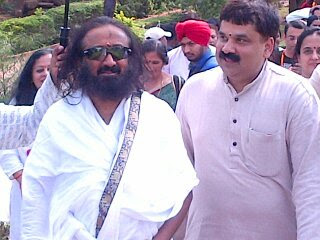
When Adarneeya PM Narendra Modi ji called on Pujya Gurudev Sri Sir Ravi Shankar ji

My journey with you did not begin with immediate, blind faith. Like many who pride themselves on analytical reasoning, I initially approached the spiritual realm with a guard of heavy skepticism. I looked for proof, relied strictly on logic, and questioned the intangible. Yet, you patiently and subtly showed me that life’s deepest truths lie just beyond the boundaries of intellect. You didn’t ask me to drop my rationality; instead, you effortlessly expanded it, transforming my rigid skepticism into a deep, experiential spirituality. Moving beyond mere logic, I realized that true faith isn’t about shutting your eyes to reality but opening your heart to a larger dimension of existence. Read that story here

When people ask what it is like to sprint alongside a Master who moves at the speed of light, I point them to the massive expansions we have witnessed. From the intimate amphitheatre, Narayana Hall or old Kitchen of the ashram before 2003 or so, to the magnificent Vishalakshi Mantap and the new Amphitheatre, and then to the sea of humanity packing Gurupaduka Vanam for Maha Shivaratri, the scale always leaves us breathless. Watching millions gather at the World Culture Festival on a seven-acre stage, or witnessing over a hundred thousand voices sing in perfect harmony during Naada Vaibhavam, taught me a profound truth about you: while the world sees massive logistical chaos, you effortlessly turn it into perfect, divine precision. When the world asks if we believe in miracles, we simply smile and remember your words: “We not only believe, we rely on miracles.” But your greatest miracle hasn’t just been conceptualising, guiding or blessing mega-events,  it is the quiet transformation within our everyday lives.

As a professional navigating a career spanning nearly four decades, your wisdom became my anchor. It was through observing you that I discovered the true essence of “Spiritualising Work and Humanising Workplace.” You taught me that spirituality isn’t a retreat into laziness or an escape from responsibilities; it is the ultimate energy source that allows us to work harder and more effectively without burning out. Because of you, I learned to clear the mental cobwebs, access intuition, and practice true equanimity, understanding that success is ultimately “a smile that no one can snatch away.” You showed us how to move past labels, titles, and workplace stresses to recognize the human family underneath.

The way you sharpen and appreciate our work is often filled with your profound, unpredictable play of wisdom. I will never forget the moment I handed you a summary of a complex Himachal Pradesh court order. You went through this 1 page summary and to my utter shock, you looked at me in front of a whole bunch of people and announced, “This guy Suresh, does nothing great or dramatic.” A heavy silence fell all around (in front of Kashyap); everyone was completely stunned and started casting sympathetic looks my way.

That Unforgettable day!!!

But then, in your classic, customary style, you took a small pause, smiled, and added, “He does no great things, but does small things perfectly.” The atmosphere instantly shifted from tension to pure grace. I am simply unable to forget that moment, it remains the biggest, most treasured certificate of my life.

That Twist of Ears ❤️

You gave us the ultimate shelter in the form of Satsang. In a world full of noise, you built a nest where our minds could finally rest. You gave us the beautiful formula of Gaana, Dhyana, Gyaana, and Khaana—a sacred space that consistently touches the heart, douches the mind, fills the spirit, and stills the intellect. Through the chanting of the Guru Puja, you didn’t create thought-clones of yourself; instead, you patiently guided us to recognize the Guru Tattva, the eternal essence of wisdom hidden within our own selves. You taught us the real Art of Living: the strength to “DROP IT” and move on. You showed us that holding onto negativity only numbs us to inaction, while dropping the burden of expectations every single moment keeps us fresh, recharged, and ready to grow. You taught us to look at this planet not as a block of sand and stone, but as a living, vibrant entity that responds to our care, inspiring us to clean rivers, plant trees, and serve humanity.

Your protection has not just wrapped around my work and mind, but has deeply enveloped my entire family, generation after generation. I will never forget that unforgettable moment near the Narmada Tank on the hilltop, when you held my young son Vishnu’s hands, gently holding his hands and guiding him to cut his birthday cake. At that moment, looking at the pure grace unfolding, I turned to my wife and everyone around us and said with absolute certainty, “My son is in the safest hands.” I told my boy then that the true significance of that picture would only be understood much later when he grew up. Today, as he navigates his life as a postgraduate student, those words have come full circle. He realizes it now. The grace that held his tiny hands on the hilltop continues to guide and shield his steps today.

In Safest Hands of the World – Vishnu guided by the Guide to cut the cake

Your boundless love similarly shaped my daughter Akhila’s life, encouraging her to soar. When she was given the immense platform to perform a Bharatanatyam recital during the sacred days of Navaratri in the Ashram, your eyes showered her with immense encouragement. The way you showered her with praise afterward, specifically showering compliments on her amazing, vivid expressions (abhinaya) during the performance, is a memory etched into her heart forever.

Blessings come along for lucky one and We considers ourselves luckiest. Divya with her Guru Arpane

Years later, when she made the deeply personal decision to marry the person of her choice, you stood by her choice like a pillar of support, ordering us to stand by her decision and that He was certain she would do great, filling her path with abundant blessings at every single step.

The circle of this divine love beautifully expanded when we brought our next generation, our grandson Anay, to receive your blessings. Watching the Master of millions transform into a completely playful, joyful presence just to interact with little Anay was the absolute best part of our journey, a moment of pure, unadulterated bliss.

Reminded me of His advise – To be Happy, Be Childlike, not Childish

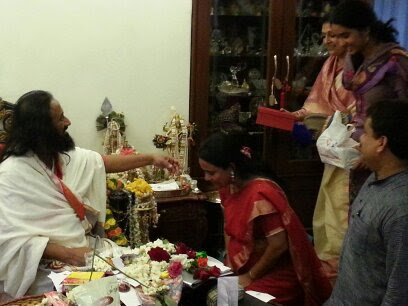
Year after year, on every single birthday and wedding anniversary, Aparna and I have had the ultimate fortune of standing before you, receiving your personal blessings and taking home memorable mementoes that we treasure as sacred tokens of your love.

Milestones becomes Extra Special
Moments that We Cherish

On this auspicious milestone of your 70th Birthday, as we look at how securely, lovingly, and beautifully you have held our entire family, Aparna and I consider ourselves truly the luckiest human beings in the world.

Looking back at these seventy magnificent years of your life, it becomes overwhelmingly clear that your journey on this planet has been a monumental gift to mankind. You have walked among us not just as a teacher, but as a living bridge between ancient wisdom and modern life, untangling the complexities of human existence with an effortless smile. From leading massive peace negotiations to healing broken hearts, from inspiring global waves of selfless service to creating a stress-free, violence-free world, your footprint on earth has elevated human consciousness itself. Every river revived, every tree planted, every mind comforted, and every soul awakened stands as a testament to your tireless devotion to the planet. On this historic milestone, we bow down in absolute awe and reverence. On behalf of all mankind, and indeed the entire creation that has pulsated with greater joy under your gaze, we offer our deepest, endless gratefulness for the privilege of walking this earth at the same time as you.

Thank you, Pujya Gurudev, for teaching us to move from the rigidness of “This should be” to the ultimate, meditative freedom of “Let It Be.” We offer our gratitude, our seva, and our smiles at your lotus feet today and always.