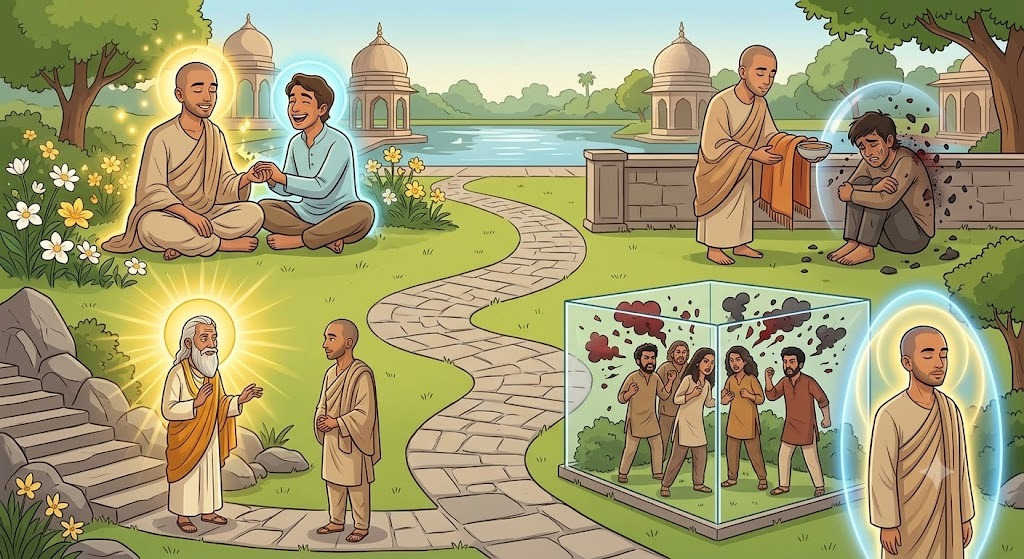
महायोगपीठे तट भीमराथ्या
वरं पुण्डरीकाय दातुं मुनीन्द्रैः।
समागत्य तिष्ठन्तमानन्दकन्दं
परब्रह्मलिङ्गं भजे पाण्डुरङ्गम्॥
फुल्लाम्बुजाक्षीं सुविशालनेत्रां
रुक्मिणीं सर्वभूतानां मातां जगद्धात्रिणीम्।
“I worship Shri Panduranga, the ultimate source of bliss and the manifest form of the Supreme Reality. He has arrived on the sacred banks of the River Bhima along with great sages, standing steadily on a brick to grant a boon to His devotee Pundalik.”
“I bow to Devi Rukmini, whose wide eyes are as graceful as blooming lotus flowers. She is the compassionate mother of all creation and the eternal nurturer of the universe.”
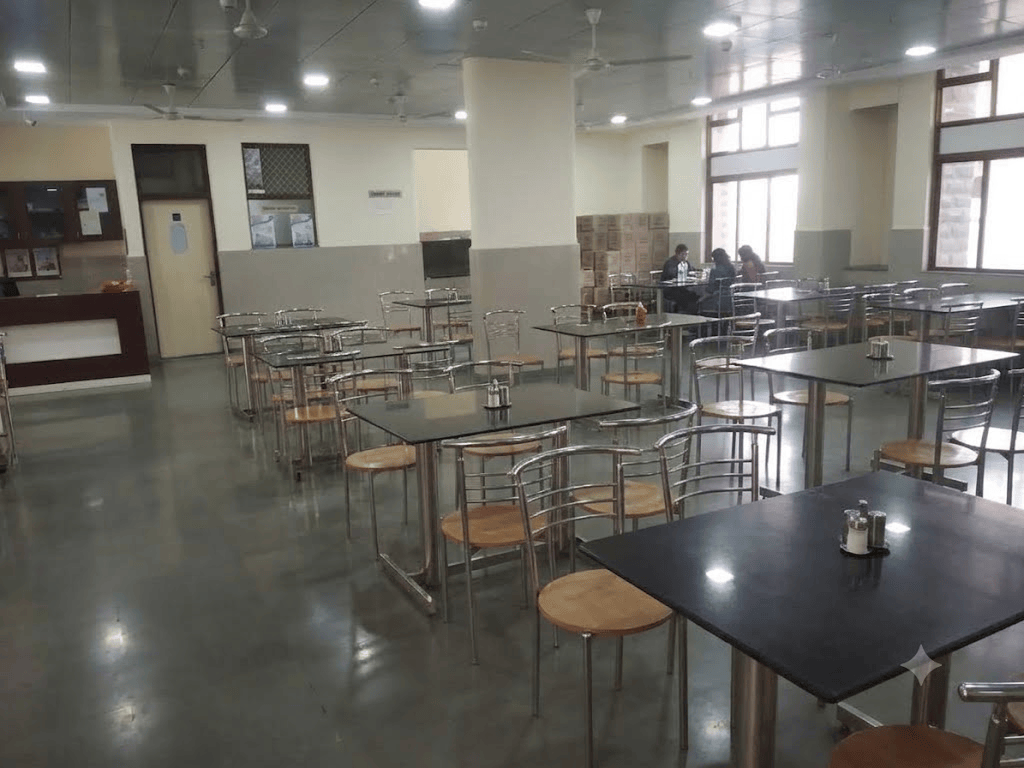
The journey began with a celebration. We gathered on the evening of 11th September to mark Sindhu’s and my birthday together (The other Birthday Baby Vinay couldn’t make it) and the festivities stretched late into the night. It was a joyful late evening, even knowing full well that a 650-km drive to Pandharpur awaited us at 3:00 AM. Sleep was virtually non-existent (Raju and I both stayed awake for entirely different reasons) but the lack of rest didn’t bother us in the slightest. The sheer thrill of laying our foreheads at His Lotus Feet was the ultimate high, keeping us energized and wide awake throughout the drive. Barring a few diversions around Tumakuru due to ongoing roadwork, the stretch all the way to Pandharpur was superb, scenic, and exceptionally safe with clear visibility. With just a breakfast stop and a short tea break along the way, we pulled into the Shri Vittal Rukmini Bhakt Niwas by 2:30 PM, just in time to join Raju and Lakshmi, who were already there for a delicious, authentic Pandharpur Lunch Thali. After a quick freshen-up, we stepped out for the experience of a lifetime which is what this piece is all about.
Seeking Solace at Feet of Vithai
Birthdays usually bring family together, but this year was different. Facing first birthday without Amma left quiet ache, space only motherly love could fill. When mind searched for refuge, heart turned towards Pandharpur, destination pending for years yet deeply familiar through every song sung in His devotion. Devotees lovingly call Bhagavan Shri Vitthala as Vithai, mother of entire universe. Choosing to spend this day in His presence was not just travel decision, it was child running to parent for comfort.
For decades, singing abhangas and bhajans painted vivid pictures of Chandrabhaga river, Namdev Payari, and majestic stone pillars of temple. Singing these verses over years built sanctuary inside mind, but standing on holy soil brought overwhelming sense of déjà vu. Every chant echoing through streets, every sound of cymbals, every breeze over river felt like revisiting home long remembered. Journey was no longer about exploring unknown place, it was about walking into music that sustained soul through loss.
Pandharpur is not merely town, beautifully described by Santa Bhanudas in his composition – Dhanya Dhanya He Nagari (watch the video of Shri Vittaldas ji Maharaj of Govindapuram singing this Abhanga), it is living ocean of bhakti where status and background completely vanish. Stepping into temple environs on birthday evening, weight of grief began to lift, replaced by unconditional warmth radiating from shrine. What lay ahead was intimate encounter at feet of Devi Rukmabai and Bhagavan Shri Vitthala, moment to offer Tulsi leaves, seek blessings, and feel Amma love merging with divine grace.
Sacred Chandrabhaga River Under Evening Sky
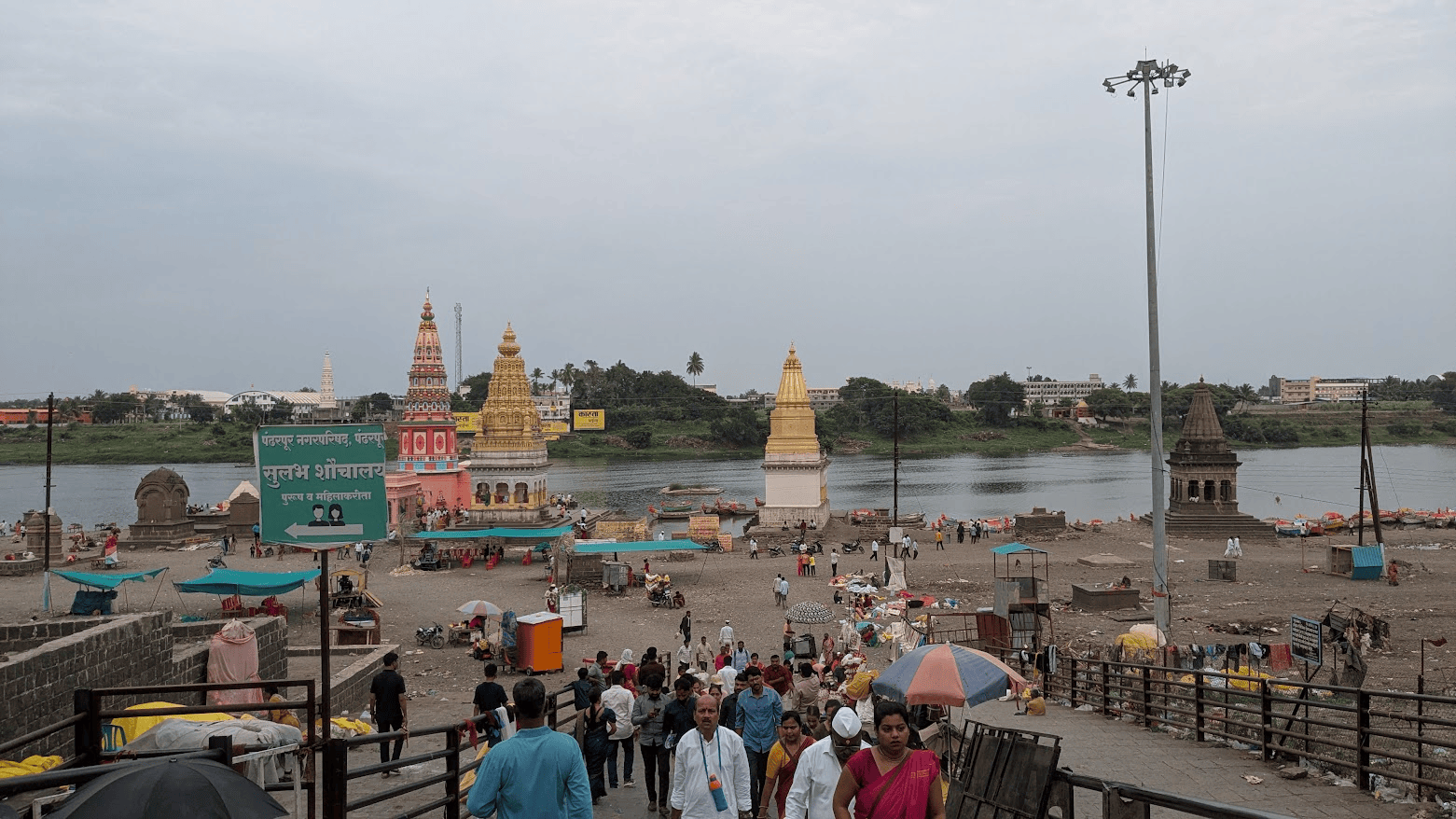
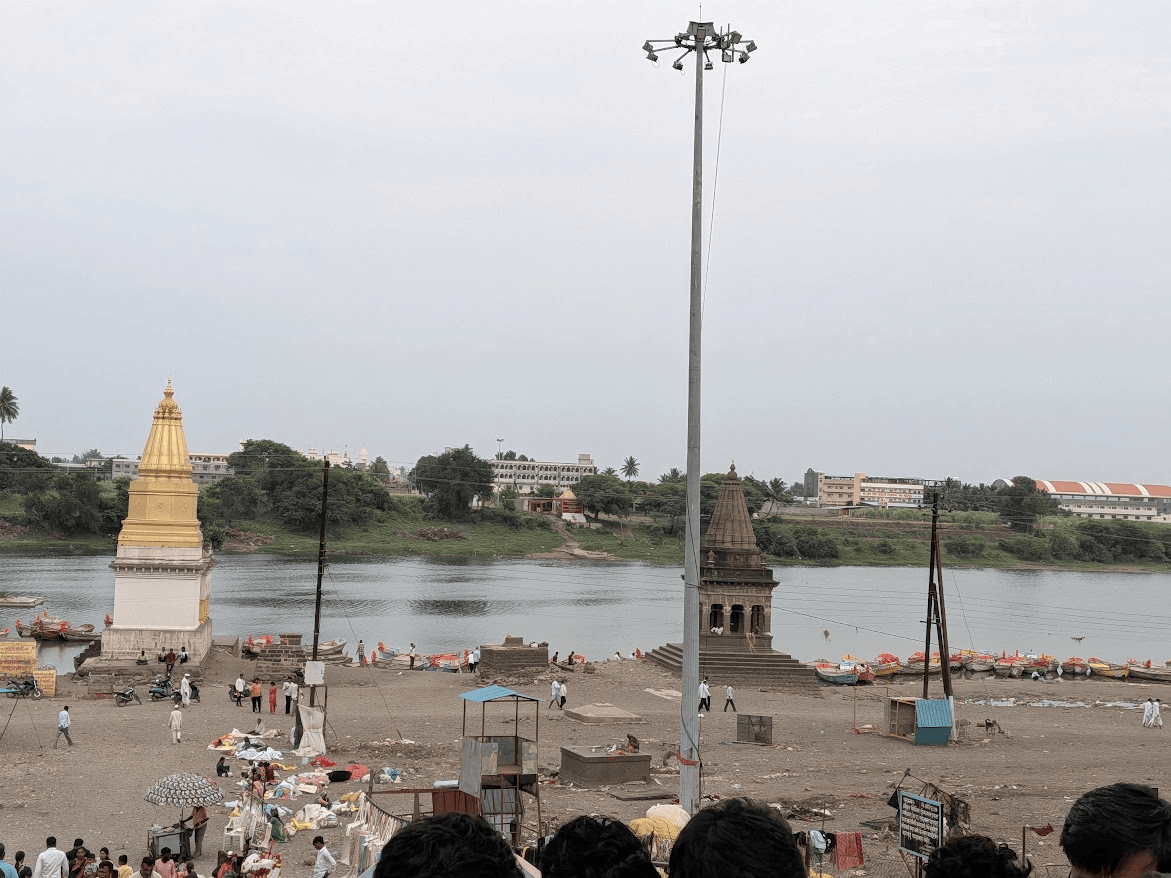
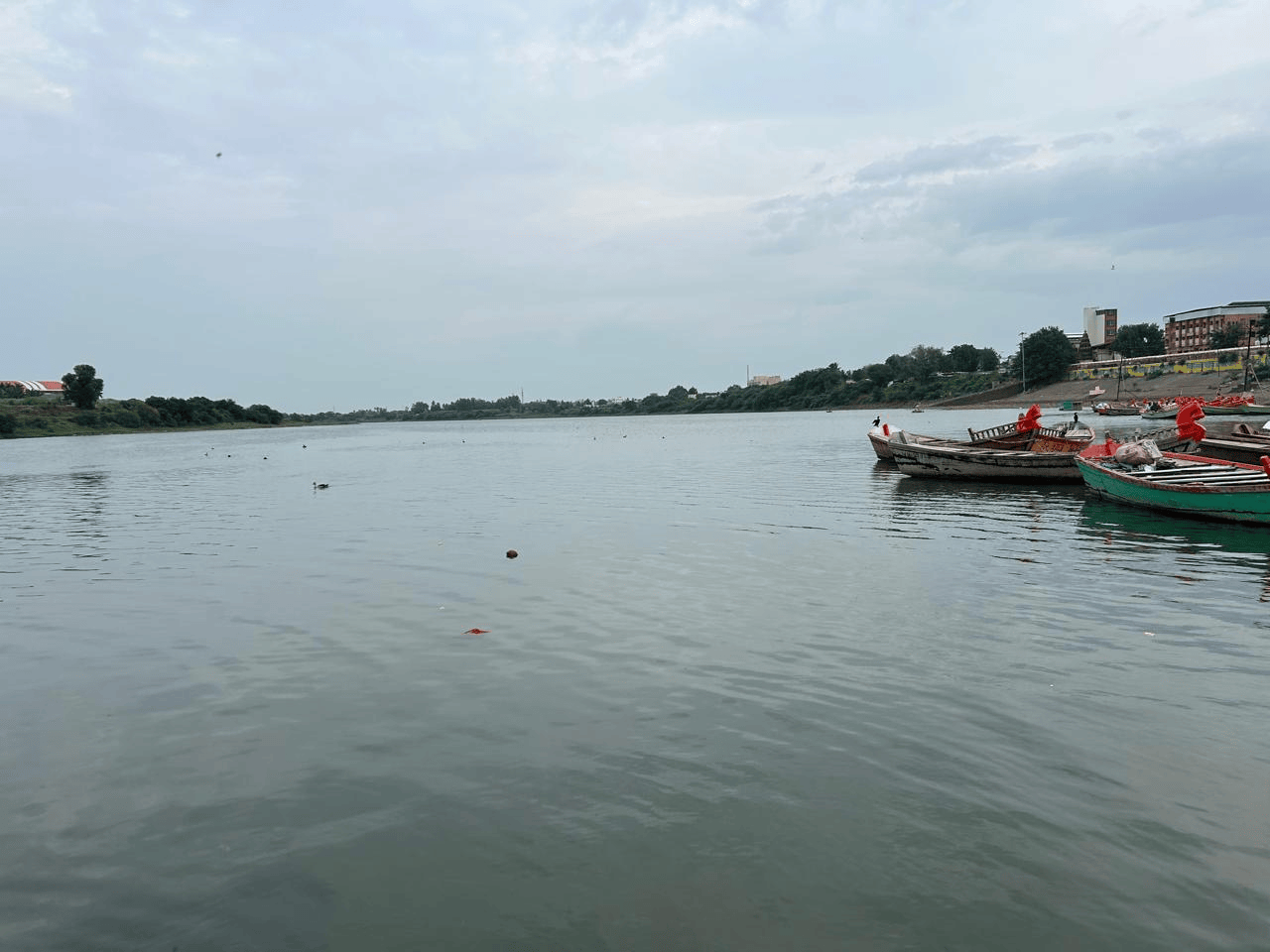
Late evening light of 12th September settled over waters of Chandrabhaga river, casting deep golden reflection across crescent banks. Stepping down stone ghats under twilight sky felt like stepping out of everyday world into sacred timeless realm. Air was cool, carrying gentle breeze over river mixed with scent of burning camphor, oil lamps, and fresh flowers. Dipping feet and taking holy water in hands, cool river washed away travel fatigue and heavy thoughts. Varkaris were sitting in small groups along riverbanks, singing praises with eektara, cymbals, and drum beats under soft glow of evening lamps. Watching simple faith of devotees gathered by waters, heart felt instant stillness, ready to meet deity.
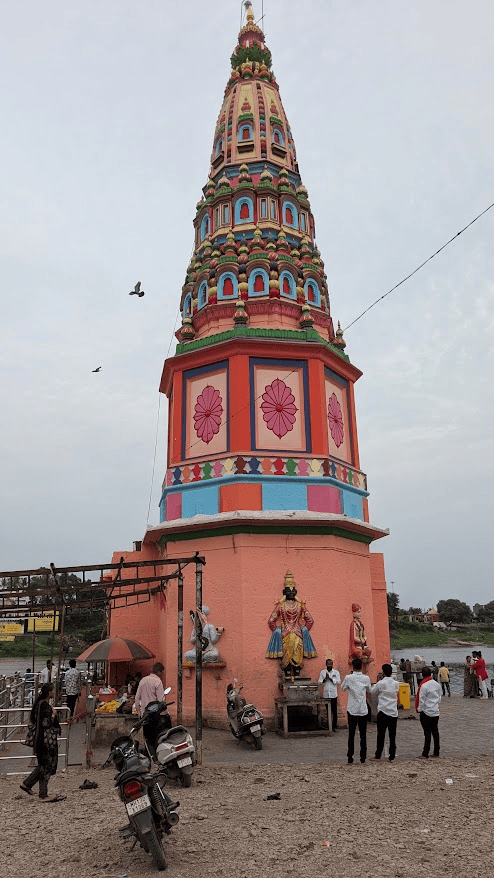
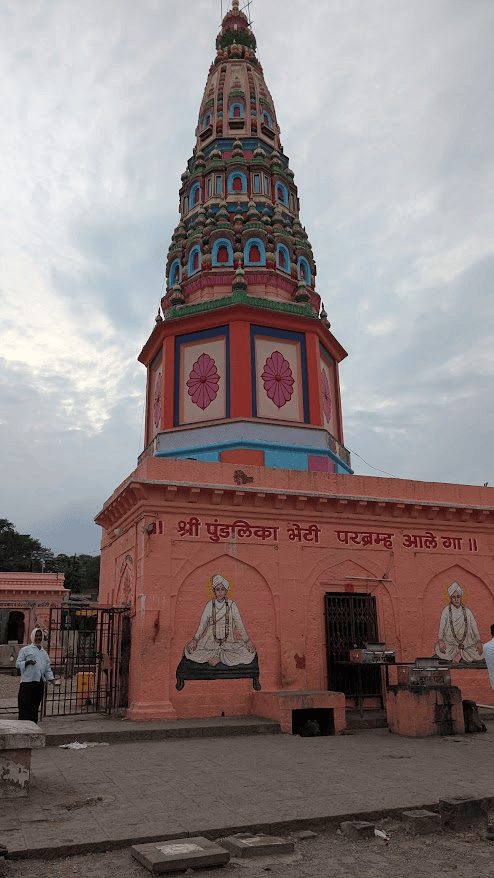
Regulars like boatmen and vendors sitting near Bhakt Pundalik Mandir on riverbank love to share timeless stories of Chandrabhaga river. One such legend explains why river takes crescent shape like half moon right at Pandharpur. Story goes that Bhima river changed her course centuries ago just to touch feet of Bhagavan Shri Vitthala, bending herself gently to wrap around town. Hearing this story while watching evening waves reflect twilight sky, deep feeling arose that nature itself bends in devotion when love for divine is pure. Offering prayers at Bhakt Pundalik Mandir is precursor to worship of Devi Rukmabai and Bhagavan Shri Vitthal.
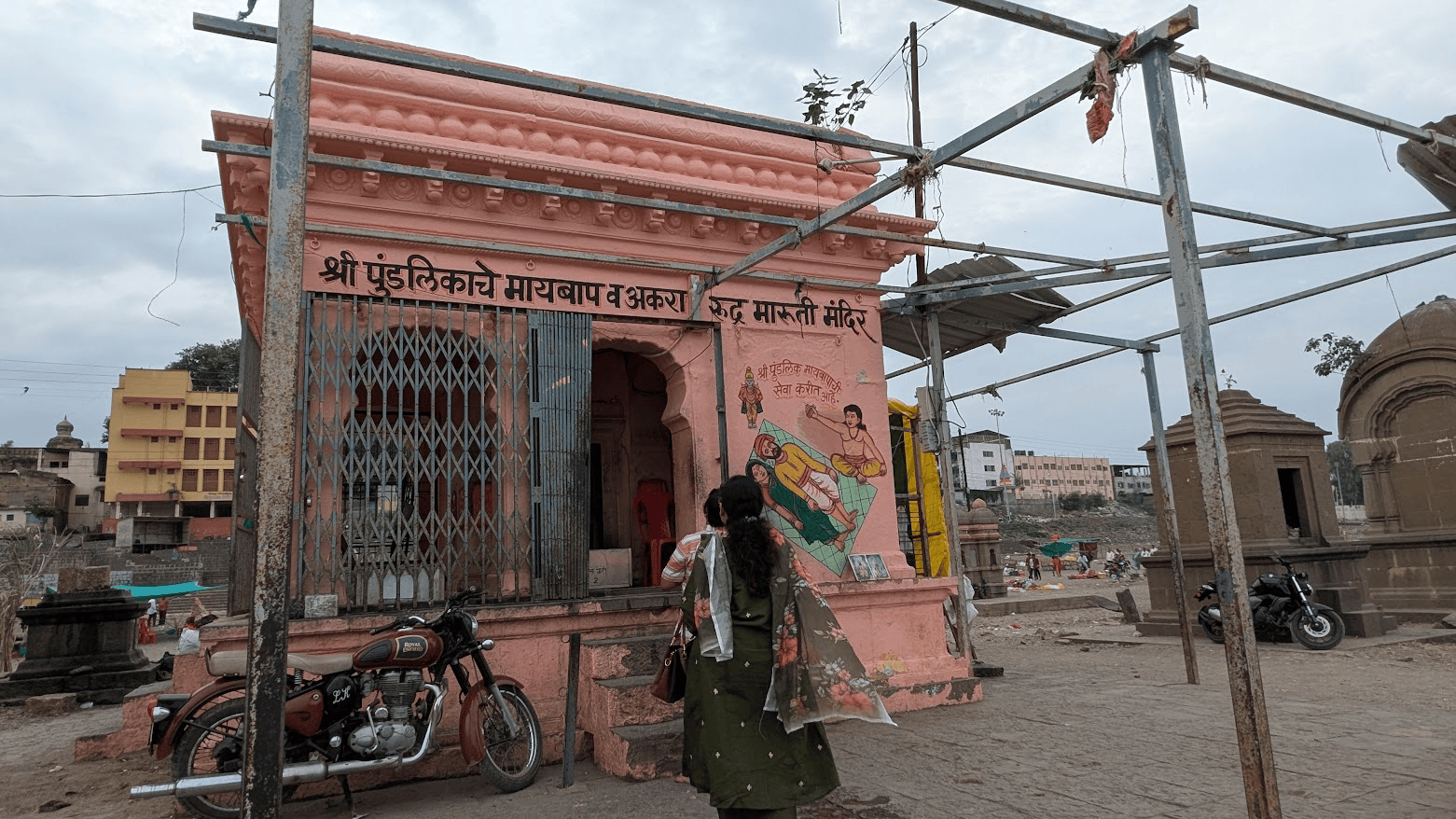
Moving from river towards temple complex, massive stone entrance stood tall, welcoming stream of pilgrims. Right at base of entrance lies Namdev Payari, holy step where Sant Namdev Maharaj chose to rest for eternity. Just watching it and rewinding to those days brings deep humility that filled hearts. According to legend, saint wanted every devotee to walk over him, taking dust of their feet onto his head. Standing there, tears welled up naturally, thinking how Amma always taught humility and devotion through her own simple life along with being rigidly firm standing up for what was right.
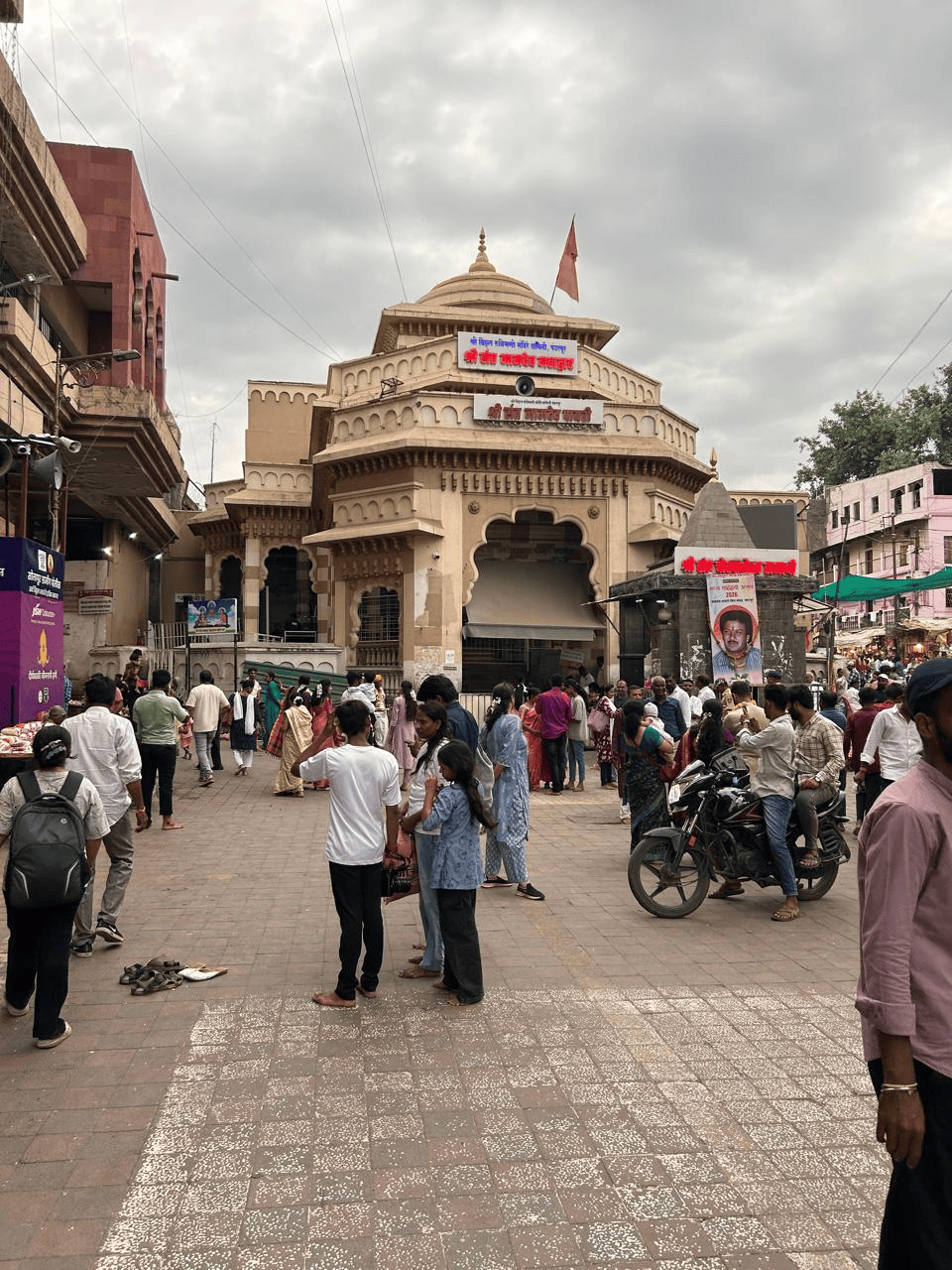
Passing main gates led straight into grand Solah Khambi, hall supported by sixteen massive carved stone pillars. Echo of Vitthal Vitthal chants reverberated through stone walls, creating deep vibration felt directly in chest. Large number of devotees were dancing in circular dindis, lost in bliss, clapping hands without care for world outside. Walking through dark cool corridors made of rough black stone gave striking sense of familiarity. Every pillar and arch matched mental images built over years of singing bhajans. It felt less like visiting new historical site and more like walking through familiar corridors of old family home.
Bhakta Pundalik and Legend of Brick
Before entering inner shrine, it was time to reflect on story of Bhakta Pundalik that forms heart of Pandharpur. Long ago, Pundalik was deeply devoted to serving his aged parents, pressing their tired feet every day with utmost love. Pleased with his selfless duty, Bhagavan Shri Krishna appeared at his door to bless him. Pundalik was so absorbed in serving parents that he did not drop his work. Instead, he tossed brick kept nearby toward doorway, asking deity to stand on it and wait till service to parents was finished.
Deity stood patiently on brick with hands resting on hips, waiting for Pundalik. Seeing such unmatched devotion toward parents, divine chose to remain standing on that brick forever in Pandharpur. Listening to this story near sanctum made eyes moist. It showed that serving mother and father is supreme form of worship. Standing on brick, Bhagavan Shri Vitthala proved that true love given to parents reaches divine directly, making Amma selfless life feel even more sacred.
Touch of Grace at Lotus Feet
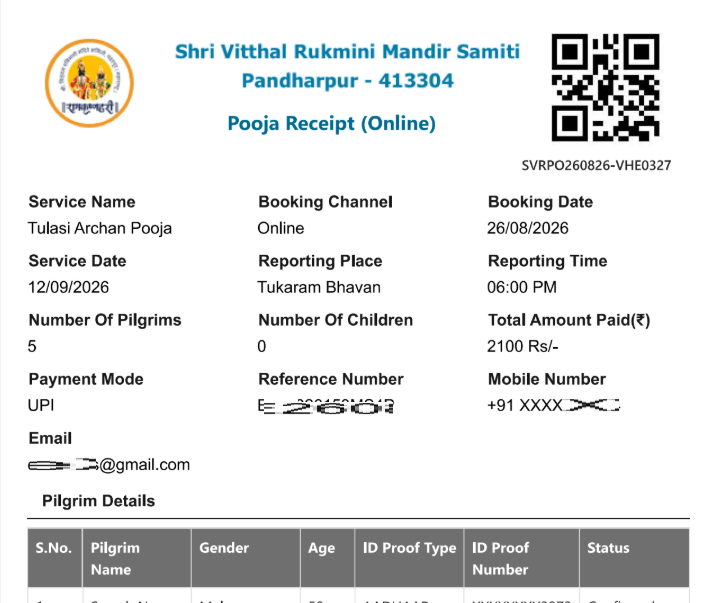
On evening of 12th September, birthday of Sindhu, and with two of us having birthdays on 11th September, myself and Vinay, it was absolute blessing for all of us to be at feet of Bhagavan Shri Vittal and Devi Rukmabai. Moment arrived to enter Sant Tukaram Bhavan for sacred Tulsi Archana Puja. Stepping into hall, rush of world outside faded away completely. Placing basil leaves stem by stem, leaf by leaf to accompaniment of Vishnu Sahasranama chant, heart overflowed with pure emotion. Thereafter all of us were led into Sanctum Sanctorum through gate directly in front of Sant Tukaram Bhavan. Walking towards inner sanctum carrying Flower Garland, Tulsi Archana offerings, and Naivedya, quietness felt completely different from whatever was experienced in life before. Mind was already still, heart was open, and soul was ready to absorb grace deeply.
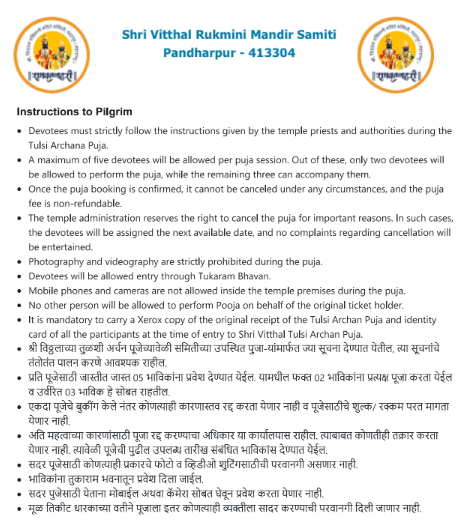
It was Dhoop Aarti time and bonus time for all of us in sanctum sanctorum. Sounds of cymbals, dhol, and hair-raising chants of Jai Jai Ram Krishna Hari and Gopala Krishna Hari brought pure bliss for nearly half hour. Then came moment of lifetime, touching His feet directly and feeling smooth worn stone under fingers while warm wave of peace spread through body. Serene smile of Bhagavan Shri Vitthala in hands-on-hips posture brought instant comfort. Placing forehead at feet of Vithai, with soft glow of lamps reflected on face of Vithoba, deep peace washed over. Vitthala does not demand grand rituals, only selfless love, same quiet unconditional love Amma gave throughout life. Offering last handful of Tulsi leaves, grief transformed into gratitude.
First Charan Sparsh Darshan felt like homecoming long overdue. Bowing down directly touching foreheads at lotus feet of Bhagavan Shri Vitthala, hands held fresh green basil leaves. Fragrance of sandalwood and Tulsi filled small sacred space. Priest then placed flower garland offered to Bhagavan Shri Vitthala across shoulders as prasad along with Tulsi leaves and pedas. Next stop was sanctum sanctorum of radiant Devi Rukmabai. Placing forehead at Her feet made soul feel complete and blessed. Touching feet after birthdays felt like mother placing reassuring hand on child head before sending them back into world. Fresh flowers adorned dark stone statue, and quiet atmosphere allowed uninterrupted moment of communion. Feeling worn surface of sacred brick once again brought realization that divine grace in Pandharpur is boundless, showering blessings again and again on those who seek shelter.
Darshan completed by praying to other Upadevatas inside the temple complex – Devi Radhika, Satyabhama, Venkateshwara (Balaji), Mahalakshmi,
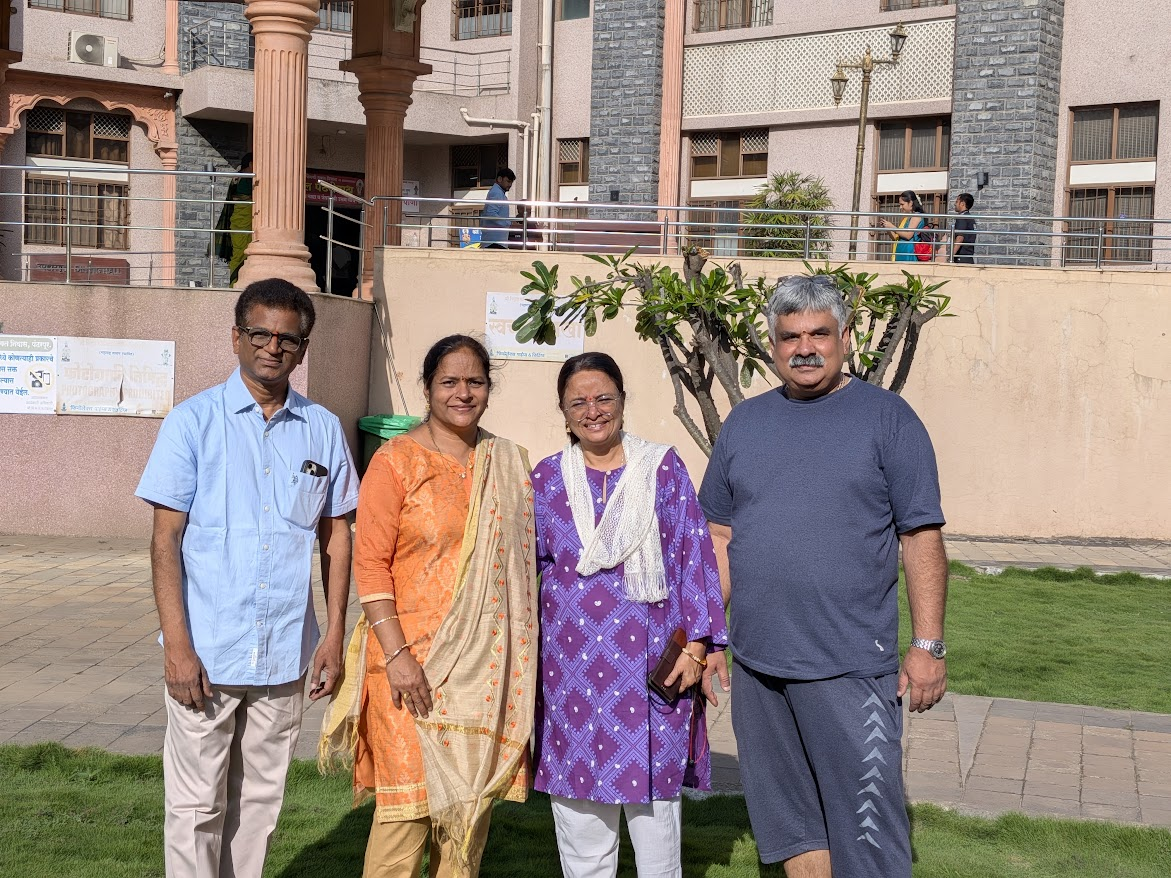
Beautiful anecdote explains how devotees believe Bhagavan Shri Vitthala gets tired after standing on brick for centuries to receive millions of pilgrims. During daily rituals, priests perform gentle care, treating deity like loving parent who works tirelessly for children. Simple touch of human care combined with divine presence reveals intimate relationship between devotee and deity in Pandharpur.
For years, songs described dark complexion of deity, fish-shaped earrings dangling near cheeks, and jewel shining on chest. Sitting right in front of deity during puja, poetic lyrics turned into living reality. Looking at His steady eyes that watched generations of devotees, sense of déjà vu was overwhelming. It was as if soul recognised this exact spot from long ago, recognizing divine presence that bhajans always promised was waiting here.
Miracles from Lives of Saints
Elderly Varkari sitting near outer courtyard narrated popular miracle of Sant Chokhamela Maharaj and Sant Janabai. Sant Janabai was humble maidservant in house of Sant Namdev Maharaj who spent all her hours grinding grain, sweeping floors, and collecting cow dung cakes. Locals say Bhagavan Shri Vitthala Himself would come down from altar in form of simple worker to help Janabai grind wheat and tie her hair. Deity did not care for high position or grand temple purity laws, He only cared for pure devotion in heart of simple woman doing household chores.
While Sant Janabai sat at hand-mill early in morning, task of grinding heavy grains was long and tiring. To unburden her heart, she sang abhangas, addressing Bhagavan Shri Vitthala not as distant king but as her closest motherly companion. Seeing her deep love, divine could not stay away on altar. Bhagavan Shri Vitthala transformed into female friend named Rangamma, sitting right across Janabai, holding other handle of stone mill, and grinding grain in rhythm with song. Janabai poured out her soul in famous song Rangamma Majhi Rangamma, praising divine friend who wore yellow silken robe and beautiful ornaments while helping maidservant with mundane household work.
Another story passed down through generations tells how Sant Chokhamela Maharaj was denied entry into main temple due to old caste barriers. He would stand across river, singing praises with tears. When temple priest found divine garland missing from deity statue, it was miraculously found hanging around neck of Sant Chokhamela Maharaj across Chandrabhaga river. These stories whispered by local elders in temple courtyards prove that Vithai belongs equally to everyone, rejecting artificial boundaries built by human society.
Birthday Celebrations in Divine Presence
Celebrating birthdays in divine presence of Vithai made occasion truly extra special. Warmest birthday wishes go to ever-smiling and adorable birthday girl Sindhu, whose bright presence brings warmth everywhere. Heartfelt wishes also go to her brother Vinay, who celebrated his birthday previous day on 11th September alongside me. Sharing these special days together at lotus feet of Bhagavan Shri Vitthala and Devi Rukmabai felt like divine design, filling all three of us with abundance of joy, good health, and everlasting peace.
Cherished Moments and Special Reunions
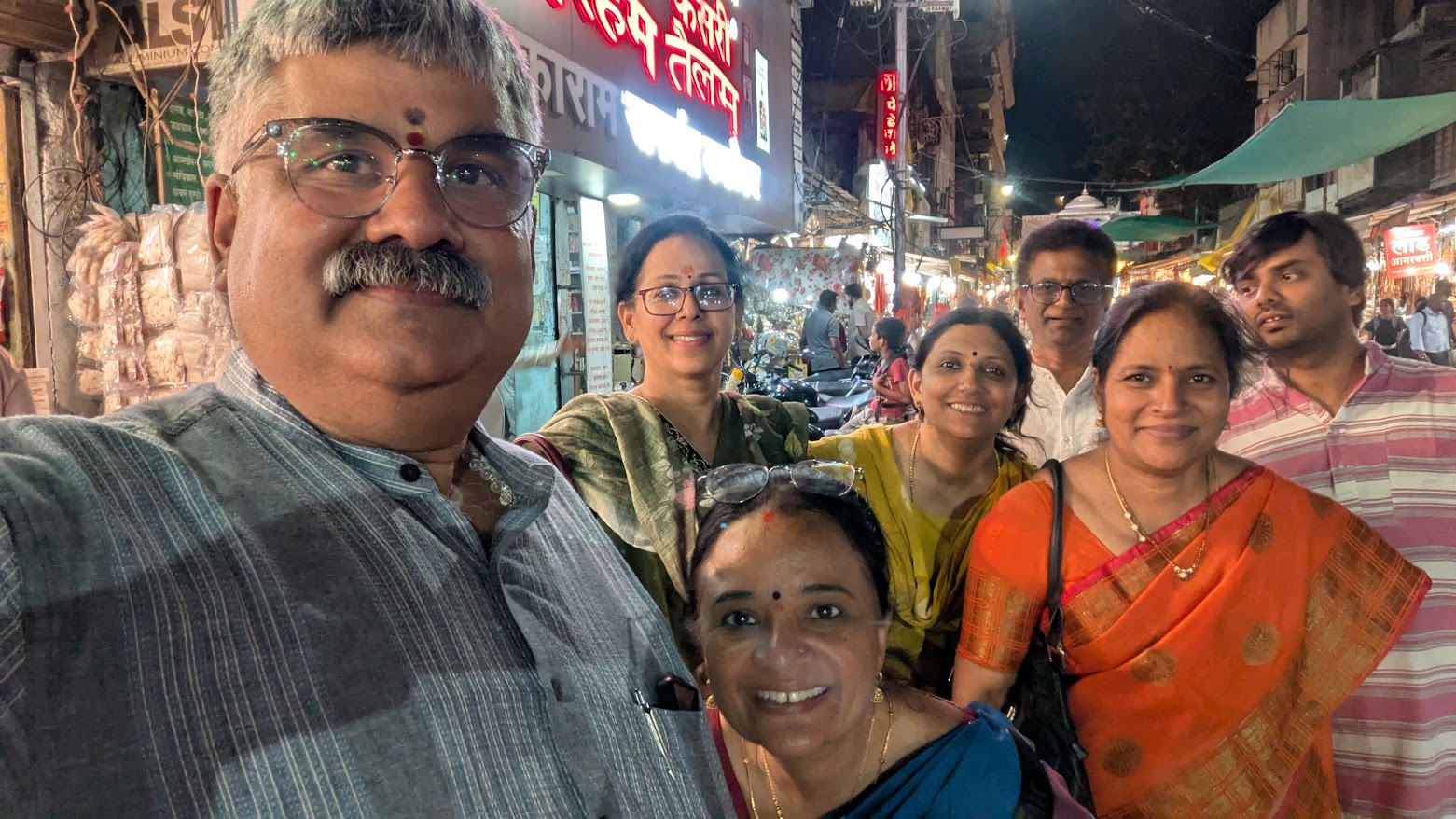
This pilgrimage became unforgettable for many lighthearted reasons alongside divine moments. Meeting Raju and Lakshmi after quite long time was special treat, and Pandharpur provided most unique setting for reunion since they travel all way from Hyderabad. Train journey itself started with funny story when only Lakshmi ticket got confirmed, leaving Raju to travel on RAC sitting ticket in completely different compartment (and he swore that he did not have a wink of sleep), giving everyone topic for endless teasing throughout the time we spent together. Road travel had its own drama when I had to hit sudden brakes at the last toll gate on our return journey, for unnoticed speed breaker, making Sweta shriek loudly in fear thinking car had crashed into something and she had a lot of stories about the thoughts in her mind during that 10-15 seconds that it took for her to regain her normal breath – all because of a Speed breaker at the Toll gate.
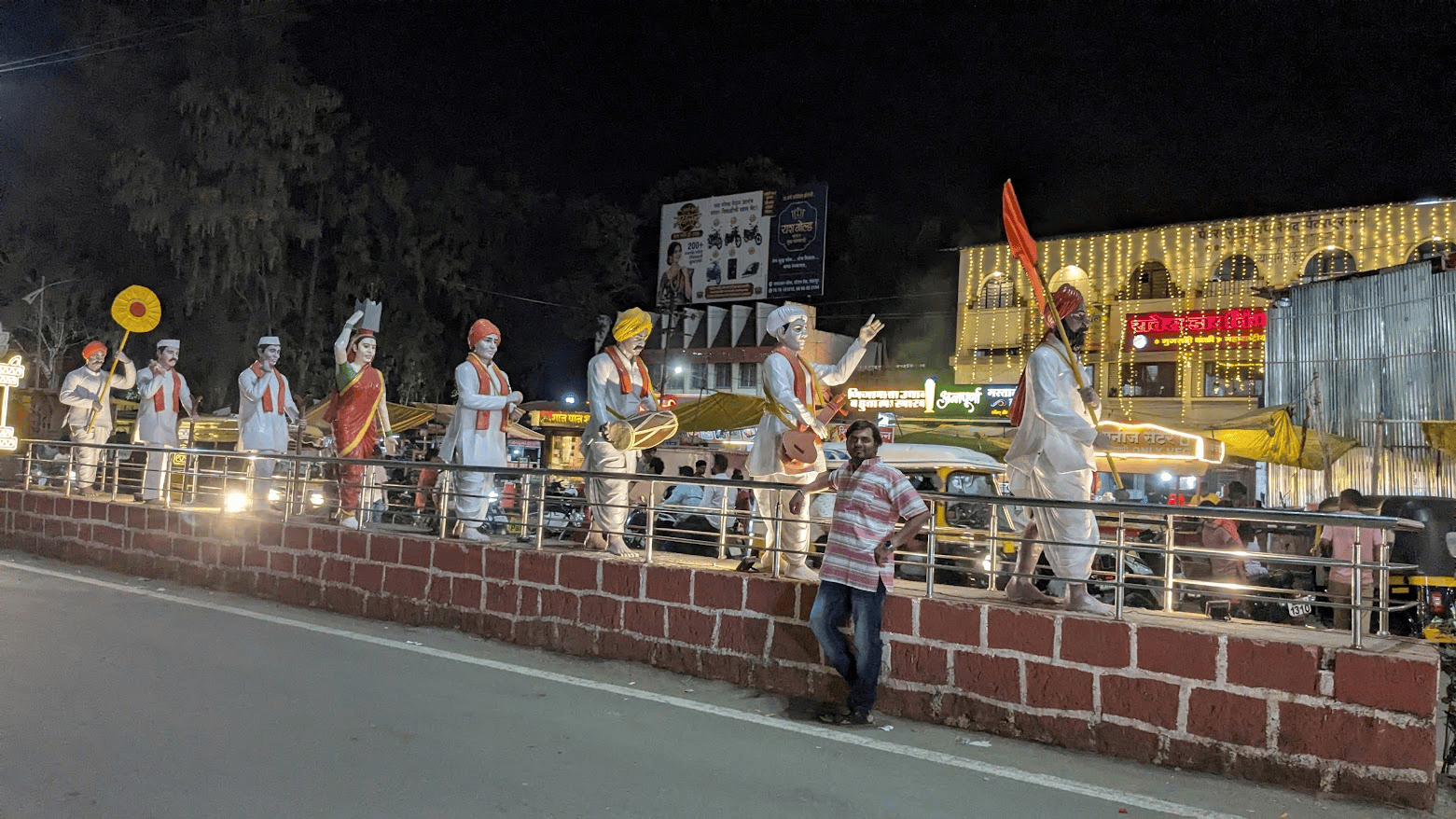
As we were returning back to Vitthal Rukmini Bhakta Niwas, where we had stayed, we were lucky to witness something so unique to Maharashtra (no other place can match). Arrival of Ganapati. Watch the Video for what we experienced – so so Maharashtrian thing
Reflections of Transformed Heart and Gratitude
Stepping out of temple complex after darshan into bright sun, world looked completely different. Heavy sadness that marked start of journey was replaced by quiet, unshakable strength. Walking away from sanctum, rhythm of tal and mridangam still echoed inside chest like steady heartbeat. Receiving Charan Sparsh Darshan turned time of loss into celebration of Amma enduring spiritual presence.
Pandharpur showed that grief does not need to be carried as burden, it can be offered at feet of divine and transformed into pure gratitude. Journey to Pandharpur was long pending, but timing could not have been more perfect. Singing His praise for decades prepared mind, but sitting twice at feet of Devi Rukmabai and Bhagavan Shri Vitthala anchored soul forever. Sacred town on banks of Chandrabhaga river is not just destination on map, it is sanctuary where every wandering heart finds home. Leaving temple town with forehead marked with bhasma and neck adorned with Tulsi garland, clear realization remained in heart. Amma love and Vithai grace are one and same, guiding every step on path ahead.
Temple Run Gang – My Heartfelt Gratitude
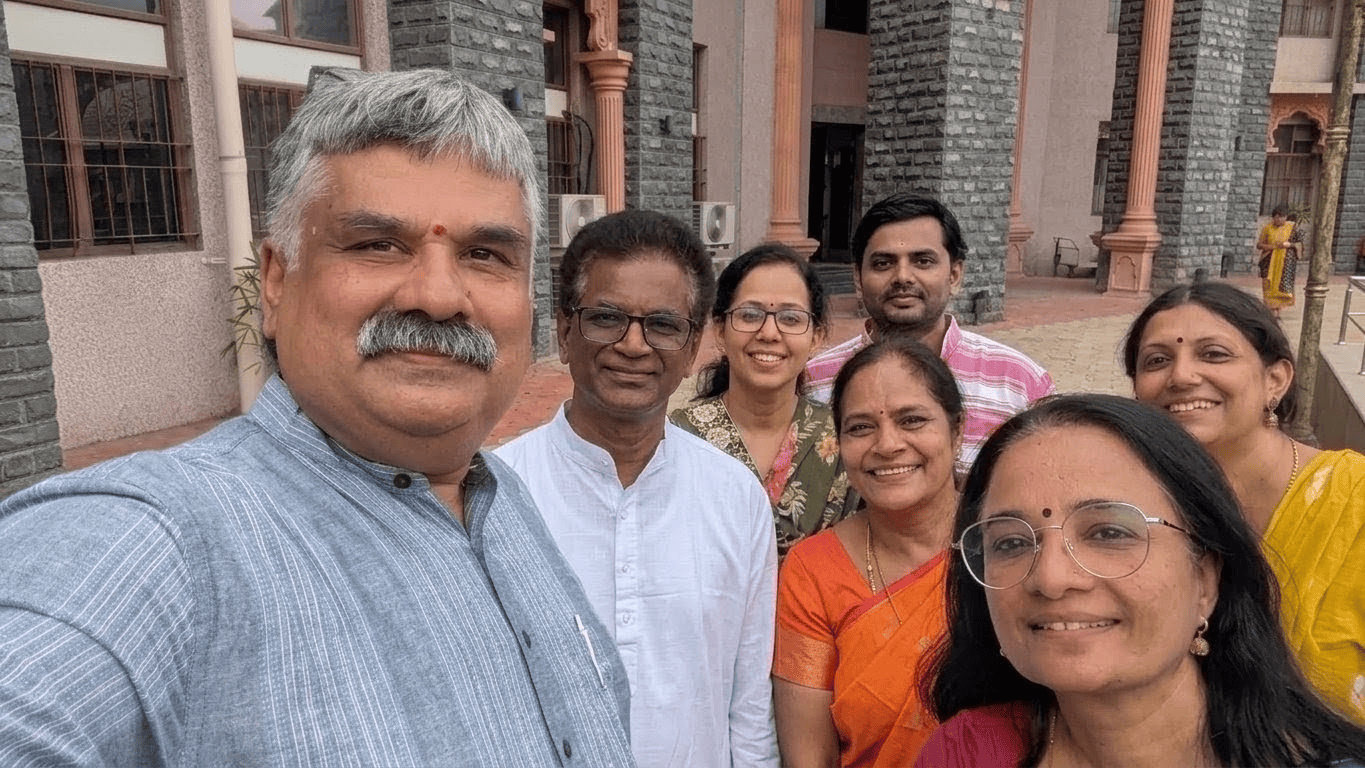
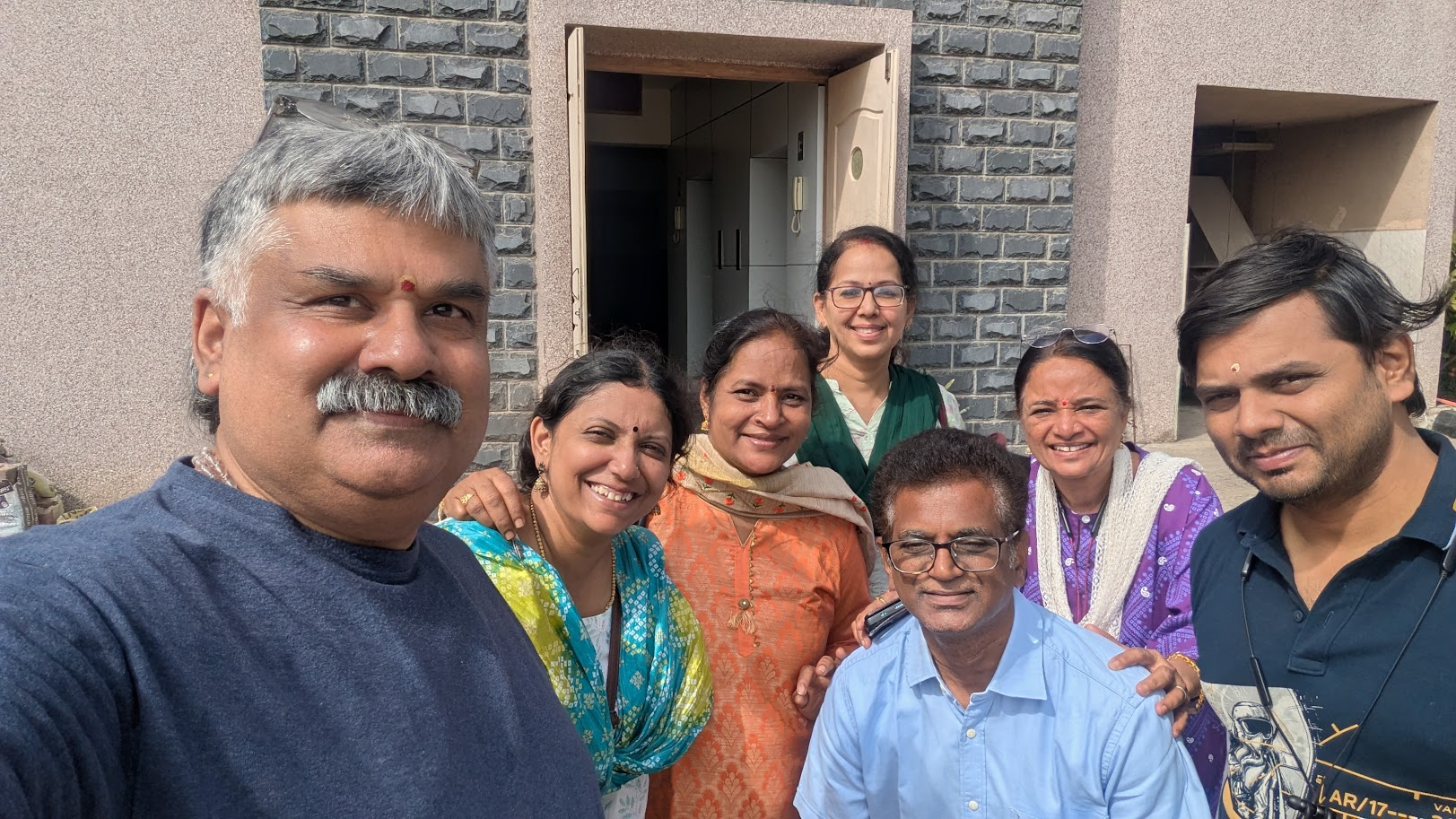
What an unbelievable journey! A fast-paced, action-packed pilgrimage like Pandharpur can easily get overwhelming, but this team turned it into pure joy. Huge thanks to Lakshmi, Sweta, Sindhu, Vinay, Raju, and of course, Aparna – you all truly made this trip special. When everyone vibes on the same frequency, thinks alike, and moves with the same spirit, even a short trip leaves memories for a lifetime. It’s the team that makes or breaks an experience, and this crew absolutely made it. Thank you all for the wonderful energy, laughter, and shared devotion.
As we keep resolving after Pilgrimage, this was just the warm-up. Let’s start planning our next pilgrimage, and let us make it a longer one next time.
Mastermind Behind Temple Run Gang
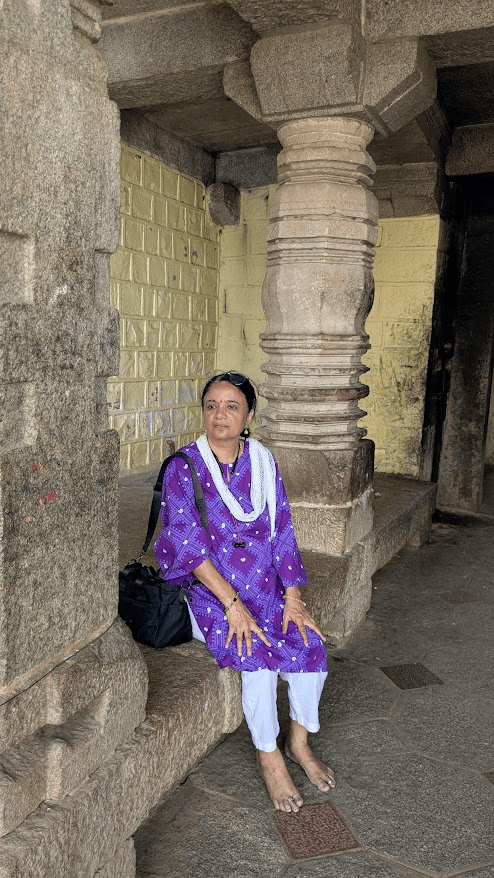
Special tribute goes to Aparna, my better half, who is ever-enthusiastic and over-excited mastermind behind all our spiritual journeys. She is prime driving force who seamlessly plans every ritualist detail in each temple stop, ensuring we step onto holy ground at perfect moments. Serving as go-to expert on rituals and astrological remedies for our group, her guidance ensures every step of pilgrimage is done with maximum devotion and propriety. For quite some time, we have proudly named ourselves as Temple Run Gang, and under her energetic leadership, every temple trip turns into well-guided, soul-stirring adventure.
🙏 Bola Pundalika Varade – Jai Shri Hari Vitthale 🙏
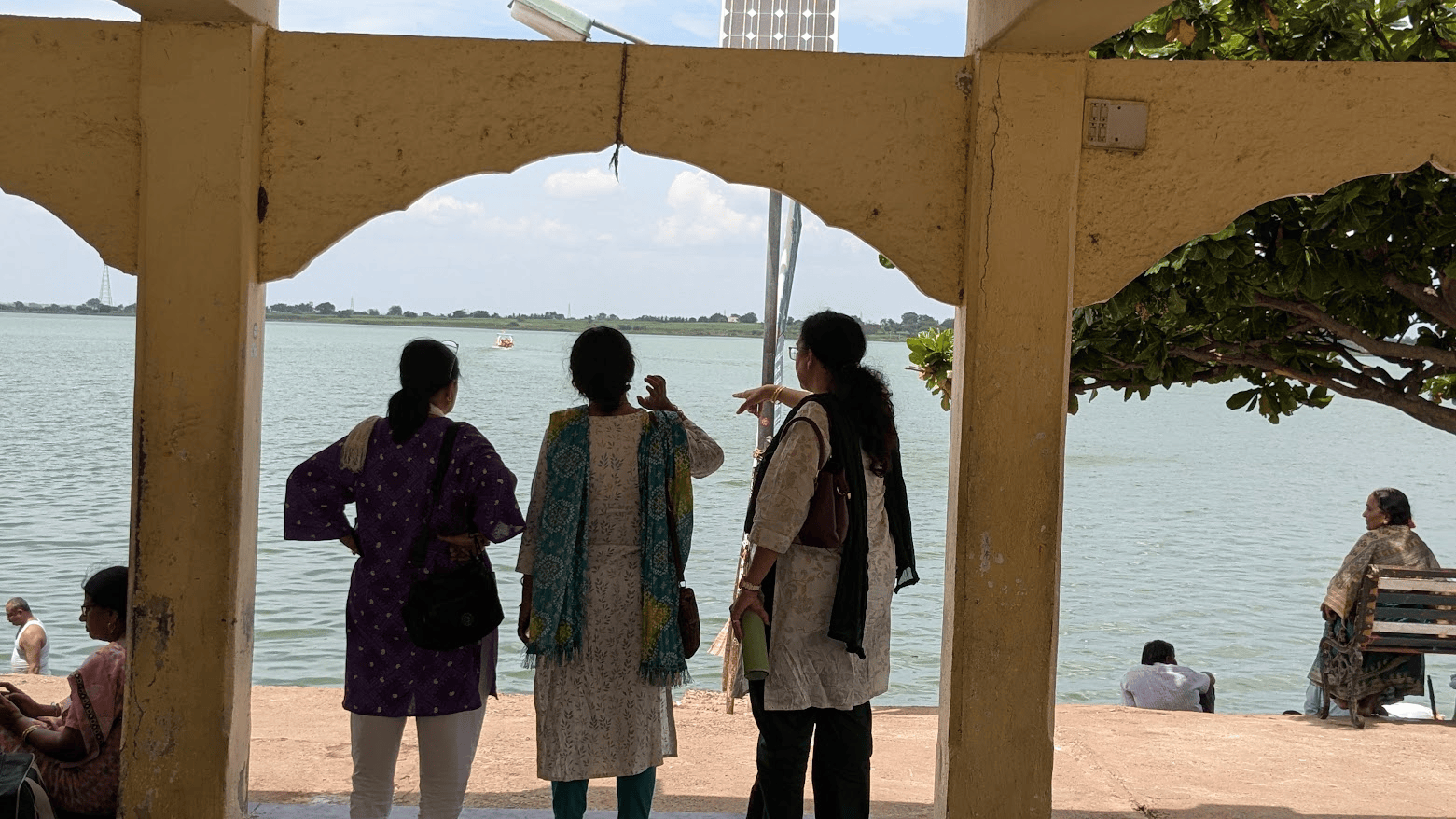
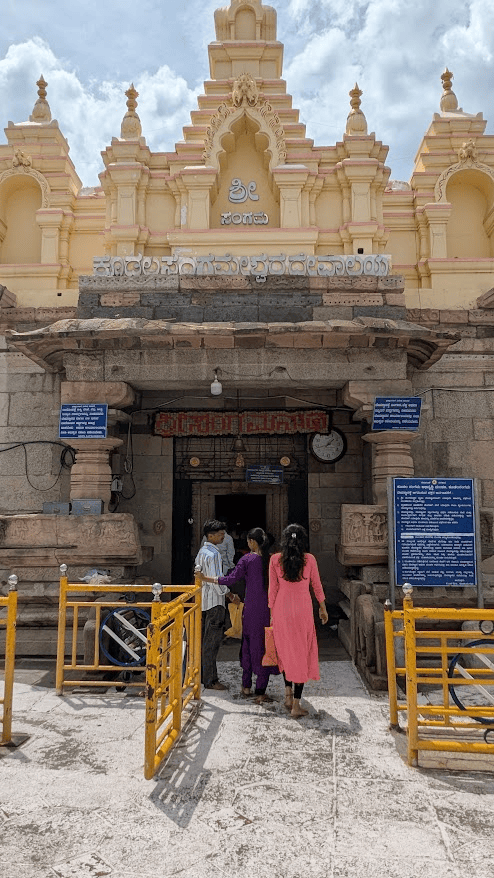
On return journey, stopping at holy site of Koodala Sangama (the Aikya Sthala of Santa Basaveswhara Swamigalu, founder of Lingayat Sect) brought another layer of peace. Having blissful darshan at confluence of rivers was soul-satisfying experience. This visit concluded on delicious note with traditional Lingayat Jolada Rotti Oota, filling hearts with joy and stomach with authentic local flavors.