Parama Ekadashi: Gateway to Prosperity & Liberation

शान्ताकारं भुजगशयनं पद्मनाभं सुरेशं
विश्वाधारं गगनसदृशं मेघवर्णं शुभाङ्गम् ।
लक्ष्मीकान्तं कमलनयनं योगिभिर्ध्यानगम्यं
वन्दे विष्णुं भवभयहरं सर्वलोकैकनाथम् ॥

Parama Ekadashi occurs during Krishna Paksha (dark fortnight) of Adhika Masa (intercalary extra month), also known as Purushottama Masa. Since Adhika Masa comes once in roughly three years, this sacred day carries rare and immense spiritual potency. Devotees dedicate this unique occasion to worship Bhagawan Narayana form of Bhagawan Vishnu to eliminate deep poverty, wash away heavy karmic sins, obtain material abundance, and achieve ultimate spiritual liberation.

Meaning and Significance of Parama Ekadashi

In Sanskrit, Parama means supreme, ultimate, or highest. Therefore, Parama Ekadashi translates to 11th day that grants supreme spiritual merit and ultimate liberation.

Human life often suffers due to poverty, financial hardship, and consequences of past unrighteous deeds. Observing fast on Parama Ekadashi during Adhika, also called Purushottam Masa with pure devotion serves as ultimate spiritual remedy to dissolve severe karmic obstacles. Scriptures mention that sincere devotion on this day pleases Shri Hari deeply, granting wealth, prosperity, removal of scarcity, and residence in Vaikuntha Dham.

Legend associated with Parama Ekadashi

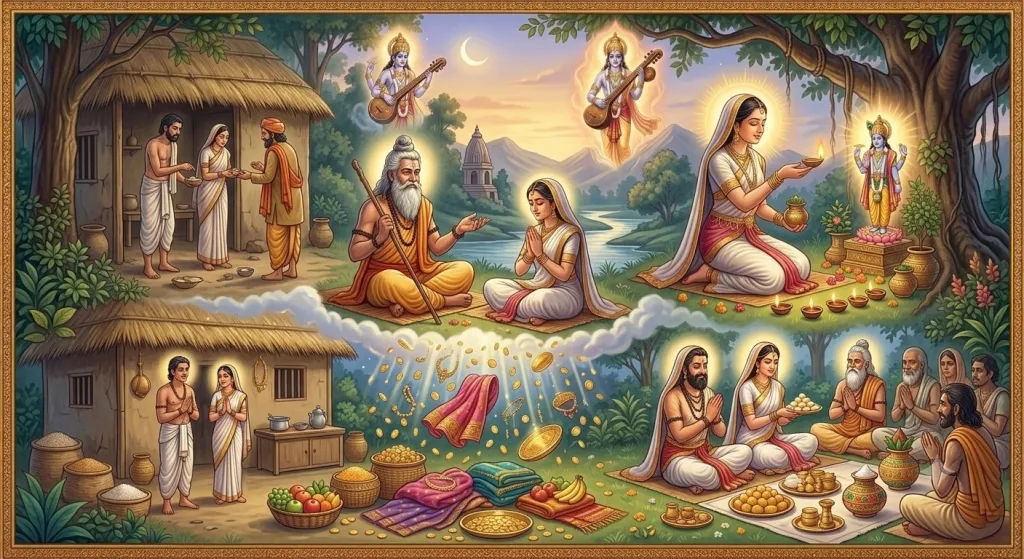
Scriptures describe sacred story narrated by Bhagawan Krishna to King Yudhishthira, involving pious Brahmin named Sumedha and his devoted wife Pavitra who lived in Kampilya city. Sumedha was extremely virtuous, but due to severe past karma, he suffered from extreme poverty and lacked even daily food. Despite deep starvation, couple remained strictly truthful and devoted to Bhagawan Vishnu.

One day, Sumedha expressed desire to leave house and travel to distant lands to earn livelihood. Pavitra humbly advised husband that wealth comes only through past good karma and charity. She suggested staying home and trusting Shri Hari grace instead of wandering aimlessly.

During Adhika Masa, holy Sage Kaundinya visited humble hut of Sumedha. Brahmin couple welcomed sage with deep respect and served him water despite having no food. Moved by their devotion and dire poverty, Sage Kaundinya instructed couple to observe strict fast on Krishna Paksha Ekadashi of Adhika Masa, known as Parama Ekadashi. Sage explained that observing Pancharatri fast starting from Parama Ekadashi for five continuous days destroys all poverty and grants divine wealth.

Sumedha and Pavitra strictly followed advice of Sage Kaundinya and observed Parama Ekadashi fast along with Pancharatri vows with total faith. By divine grace of Bhagawan Vishnu and immense spiritual merit of fast, royal prince arrived at their door soon after, gifting them grand house, land, cattle, and abundant wealth. Couple lived happily in prosperity, performed charity, and eventually attained Moksha.

Rituals to be performed on Parama Ekadashi

Devotee must wake up early in morning during Brahma Muhurta and take ritual bath using clean water without using soap, shampoo, or such cosmetic products.

Puja area should be cleaned thoroughly and idol or photo of Bhagawan Vishnu, specifically Bhagawan Narayana form alongside Maata Lakshmi, should be placed respectfully.

Light ghee lamp, offer fresh yellow flowers, sandalwood paste, incense, sweets, and Tulsi leaves to Bhagwan Vishnu.

Chant Vishnu Sahasranama, Hare Krishna Mahamantra, or Om Namo Bhagavate Vasudevaya continuously throughout day.

Listen to or read Parama Ekadashi Katha with family members in peaceful state of mind.

Offer your respects to parents and other elders, especially Guru, seeking their heartfelt blessings on this sacred morning.

Observe fast during entire day according to individual health capacity. Healthy individuals can observe strict fast without water or taking only water. Devotees seeking special merit can observe Pancharatri fast for five days starting from Ekadashi till Dwadashi or Purnima. Milk, curd, and fruits can be consumed if complete fasting is difficult due to health reasons. Rice, wheat, barley, lentils, pulses, and all food grains must be avoided strictly. Heavy spices, regular salt, garlic, onion, tea, coffee, outside processed food, and alcohol must be strictly avoided.

Perform evening Aarti with devotion, light lamps, offer special Naivedya to Bhagwan Vishnu, donate food, clothes, and gold or brass items to deserving Brahmins or needy people, and maintain noble thoughts, avoiding anger, backbiting, falsehood, or harsh speech.

Break fast next day on Dwadashi tithi during scheduled Parana time. Fast should be broken after sunrise once Hari Vasara period concludes. Offer naivedya to Bhagwan Vishnu, perform short prayer, and break fast by consuming prasada, water, or fruits before eating regular food.

PS: Article re-formatted into blocks and Header Image changed. Updated link to Adhika Masa Article (which is written later)
Padmini Ekadashi: Blessings During Purushottama Masa

सशङ्खचक्रं सकिरीटकुण्डलं सपीतवस्त्रं सरसीरुहेक्षणम् ।
सहारवक्ष:स्थलशोभिकौस्तुभश्रियं नमामि विष्णुं शिरसा चतुर्भुजम् ॥

Padmini Ekadashi occurs during Shukla Paksha (waxing phase of moon) of Adhika Masa (intercalary extra month), also known as Purushottama Adhika Masa. Since Adhika Masa comes once in roughly three years, this sacred day carries rare and immense spiritual potency. Devotees dedicate this unique occasion to worship Bhagawan Purushottama form of Bhagawan Vishnu to gain spiritual glory, fulfill desires, wash away heavy karmic sins, and attain place in Vaikuntha Dham.

Meaning and Significance of Padmini Ekadashi

In Sanskrit, Padmini refers to lotus-like pure nature or Queen Padmini who first observed this fast, while Ekadashi means 11th lunar day. Therefore, Padmini Ekadashi translates to 11th day of Adhika Masa that brings divine purity, fame, and spiritual elevation.

Human existence often faces suffering due to lack of spiritual progress, childlessness, and heavy karmic debts. Observing fast on Padmini Ekadashi during Purushottama/Adhika Masa with pure devotion provides spiritual merit greater than performing grand Yagnas or severe penance. Scriptures mention that sincere devotion on this day pleases Shri Hari deeply, granting fame, noble child, wealth, and freedom from cycle of rebirth.

Legend associated with Padmini Ekadashi

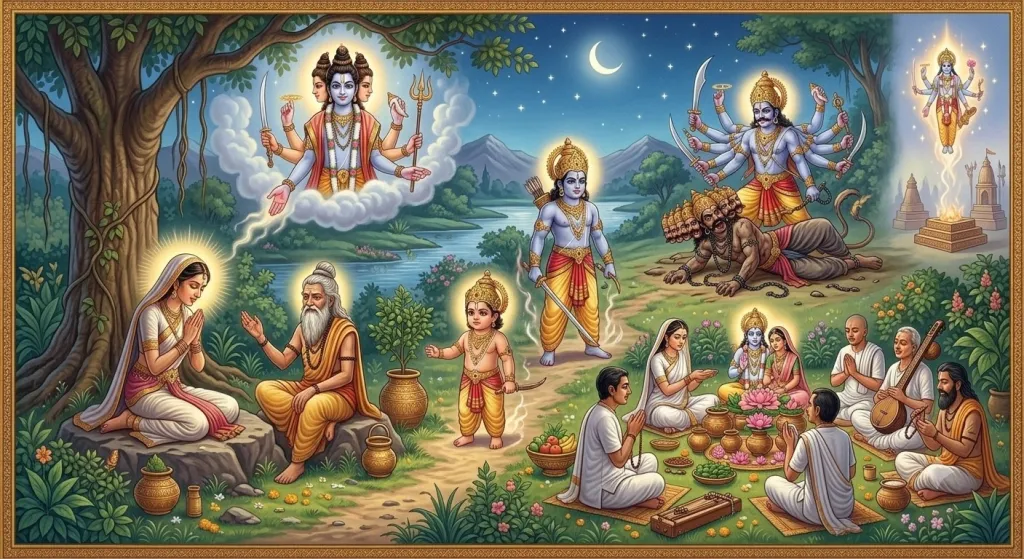
Scriptures describe sacred story narrated by Bhagawan Krishna to King Yudhishthira, involving King Kritavirya who ruled kingdom of Mahishmati during Treta Yuga. King Kritavirya was mighty ruler, but despite having many queens, he had no son to carry forward royal lineage. King tried all sacrifices, medicine, and rituals, but failed to get offspring.

Deeply sorrowful, King Kritavirya decided to renounce royal duties, hand over kingdom to ministers, and leave for forest penance. Queen Padmini, daughter of King Harischandra, accompanied her husband to Mandrachala mountain forest to perform intense austerity. King practiced severe penance for thousands of years, becoming extremely weak and frail, yet failed to receive divine darshan of Bhagawan Vishnu.

Seeing condition of king, Queen Padmini approached Maa Anusuya, wife of Sage Atri, seeking guidance. Compassionate Anusuya informed queen that Adhika Masa occurs once in three years, containing two special Ekadashis. Anusuya instructed Queen Padmini to observe strict fast on Shukla Paksha Ekadashi of Adhika Masa with total devotion to Bhagawan Purushottama.

Queen Padmini strictly followed advice of Maa Anusuya and observed fast on Padmini Ekadashi along with night vigil. Pleased with deep faith and sacrifice of Queen Padmini, Shri Hari appeared before couple riding on Garuda. Bhagawan offered boon to queen, but queen humbly requested Bhagawan to grant powerful son to her husband. By divine grace of Bhagawan Vishnu, Queen Padmini soon gave birth to powerful son Kartavirya Arjuna, who grew up to become mighty king, defeated demon king Ravana, and ruled righteously.

Rituals to be performed on Padmini Ekadashi

Devotee must wake up early in morning during Brahma Muhurta and take ritual bath using clean water without using soap, shampoo, or such cosmetic products.

Puja area should be cleaned thoroughly and idol or photo of Bhagawan Vishnu, specifically Bhagawan Purushottama form alongside Maata Lakshmi, should be placed respectfully.

Light ghee lamp, offer fresh yellow flowers, sandalwood paste, incense, betel leaves, and Tulsi leaves to Bhagwan Vishnu.

Chant Vishnu Sahasranama, Hare Krishna Mahamantra, or Om Namo Bhagavate Vasudevaya continuously throughout day.

Listen to or read Padmini Ekadashi Katha with family members in peaceful state of mind.

Offer your respects to parents and other elders, especially Guru, seeking their heartfelt blessings on this sacred morning.

Observe fast during entire day according to individual health capacity. Healthy individuals can observe strict fast without water or taking only water. Milk, curd, and fruits can be consumed if complete fasting is difficult due to health reasons. Rice, wheat, barley, lentils, pulses, and all food grains must be avoided strictly. Heavy spices, regular salt, garlic, onion, tea, coffee, outside processed food, and alcohol must be strictly avoided.

Perform evening Aarti with devotion, keep night vigil (Jagaran) singing devotional hymns, offer special Naivedya to Bhagwan Vishnu, and maintain noble thoughts, avoiding anger, backbiting, falsehood, or harsh speech.

Break fast next day on Dwadashi tithi during scheduled Parana time. Fast should be broken after sunrise once Hari Vasara period concludes. Offer naivedya to Bhagwan Vishnu, perform short prayer, and break fast by consuming prasada, water, or fruits before eating regular food.

PS: Article re-formatted into blocks and Header Image changed. Updated link to Adhika Masa Article (which is written later)

Adhika Maasa: Gift of Purushottama

Adhika Maasa represents a profound intersection of ancient astronomical mathematics and deep spiritual philosophy within Sanatana Dharma’s culture. Its origin lies in fundamental difference between solar and lunar calendars, which operate on distinct cycles.

Adhika Maasa Graphically Explained

While a solar year spans roughly three hundred sixty-five days, a lunar year concludes in about three hundred fifty-four days, leaving an annual eleven-day deficit. Over a period of approximately thirty-two and a half months, this discrepancy accumulates into a full thirty-day month, prompting Hindu astronomers to insert an extra lunar month to keep seasonal festivals from drifting out of their proper times of year. Sankramana, also widely known as Sankranti, signifies precise astrological moment when sun transits from one zodiac sign, or rashi, into the next. Within solar calendar framework, this movement occurs approximately every thirty days, marking commencement of a new solar month and dividing the year into twelve distinct transits. Each transition is named after the zodiac sign the sun enters, such as Makara Sankranti when the sun moves into the constellation of Capricorn. These moments are traditionally viewed as vital cosmic resets that align human activity with seasonal shifts, rendering them highly auspicious periods for spiritual purification, charity, and ancestral rituals, while conversely serving as the crucial markers whose absence defines the occurrence of an extra month like Adhik Maasa. Astrologically, Adhika masa occurs when a lunar month passes entirely without a solar transit, meaning the sun does not move into a new zodiac sign. This lack of planetary movement led ancient texts to initially label it Mal Maasa, meaning an unaligned or unclean month, because it possessed no ruling zodiac sign, no presiding deity, and no apparent purpose in daily worldly affairs.

Dejected by its perceived worthlessness, the personified month sought refuge with Lord Vishnu in Vaikuntha, weeping over its rejection by humanity. Moved by compassion, Vishnu adopted the extra month, bestowed his supreme name upon it, and transformed it into Purushottam Maasa. He blessed this period with spiritual potency superior to all standard months, decreeing that selfless devotion practiced during this time would yield immense inner growth. Because it lacks a solar transit, the month represents a cosmic pause, prompting people to suspend desire-driven milestones like weddings, business ventures, or housewarmings. Instead, the focus shifts entirely toward internal purification, with devotees prioritizing selfless actions, fasting, scriptural reading, and charitable giving without expecting any material reward.

Unique status of this month as a period existing outside ordinary boundaries is further illustrated in classical legends, a couple of which is related here.

One notable legend involves King Nahusha, whose material arrogance during this sacred month led to his downfall and transformation into a serpent, serving as a timeless warning against feeding the ego when cosmic energies call for humility. His downfall provides a stark illustration of how spiritual discipline of Purushottam Maasa must be respected to maintain moral alignment. Having accumulated immense merit through rigorous penances and virtuous governance on Earth, Nahusha was chosen by celestial sages to temporarily occupy the throne of Indra, King of Devas, who had gone into hiding to atone for a sin. This sudden elevation to ultimate cosmic authority intoxicated Nahusha with pride, blinding him to his earthly wisdom. When the sacred period of the extra month arrived, a time designated strictly for dissolution of ego and performance of selfless deeds, the king chose instead to indulge in unprecedented sensory pleasures and demand absolute subservience from the universe. His arrogance culminated in an outrageous demand to be carried through the heavens in a palanquin borne by the revered Saptarishi, the seven great sages of Hindu tradition. As the sages walked, Nahusha, consumed by impatience and desire, repeatedly kicked the eminent Sage Agastya, urging holy men to move faster. The physical assault, committed during a sacred period meant for absolute humility and reverence, instantly shattered king’s accumulated spiritual merit. Agastya immediately pronounced a curse, casting the proud ruler out of the heavenly realms to dwell on Earth as a serpent (a legless creature) for thousands of years, demonstrating that when the cosmic window for inner reflection is treated with material arrogance, even the highest spiritual achievements can be utterly undone.

In contrast to Nahusha’s moral collapse, destruction of demon king Hiranyakashipu highlights how this unique month functions as an instrument of divine justice operating outside ordinary temporal laws. Hiranyakashipu had attained near-invincibility by extracting a highly complex boon from Brahma, carefully designing conditions that seemed to eliminate every possible vulnerability to death. He specified that his demise could not be brought about by any human, animal, or demigod, nor could it occur indoors or outdoors, during day or at night, or by any weapon forged by hand. To seal his immortality against time itself, the tyrant explicitly demanded protection across all twelve months of the year, confident that he had successfully blocked every path to his destruction.

This absolute immunity fuelled a reign of terror, during which Hiranyakashipu sought to eradicate the worship of Vishnu, eventually attempting to murder his own young son, Prahlada, who remained a steadfast devotee of the Vishnu (preservation) aspect of the cosmos. To honour absolute faith of the child while fully respecting the parameters of Brahma’s boon, Vishnu manifested as Narasimha, an avatara possessing body of a man and head of a lion. He confronted Hiranyakashipu at twilight, an hour that was neither day nor night, and held him on His lap on the threshold of the palace doorway, a location neither indoors nor outdoors. Using bare claws instead of a weapon, Narasimha flawlessly utilized Adhik Maasa, the thirteenth month that sat completely outside the standard twelve-month calendar protected by the boon, as a divine loophole that bypassed ordinary earthly laws. Through this act, extra month became the literal space where human cleverness ended and cosmic balance was restored, serving ultimately as a built-in period for the human mind to slow down, hit pause on material ambitions, and consciously reorient toward internal growth and spiritual alignment.