The manufacturing plant on the outskirts of Mysore, near the Nanjangud industrial area, buzzed with the sound of automated pick-and-place machines. Inside the high-precision Surface Mount Technology division, however, the atmosphere was thick with tension. At the center of this tension was Ramanjaneya, the plant’s production manager. To some in the leadership, he was a reliable asset, but his rise to the top was entirely accidental. Ten years ago, Ramanjaneya’s world had been delightfully simple: a desk, a micrometer, and a mountain of incoming components. As an Incoming Parts Inspector, success meant matching a physical part to a blueprint. If the dimensions matched, it passed. There were no shades of grey and no people management.
Then, a chaotic organizational purge hit the company. The department head resigned, senior supervisor took a job abroad, and a hiring freeze locked the team size. Finding himself the last man standing, Ramanjaneya was handed the manager’s cabin for one simple reason, he was a ultimate Yes-Man for his Manager. While others argued about bandwidth or quality protocols, Ramanjaneya just nodded, becoming the friction-free gear the top brass wanted.
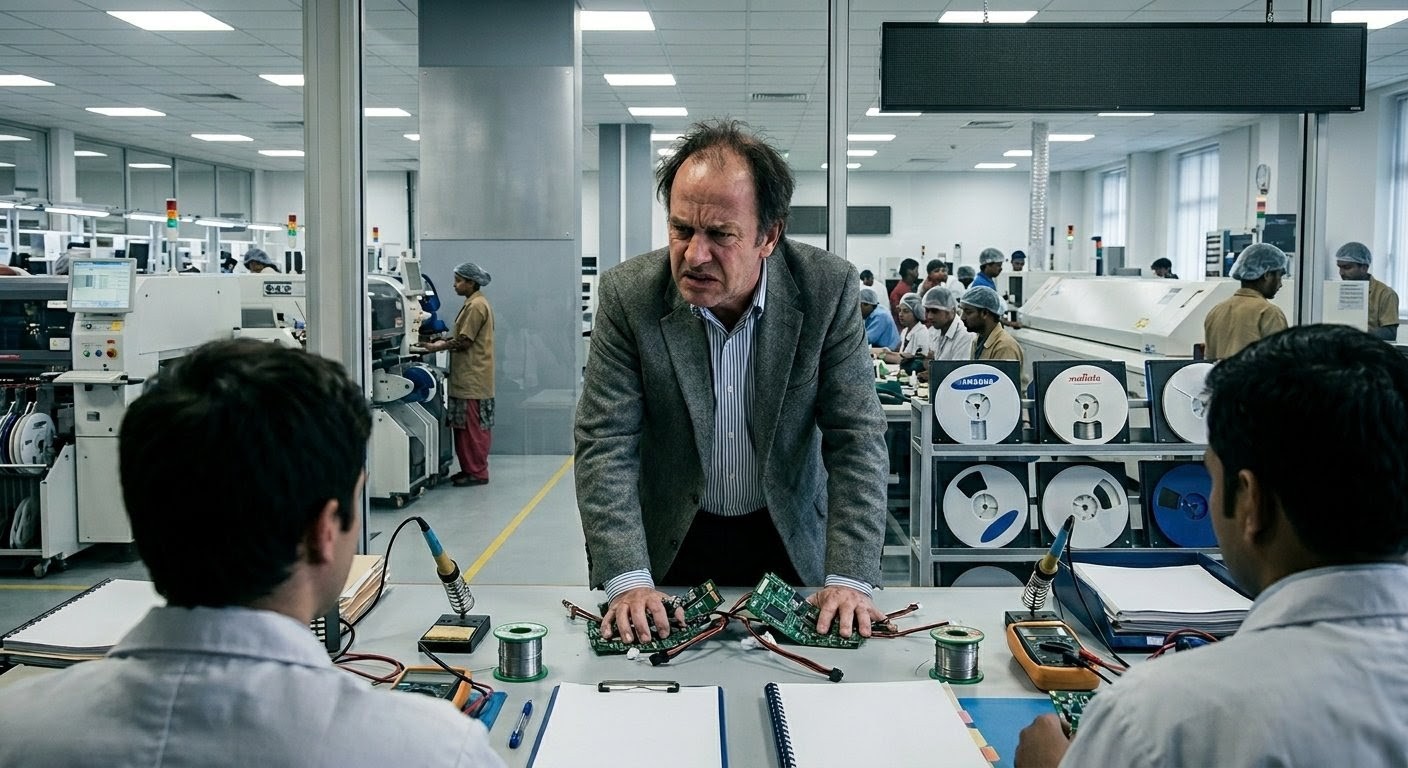
Now, tasked with setting up a new assembly line for advanced medical electronics, his deep-seated technical inadequacy caught up with him. Knowing he lacked true engineering expertise, he personally interviewed and selected every technician and quality inspector, purposely seeking out quiet, unassuming individuals from local polytechnic colleges. In his mind, he was building a compliant team that would blindly follow his instructions, ensuring he kept absolute control and hid his own limitations.
The strategy collapsed during the very first trial run. One of his handpicked test engineers, a young man with a sharp eye for detail, noticed a recurring calibration defect in the soldering oven. He quickly adjusted the thermal profile, preventing a massive batch of printed circuit boards from warping and saving the company lakhs of rupees. When the plant director publicly praised his quick thinking during the weekly Gemba floor walk, Ramanjaneya felt a wave of intense insecurity. He didn’t see an asset but a dangerous rival who could expose the fact that he was just an inspector playing the role of a manager. Almost overnight, Ramanjaneya transformed into a saboteur. He began assigning this engineer to basic component sorting, publicly reprimanded him for minor dress-code violations in front of the entire shift, and deliberately altered his machine logs to make her work look sloppy. Unable to handle the constant hostility, he resigned within a month. Ramanjaneya smoothly told the HR department that he lacked the stamina for the works.
The cycle continued with the next few recruits. A skilled component specialist who suggested a better inventory tracking system was immediately isolated and forced to do manual packing work until he, too, walked out. Ramanjaneya’s incompetence made him paranoid, driving him to systematically destroy the very talent he had selected. He wanted yes-men to cover his flaws, but the moment their competence shone through, his fragile ego felt threatened.
As the production delays worsened, Ramanjaneya scrambled to protect himself during the monthly review meeting with the Corporate Team. Standing before the projection, he projected a massive spreadsheet of missed targets and pointedly shifted the blame onto the very technicians he had driven away. He claimed that the local polytechnic graduates lacked the basic work ethic required for high-precision electronics manufacturing and accused his former test engineer of gross negligence that supposedly damaged a calibration sensor. By painting his subordinates as reckless, incompetent, and undisciplined, his practiced habit of telling leadership exactly what they wanted to hear worked once again. He successfully managed to divert attention from his own operational failures, convincing senior management that he was simply a victim of a poor workforce. In any other professional organisation a Manager blaming his subordinates, would be the first one to get the sack, even if he was right.
By the start of the monsoon season, however, this strategy began to crumble. The state-of-the-art assembly line sat completely idle, surrounded by empty workstations, while Ramanjaneya paced his cabin alone, the old comfort of his “Yes-Man” routine no longer shielding him from reality. Upstairs, the plant director looked past the polished presentations and focused instead on the hard metrics-soaring recruitment costs, missed delivery deadlines, and a mounting pile of identical resignation letters, all tracing back to a single department.
HR proposed initiating another hiring drive to replace the technicians, but the director closed the folder. The machinery was perfect, and the local talent pool was excellent. The defect was entirely in the leadership of the team. Recognizing that the accidental manager was the root cause of the system failure, the director initiated the process to show Ramanjaneya the exit.
His note on the proposal had just one line “It was time to stop replacing the workers on the line and time to replace the manager”
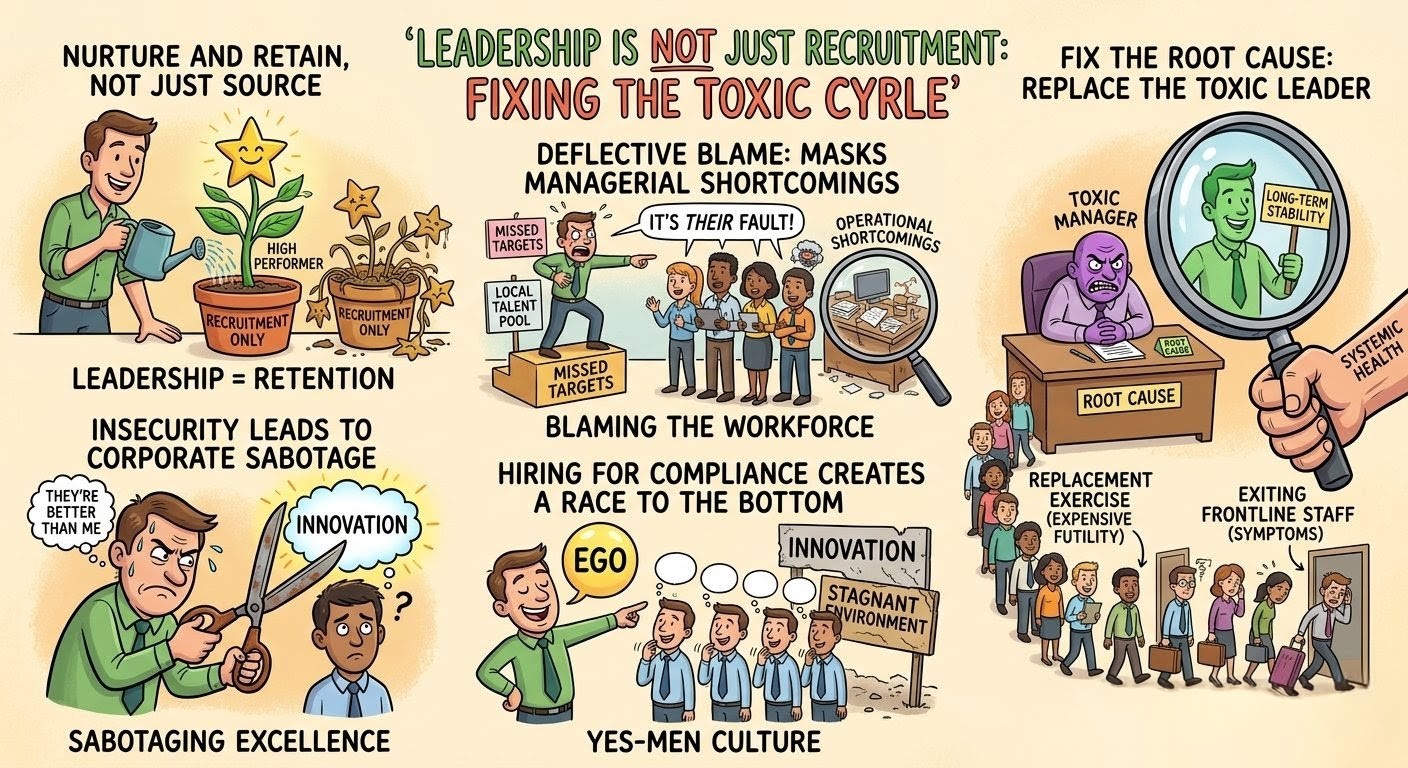
- Leadership is defined by retention, not just recruitment: A manager’s capability is measured by how well they nurture and retain high performers, not just by their ability to source talent.
- Insecurity breeds corporate sabotage: Incompetent leaders view skilled subordinates as threats to their position rather than assets to the organization, leading them to actively undermine their own team.
- Deflective blame signals systemic failure: When a leader consistently blames the workforce or local talent pool for missed targets, it usually masks their own operational and managerial shortcomings.
- Hiring for compliance creates a race to the bottom: Recruiting “yes-men” to protect a fragile ego destroys innovation, limits productivity, and ultimately results in a stagnant work environment.
- Fix the root cause, not the symptoms: Continuously replacing frontline staff without addressing a toxic manager is an expensive exercise in futility; long-term stability requires changing the leadership.
If the soil is toxic, it doesn’t matter how many handpicked seeds you plant, NOTHING WILL GROW. Change the gardener.