Satsang: Non-Template Way to Bliss

This article comes out as someone pointed me to a Facebook post by a dear friend and fellow Satsangi whose perspective I deeply respect, yet it sparked a need to share a different side of story and asked me, what would be my take. When it comes to spirituality, we must recognize that every individual walks a unique path, there is no single formula that works for everyone. Spirituality is not a specification based product that comes off an assembly line in a standard size. It is a deeply personal journey where what brings one person to tears of devotion might bring another to a state of silent reflection, and both are equally acceptable. In the end it is all about the journey of an individual from “Where they are, to What they are.”

Satsang and Bhajans are beautiful because they do not demand one rigid way of being. While finding stillness is a powerful outcome, for a significant many, it may not even be the goal. For many seekers, true aim is Bliss. This usually leads to a choice between two experiences, Shanti, which is peace, and Ananda, which is ecstatic joy.

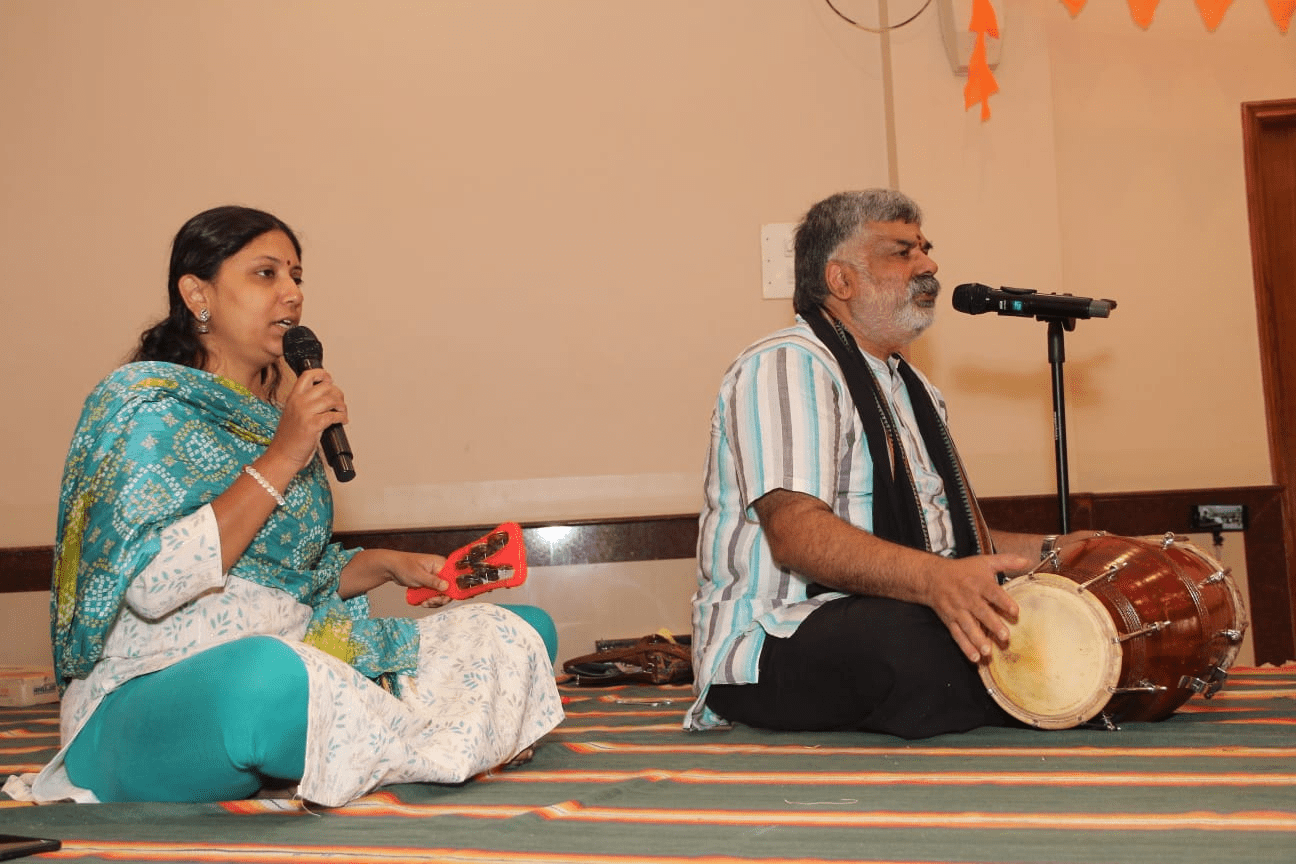
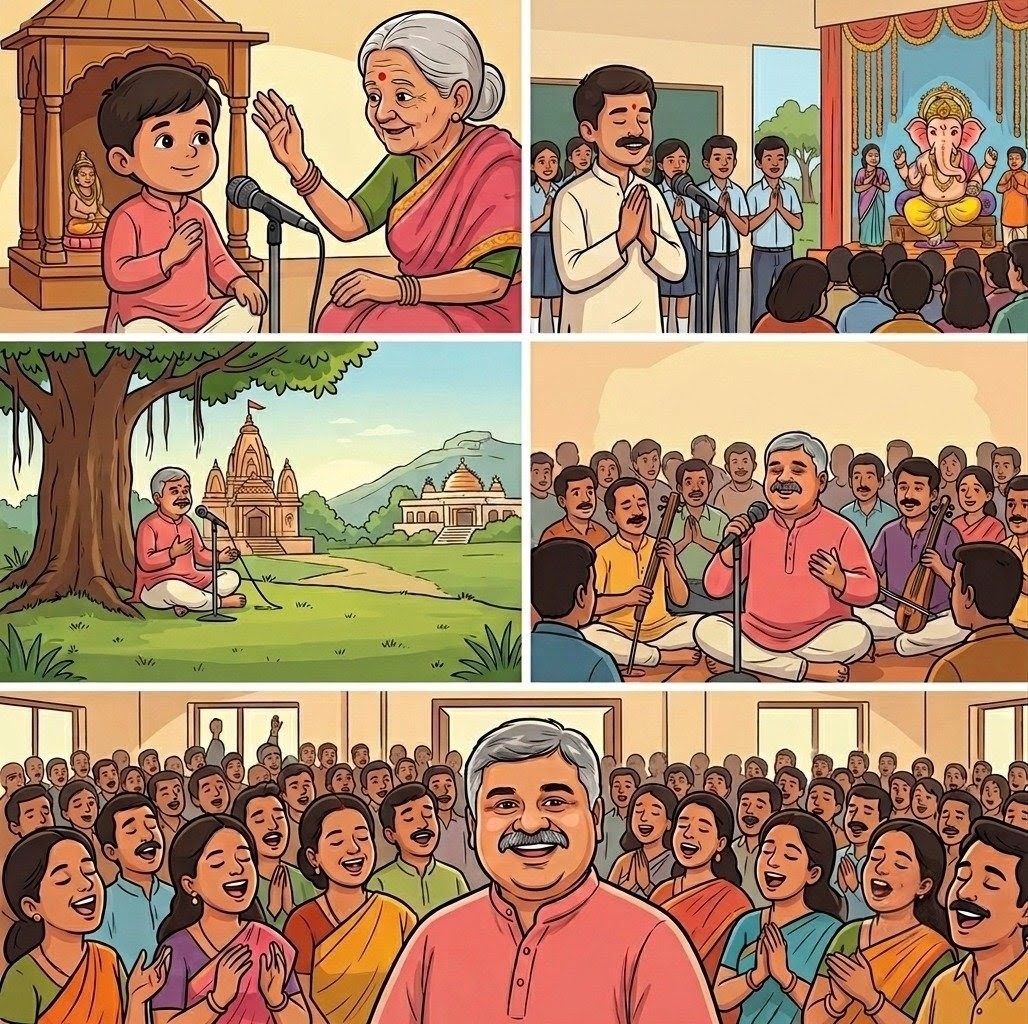
Singer becomes the Song and Dancer becomes the dance

Art of Living Satsangs thrive on this very freedom, remaining non-prescriptive so that every seeker can find a rhythm that feels like home. There is no rigid template to follow, instead, these gatherings embrace spontaneity, allowing for a natural flow between meditative silence and high-energy celebration. This flexibility ensures that you are never stuck in one way of being. You have full permission to choose path that suits you today and change it tomorrow as your inner journey evolves. By avoiding a fixed format, these Satsangs stay fresh and alive, making spirituality a lived experience rather than a forced ritual.

Satsang means being with truth, and truth is not always quiet. Sometimes it is a loud, joyful celebration. Those who prefer slow, meditative songs believe that the aim is to calm the restless mind. For them, music is a bridge to meditation where slow rhythms steady the breath and help focus on the silence between notes. On the other hand, fast medleys and high-energy singing belong to path of devotion. These fast tempos help release emotions and bypass logical mind. When people clap and move together, energy builds up until it turns into pure bliss. For many, sitting still is hard because mind is racing. High-energy Bhajans take that restless energy and channel it toward Divine until it naturally settles into a deep, unexhausted quiet.

If someone feels fast Bhajans are not good, they are most likely looking only at the quiet side of spirituality. But traditional Bhajans often begins slowly and ends in a fast, ecstatic peak. Just as a dancer becomes the dance, a fast song allows a singer to get lost in the sound until the singer becomes the song. Not everyone finds the divine in a cave,  many find it in the beat of a drum and collective voice of a crowd. Stillness and bliss are two sides of same coin. Stillness cools the mind while bliss lights up the heart. If a medley makes you feel joy or brings you closer to the divine, it has done its job.

That shift from peak excitement to deep silence is exactly how devotion is designed to work. It is a cycle of expanding and then absorbing. High-energy singing acts like a spiritual spinner. It moves so fast that daily worries and ego are thrown away. In that state, you are not thinking about God,  you are feeling the vibration. When a fast medley suddenly stops, the silence that follows is not just absence of sound. It is a charged, sweet stillness. Because your body was just at a high level of energy, sudden drop into rest makes peace feel tangible.

Our team’s experience has shown us that music is a powerful catalyst for this transformation. We ensure that we always have a mix of fast and slow Bhajans to cater to needs of most of our participants. We have also realized that a non-stop medley of Bhajans from slow tempo ones to fast ones (especially those dedicated to Bhagwan Krishna), automatically results in a dance of energetic bliss among the participants. While at the same time, stillness is a practice some work at. For many in our sessions, stillness is result of singing so fully that silence becomes inevitable. Neither way is superior, but high-energy path creates a collective wave that carries everyone along. Essentially, Bhajans provide the fire of bliss and silence provides the ash of stillness. One lights you up and other settles you down. Both are essential parts of same flame.

Catering to Young and Old Alike (Shanti or Ananda?)

As I understand (I could be way off mark too) from various discourses of Pujya Gurudev Sri Sri Ravi Shankar, varying speeds of Bhajans are a deliberate tool for harmonizing our inner state. The fast, rhythmic chanting is designed to shatter mental inertia and release stagnant energy, using high-tempo celebration to pull a scattered mind back into the present moment with intense dynamism. This energetic phase awakens enthusiasm and creates a sense of collective unity that leaves no room for worry. In contrast, the slow and meditative melodies are intended to lead the consciousness into a state of profound rest, allowing the nervous system to settle and the mind to transition from activity to deep silence. By moving through these different rhythms, Satsang effectively balances the logical and emotional hemispheres of the brain, using sound as a bridge to reach the stillness of the self. Ultimately, Gurudev suggests that the outer music is simply a means to cultivate an inner silence that empowers us to be more effective and centered in our daily lives. Satsang balances logical left brain (through knowledge) and emotional right brain (through music)

Rudram & Satsang – When Mind Meets Mantras

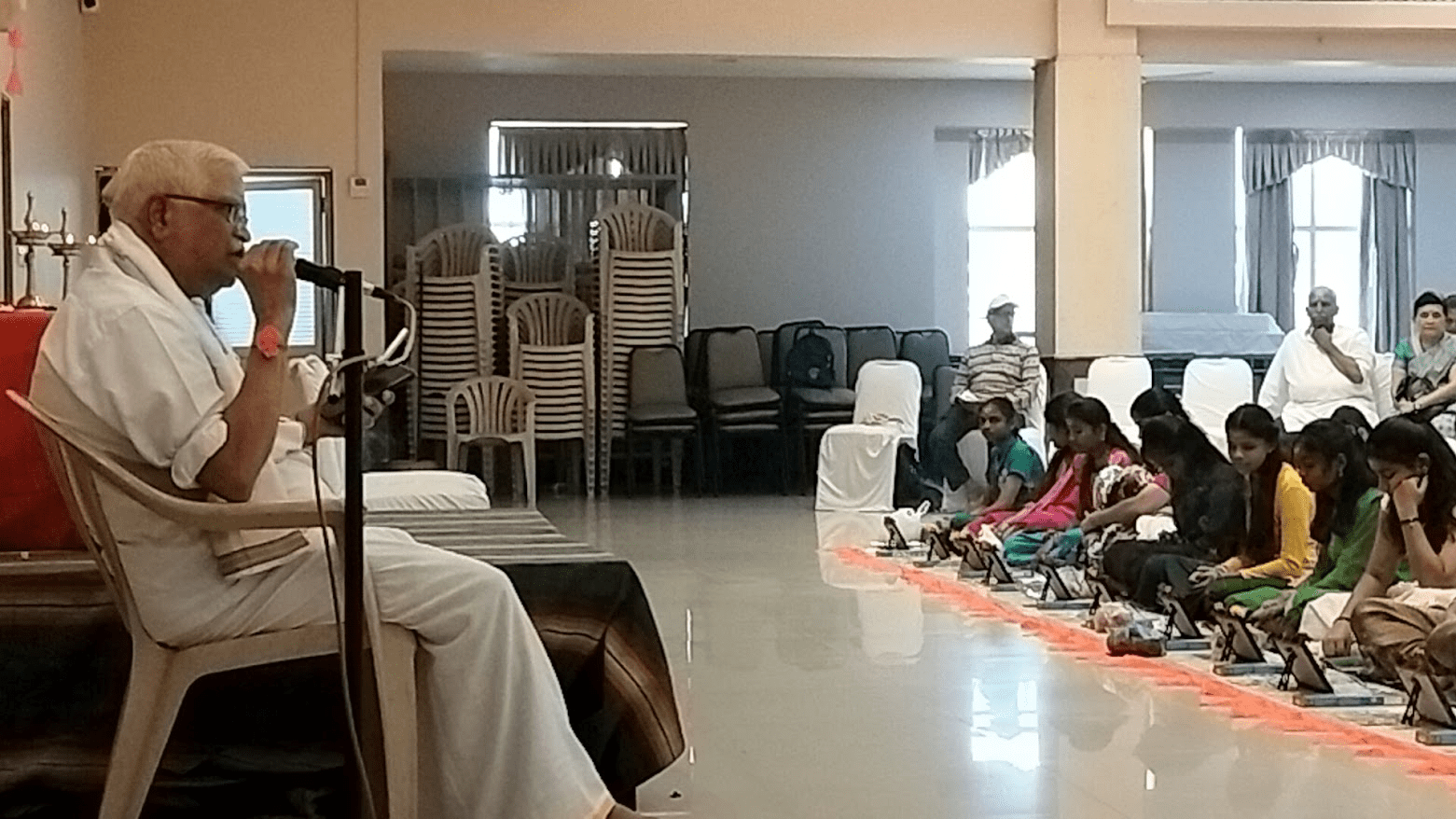
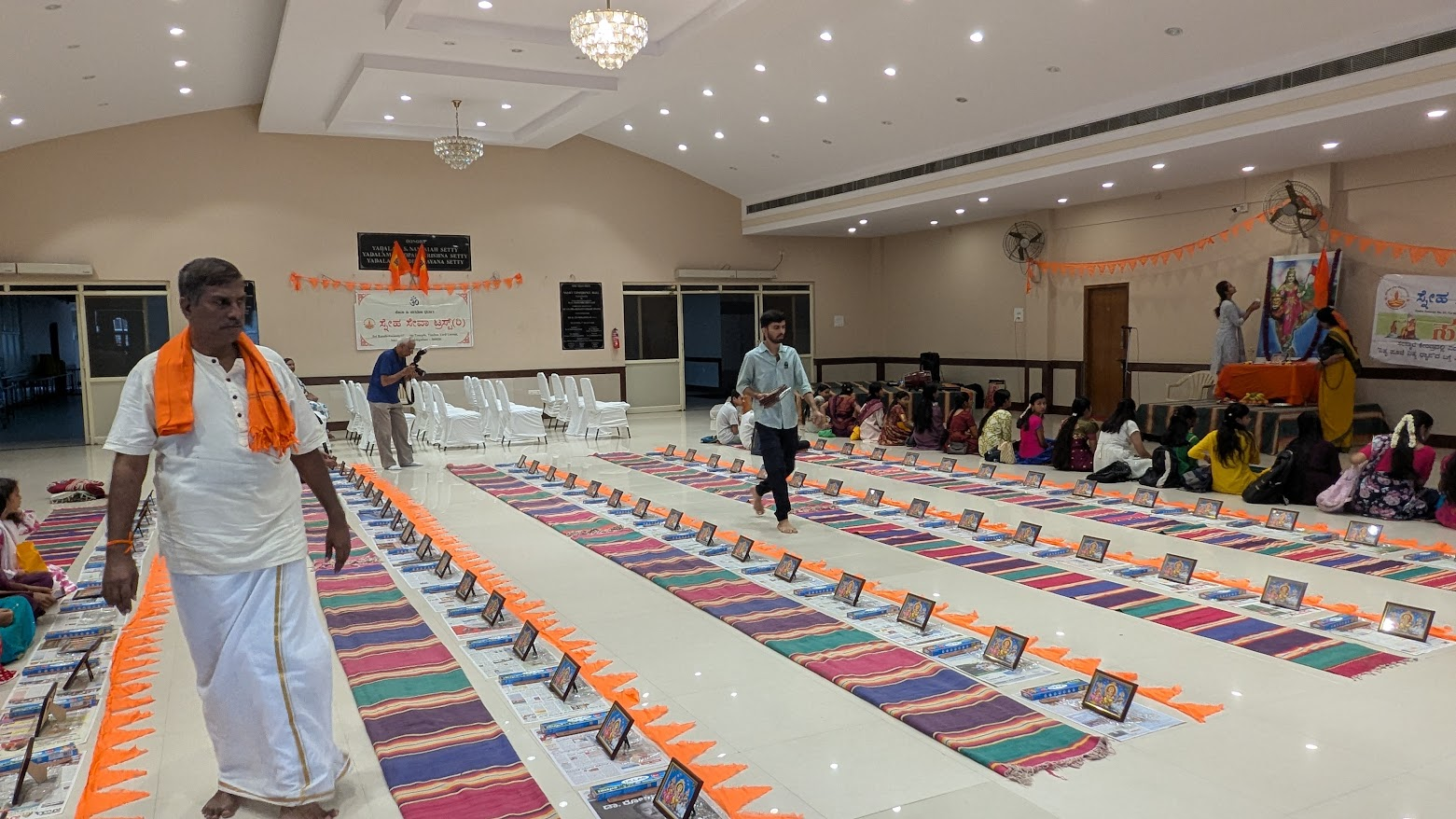
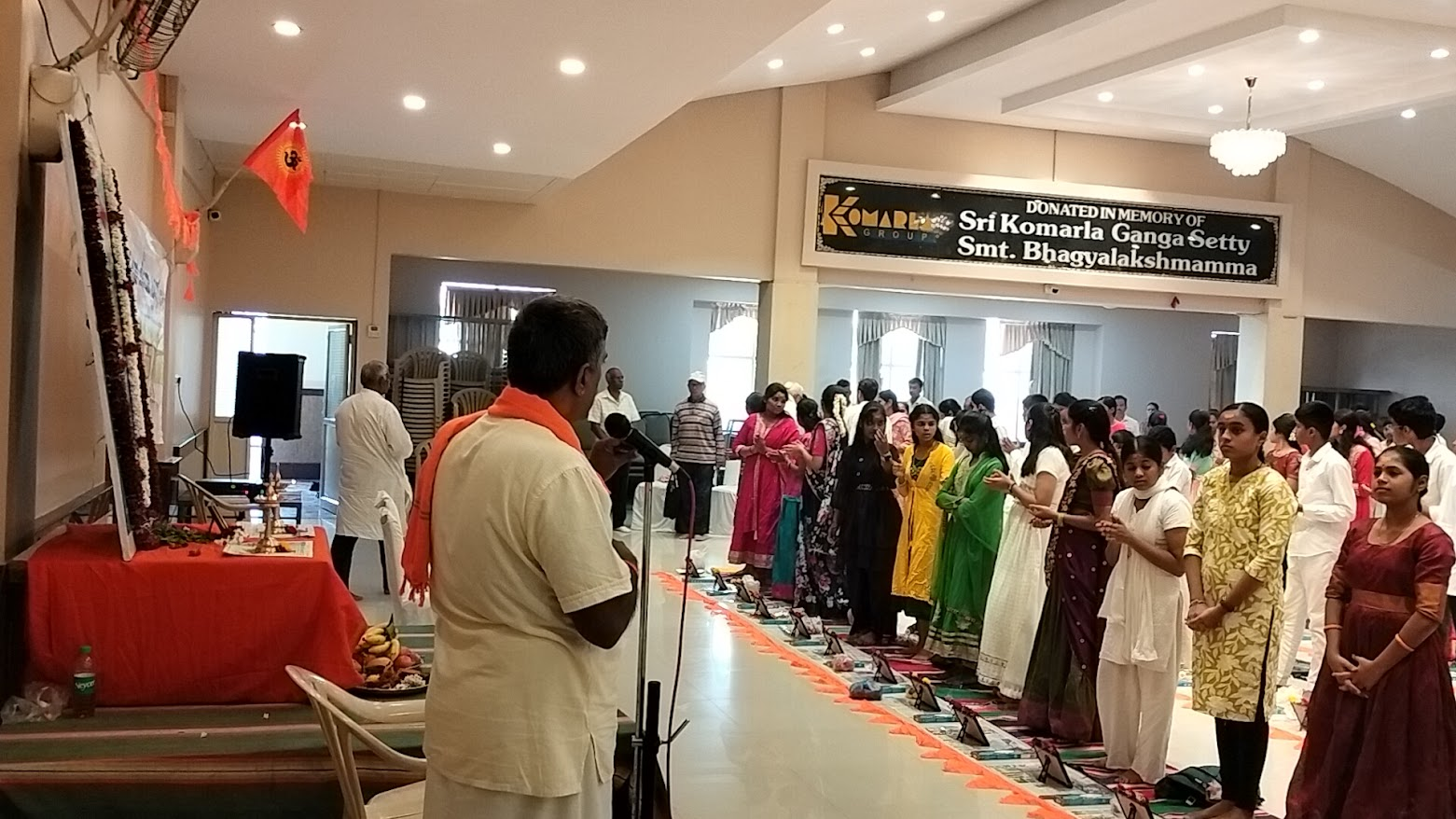
There is a specific kind of electricity that fills the air when the Pandits from the Art of Living Gurukul begin to chant. Having been part of hundreds of Art of Living Rudra Puja & Satsangs, Trust me when I say this, It isn’t just sound; it is a tectonic shift in the room’s vibration. Conducted generally in the presence of a Swamiji/Sadhvi of Art of Living, the Rudra Puja is less of a ritual and more of a cosmic cleansing. Participating in this sacred ceremony, followed by a soulful Satsang led by our team (the cherry on top), proved to be an experience of sublime elevation that words struggle to fully capture.

With Swami Virupaksha ji of Art of Living

The heart of the Puja lies in the Sri Rudram, a Vedic hymn with two distinct movements that mirror the rhythm of life itself. In the phase of Namakam, the repetitive salutations recognize the Divine in everything—from the beautiful to the fierce—serving as a profound exercise in non-duality. This is seamlessly followed by Chamakam, where the chant shifts to a list of prayers for human needs, acknowledging that spiritual liberation requires a body and world in harmony.

With Sadhvi Nityabodha ji of Art of Living

As the resonance of the mantras peaks, the Abhisheka begins. The most mesmerizing element is the Dhaara, a continuous, unbroken stream of water and milk poured over the Shiva Linga. This flow represents the movement of consciousness, reminding us that our awareness should remain centered and steady amidst the chaos of daily life. Offerings of honey for sweetness, curd for prosperity, and sandalwood for mental clarity are layered into the ceremony, each adding a biological and spiritual resonance to the atmosphere.

Swami Paramanand of Art of Living performing Panchamrita Abhisheka

The Puja follows a precise energetic map, starting with the Sankalpa, where we drop our intentions into the field of consciousness. Through the Mahanyasam, the Pandits effectively turn their bodies into vessels for the Divine vibration. The entire process culminates in the Arati, the final offering where the external light serves as a powerful reminder of the light within.

Alankara Post Rudram
Alankara
Aarti
Vaibhav ji Performing Aarti

Beyond the spiritual masterpiece of the ritual, the impact on the human nervous system is scientifically profound. The mathematical precision of the Sanskrit syllables acts as a sonic scrub for the mind. These specific Vedic accents create a resonance in the cranial cavity that synchronizes the brain hemispheres, leading to a state where you are awake but in a relaxed, meditative, or restful condition. It is a state of flow where daily mental chatter—the Vruttis—is shattered, replaced by a deep, centered stillness.

It reaches a crescendo as we transitioned from the ancient rigor of the Gurukul chants into the Satsang. If the Puja was the deep-cleaning of a vessel, the Satsang was filling that vessel with nectar. The silence earned during the meditation exploded into music, locking in the elevated state we had cultivated. We didn’t just sing; we integrated the peace we had found.

Post Rudra Puja Satsang

This journey from the depths of Vedic silence to the peaks of collective celebration left us in a state of sublime elevation—a peak of consciousness that stays with you long after the last bell has rung.

With Pandits Subbaraya ji and Ganapati ji trained in Art of Living Gurukul – Their amazingly coordinated and perfect Chants makes our day
Satsangis in a Rudra Puja and Satsang

Satsang – A Nest to Rest

As I shared the information on the Social media (Facebook and Twitter) that we are headed to our 61st Gurupuja and Satsang of 2013 this evening, I received a few queries (I assume they were genuine ones) primarily centered around 2 questions:

  1. What is in it for you?
  2. What is in it for others/Society?
Blog-02

Though we never thought about this on lines of question above, I was pleasantly surprised to find that each one of my co-passengers in this blissful journey, pretty much had same reasons for the above questions when I spoke to. This blog is a summary of Why we do what we do 🙂

Blog-04

What is Satsang?

Googling for technical definitions of Satsangs will give you many descriptions: And I found this one pretty close to what has been our experience. Satsang is a Sanskrit word that means “gathering together for the truth” or, more simply, “being with the truth.” Truth is what is real, what exists. So all there is, is Truth.

A few quotes on Satsang from the Founder of The Art of Living Foundation, His Holiness Pujya Gurudev Sri Sri Ravi Shankar ji who is the inspiration and the guide for this journey of ours:

  • “Satsang, the company of the Truth, is the resting place for the mind and the spirit.
  • Give quality time to the divine, it will be rewarded. Give Satsang and meditation your highest priority.”
  • “Why do people need homes? Can they live like animals in the forest without shelter? Even intelligent animals make their homes. Man needs protection from changing nature. So, he builds a shelter for physical comforts. In the same way, for spiritual and mental comfort – Satsang is the shelter.”
  • “Satsang is the nest in which you can rest.”
Blog-03

If we were to define experientially, On the outside, Satsang is the worldly version of an e-group, an opportunity & platform for us with some common interest to gather, enjoy, share and care.

Considering what a Satsang has done for each one of us, this is a very simplistic (and too limited definition). It is those moments when we just get together, sing, dance, meditate, share knowledge “SPONTANEOUSLY” Yes, the key here is “spontaneous”. We have never had a template (except the Sampradayic/traditional sequence, though not prescribed has become a feature), we never plan or design a Satsang. It just Happens, the theme or mood gets set spontaneously based on needs of “that moment” A fellow Satsangi added, this clarity and overtness happens due to dissolution of Ego.

Blog-06


It is an expression of the inner joy that we experience, our way to share and show that we care. To summarize, we often refer to such Evenings (we do have Satsangs during the day too) as an evening of Gaana, Dhyana, Gyaana and “Khaana” – a time when it touches our heart and douches our mind, fills our heart and stills our mind.

This also answers “What is in it for us”
Everything” 🙂 is a single word answer. We do it for our own joy and growth. On the material level, an opportunity for whole lot of us to hone our talents, improve confidence – we have been in Satsangs with participants from 30 (at homes) to 2800+ (Brahma Chaitanya Mandira in Chintamani on Vaikunta Ekadashi day), enhance our state of mind when we are able to give those moments of smile and joy to others, better our public speaking skills, network with like minded individuals and groups and the usual perquisites of Gossip (no vile ones though) and of course, the Food 🙂

It is pertinent to also touch upon a question that someone asked – Isn’t this a Hero Worship or Vyakti Puja? Even for a moment assuming that this argument was true, our answer was “So what? Why not, if it enhances our state of mind, does it matter?” It anyway is an essential part of our culture, revering and honoring those who have added value to our lives. Our Satsangs or Gurupuja is not about worshipping the photo or any individual, it is an expression of Gratitude and acknowledging their role in our spiritual quest from a state of fullness.

Blog-01


A few words on the significance of Gurupuja (almost always an essential part of our Satsangs these days) maybe pertinent here. Guru Puja is a thanksgiving ceremony remembering all the ancient rishis, seers, sages in the Holy tradition of Masters, who have brought this knowledge of self. Puja means that which comes from the fullness and the five elements, which are used & one of the highest expressions of devotion and gratitude to the Master. Chanting the Guru Puja unites our minds with the Holy tradition of Spiritual Masters.

Canada2013-04


Let me also add another important thing here. In more than a decade & a half that I have known and got inspired by this Master Sri Sri Ravi Shankar ji, there has been no attempt on His part to create thought-clones of Himself. He keeps emphasizing that everyone is equally endowed with the capacity to discriminate the Truth and the true teacher, or Sadguru, is within us. Guru Puja thus is more, a recognition of the Guru Tatva or Essence of Master that is within us than a chant in praise of anyone else. In any case, Praising is a quality that we should nurture because that broadens our thinking – we always praise that which we aspire to become (or which we value)

What is in it for Others?
Nothing that we really plan for. We do it for our joy, our growth and our well-being. Anything else as the goal of our Satsang would be a lie 🙂

While there, I would like to also mention that many things in life is infectious. Benefits of Satsangs like our Joy, Growth and General Well-Being (both physically and mentally), we believe is infectious too. It rubs off on those around us. A time when everyone turns inwards and realize the temporary nature of our temporal pursuits. A time to realize that real Joy is within us, A time to disconnect our Joy from the Events. Do we need any other benefits that we can be to others and society through this route!

Blog-05

Incidentally,we do also address “Annadata Sukhibhava, Godaaana/Goraksha, Organic Farming, Education, Cleanliness/Hygiene, Women empowerment and Self help Groups, Rural-Urban partnership (on equal terms) and so on. But then these are mundane stuff compared to the Unerasable “Smile” that we put on peoples’ face.

We Share…. We Care….
||Jai Gurudev||

Updated with the 61st Satsang 🙂

LoRes1