Joy of Giving: Dignity Matters

“Charity is injurious unless it helps the recipient to become independent of it.” — John D. Rockefeller

True generosity requires the humility to wait for an invitation and the wisdom to give in a way that makes the receiver feel stronger, not smaller.

Karna & Mountain of Gold

Bhagwan Krishna, wanting to teach Arjuna a lesson about true charity, turned two mountains into solid gold. He first asked Arjuna to distribute them to the poor. Arjuna, being methodical and perhaps a bit egoistic about the task, spent days laboriously measuring portions of gold to ensure every villager got an “equal” and “fair” share. He eventually became exhausted and frustrated by the never-ending task.
When Krishna asked Karna to do the same, Karna simply called over two passing villagers and said, “These two mountains of gold are yours; do with them as you wish.”

A Gift Once Given Belongs to Recipient – Don’t Manage Usage
PC: Google Gemini


While Arjuna tried to manage the charity, imposing his own ideas of how it should be received and used. Karna recognized that once a gift is given, it belongs to the receiver. He didn’t force a system of distribution on them; he respected their agency to handle the wealth themselves.

Dronacharya & King Drupada

The rivalry between Dronacharya and King Drupada is a classic example of how unsolicited charity can be perceived as an insult. Drona and Drupada were childhood friends. Years later, when Drona was impoverished, he went to Drupada for help, calling him “friend.” Drupada, now a king, insulted Drona, saying a beggar and a king cannot be friends. Later, after Drona became the teacher of the Pandavas, he had them defeat Drupada in battle.

Respect Recipient’s Dignity: Else a Surrender or a Gift is Worthless
PC: Google Gemini

Drona then in infinite wisdom and goodness generously gave half the kingdom back to Drupada, saying, “Now we are equals, and we can be friends.” Drupada did not see this as charity or a kind gesture. He saw it as a forced humiliation. This unsolicited gift of his own land sparked a burning desire for revenge, leading Drupada to perform a sacrifice to obtain a son (Dhrishtadyumna) specifically to kill Drona.

Types of Charity from Bhagavad Gita (Guna based)

In the Bhagavad Gita (17:20), Krishna defines the highest form of charity (Satvika Daan) with specific criteria.. When it is done as a duty (Datavyamiti), without expectation of return. This Charity purifies the giver’s heart and at the same time maintains the receiver’s dignity.

दातव्यमिति यद्दानं दीयतेऽनुपकारिणे ।
देशे काले च पात्रे च तद्दानं सात्त्विकं स्मृतम् ॥

Charity given out of duty, without expectation of return, at the proper time and place, and to a worthy person is considered to be in the mode of goodness

In the Bhagavad Gita (17:21), Krishna talks about the next form of charity (Rajasic Daan). When a charity is given with the hope of a reward or grudgingly (Pariklistam) it is not of the purest form. It is sometimes performed for elevation to the heavenly kingdom and sometimes with great trouble and with repentance afterwards or sometimes given under some obligation, at the request of a superior. This is often forced charity. It inflates the giver’s ego and makes the receiver feel like a project or a debtor.

यत्तु प्रत्युपकारार्थं फलमुद्दिश्य वा पुन: ।
दीयते च परिक्ल‍ि‍ष्टं तद्दानं राजसं स्मृतम् ॥

Charity performed with the expectation of some return, or with a desire for fruitive results, or in a grudging mood is said to be charity in the mode of passion

In the Bhagavad Gita (17:22), Krishna talks about the last & most undesirable form of charity (Tamasic Daan). Charity given at the wrong time/place, to an unworthy person, or with contempt/disdain (Avajnatam) is a form that is better avoided. Neither the Donor nor the Donee is elevated in this context. This humiliates the receiver. It is unsolicited help that actually harms or degrades the person receiving it.

अदेशकाले यद्दानमपात्रेभ्यश्च दीयते ।
असत्कृतमवज्ञातं तत्तामसमुदाहृतम्

Charity performed at an impure place, at an improper time, to unworthy persons, or without proper attention and respect is said to be in the mode of ignorance.

Quite often all these profound truths are overlooked in the rush to do good. The dynamic between a Donor and a Donee is a delicate social and psychological ecosystem. When that balance is ignored, help can inadvertently become a tool of disempowerment. Dignity is the internal sense of worth. In many cultures and psychological frameworks, receiving help can feel like a debt that cannot be repaid, creating an immediate power imbalance. Clearly distinguish between two types of giving. Never become a Vertical Giver where giver looks down at the receiver. This is clear prescription for resentment and a sense of inferiority. On the contrary be a Horizontal Giver where there is a sense of partnership. The giver views the receiver as an equal who is currently facing a challenge, recognizing that roles could easily be reversed.

Helping someone who hasn’t asked for it can sometimes be perceived as a boundary violation or invasion of personal independence” It sends a subtle, most likely unintended message: “I don’t think you are capable of handling this yourself.” When we intervene without invitation, we strip the individual of the opportunity to solve their own problems, which is essential for building self-efficacy and end up giving them what I call a “Savior Complex” – This occurs when the giver’s need to feel helpful outweighs the receiver’s actual needs. The focus shifts from the problem at hand to the giver’s internal validation.

Respect the Recipient: Indian philosophy says, Charity is not a favour one does to the recipient it is the donor who is actually being blessed by the Donee’s willingness to accept.
Giver’s Ego: Forcing charity often stems from the giver’s desire to feel powerful or virtuous, rather than a genuine focus on the receiver’s needs.
Karmic Interference: On the flip-side intervening unsolicited in another’s struggle may interfere with their Prarabdha Karma (destiny they must work through), though this is often balanced by the duty to show compassion (Karuna).

Most important factor is the Timing and Context. Timing is everything. For help to be effective, the receiver must be in a state of readiness—both emotionally and logistically—to utilize the resources provided. Giving a how-to manual to someone in the middle of an emotional crisis is a mismatch of readiness. They need empathy first, and information later.
Finally, when a receiver is ready, they take ownership of the help. When they aren’t, the help is often wasted or discarded because it wasn’t integrated into their own plan for progress.

Pujya Gurudev Sri Sri Ravi Shankar founder of The Art of Living says, “When we do daana, charity, or help someone who is really in need, the sigh of relief from that soul brings positive vibrations to you. These good deeds bring you merit, which in turn helps you go deep in meditation and elevate your consciousness. If we think of how we can be useful to those around us, we can never get depressed. People who get depressed do not know this. They get depressed because they keep thinking only about themselves. If they start to give or serve they will notice that their depression has vanished”

He continues, “Let’s ask ourselves, ‘How can we be useful to people around us, and to the whole world?’ Then our hearts start to blossom. The best seva is helping someone to understand this eternal nature of life. Life is a journey, moving from the joy of taking, to the joy of giving.

You can read my earlier blogs on this subject here

Aparna – The Soul of My Journey

Today, I celebrate Aparna — not just her birthday, but the extraordinary woman she is. Every year, I write about her, and every year I find myself discovering new layers to her grace, strength, and quiet brilliance. This post is not just a tribute; it’s a love letter to the woman who has been my partner, my compass, and my greatest blessing.

The Beginning of Us

I still remember the first time I saw Aparna — calm, composed, and radiating a quiet confidence. There was something about her that felt grounding. While many of our common friends dreaded engaging with her (she was called Kali – not for being divine, it was more due to the perceived Ferocious nature) Over the years, that feeling has only deepened. She’s not just the person I married; she’s the person who has helped me become who I am.

In our early days together, I was often caught up in work, travel, and ambition. Aparna never complained. She simply made sure that home was a place of peace, warmth, and unconditional support. I’ve often said she’s the reason I could chase dreams without fear — and I mean it.

The Backbone of Our Family

Aparna is the emotional backbone of our family. She remembers every birthday, every anniversary, every little detail that makes people feel seen and loved. She’s the one who ensures that traditions are honored, that relationships are nurtured, and that no one ever feels left out.

While she had been a great parent, what was surprising to all of us was the she is a greater grandparent. A new priority (notwithstanding what I will write later on). Her small world now revolved around Anay, the lovely gift from the Divine who came into our lives 2 1/2 years ago.

Her Quiet Wisdom

Aparna doesn’t speak to impress — she speaks to connect. Her wisdom is never loud, but it’s always profound. I remember a particularly difficult decision I had to make at work. I was torn, overthinking, and restless. When you are spoilt for choices, a good night’s sleep becomes a distant dream. Aparna listened patiently and then said, “Do what lets you sleep peacefully at night.” That one line cut through all the noise and helped me choose clarity over confusion. Decision was made. It was not just about Money, Honey was the message she stood by.

She has this ability to distill complexity into simplicity — not because she’s trying to solve things for me, but because she trusts me to find my way. Her faith in me has often been stronger than my own.

The Rituals That Bind Us

Our Sunday mornings are sacred. Uppittu, Avalakki, Dosey, filter coffee, and short conversations — about everything and nothing. It’s in these moments that I see the depth of our bond. While I may find it difficult to tell this on the face, it is easier to express it here – Aparna’s presence doesn’t demand attention; it offers comfort.

Her Many Roles, Her One Essence

Aparna is a wife, a mother, a daughter, a friend — but she’s also a seeker, a thinker, and a woman of substance. We have so many to endorse this – Divya, Vishnu, Sindhu and so many of our Kids. She reflects deeply (and gets hassled even when things are fine), and refuses to evolve 😛 She’s the kind of person who’ll attend a spiritual discourse in the morning, debate a social issue (based on her FB feeds) in the afternoon, and watch a movie she will never understand in the evening.

She’s not defined by any one role — she’s enriched every role she’s taken on. Her priorities were very clear – it revolved around a few of us, whatever it took.

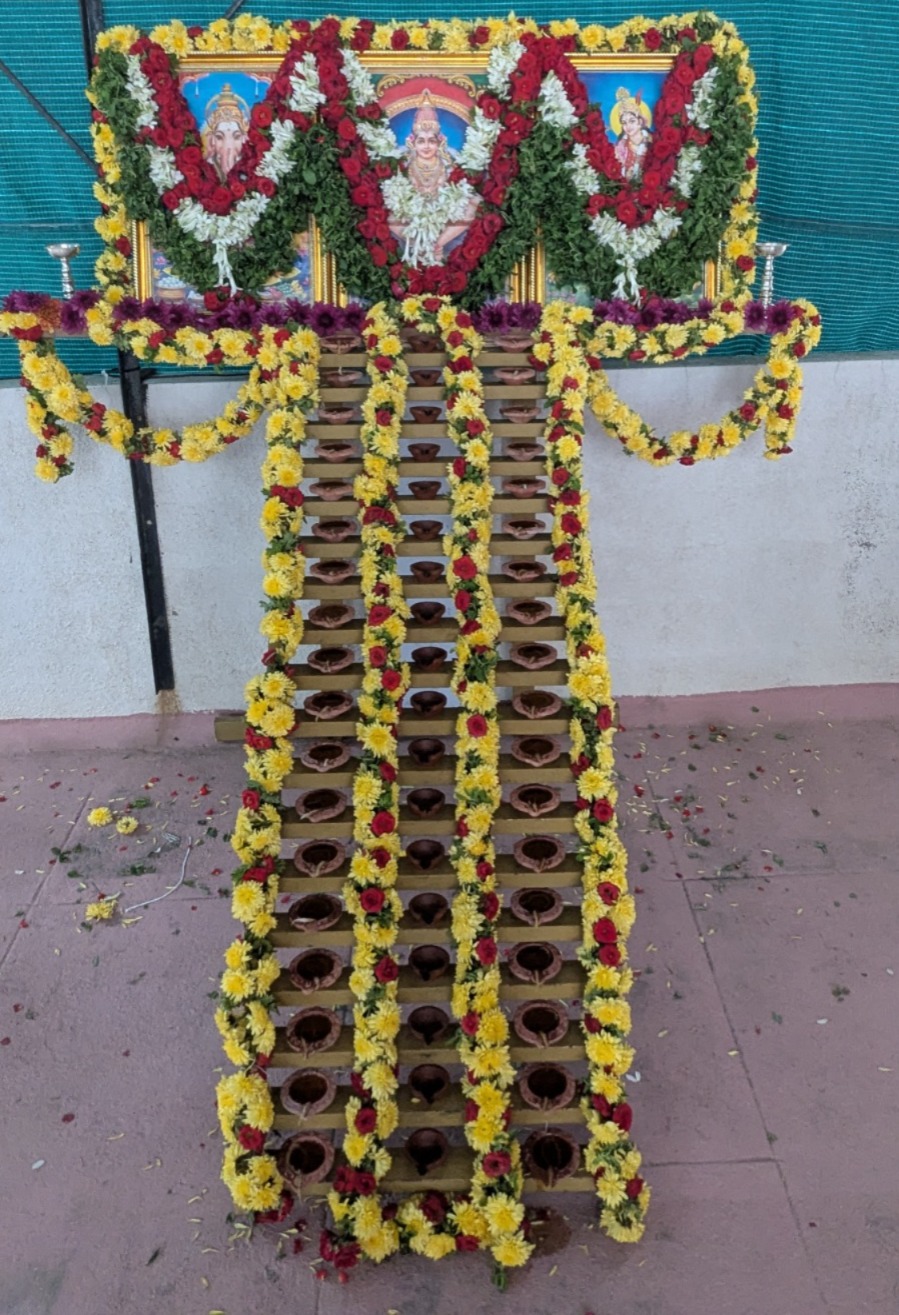
Her recent Pilgrimages to Sabarimala revealed an hitherto unrealised inner power. While we all thought she was frail and weak, she shocked us all. With His blessings she did it so easily, not once but two times in couple of months. Hats off!!!

The Unseen Sacrifices

There are sacrifices Aparna has made that I’ve only understood in hindsight. The career opportunities she let go of, the personal dreams she quietly shelved, the countless times she put others before herself. She never made a show of it — she simply chose love, responsibility, and grace.

I remember once asking her if she ever regretted not pursuing certain things. She smiled and said, “I chose what mattered most to me. And I’ve never looked back.” That’s Aparna — always choosing with clarity, always living with conviction, especially when it came to Children.

A Birthday Wish from the Heart

May this year bring you the peace you so generously give others. May you always know how deeply you are loved — not just today, but every single day.

Happy Birthday, Aparna.
From all of us

Architect of Dreams

Our beloved Late Executive Vice Chairman, Shri Reguraj, was not just a leader; he was a mentor and a guiding light for me and many others. Imagine a young student at the raw age of 16, stepping into the world of technical education, unsure of their path. Dr. Reguraj’s vision was the only beacon of hope and direction for those who entered the portals as the first batch at NEC on August 14th, 1984. His belief in the power of practical skills and hands-on training meant that every student who walked through the doors of NTTF left with not just knowledge, but confidence, a sense of purpose, and of course, multiple job opportunities.

Happy Birthday! Wherever You are Sir

He had a unique ability to connect with people on a personal level. Whether it was a student struggling with a complex situation in NTTF or in personal life, Dr. Reguraj was always there with a kind word and insightful advice. His passion for education and his genuine care for the well-being of his students made him a beloved figure. I still remember a mortally scared me being summoned to Mr. Jacques Delisle, the Principal’s office one morning to meet the Managing Director. Shivering, I went up to him, and he presented me with a box of Roche chocolates, which was the first time I received such a luxury in my life, especially in the mid-1980s. There are countless such incidents, but what I want to highlight is that if you wanted, he was a treasure house of information about NTTF itself, if only we cared to hear him, instead of launching into our own speeches. I had the fortune to work with him for five years, then as Principal of NTTF, Electronic City, and the reams of history, the journey, and transformation of NTTF were a treat to listen to. Sadly, not much of it is documented, which I wish to do sometime in his memory and as a tribute.

My second innings was very brief, but on the dreaded and unforgettable day of March 7th, 2024, I was with him for about three hours in a one-to-one meeting. A three-hour session during which a lot of things transpired—philosophical, professional, and spiritual too. I want to keep it to myself and let it be my personal treasure.

On this birth anniversary, as we remember Shri Reguraj, it’s not just his professional achievements that stand out, but the countless lives he touched and the inspiration he continues to provide. His legacy is not just in the institution he built, but in the hearts and minds of those who had the privilege of knowing him. On this day, I rededicate myself to live up to his vision for NTTF and humanity and make him proud wherever he is, counting on his blessings to achieve the goals.

Thank you, Sir, wherever you are. You may have passed on, but your thoughts and values remain etched permanently in my heart. Miss you!