Through every season, quiet morning, and shared milestone, one thing remains constant. You are heart of our home and light in my life. Happy Star Birthday to our Star Aparna
Over years, expressing how much you mean to me has been recurring tradition, yet no single post or set of words ever feels quite enough. Looking back at every message, wish, and tribute written for you, clear pattern emerges. It is story of gratitude, deep partnership, and total devotion, with fair share of me agreeing with you just to save time. 😂😛Just to make it different, I chose to write this for star birthday and not the Gregorian calendar birthday
Life moves fast, Aparna, but you bring grounding warmth to everything you touch. Whether it is your laughter (though it is too rare, very rare) that instantly brightens room, your quiet resilience during tough times, or selfless care you extend to everyone around you, you make life look effortless and full of grace. How you manage to keep entire house running smoothly while keeping me in check remains one of life’s great mysteries.
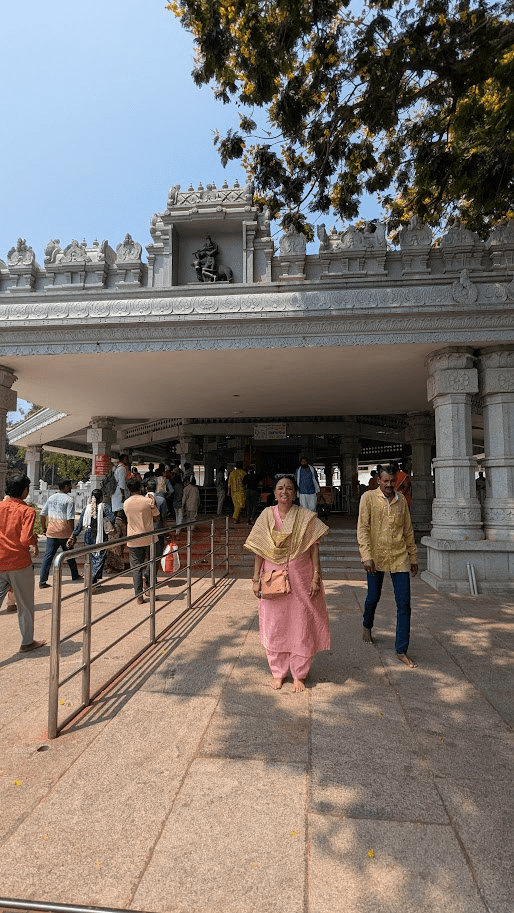
We could not be more different on surface. Our quirks, reactions, and way we view world often stand in total contrast. Where one brings calm logic, other brings spontaneous spark, and where one wants to plan everything down to minute, other is just happy to tag along. Yet beneath those contrasting personalities lies shared foundation that ties us together so effortlessly. We find common ground in sacred spaces and simple joys. Above all, our deep love for traveling together to temples, soaking in divine atmosphere, and cherishing every single moment spent in those holy spaces, like our recent memorable trip to Tirupati for your birthday, is bond that grounds us completely. Though I must admit, walking at your speed through temple queues is true test of my devotion.
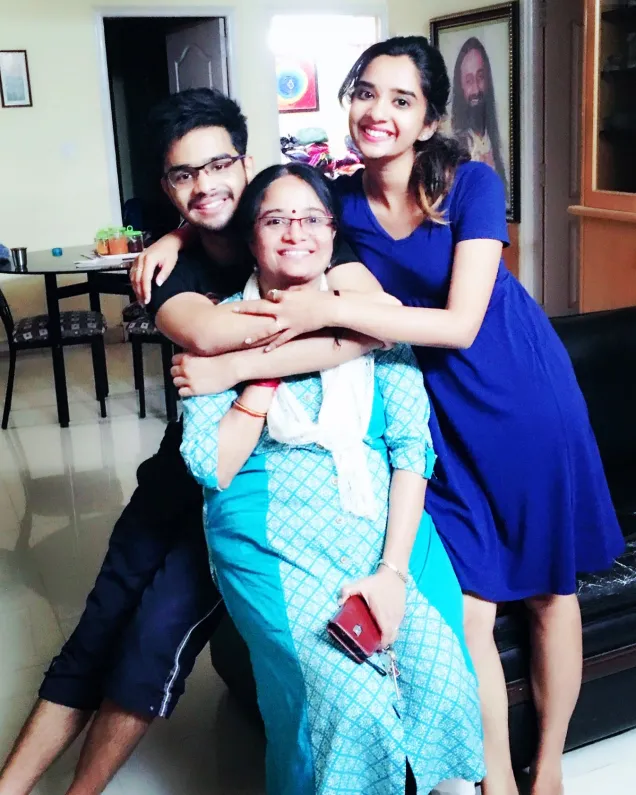
Our home and lives are anchored by your boundless capacity to nurture. As mother to Vishnu and Divya, you have given them strength, wisdom, and unwavering foundation. But your maternal warmth does not stop with our own. Over years, you have embraced whole legion of manasik children, serving as their strict yet deeply loving guiding light. You hold high standards, push them to excel, and correct them when needed, often with just single sharp glance that strikes loving fear into all of us. Yet you always wrap them in genuine affection and care. To watch you lead, guide, and love so many lives is true sight to behold.
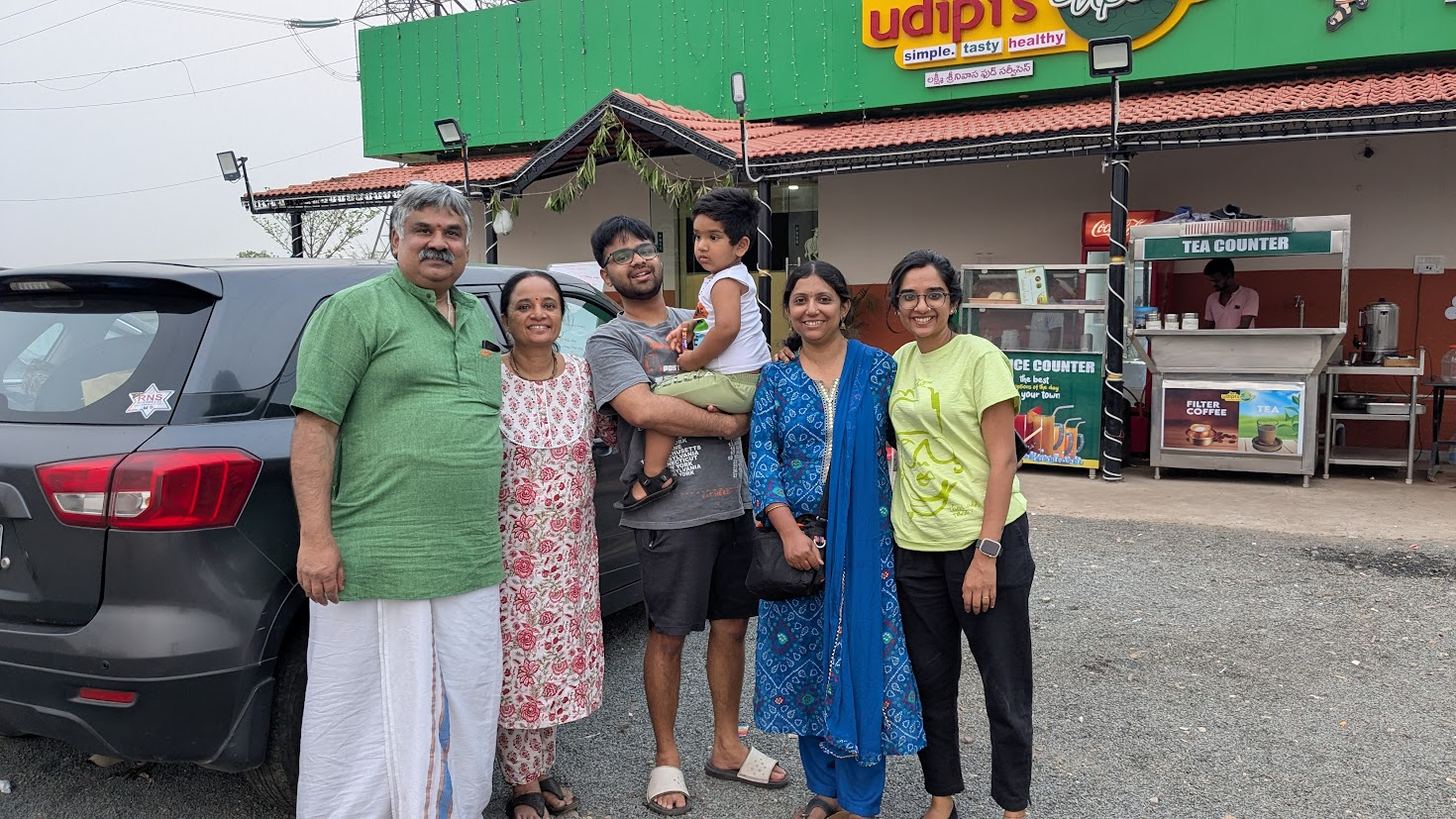
Yet another of our Pilgrimage Tour with All of us
Marriage is not just about sharing home, it is about sharing journey. Standing side by side with you, Aparna, has been greatest privilege. You are my confidante, my biggest supporter, my chief critic (this is something that is perfected by you, happens about everything and every time), and my best friend. With you, every success feels twice as sweet, and every challenge feels manageable, mostly because you usually have solution ready before I even finish worrying (I say this since I love humour).
Today is not just another birthday. It is moment to pause and celebrate incredible woman you are, your kindness, your strength, and endless joy you bring into my world.
May this year bring you as much comfort, peace, and happiness as you tirelessly give to everyone around you. May your dreams continue to take flight, and may we keep creating beautiful memories together, along with endless debates over who is actually in charge.
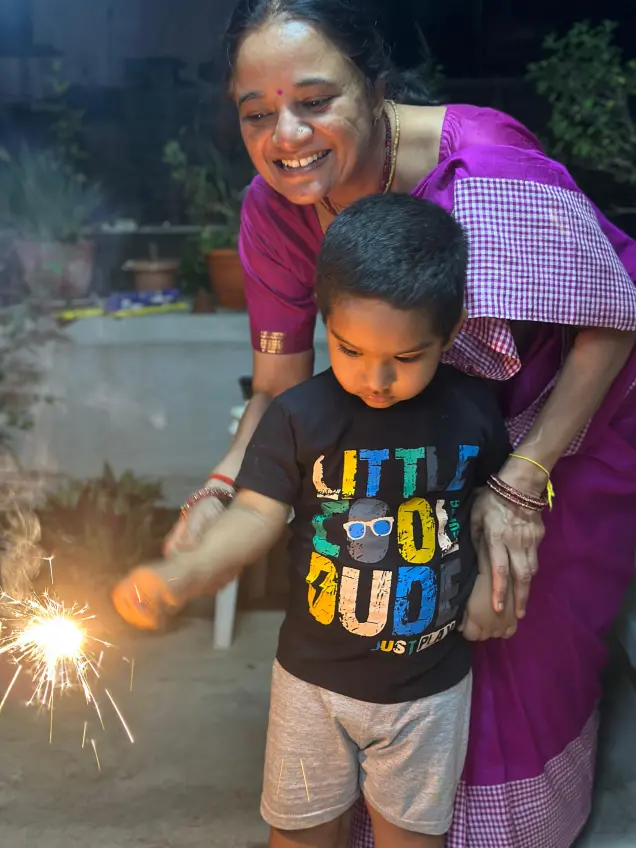
Bringing Light everywhere
Our family story has grown richer with time, but it feels truly complete today in joyful, infectious presence of our grandson, Anay. With him in our arms, children besides and you with us, life is whole.
Happy Birthday Ajji – Govinda Govinda
Happy Birthday, Aparna. Today & always, here is to you.
Dedicating this song to depict spirit of traveling together, navigating life hand-in-hand, and enjoying journey through all its twists and turns
Here is to endless temple trips, shared laughter, and beautiful life we continue to build together.
Bharat Maata – an essential part of any Sneha Seva Trust Event
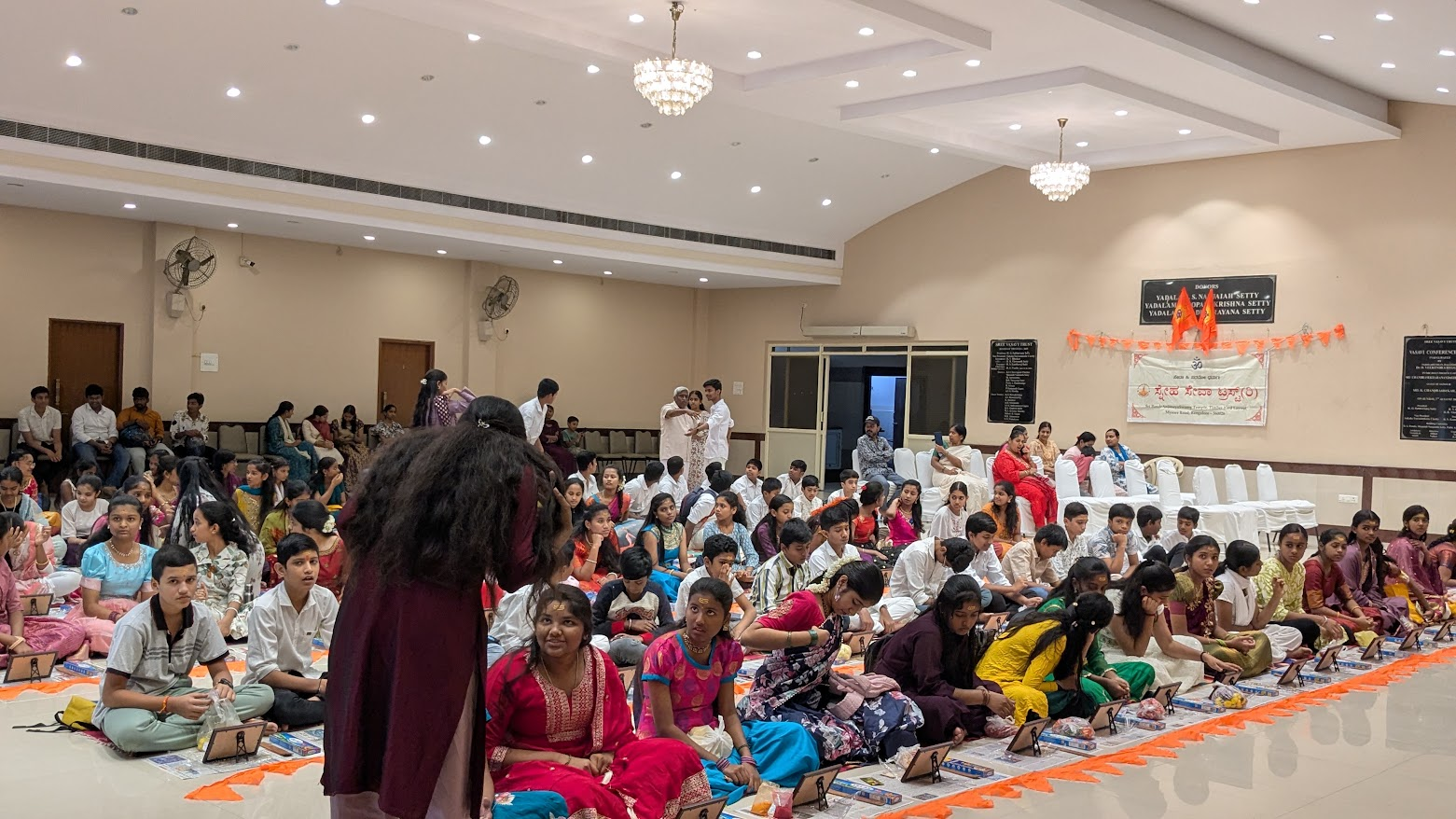
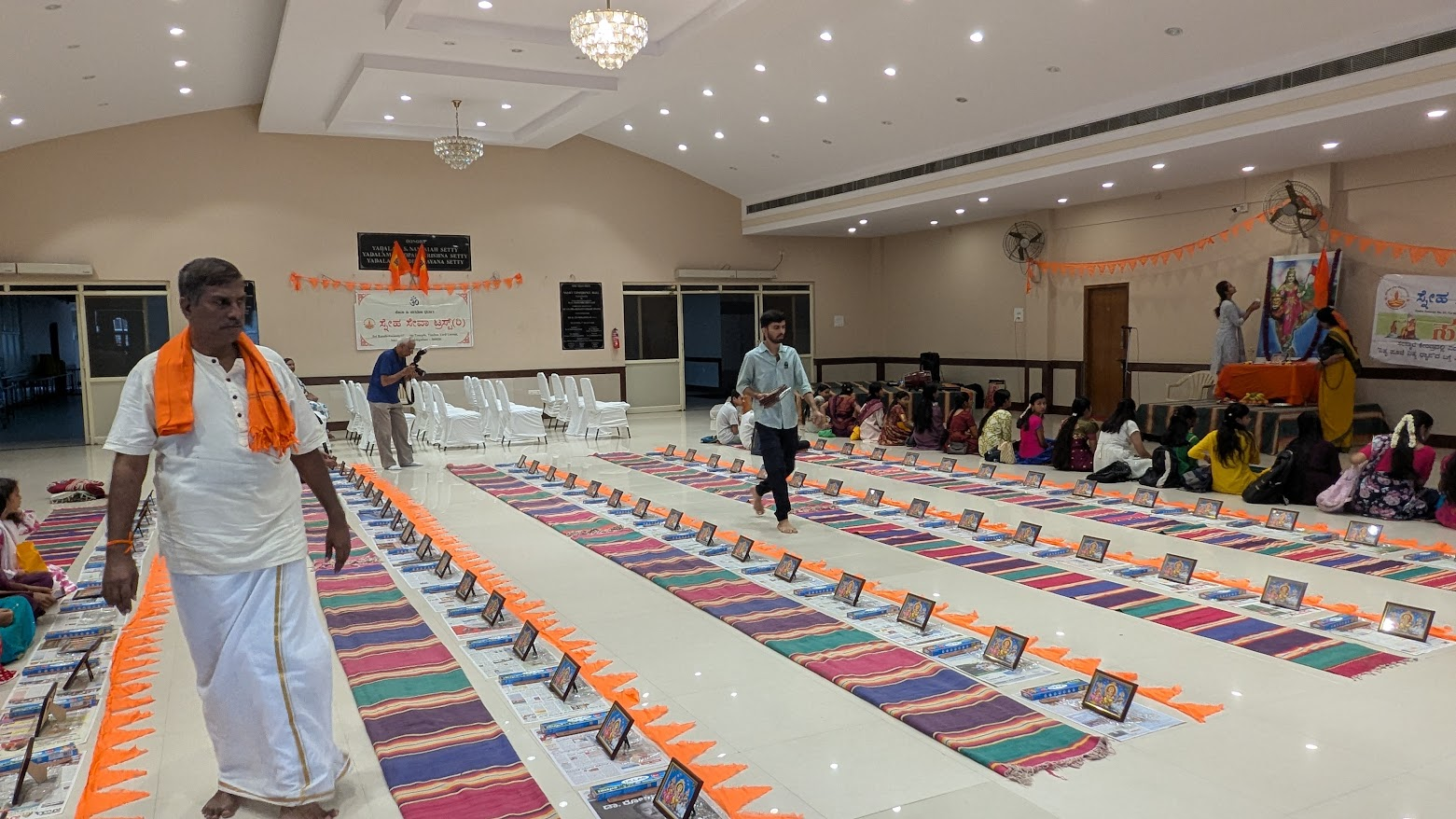
On 2nd August 2026, Sneha Seva Trust organized Sankalpa Event as part of Samskara Kendra activities for about 200 newly sponsored 8th standard students selected for Jnanasiri Vidya Vethana, along with their parents and guardians. Event was wonderful success with everyone coming together to celebrate culture, devotion, and community values.
All Set for Nitya Puje Initiation & Practice
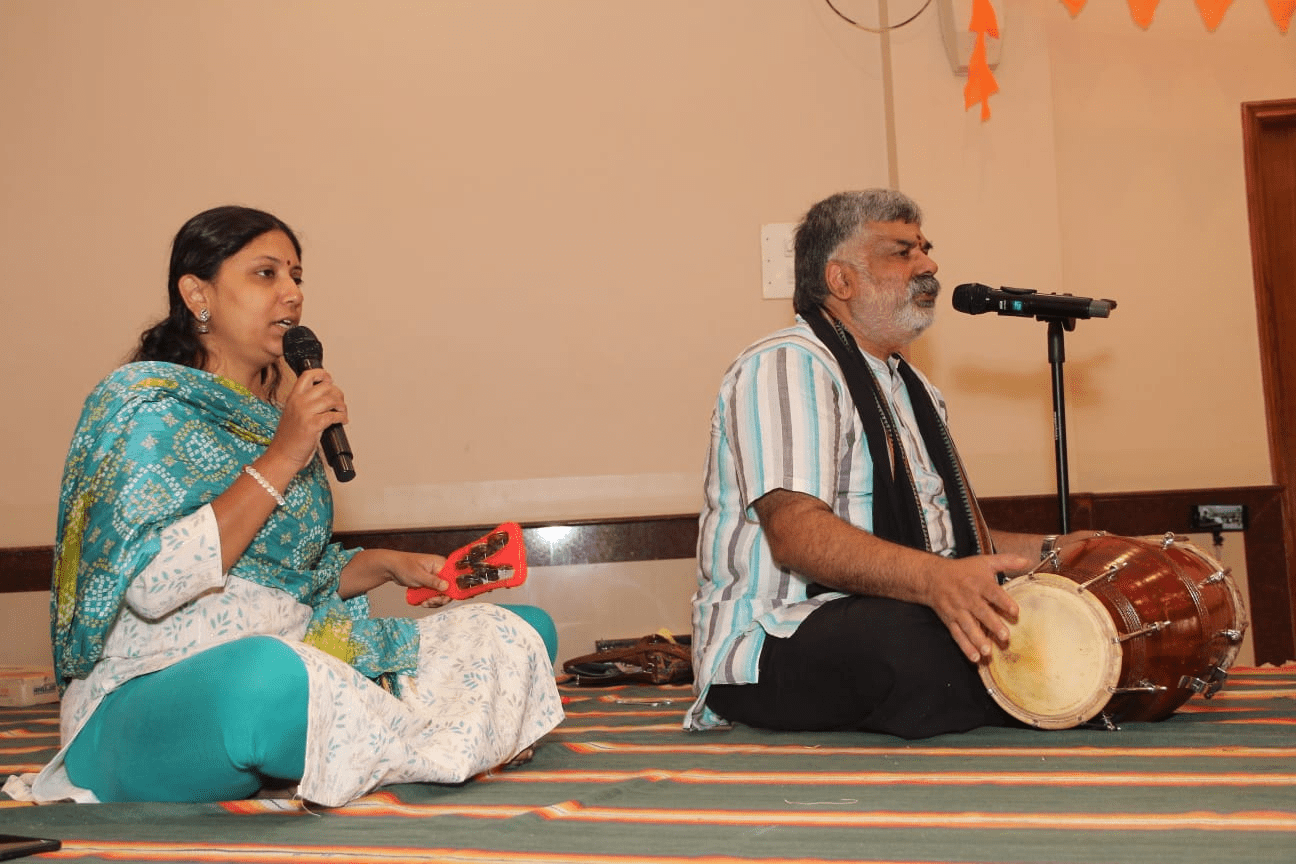
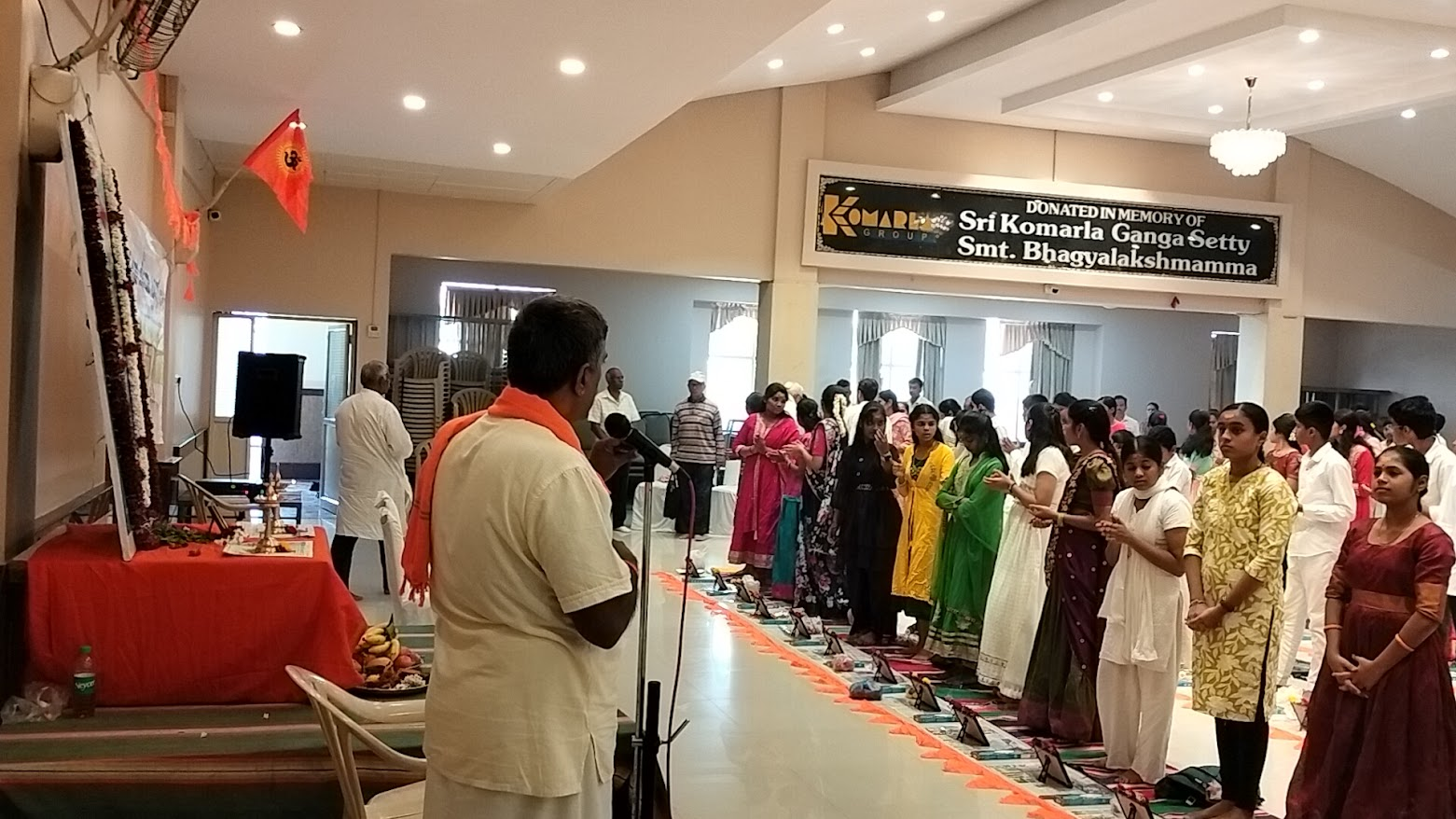
To start event on divine note, We, the disciples of Pujya Gurudev Sri Sri Ravi Shankar ji of Art of Living conducted a traditional Satsang & bhajan session. Kids participated in the session with immense enthusiasm, and we were thrilled to see 100% participation from all children and parents present. Entire hall reverberated with joy as everyone sang together with pure hearts and high energy. Importance of nama sankeertane , music and dance in our culture and how important it is for parents to practice sadhana.
Satsang & Bhajan Session
Demonstrated with a simple fun exercise how children listen more through their eyes than their ears, meaning we must demonstrate by our own behaviour and practice instead of just preaching, if you want children to emulate.
Participants being guided to the preparatory process
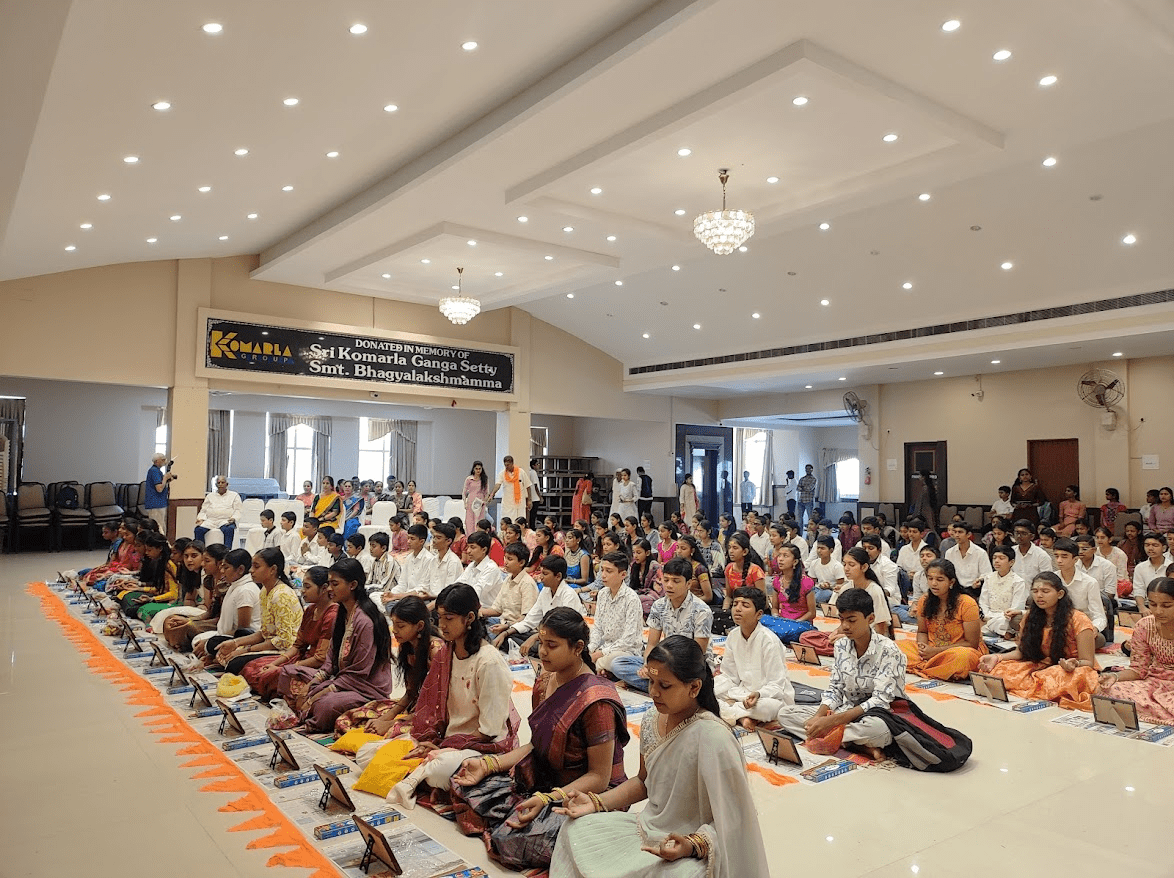
Chanting Time
Gratitude and Meditation Time
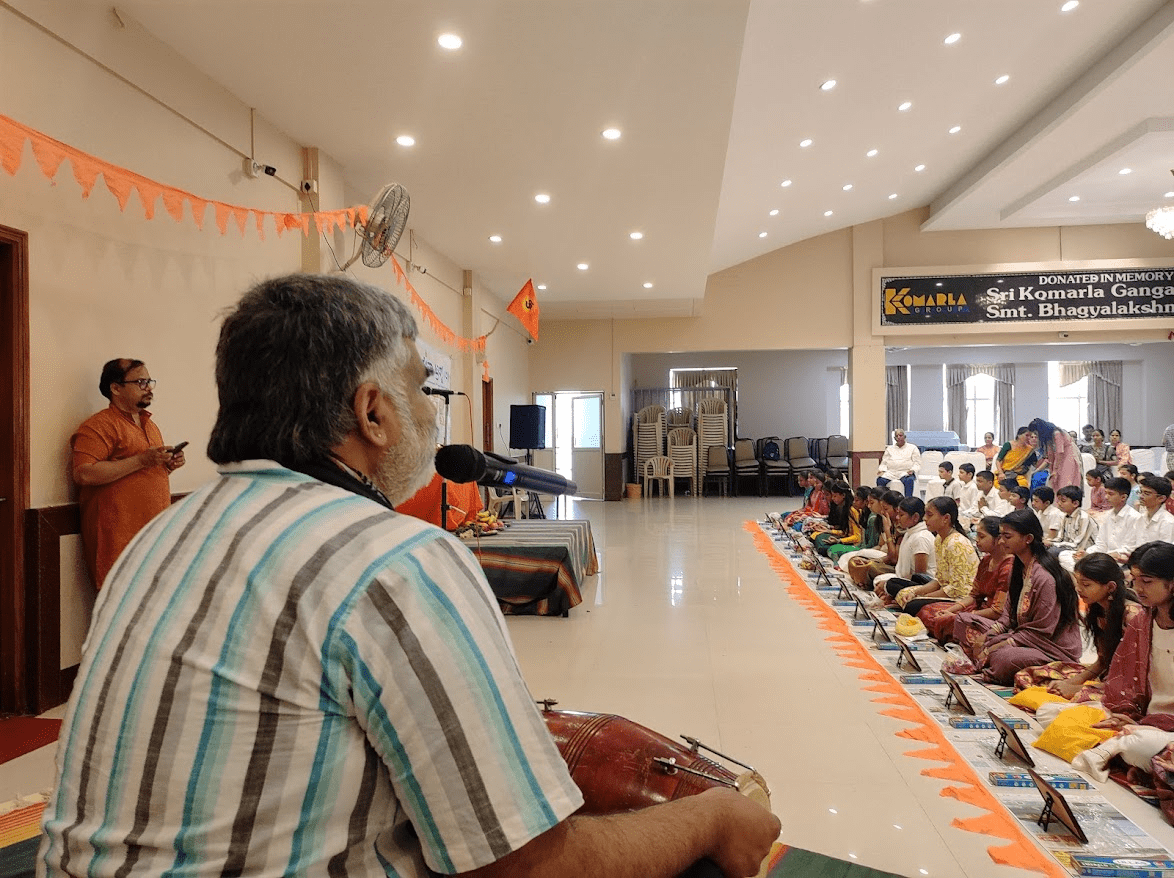
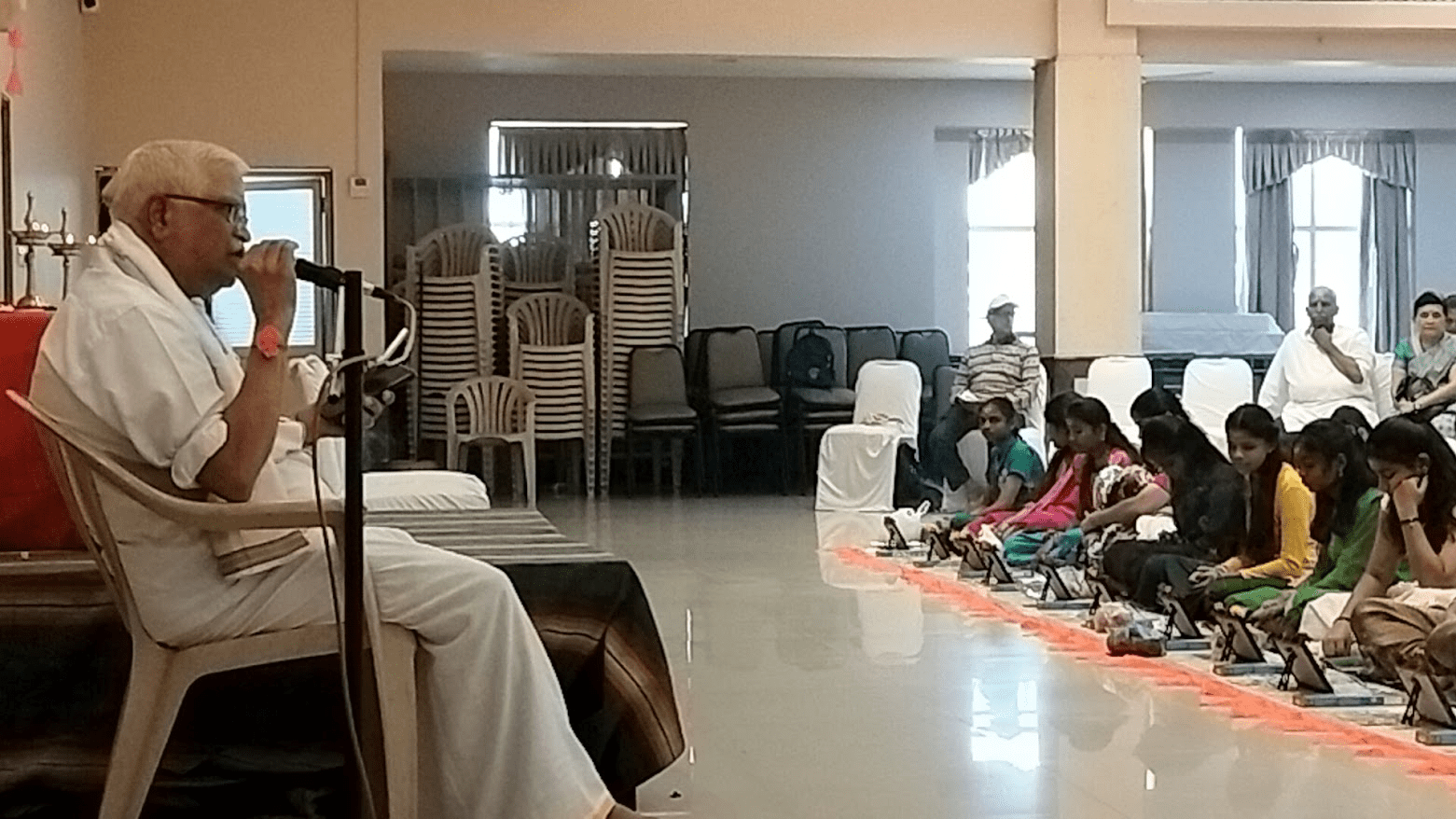
Following Satsang, ardent RSS Karyakarta and Swayamsevak Shri Lakshmi Narayan Sharma ji spoke to children and parents about importance of daily spiritual practice. He explained significance and process of performing daily pooja, and why reserving few minutes every day for pooja and dhyana in daily life is so valuable for growing mind. He taught students daily pooja procedure and four basic shlokas for everyday puja, giving them clear and easy daily routine to follow at home.
Shri Lakshmi Narayan Sharma ji
As part of session, Nitya Pooja and Dhyana concepts were explained in simple terms that every child can easily relate to. Nitya Pooja is just like saying good morning to God. Everyday you wake up, brush teeth, and say good morning to parents. Pooja is taking five minutes to say warm good morning, thank you, and offer small treat or flower to God who looks after world. Nitya Dhyana is power-up for mind. Just like charging phone gives energy to play games, taking two minutes to sit quietly and breathe gives brain maximum focus, memory, and peace for day.
Post Puja
Shri Lakshmi Narayan Sharma ji walked everyone through simple five minute Nitya Pooja for kids that keeps routine short, active, and sensory. First step is clean hands and smile, followed by lighting diya, offering flower or water, chanting simple mantra, and ending with gratitude pranam. In preparation step, kids wash hands and feet, then sit comfortably in designated quiet corner. Next step is welcome by lighting diya or agarbatti with adult help. It was explained that light removes darkness just like kindness removes sadness. For offering step, it was explained that kids pick real flower, tulsi leaf, small cup of water, or any fruit if available for naivedyam.
It was emphasized that God does not care how big gift is, only how much love you put into giving it. Thereafter all participants were initiated into 4 basic Shlokas – Vakratunda Mahakaya, Saraswati Namastubhyam, Guru Brahma Guru Vishnu and Namastestu Mahamaaye. Finally during aarti and gratitude, kids wave small bell or clap hands while singing short Arti song, if possible. With a quick pranam there were asked to pray God for good thoughts, health, and fun day.
During lunch time, group of curious students approached us to explain how exactly to do meditation in their daily routine. We sat together over food and guided them on simple ways to practice dhyana at home. We addressed common doubts that children usually have during meditation practice. When kids asked why they cannot just play instead of sitting for dhyana, we told them two minutes of Dhyana keeps mind healthy so they enjoy playing even more, just like brushing teeth keeps teeth healthy. When kids asked if God can see or hear them during quiet time, we explained that God is not person far away in sky but is like air or sunshine. You cannot see air, but you can feel it when you breathe, and God feels love whenever you think good thoughts. When kids asked what happens if they make mistake in steps or get distracted, we reassured them that God does not care if they drop flower or forget word. Just like mom loves hand drawn birthday card even if lines are not straight, God only cares about love and smile.
Parents/Guardians part of the program
Many parents participated in program and expressed immense happiness for being part of such divine event. After program, everyone enjoyed delicious meal together and returned home with firm sankalpa to perform Nitya Pooja every day. Sankalpa Event ended on highly positive note, leaving all new students and their parents inspired, empowered, and deeply connected with values of Sneha Seva Trust.
Organizational Profile: Sneha Seva Trust (Click to Visit their Website)
Background and History: Established in 1990 at the Timber Yard Layout in Bengaluru, the organization has served as a beacon of hope and transformation for communities in need. Formally registered in 2007, its journey began with a heartfelt mission to serve with compassion and empower individuals through education, healthcare, and skill development.
Educational and Community Initiatives: The organization provides free tuition classes for students from 2nd Standard to the SSLC level. However, its impact extends far beyond traditional academics. Through weekly Samskara classes, the trust imparts value-based education and essential life skills to children. Additionally, comprehensive counseling services are offered to both students and parents, alongside free medical camps organized to support the overall wellbeing of the community.
Jnanasiri Project: As part of the Jnanasiri Project, Sneha Seva Trust organizes a specialized program for students, encouraging them to take a formal pledge to practice daily worship and meditation (Nitya Pooje Nitya Dhyana).
Story of Little Arjun and Dusty Mirror
Once upon a time, there was a young boy named Arjun who loved to play in the mud, paint pictures, and race his friends. Arjun had a special tiny silver mirror in his room given to him by his grandmother. “This mirror is magic,” his grandmother had told him. “Whenever it is clean and clear, it reflects the warm, bright sunlight and fills your whole room with beautiful light.” Every morning, Arjun would wake up, wipe the mirror clean with a soft cloth, and shine a little flashlight onto it. The clean mirror would bounce a bright, glowing beam of light all over his room, making Arjun feel happy, energized, and ready for a great day. But then came a busy week. On Monday, Arjun said, “I don’t have time to clean my mirror today! I want to play right away.” By Wednesday, he forgot again. Day after day, tiny bits of dust, mud from his hands, and spots of paint settled on the glass. By Saturday morning, Arjun woke up feeling cranky and tired. He tried to shine his flashlight onto the mirror, but nothing happened. The glass was so thick with dust that no light could bounce off it. His room stayed dark and gloomy.
Arjun ran to his grandmother and said, “Ajji! The magic mirror is broken!” Ajji smiled gently, took a damp cloth, and handed it to Arjun. “The mirror isn’t broken, Arjun. It’s just covered in dust from all your playing. Take two minutes to wipe it clean.” Arjun sat down quietly. He took a deep breath, slowed down, and carefully wiped away every speck of dust. As soon as the glass was clear, the bright morning sunlight hit the mirror and Lo! His whole room lit up with brilliant, warm, golden light again. Arjun instantly felt peaceful and cheerful.
Lesson for the Kids
“Guess what? You have a magic mirror inside you—it’s your mind!
Every day, when we run around, get angry, or rush, a little bit of ‘dust’ settles on our mind. Pooja and Dhyana are just like wiping that mirror clean.
Taking two minutes every morning wipes away the dust, so your inner light can shine bright all day long!”
Shri Varadaraj ji, Secretary of Sneha Seva Trust and the heart and soul of this Event
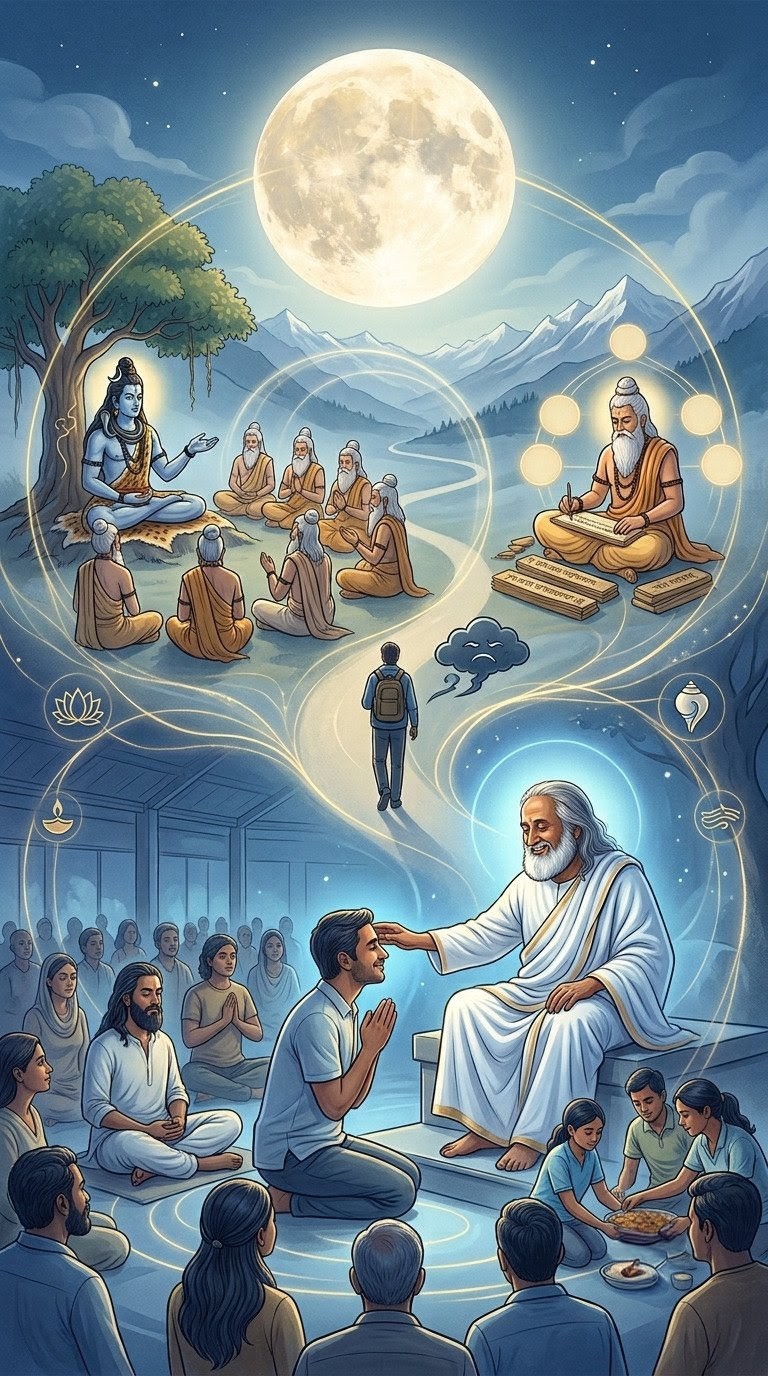
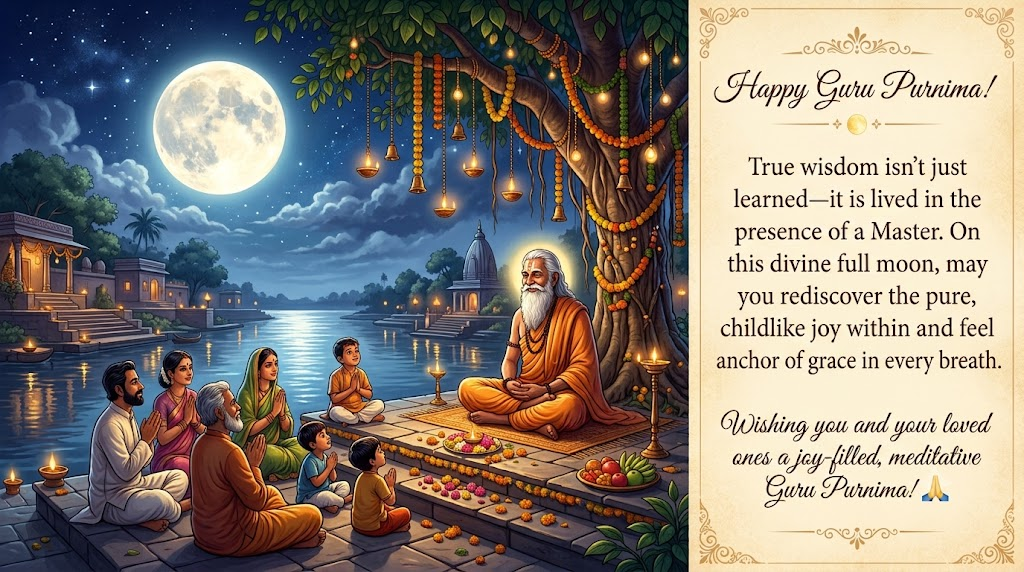
There is a timeless sacredness to Guru Purnima that reaches far back into our ancient history. There is an old saying that when the night is darkest, the moon shines the brightest. On Guru Purnima, as the full moon illuminates the sky, it serves as a gentle reminder of the Guru’s role in our lives, to dispel the darkness of doubt and stress, replacing it with the steady, soothing light of wisdom. Long before it became a marked date on our modern calendars, it was the day Adiyogi Shiva, the first Guru, relented after 84 years of intense penance by the Sapta Rishis. On the full moon night of Ashadha, He imparted the supreme science of yoga and self-realization, revealing to humanity that we are not bound by physical limitations. Centuries later, on this very same auspicious day, Maharshi Veda Vyasa, the pillar of Sanatana Dharma, emerged from deep meditation to organize the vast Vedas into four parts, compose the 18 Puranas, and write the Brahma Sutras. It is also the day Lord Buddha delivered His first sermon at Sarnath, and Lord Mahavira acquired His first disciple, Gautama Swami. Across traditions, the Ashadha Full Moon stands as the ultimate “Stock-Taking Day”, a spiritual New Year for seekers to pause, reflect, look within, and review their progress on the path of wisdom. Looking back over 25+ years with Pujya Gurudev Sri Sri Ravi Shankar ji, my stock-taking reveals a journey that feels less like a passing timeline and more like an overflowing stream of grace, joy, and quiet wonder.
Every Time is Like the First Time
People often say that the magic of a spiritual experience happens the first time you meet a Master, and that over time, the feeling settles into familiarity. But with Gurudev, every single interaction defies that logic. After a quarter-century, every Darshan and every personal interaction brings the exact same elevated, speechless awe. It never ages. Whether it is a light pull of the cheek or ears, a warm, affectionate pat on the back, or simply one of His hugs, the experience drops you straight into a state of deep, blissful silence. It takes ages just to recover from the sheer warmth and light of those few moments. In that stillness, words completely fail, and the mind simply surrenders to the joy of being present.
Living Example of Wisdom
Over these two decades, I’ve listened to Gurudev share countless points of wisdom on life, love, mind, and celebration. The most beautiful part? We never have to look far for an example of what He teaches. He doesn’t just deliver knowledge, He embodies it. When He speaks of unconditional love, you see it in the way He attends to thousands without a trace of fatigue. When He talks of childlike innocence, you see it in His playful smile and lighthearted humor. Every lesson on patience, peace, and service is mirrored live in His daily life. He is the ultimate living scripture.
Where Miracles Are the Baseline
Walking this path for 25 years means witnessing monumental events, large-scale service projects, and chaotic situations that transform seamlessly into perfection. When Gurudev was once asked if He believes in miracles, His instantaneous reply was: “We not only believe, we rely on miracles.” To be in His fold is to realize that miracles aren’t grand, unnatural phenomena, they are the natural byproduct of a life lived in complete alignment with divine grace. From the simple act of turning a heavy, stressed heart into a light, smiling soul to observing His tireless movement across the globe bringing peace, every day is a testament to that silent, moving force.
Rituals to Observe on Guru Purnima
While the spirit of Guru Purnima is an inner transformation, sacred rituals provide the container to align our mind and body with the powerful lunar energy of the full moon:
Sadhana & Meditation: Waking up early during Brahma Muhurta, practicing Pranayama and Sudarshan Kriya, and sitting in quiet meditation under the full moon. The heightened lunar energy naturally deepens the meditative experience.
Guru Puja & Chanting: Performing or participating in Guru Puja to express gratitude to the lineage of Masters (Guru Parampara).
Sankalpa & Spiritual Review (Stock-Taking): Reviewing the past year’s inner growth. Drop a negative habit or emotional burden like anger, doubt, or procrastination, as your Guru Dakshina, and take a fresh Sankalpa (intention) for service (Seva) and personal growth for the coming year.
Satsang & Seva: Gathering with fellow seekers for Satsang, singing, celebrating, and listening to knowledge sheets, followed by Annadaanam (offering food) or engaging in acts of selfless service.
True Essence
Guru means the dispeller of darkness, and Purnima signifies full illumination. On this day, as we honor the grand lineage from Bhagwan Shiva and Maharshi Veda Vyasa down to our living Master, the real celebration happens within a filled, grateful heart. To walk with the “Guru of Joy” for over 25 years is to realize that true devotion isn’t complex philosophy. It is the simple, profound grace of having an unshakeable anchor in a chaotic world, knowing that no matter how many years pass, every moment with Gurudev will always feel fresh, vibrant, and brand new.