During a Satsang organized a couple of days ago (on 29th August 2026) by Art of Living volunteer faculty Hemadri ji and other volunteers at the Yoga Hall in Omkar Layout Centre, several participants raised common questions on how to address naysayers who critique the life and actions of Shri Krishna. Sri Krishna is one of the most revered deities in Sanatana Dharma. His life presents fascinating paradoxes that deeply inspire millions of devotees across the globe. To an untrained mind, seeing Bhagavan Shri Krishna as a butter thief, a flirt, or hearing Mahamantra of wisdom like Bhagavad Gita on a battlefield full of violence might appear contradictory. However, deeper spiritual study reveals profound truths hidden inside these divine events. Towards the end, I have also shared 3 popular anecdotes and lessons that we can draw from those.
Shri Krishna Janmashtami marks arrival of divine consciousness in world clouded by ignorance and chaos. Beyond midnight celebrations and fasts, life of Bhagavan Shri Krishna serves as practical guide for modern living. Whether viewed as divine incarnation, philosopher, or master strategist, His life stories offer universal values that apply directly to daily challenges, workplaces, and communities. We often think of Janmashtami as a historic event celebrated at midnight. But spiritually, Krishna’s birth represents light arriving in the darkest of places. And let’s be honest, between work pressure, personal challenges, and global uncertainty, we all face our own “dark midnights” occasionally.
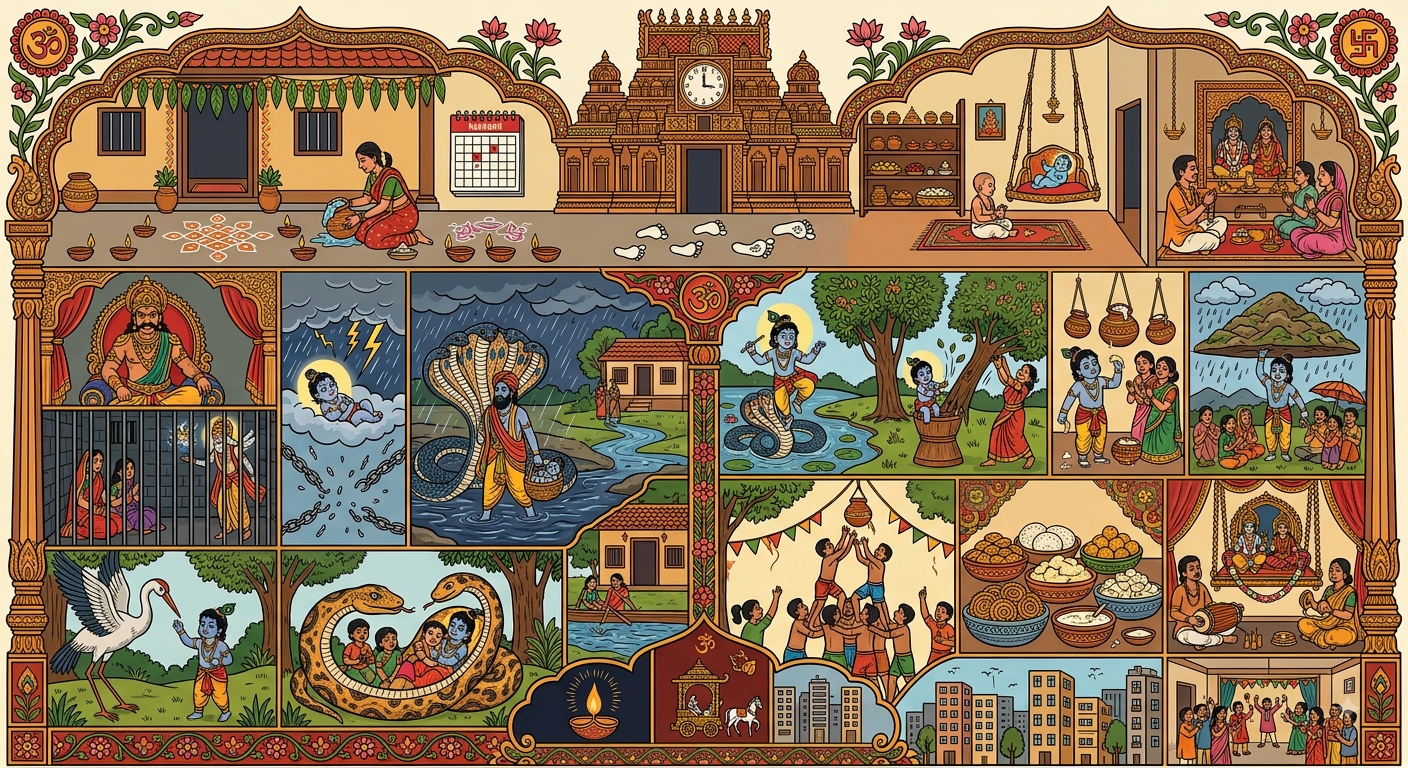
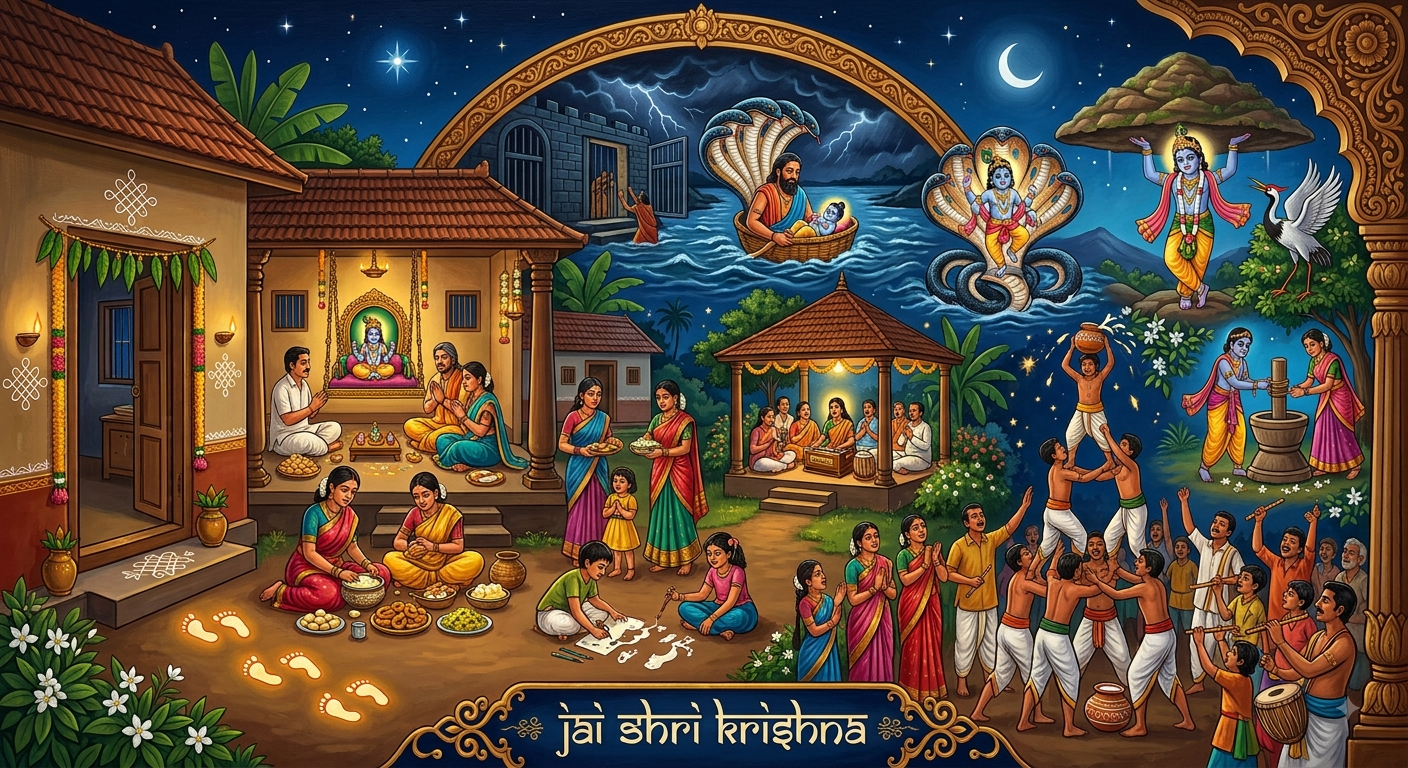
Please read my earlier Article Beyond the Festivities: Shri Krishna Janmashtami in which I have described traditions, legends, and spiritual significance of Shri Krishna Janmashtami. From divine childhood miracles to vibrant South Indian home celebrations and community satsangs, I share how welcoming little Krishna brings enduring hope, peace, and joy into our everyday lives today.
Navaneeta Chor
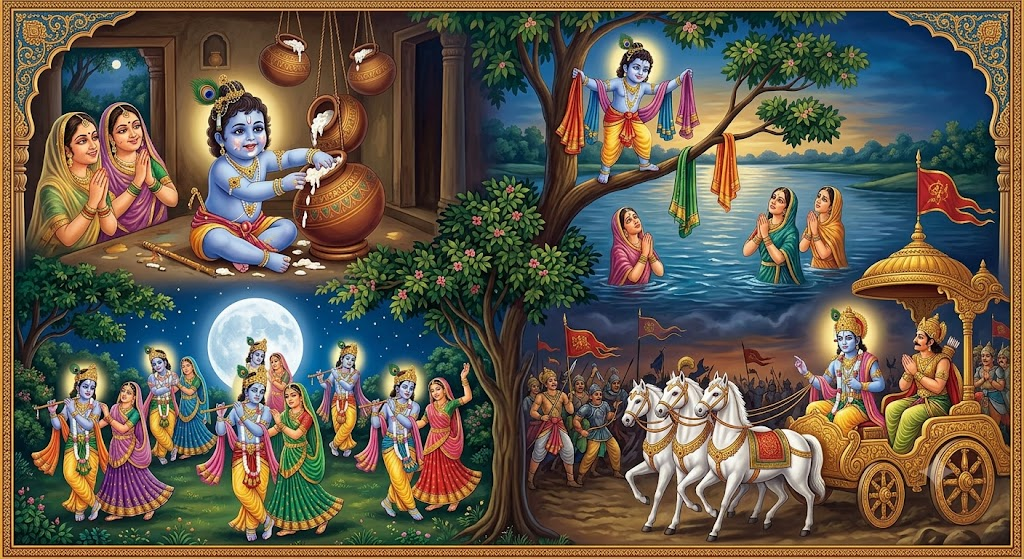
In his childhood at Vrindavan, Shri Krishna frequently stole butter from cowherd women called Gopis. This act was not driven by material greed, but carried deep Vedantic symbolism. Butter comes only after patient churning of milk. It represents pure essence of human mind, free from worldly impurities. Gopis used to hide butter pots near roof ceilings, which symbolizes how human beings conceal their pure devotion under ego and worldly fear. By breaking those pots and taking butter, Shri Krishna actually steals ego and accumulated karmas of his devotees. Unlike human theft which arises from greed, divine theft is supreme grace where Ishvara claims what originally belongs to him.
Vastra Harana
Another pastime often misunderstood by critics is Sakae Vastra Harana, where young Shri Krishna hid the clothes of bathing Gopis on the banks of Yamuna. This act was not about physical nakedness or mischievous pleasure, but an essential lesson in shedding spiritual ego. The Gopis were performing Katyayani Vrata, seeking Shri Krishna as their divine lord, yet they retained their last lingering layer of worldly attachment—body consciousness, bodily shame, and social conditioning. By removing their clothes, Shri Krishna showed that one cannot approach the Supreme Divine while holding onto worldly masks or physical illusions. True devotion requires absolute innocence and complete surrender without any hidden layers between Jivatma and Paramatma.
Shri Krishna- Living Life to Fullest
Life of Shri Krishna teaches us to live with total freedom and joy. He is not a distant ruler watching from heaven, but an approachable divine entity who can be loved as a child, friend, or guide. Through his divine play called Leela, Shri Krishna shows that spiritual path does not require complete isolation or sorrowful asceticism, which is how we have come to associate spirituality with. One can celebrate every moment of life while remaining detached from material worldly traps.
Rasa Leela and Maya Roopa
To a worldly mind blinded by material desire, Rasa Leela might appear like human romance or flirtation. However, ancient scriptures like Srimad Bhagavatam clarify that Rasa Leela is the ultimate spiritual union between Jivatma, the individual soul, and Paramatma, the supreme soul. Gopis of Vrindavan were not ordinary women seeking physical romance, they were realized sages and pure devotees who spent lifetimes doing intense penance to attain closeness with Bhagawan Shri Krishna. When Shri Krishna played his divine flute on full moon night of Sharad Purnima, Gopis instantly abandoned their homes, families, and worldly responsibilities. This sudden exit symbolizes complete surrender where a seeking soul breaks all physical bondages, ego, and worldly attachments to merge with divine supreme consciousness.
During Rasa Leela, Shri Krishna expanded himself into multiple divine forms using Yogamaya, his divine potency. This cosmic phenomenon created a divine play where every Gopi experienced Paramatma standing directly beside her, dancing exclusively with her. This Maya Roopa or divine manifestation proves that God is omnipresent and capable of reciprocating unlimited personal love to every single devotee simultaneously. Moreover, scriptures mention that Shri Krishna was merely a young child during this event, proving that Rasa Leela is entirely transcendental, sacred, and completely free from any material or carnal desires. Through Rasa Leela, Purushottama Shri Krishna revealed the pinnacle of Bhakti Yoga, where pure spiritual love conquers all material limitations.
Bhagavad Gita on Battlefield
Many wonder why supreme knowledge of Bhagavad Gita was revealed amidst conch shells, war cries, and impending death at Kurukshetra instead of a quiet forest ashram. The war field represents internal conflict inside human mind where righteousness constantly fights against ignorance. Spirituality that works only in peaceful environment is incomplete. By guiding Arjuna during peak moments of panic, Bhagavan Shri Krishna proves that true spiritual wisdom must help us navigate chaotic real world challenges.
Facing Duty Without Fear
Arjuna wanted to run away to forest to avoid fighting his own relatives. Sanatana Dharma teaches that running away from righteous duty due to emotional attachment is delusion, not true detachment. Shri Krishna taught Nishkama Karma, which means performing one’s duty without attachment to final results. Bleak setting of battlefield also served as perfect background to explain immortality of Atman. While bodies perish in war, eternal soul remains completely untouched by weapons, fire, or time. Through this timeless message, Purushottama Shri Krishna inspires humanity to stand firm in duty with unwavering mind.
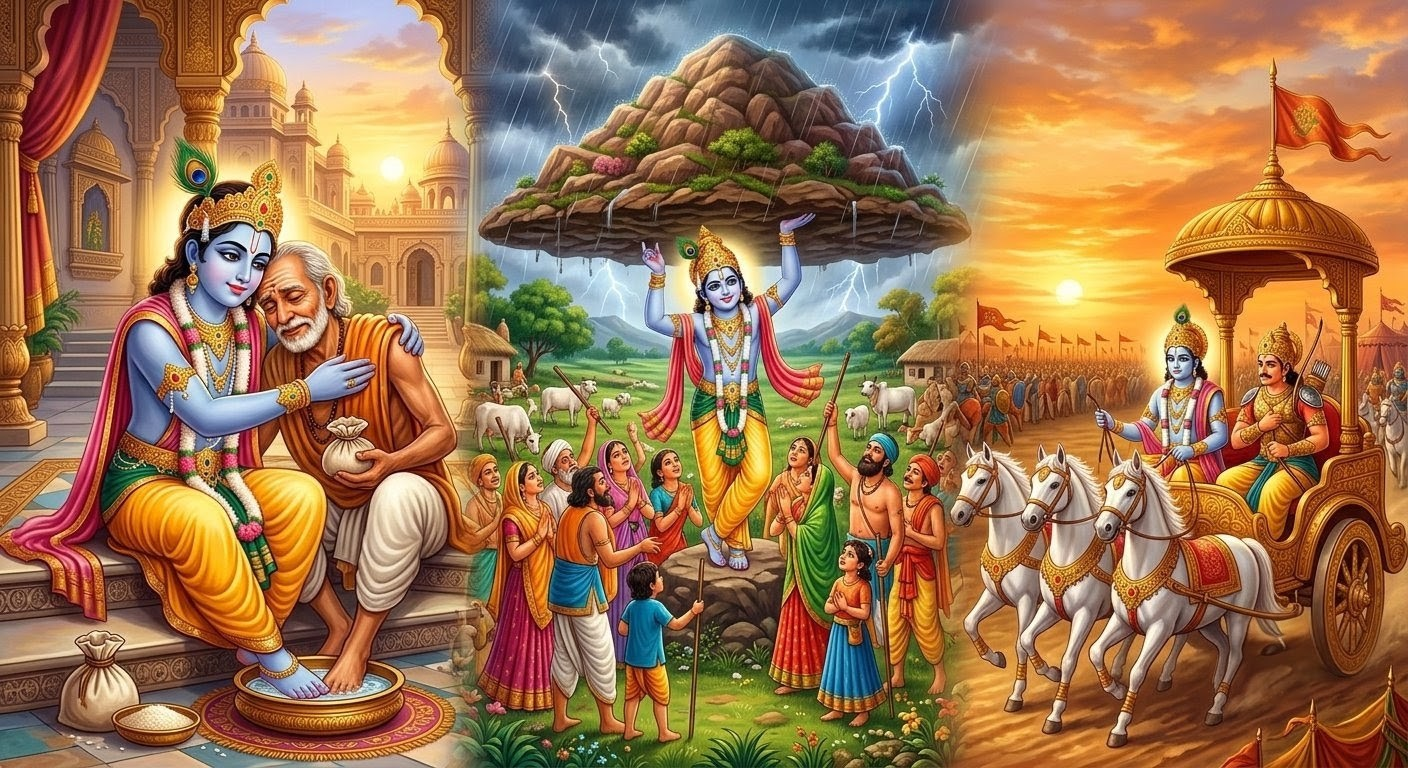
Signing off this article sharing three powerful anecdotes from His life highlight how simple actions can teach us about humility, environmental respect, teamwork, and duty.
Friendship Beyond Status
One of most touching accounts in life of Bhagavan Shri Krishna is His reunion with childhood friend Sudama. While Shri Krishna ruled as King of Dwarka, Sudama lived in extreme poverty. When Sudama visited Dwarka, he carried only small pouch of flattened rice as humble offering. Upon seeing his old friend, Bhagavan Shri Krishna did not care about social standing or wealth. He ran barefoot to welcome Sudama, washed his feet with tears of deep affection, and accepted simple offering with great joy.
In modern workplaces and society, people are frequently judged by titles, designations, and material success. This story reminds us that authentic relationships are built on respect and emotional connection, not social status. True leadership begins with humility and treating every individual with dignity, irrespective of position.
Strength in Unity and Environmental Consciousness
During His youth in Gokul, villagers regularly performed rituals to appease Lord Indra for rain. Young Shri Krishna encouraged people to shift their gratitude toward Govardhan hill, forests, and cattle that directly nourished their community. When torrential storms followed, Bhagavan Shri Krishna lifted Govardhan hill on His finger and asked every villager to support weight with their wooden sticks.
This incident carries dual significance for contemporary world. First, it emphasizes ecological balance and necessity of protecting natural resources that sustain life. Second, it demonstrates strength of collective effort. Complex challenges are rarely solved by single individual; real progress happens when communities unite and contribute toward common objective.
Dignity of Labor and Calm Guidance
On battlefield of Kurukshetra, Bhagavan Shri Krishna assumed role of charioteer for Arjuna. Despite being supreme authority, He drove chariot, tended to horses, and steadily guided Arjuna through intense conflict and moral doubt.
In daily professional and personal life, individuals often hesitate to take up tasks perceived as secondary or low-profile. Bhagavan Shri Krishna demonstrated that no work is small when performed with sincerity and commitment. True excellence lies in carrying out responsibility with focus, keeping ego aside, and remaining calm in midst of chaos.
Living the Wisdom Today
Shri Krishna Janmashtami is not merely historical remembrance. It serves as continuous reminder to approach life with balance, practice empathy in relationships, work collaboratively, and fulfill responsibilities without fear. By integrating these timeless principles into daily routine, individuals can build meaningful lives and stronger communities.
🙏Jai Shri Krishna🙏