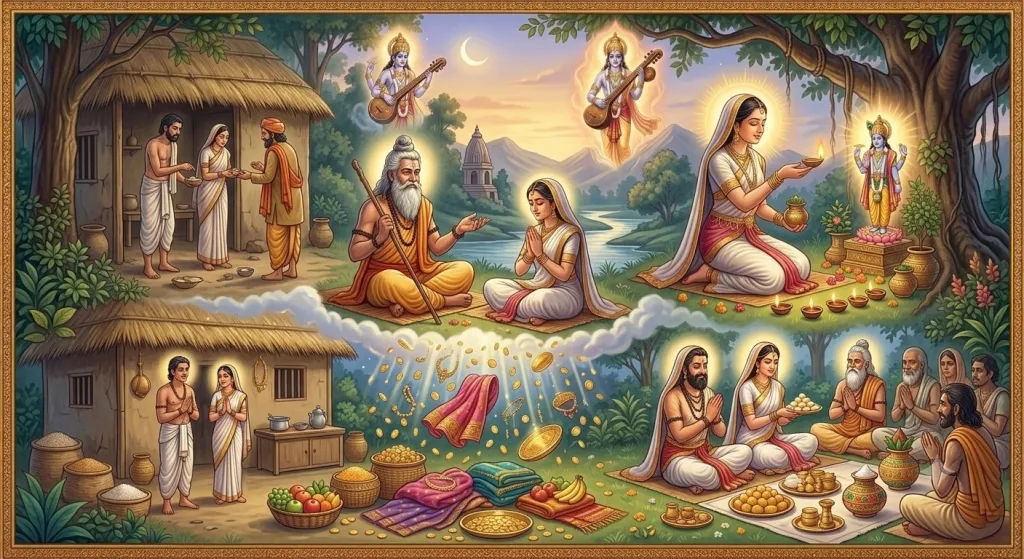
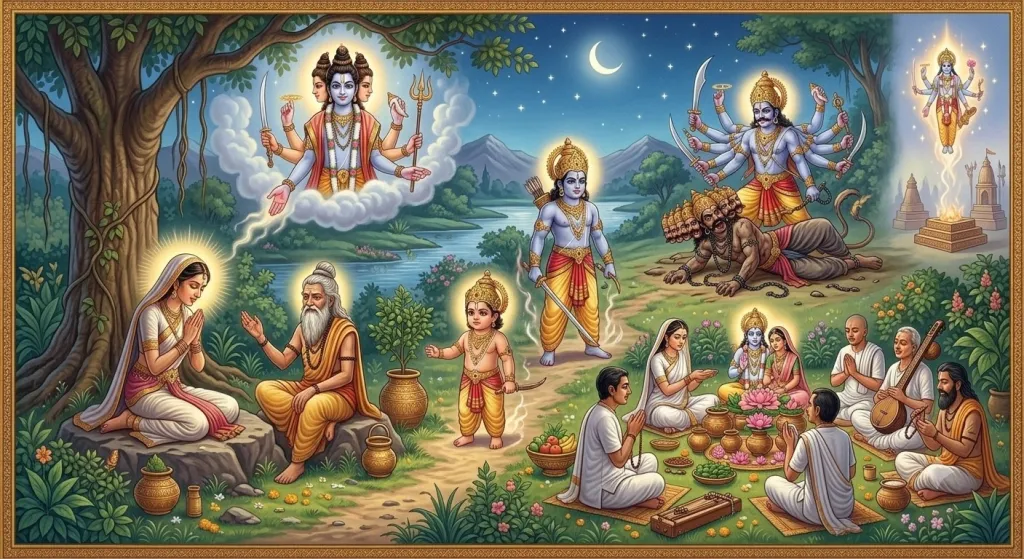
This article is a consolidation and single ready-reckoner of all 24 Ekadashis (26 in case of Adhika Masa year) capturing summaries of all my individual Ekadashi related articles based on request by a regular visitor and reader of my articles on this blog site. You can search for article about any particular Ekadashi on this site, in case you want to read more about it.

An Ekadashi is eleventh lunar day of fortnight in Hindu calendar. Two Ekadashis occur every month, one during Shukla Paksha (bright fortnight) and one during Krishna Paksha (dark fortnight).
Usually, there are 24 Ekadashis in a standard year. However, during Adhik Maas (or Purushottam Maas), two extra Ekadashis occur, making total count 26. Each Ekadashi carries unique name, deep spiritual significance, ancient legend, and specific rituals for devotees. You can click on the names of each Ekadashi (sub-heading) to read more about the specific ekadashi
Ekadashis of Chaitra Month (March–April)

Significance: Word Papamochani translates to remover of all sins and negative karmic burdens. Fasting on this day helps clear past misdeeds, relieves guilt, and brings inner peace.
Legend: Ancient story tells of sage Medhavi, who was meditating in forest when beautiful apsara named Manjughosha captivated him. Sage lost track of time and spent years in worldly pleasures. Realizing his mistake, sage became furious and cursed Manjughosha to become ugly hag. When she begged for forgiveness, sage advised her to observe Papmochani Ekadashi fast. Both observed fast with pure devotion, and sage as well as apsara were freed from curse and sins.
Rituals: Devotees wake up early during Brahma Muhurta, take holy bath, and light lamp in front of Bhagwan Vishnu. Yellow flowers, Tulsi leaves, and fruits are offered. Devotees chant Vishnu Sahasranama throughout day and donate food or clothes to needy.
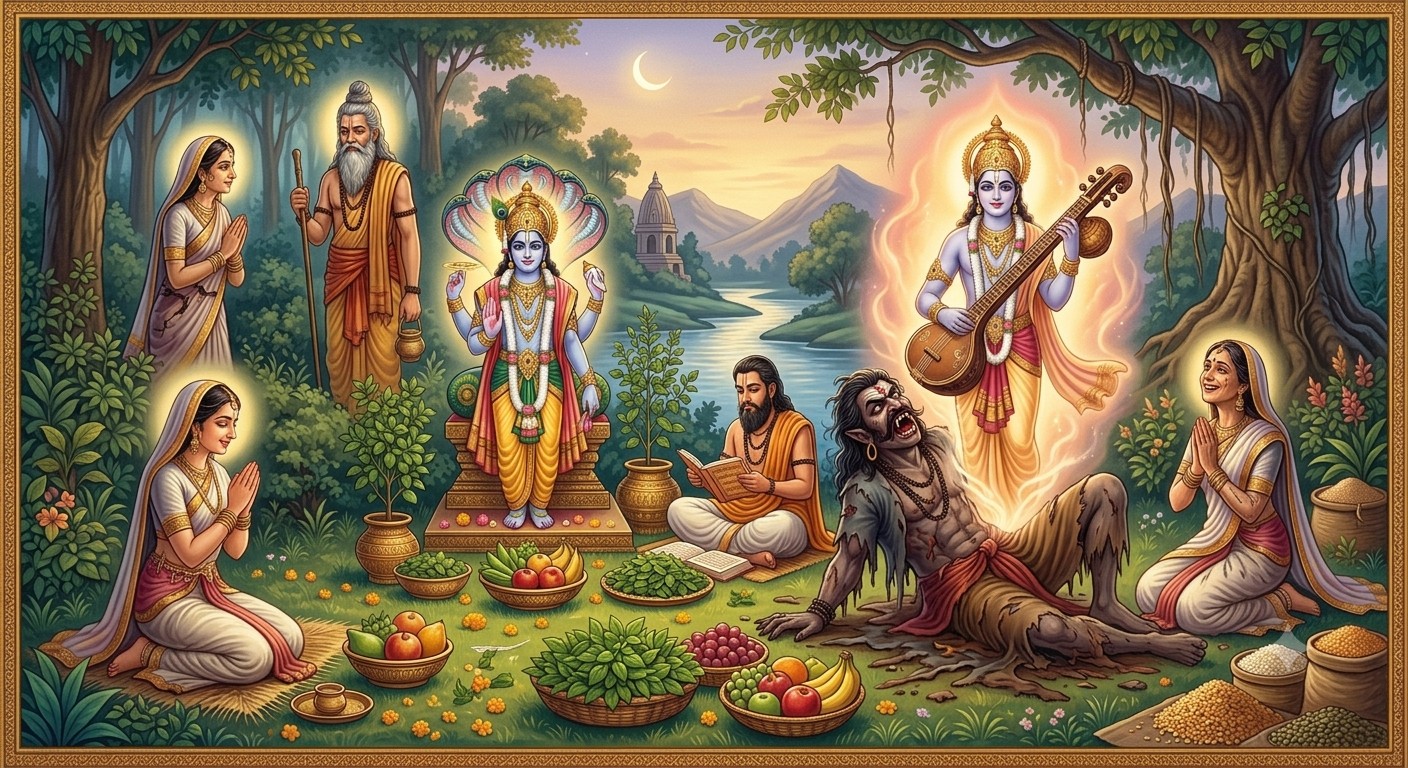
Significance: Kamada means fulfilling all genuine desires. Observing this fast helps clear spiritual obstacles, grants wishes, and cleanses soul from heavy family curses or inherited karma.
Legend: In kingdom of Ratnapura, lived Gandharva couple named Lalit and his wife Lalita. Lalit was court singer. One day while singing in palace of King Pundarika, Lalit became distracted thinking about his wife and missed beat. King became enraged and cursed Lalit to turn into monstrous demon. Distressed Lalita searched forest for cure and met sage Shringi. Sage advised her to observe Kamada Ekadashi fast. Lalita observed strict fast and offered all spiritual merit to her husband, instantly restoring him to his original form.
Rituals: Fast starts on Dashami night by eating light meal. On Ekadashi, devotees maintain complete or partial fast, avoiding grains and pulses. Worship includes offering sandalwood paste, incense, and fresh fruits to Bhagwan Vishnu, followed by reciting Ekadashi katha.
Ekadashis of Vaishakha Month (April–May)

Significance: Varuthini Ekadashi offers divine protection from physical ailments, evils, and bad fortune. It is believed that observing Varuthini Ekadashi brings rewards equivalent to donating gold or performing penance for thousands of years.
Legend: King Mandhata once asked Shri Krishna about glory of Varuthini Ekadashi. Shri Krishna narrated story of King Dhundhumara, who was once cursed by Bhagwan Shiva due to disrespect and turned into lame, bedridden man. Devastated king was advised by royal priests to observe Varuthini Ekadashi fast. By strictly following rituals, king regained his strength, body, and prosperity, finally attaining heaven after death.
Rituals: Devotees fast by consuming only milk or fruits once a day if full fast is not possible. Avoid oil, meat, lentils, and grains completely. Devotees perform charity, specifically donating water, umbrella, or footwear during hot summer season.

Significance: Mohini Ekadashi marks day when Bhagwan Vishnu assumed his enchanting Mohini avatar. Observing fast on this day helps devotees break free from attachment, worldly illusions, and path of delusion.
Legend: During Samudra Manthan (churning of cosmic ocean), divine Amrit (nectar of immortality) emerged. Demons stole nectar to rule universe. Bhagwan Vishnu transformed into Mohini, most captivating woman, and tricked demons into letting her distribute nectar. She cleverly fed entire Amrit to Devas, saving universe from evil dominance. Fasting on this day honors this divine intervention.
Rituals: Devotees offer sweet preparations, panchamrit, and Tulsi to Bhagwan Vishnu in form of Mohini. Devotees read or listen to Mohini avatar chapter from Bhagavata Purana and maintain peaceful, truthful mind throughout day.
Ekadashis of Jyeshtha Month (May–June)

Significance: Apara means limitless. This day is celebrated for granting limitless wealth, fame, prosperity, and absolution from severe negative karma.
Legend: Good and pious king named Mahidhwaja was murdered by his evil younger brother Vajradhwaja. Body was buried under banyan tree, and spirit became tormented ghost trapped in tree. Sage Dhaumya passed by tree and saw ghost. Using divine vision, sage recognized king and brought spirit down. Sage then observed Apara Ekadashi fast on behalf of ghost king. Thanks to earned spiritual credit, king got freed from ghost form and reached heaven.
Rituals: Devotees wake up at dawn, take holy bath, and offer prayer to Shri Trivikrama (form of Bhagwan Vishnu). Fasting involves avoiding rice, non-veg, and salt. Special prayers are offered for ancestral peace.

Significance: Known as most rigorous Ekadashi, Nirjala means without water. Observing this single fast grants spiritual merits of all 24 Ekadashis combined.
Legend: Pandava brother Bhima was famous for his enormous appetite and could not control hunger, making it impossible to fast twice every month. Distressed Bhima approached sage Vyasa for solution. Sage advised him to observe Nirjala Ekadashi fast just once a year, where even drinking water is forbidden from sunrise on Ekadashi to sunrise on Dwadashi. Bhima successfully observed this tough fast, which is why it is also named Bhimseni Ekadashi.
Rituals: Devotees observe strict waterless fast for full 24 hours. Pots filled with sweet water, fans, clothes, and umbrellas are donated to brahmins and poor people. Fast is broken on next morning (Dwadashi) after offering prayers and drinking water with Tulsi.
Ekadashis of Ashadha Month (June–July)

Significance: This fast is dedicated to curing severe physical ailments, skin diseases, and removing consequences of past bad actions, restoring vitality to body and mind.
Legend: In kingdom of Alakapuri, gardener named Hemmali was assigned duty to collect fresh flowers daily for king Kuber for worship of Bhagwan Shiva. Hemmali became deeply attached to his beautiful wife and neglected his duty, spending day with her instead. Furious Kuber cursed Hemmali with severe white leprosy and banished him from kingdom. Suffering immensely in forest, Hemmali met sage Markandeya, who guided him to observe Yogini Ekadashi fast. Upon completing fast, his body was completely healed, and he regained his normal life.
Rituals: Devotees perform morning abhishekam of Bhagwan Vishnu image with panchamrit. Fasting is observed with devotion. Offering fresh green leaves and flowers is considered highly auspicious on this day.
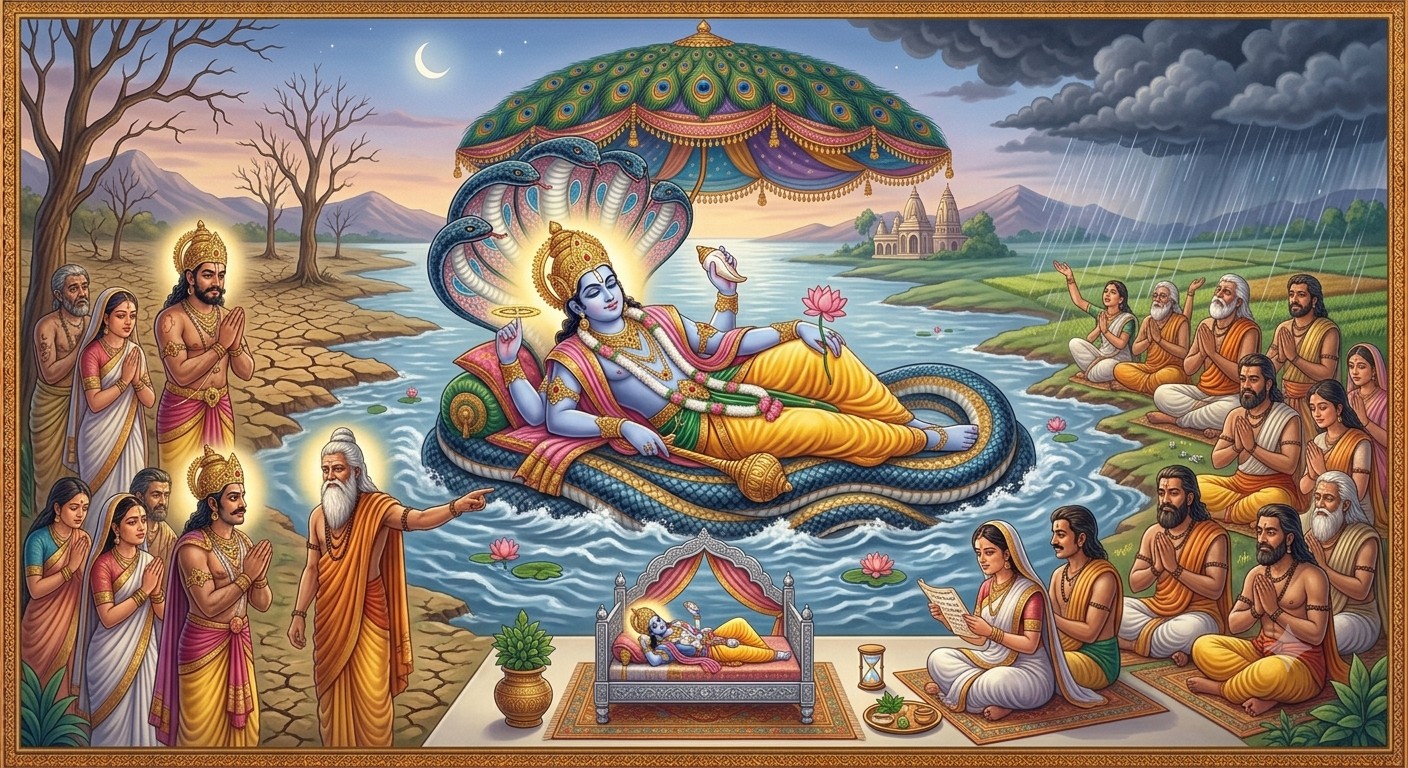
Significance: Devshayani Ekadashi marks beginning of Chaturmas (four holy months). On this day, Bhagwan Vishnu goes into divine yogic sleep (Yoga Nidra) on Sheshnag in cosmic ocean. Marriages and major worldly celebrations are paused during this four-month period.
Legend: Great king Mandhata once ruled kingdom that suffered severe three-year drought, leading to famine. King visited sage Angiras to seek solution. Sage advised king to observe Devshayani Ekadashi fast along with his citizens. King and his people observed fast with complete purity, resulting in immediate heavy rainfall and restoration of agriculture across kingdom.
Rituals: Devotees clean worship room and place Bhagwan Vishnu idol in small bed symbolizing his sleep. Devotees take vows (vrata) for four months of Chaturmas, such as giving up specific foods, practicing silence, or daily scripture reading.
Ekadashis of Shravana Month (July–August)
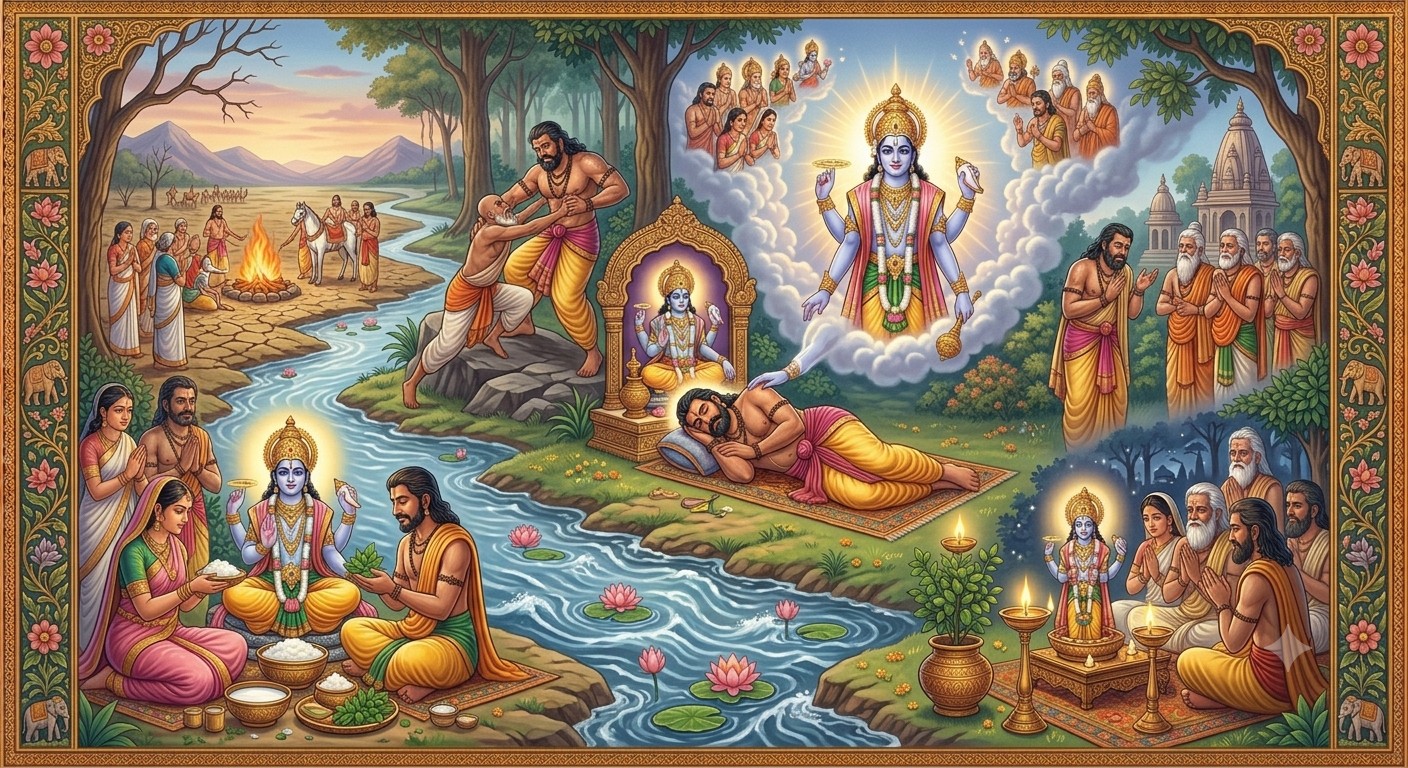
Significance: Falling in auspicious month of Shravana, Kamika Ekadashi grants merit of visiting all sacred rivers and performing ashwamedha yajna. It protects devotees from negative influences and fulfills pure worldly desires.
Legend: Wealthy landlord in village accidentally killed local brahmin during fight. Desperate to repent for grave sin, landlord asked village sages how to make amends. Sages asked him to fast on Kamika Ekadashi and pray sincerely before Bhagwan Vishnu. While landlord was sleeping near idol on night of fast, Bhagwan Vishnu appeared, accepted his repentance, and freed him from guilt and karmic sin.
Rituals: Devotees worship Bhagwan Vishnu with milk, butter, and Tulsi leaves. Lighting sesame oil or ghee lamp in front of Bhagwan Vishnu and Tulsi plant throughout night brings endless blessings.

Significance: Putrada means giver of children. Married couples facing difficulties in having offspring observe this fast to seek divine blessings for healthy, righteous, and long-lived children.
Legend: Kind King Suketuvarman ruled kingdom of Bhadravati with his queen Shaibya. Despite having everything, they were deeply sad because they had no children to carry forward lineage and perform ancestral rites. King wandered into forest in sorrow and found hermitage near lake where sages were chanting. Sages advised couple to observe Shravana Putrada Ekadashi fast. Couple observed fast strictly, and soon queen gave birth to noble son.
Rituals: Both husband and wife keep fast together. Bhagwan Vishnu in form of child (Balkrishna) is worshipped. Devotees offer sweets made of milk and lotus flowers while praying for family well-being.
Ekadashis of Bhadrapada Month (August–September)

Significance: Aja Ekadashi helps eliminate heavy karmic baggage, removes illusions, and restores lost happiness, dignity, or material status.
Legend: Legendary King Harishchandra, known for strict truthfulness, lost his entire kingdom, wealth, wife, and son due to cosmic test by sage Vishwamitra. King became lowly caretaker of cremation ground. Deeply pained, he met sage Gautama, who advised him to observe Aja Ekadashi fast. King followed instructions with complete devotion. As result, his past sins were erased, his dead son was restored to life, his kingdom was returned, and he was reunited with his queen.
Rituals: Devotees spend entire day in prayer, avoiding grains and salt. Night vigil (Jagran) is kept by singing bhajans and reading stories of Bhagwan Vishnu.

Significance: Also known as Vamana Ekadashi or Jaljhulani Ekadashi. On this day, sleeping Bhagwan Vishnu changes his side from left to right during his cosmic slumber, making day spiritually charged.
Legend: Legend is tied to Bhagwan Vishnu taking Vamana avatar (dwarf brahmin) to humble King Bali. King Bali had conquered three worlds through power. Vamana approached King Bali during yajna and asked for three steps of land. Bali agreed. Vamana grew to giant cosmic form, covering earth with first step and sky with second step. For third step, King Bali offered his own head. Pleased with Bali’s devotion, Vamana made him ruler of underworld and promised to guard his realm.
Rituals: Devotees worship Vamana avatar with rice, curd, and sesame seeds. Idols of Bhagwan Vishnu are bathed, dressed in new clothes, and carried in festive processions near water bodies.
Ekadashis of Ashwin Month (September–October)

Significance: Indira Ekadashi falls during Pitru Paksha (fortnight of ancestors). Fasting on this day is dedicated to departed ancestors, helping them break free from suffering in lower realms and attain liberation.
Legend: King Indrasena ruled Mahishmati kingdom peacefully. One day, sage Narada visited king and brought message from king’s late father, who was stuck in Yamaloka (underworld) due to unresolved mistakes in past life. Narada advised king to observe Indira Ekadashi fast on Ashwin Krishna Paksha and offer earned merit to his father. King observed fast strictly with his family. Instantly, father was freed and ascended to Vaikuntha (heaven).
Rituals: Devotees perform ancestral rituals (Shradh), offer food to brahmins and cows, and maintain strict fast. Offering food to crows, dogs, and poor people on this day carries immense spiritual weight.

Significance: Word Ankusha means hook used to control wild elephants. Papankusha Ekadashi acts as spiritual hook that controls mind from committing sinful actions and purifies soul.
Legend: Ruthless hunter named Krodhana lived on Vindhyachal mountain, committing acts of cruelty, theft, and violence throughout life. As his death approached, he became terrified of messengers of Yama. Desperate, he rushed to ashram of sage Angiras for protection. Sage took pity on him and guided him to observe Papankusha Ekadashi fast. Hunter fasted with pure heart, and all his past sins were wiped out, granting him peaceful transition.
Rituals: Worship focuses on Padmanabha form of Bhagwan Vishnu (with lotus from navel). Devotees offer lotus flowers, fruits, and fragrant incense. Donating land, cows, or sesame seeds on this day brings great prosperity.
Ekadashis of Kartik Month (October–November)

Significance: Rama Ekadashi occurs just before Diwali festival. It is named after Maata Lakshmi (also known as Rama). Fasting on this day brings financial stability, harmony, and removal of obstacles from home.
Legend: Princess Chandrabhati, daughter of King Shobhana, was married to Prince Chandrasena, who was physically weak. Shobhana was strict practitioner of Ekadashi fasting and insisted everyone in kingdom fast. Weak prince observed Rama Ekadashi fast under pressure but died due to extreme weakness. However, due to merit of fast, prince was reborn as ruler of heavenly kingdom on Devagiri mountain. Queen Chandrabhati visited him later and used her own lifelong Ekadashi merit to make his heavenly kingdom permanent.
Rituals: Devotees worship both Maata Lakshmi and Bhagwan Vishnu together. Homes are decorated with lamps, and sweet offerings made from milk and ghee are presented during evening puja.

Significance: Also called Prabodhini Ekadashi or Devutthan Ekadashi. Bhagwan Vishnu wakes up from his four-month cosmic slumber on this day, concluding Chaturmas. Auspicious events like weddings, housewarmings, and thread ceremonies resume.
Legend: Bhagwan Vishnu’s sleep schedule was historically unpredictable, causing worry among Devas. Maata Lakshmi requested Bhagwan Vishnu to structure his sleep pattern so cosmos could function smoothly. Bhagwan Vishnu agreed, stating he would sleep continuously for four months during monsoon season from Devshayani to Devutthana, protecting world while lying on Sheshnag. Waking of Bhagwan Vishnu signifies awakening of wisdom and light in universe.
Rituals: Sugarcane structures are set up in courtyard. Footprints of Bhagwan Vishnu are drawn using rice paste. Sugarcane, sweet potatoes, water chestnuts, and seasonal fruits are offered. Tulsi Vivah (ceremonial marriage of Tulsi plant to Bhagwan Vishnu) is celebrated with great joy.
Ekadashis of Margashirsha Month (November–December)

Significance: Marks birthday or origin of Ekadashi as divine entity. Devotees who wish to begin annual Ekadashi fasting routine start their journey from Utpanna Ekadashi.
Legend: Terrifying demon named Mura defeated Devas and conquered heaven. Bhagwan Vishnu fought Mura for thousands of years. Exhausted during long battle, Bhagwan Vishnu retreated to cave in Badrikashram to rest. While Bhagwan was sleeping, Mura entered cave to strike him. Suddenly, divine female power emerged from body of Bhagwan Vishnu and annihilated demon Mura. Pleased Bhagwan Vishnu named her Ekadashi (as she appeared on 11th day) and granted boon that anyone fasting on her day would be freed from sins.
Rituals: Devotees wake up early, perform holy bath, and worship Bhagwan Vishnu and Maata Ekadashi. Only simple sattvik food or fruits are eaten after sunset if complete fast is not possible. Special charity is given to students and seekers.

Significance: Mokshada means giver of ultimate liberation (Moksha). Coincides with Gita Jayanti, day when Bhagwan Krishna delivered timeless teachings of Bhagavad Gita to Arjuna at Kurukshetra.
Legend: King Vaikhanasa once dreamed that his deceased father was suffering in hell. Distressed king consulted enlightened sage Parvat Muni. Sage revealed through meditation that king’s father had committed subtle karmic errors in past life. Sage advised king to observe Mokshada Ekadashi fast along with his entire royal family and transfer merit to his father. King followed advice, and his father was immediately liberated from hell, ascending to Vaikuntha.
Rituals: Devotees fast strictly, read complete Bhagavad Gita or specific chapters like Chapter 11 and 15, and distribute copies of Bhagavad Gita to seekers. Worship involves offering tulsi, dhoop, and lighting ghee lamps.
Ekadashis of Pausha Month (December–January)

Significance: Saphala means successful. Fasting on this day turns stalled efforts into success, removes lethargy, and brings clarity and direction to life goals.
Legend: King Lumpaka, eldest son of King Mahishmati, was wicked man who disrespected scriptures and harmed poor citizens. King banished Lumpaka to forest. Living in forest, Lumpaka survived by stealing and eating raw fruits. On Pausha Krishna Dashami, he fell severely ill due to extreme cold and lost consciousness. He remained unconscious all night and whole day of Ekadashi, unintentionally fasting without food or water. When he regained consciousness, he unknowingly gathered wild fruits and offered them to Bhagwan Vishnu at base of banyan tree. This accidental fast cured his mind, transformed his personality, and restored his royal status.
Rituals: Devotees worship Bhagwan Vishnu by offering fresh winter fruits, betel leaves, and coconut. Staying awake at night (Jagran) and meditating on life choices forms crucial part of ritual.

Significance: Second Putrada Ekadashi of year, falling in winter month of Pausha. It is observed by couples seeking child blessings, protection of existing children, and peace within family line.
Legend: King Suketuvarman story is remembered again during this season, emphasizing how constant devotion during both Shravana and Pausha Putrada Ekadashis opens divine blessings for childless couples. Another story recounts King Vaikuntha of Bhadravati observing this fast on advice of five holy sannyasis, leading to birth of brilliant prince.
Rituals: Special bath using sesame seeds and warm water. Offerings of yellow flowers, yellow sweets, and yellow clothes to Bhagwan Vishnu. Married couples perform combined puja and read Putrada Ekadashi Vrata Katha together.
Ekadashis of Magha Month (January–February)

Significance: Word Shattila comes from six (Shat) distinct uses of sesame seeds (Til). Fasting on this day promotes physical health, removes financial poverty, and grants spiritual strength.
Legend: Rich woman performed extensive penance and fasting to please Bhagwan Vishnu. However, she never donated food or money to poor, lacking compassion. When she died, she reached heaven but found her house empty without any food or comfort. She asked Bhagwan Vishnu why this happened. Bhagwan Vishnu explained that without charity, fasting remains incomplete. He asked her to wait for celestial maidens to guide her on observing Shattila Ekadashi fast. She observed fast using sesame seeds in all rituals, and her house was instantly filled with food, wealth, and comfort.
Rituals: Sesame seeds are used in six specific ways:
- Bathing water mixed with sesame seeds.
- Applying sesame paste on body.
- Offering sesame seeds in holy fire (Havan).
- Offering sesame water to ancestors.
- Eating sesame sweets.
- Donating sesame seeds to needy.

Significance: Jaya means victory. Fasting on Jaya Ekadashi helps devotees gain complete victory over negative thoughts, internal senses, bad habits, and external life challenges.
Legend: In court of Indra, Gandharva singer Malyavan and dancer Anangavati were performing. Both fell in love mid-performance, lost concentration, and ruined court music. Enraged Indra cursed both of them to fall from heaven and live as wretched goblins in freezing Himalayas. Suffering extreme cold and misery, couple forgot food and sleep on day of Magha Shukla Ekadashi. They unintentionally spent full day fasting under divine cold. Due to power of Jaya Ekadashi fast, their goblin form vanished, and they were restored to their original divine forms in heaven.
Rituals: Worship Bhagwan Vishnu with sandalwood, incense, and seasonal fruits. Fasting requires complete avoidance of grains and pulses. Devotees chant Om Namo Bhagavate Vasudevaya continuously.
Ekadashis of Phalguna Month (February–March)

Significance: Vijaya Ekadashi brings victory over complex obstacles, formidable opponents, and seemingly impossible life situations.
Legend: When Bhagwan Rama was searching for Maata Sita, he reached shores of ocean with his Vanara army. Crossing vast ocean to reach Lanka seemed impossible. Sage Bakdalbhya advised Bhagwan Rama to observe Vijaya Ekadashi fast along with all army commanders. Bhagwan Rama followed ritual setup on ocean bank, keeping fast with devotion. Fast created spiritual energy that paved way for successful construction of Ram Setu bridge and ultimate victory over Ravana.
Rituals: Seven types of grains (barley, wheat, rice, corn, chickpeas, sesame, moong) are placed in decorative pot (Kalash). Idol of Bhagwan Vishnu is placed on top of pot and worshipped with lamps, flowers, and fruits. Pot is donated to brahmin on Dwadashi.

Significance: Amalaki refers to Amla (Indian gooseberry) tree. Amla is considered sacred because Bhagwan Vishnu and Maata Lakshmi reside in it. Worship on this day grants physical longevity, immunity, and spiritual purity.
Legend: King Chaitraratha ruled peaceful kingdom where all citizens regularly observed Ekadashi fasts. Once during Amalaki Ekadashi night, king and citizens were meditating near Amla tree in forest. Wicked hunter, who was murderer and thief, wandered by and sat down quietly due to hunger. Hunter observed night worship and listened to sacred holy stories without eating. Years later, hunter died and was reborn as King Vasuratha. One day, enemy soldiers attacked sleeping Vasuratha, but divine weapon emerged from his body and killed attackers. Vasuratha woke up safely and learned that his miraculous protection was result of listening to Amalaki Ekadashi prayers in his past life.
Rituals: Devotees perform puja directly under Amla tree or near Amla plant at home. Tree is watered, wrapped in sacred thread, and worshipped with flowers, incense, and lamps. Amla fruit is offered and consumed as prasad.
Additional Ekadashis during Adhik Maas (Leap Month)
Every three years, an extra month called Adhik Maas or Purushottam Maas is added to lunar calendar to match solar year. Two additional Ekadashis fall in this extra month.

Significance: Padmini Ekadashi falls during Krishna Paksha of Adhik Maas. Observing this fast grants exceptional religious merit that exceeds performance of major sacrifices, purifying soul completely.
Legend: Great King Kartavirya Arjuna (Sahasrabahu) was born to King Kritavirya after long years of childlessness. Queen Padmini had performed severe penance on Anasuya’s advice during Adhik Maas, fasting strictly on this specific Ekadashi. Pleased Shri Dattatreya blessed couple with heroic son Sahasrabahu, who became so powerful that he even defeated powerful demon king Ravana in battle.
Rituals: Devotees perform 24-hour fast, worshipping Bhagwan Vishnu and Maata Radha-Krishna with lotus flowers, water offerings, and continuous chanting. Night vigil is observed with spiritual discourses.

Significance: Parama means ultimate or supreme. Fasting on this day removes severe poverty, grants spiritual power, fulfills noble material desires, and grants ultimate liberation.
Legend: Poor brahmin named Sumedha lived peacefully with his pious wife Pavitra. Despite extreme poverty, couple welcomed guests with whatever little food they had. One day, sage Kaundinya visited their humble home. Seeing their poverty, sage advised wife Pavitra to observe Parama Ekadashi fast falling in Adhik Maas. She observed fast with complete faith and discipline. Soon after, wealth and prosperity naturally flowed into their life, freeing them from hardship.
Rituals: Devotees keep fast for five consecutive days starting from Parama Ekadashi (Pancharatra fast) if capable, or observe main day fast strictly. Offerings of sweets made with ghee, gold or brass items, and water pots are made to learned brahmins and needy people.
Om Namo Bhagavate Vasudevaya
All pictures are courtesy Gemini based on the prompts depicting each Ekadashi