Writing this article on Chhath Puja took considerable time and dedication. Work on this piece began last year, though tight schedules prevented finishing it before the festival passed. Rather than rushing the sacred subject, the draft was carefully parked to await the right moment.
A few weeks back, research resumed with fresh energy and deep commitment. Meaningful discussions followed with devout observers who celebrate the festival every year alongside knowledgeable elders from the core regions. Their lived experiences, traditional insights, and reverence for Bhagavan Surya and Chhathi Maiyya shaped every section. Those rich conversations helped bring this long-awaited tribute to completion.
What is Chhath Puja?
Chhath Puja is a four-day festival dedicated to Bhagavan Surya (Surya Dev) and to Chhathi Maiya, the Devi who protects children. The word “Chhath” comes from “chhah”, meaning six, because the main day is the 6th after Diwali, or Kartik Shukla Shashti.
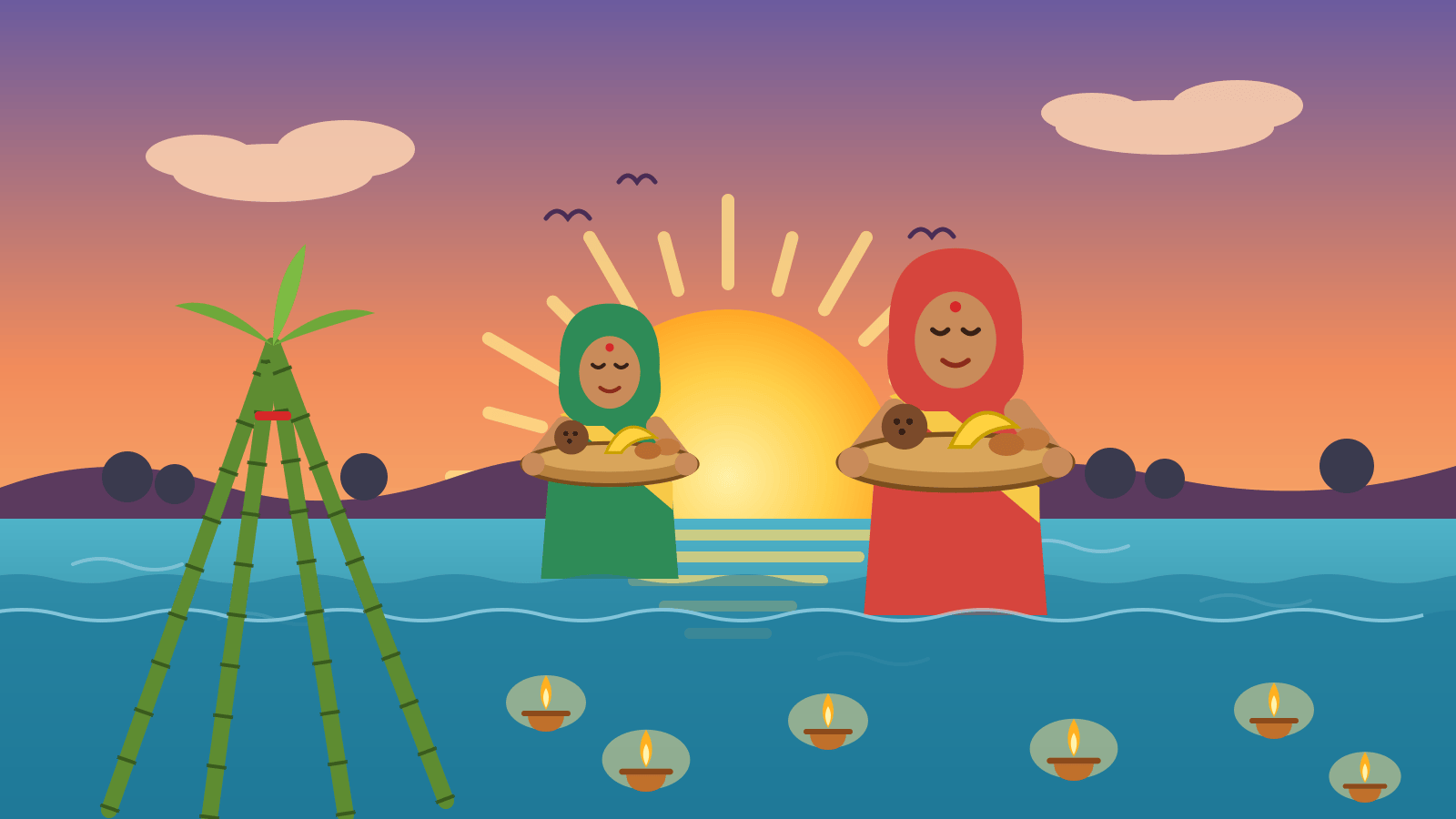
It is celebrated mainly in Bihar, Jharkhand, eastern Uttar Pradesh and the Terai region of Nepal. Today, thanks to migrants from these regions, you can see Chhath celebrated in Delhi, Mumbai, Kolkata, Chennai and even Bengaluru, and also abroad.
Day 1, Nahay Khay: Devotees take a holy bath and eat a simple, pure meal of rice, dal and lauki (bottle gourd), cooked in a clean kitchen.
Day 2, Kharna: The devotee fasts the whole day without even water. After sunset, she or he eats kheer made of rice and jaggery with rotis, and then begins the long fast.
Day 3, Sandhya Arghya: The family goes to a river, pond or ghat and offers arghya (water and prasad) to Surya Dev at sunset. Devotees stand in water, and the bamboo soop is filled with fruits, sugarcane and thekua, a sweet made of wheat flour and jaggery.
Day 4, Usha Arghya: Before sunrise, the family returns to the water and offers arghya to Surya Dev at sunrise. Then the fast of about 36 hours is broken.
What makes Chhath special is its simplicity. There are no idols and no priests. The devotee herself or himself performs the puja. The prasad is cooked at home, with great care and cleanliness, and the festival uses natural things like bamboo, earthen lamps, fruits and sugarcane. It also teaches us to respect rivers and water bodies, because the ghats are cleaned by the community before the puja begins.
Rituals in Detail
Chhath looks simple, but every step has a purpose, and families follow it with great discipline. The person who keeps the vrat is called the parvaitin. Most are women, but many men also observe it.
Before festival. Homes are cleaned and often whitewashed, and the kitchen is kept strictly pure. Onion, garlic and non-vegetarian food are not cooked in the house. Prasad is made with fresh wheat flour, rock salt and jaggery, often on a clay chulha with mango wood. Neighbours and local volunteers clean the roads and the ghats, so that the whole community is ready.
Day 1, Nahay Khay. The parvaitin takes a holy bath in a river or pond, and many families bring home river water for cooking. The first meal is simple: rice, chana dal and lauki (bottle gourd), cooked in a clean kitchen. The parvaitin eats first, and then the rest of the family.
Day 2, Kharna. The parvaitin fasts from sunrise without water. In the evening, after a simple puja, she or he eats rasiao-kheer (rice cooked in milk and jaggery) with roti. In many families the house is kept quiet during this meal, because it is believed that any disturbance should stop the eating. The prasad is then shared with relatives and neighbours. From now begins the long fast of around 36 hours, without food or water.
Day 3, Sandhya Arghya. The day goes in preparing prasad. Thekua and kasar (rice flour and jaggery laddoos) are made, and fruits are arranged in a bamboo soop (winnowing tray) and daura (basket). In the afternoon, the family walks to the ghat, and a male member usually carries the daura on his head. Tall sugarcane stalks are tied together to make a small tent, and earthen diyas are lit. At sunset, the parvaitin stands in water and offers arghya, often with milk and water poured over the soop, while family members help. In some homes, a kosi ceremony is done that night. Earthen diyas are placed under a canopy of sugarcane, mainly as thanks for a wish that was fulfilled, such as the birth of a child or a marriage.
Day 4, Usha Arghya. Well before dawn, the family returns to the ghat and lights diyas again. As the first rays of the Sun appear, the parvaitin offers arghya once more, and the family prays for health and happiness. Then the fast is broken with prasad, often with ginger and a little sugar or jaggery, and the prasad is shared with everyone present. Nobody is turned away, and anybody can take it.
Here is what is usually offered in the soop. Families explain each item in their own way, but the common idea is the same: offer the freshest produce of the season, made at home.
| Item | Why it is offered |
| Thekua and kasar | Home-made sweets of wheat, rice and jaggery, the heart of the prasad |
| Sugarcane | The sweetness of life, and a tent of stalks at the ghat |
| Coconut and banana | Whole fruits offered for fullness and prosperity |
| Big lemon, sweet potato, turmeric, ginger | Fresh crops of the season, offered unprocessed |
| Earthen diyas | Light offered to Surya Dev and Chhathi Maiya |
Devotees also sing Chhath geet, folk songs in Bhojpuri, Maithili and Magahi, that speak directly to Chhathi Maiya and Surya Dev. Many river banks echo with them through the night.
Why Chhath Matters
Chhath is, at its heart, a festival of thanks. Families thank the Sun for life, and ask Chhathi Maiya to keep their children safe. Many other values are woven into it.
Respect for every stage of life. Chhath is one of the few festivals where the setting Sun is worshipped, along with the rising Sun. It teaches us to honour what is ending, and to welcome what is coming.
Gratitude to the source of life. Surya Dev gives us light, warmth, crops and the rhythm of our days. The prasad is made of the season’s harvest and offered first to him.
Health and children. Mothers pray for the long life of their children. Couples who wish for a child pray to Chhathi Maiya, and families come back to the ghat in thanks when a wish is fulfilled.
Discipline and humility. The vrat means a fast of about 36 hours without water, sleeping on the floor, and strict cleanliness. It trains the body and the mind in self-control.
Equality. There is no priest, no idol and no fee. Everyone stands in the same water and offers the same simple things. Neighbours of every background help each other, and prasad is given freely to all.
Care for nature. Bamboo trays, clay lamps, seasonal fruit and river water are all that is needed. Communities clean ponds and ghats together before the puja.
Home and identity. For people from Bihar, Jharkhand and eastern Uttar Pradesh who live in other cities and countries, Chhath is the reason to travel back home. Trains and buses fill up for weeks before it.
Some people also say that the gentle light of sunrise and sunset is good for the body. This is a popular belief, not a medical claim. Anyone who is elderly, pregnant or unwell should speak to a doctor before keeping such a long fast.
How Shashthi Became Chhathi Maiya
Chhathi Maiya is the village form of Shashthi Devi, the goddess of the sixth day. Her name and her worship changed slowly, as devotion moved from the Puranas into homes, rivers and folk songs. No single text describes Chhath exactly as it is done today, and nobody can give the date of each change, so the story below is how scholars and traditions understand it.

Puranic Shashthi. According to the Brahmavaivarta Purana, Prakriti (Nature) divided herself into many forms. Her sixth part is Shashthi Devi, also called Devasena, the consort of Bhagavan Kartikeya and the protector of children. The story of King Priyavrat, told earlier, is how she came to be worshipped for the life of children. In many North Indian families, the sixth night after a baby is born is still called Chhathi. It is believed that the goddess comes that night to bless the baby and to write its fate.
Name changes. Sanskrit word Shashthi means “the sixth”. In the spoken languages of the people, it became Chhatthi and then Chhathi, in the same way that the Sanskrit shasht became the Hindi chhah, which means six. The affectionate word Maiya means mother in Bhojpuri, Maithili and Magahi. So Chhathi Maiya simply means “Mother of the sixth day”. The festival took its name from her, and from the day on which she is worshipped.
Goddess of the people. In the villages, Shashthi needed no temple, no idol and no Sanskrit mantra. She was worshipped at a river or pond, with local food, and in local songs. Women spoke to her like a mother, asking for a child, for health, and for the safety of the family. Chhath geet, made famous by singers such as Sharda Sinha, carry this feeling of a daughter talking to her mother.
Meeting with Surya. Surya worship is very old in India, and the Rig Veda has many hymns to Surya and Usha, the dawn. The region of Bihar also has famous Sun temples, such as Deo and Bargaon, and the tradition of Samba. Over time, the worship of Surya and the worship of Shashthi came together. Popular beliefs explain this in different ways. Some families say that Chhathi Maiya is the sister of Surya Dev. Others say that the morning arghya is offered to Usha and the evening arghya to Pratyusha, the two consorts of Surya, along with Chhathi Maiya.
Why did they join? There are good reasons. Both are connected with the sixth day of the bright fortnight. Both are connected with life and health, since the Sun gives life to all and Shashthi guards the life of the young. Kartik Shukla Shashthi is also the day sacred to Kartikeya, her consort, and it falls in the season just after harvest, when people are ready to give thanks. Many scholars therefore see Chhath as a meeting of three streams: the Vedic worship of Surya, the Puranic worship of Shashthi, and the folk customs of eastern India.
This also connects Chhath to Kanda Shashti. Shashthi Devi appears in Bengal as Shashthi Thakurani, in Bihar as Chhathi Maiya, and in the South as Devasena, the consort of Murugan. These are different forms of devotion, but they share one idea, the sixth day and the protecting mother.
Legends Behind Chhath
There is no single story of Chhath. Many legends have come down through the generations, and each adds a little to its meaning.
Mata Sita and Bhagavan Shri Rama. One popular belief says that when Bhagavan Shri Rama and Mata Sita returned to Ayodhya after the exile, and after Shri Rama was crowned king, they kept a fast and worshipped Surya Dev on Kartik Shukla Shashti. People in the Mithila region especially associate Mata Sita with this tradition.
Karna, son of Surya Dev. In the Mahabharata, Karna is the son of Surya Dev. It is said that he stood in water for hours every morning, offering prayers to his father. Many people believe Chhath carries forward that tradition of Surya worship.
Draupadi and the Pandavas. Another story says that Draupadi observed this vrat when the Pandavas were in trouble and wished to regain their lost kingdom. She was rewarded with success.
King Priyavrat and Queen Malini. This story is told in the Puranas. King Priyavrat and his queen had no child. On the advice of Maharshi Kashyap, they performed a yajna, and the queen gave birth to a son, but the child was born without life. The king was heartbroken and was about to give up his own life. Then a Devi appeared before him. She said she was Shashthi, the sixth part of Prakriti (Nature), and the protector of children. She touched the child and he came back to life. The king then began to worship Shashthi Devi on the sixth day of the bright fortnight. This is why Chhathi Maiya is prayed to for the health, long life and happiness of children.
Samba and the Sun. Another story speaks of Samba, the son of Bhagavan Shri Krishna, who was cured of a serious skin disease by worshipping Surya Dev. This is why Surya is also seen as the giver of health.
All these stories carry the same message. Surya Dev gives us life, light and health every single day, and Chhath is our way of saying thank you.
Now the best part
How the sun worshippers of Bihar and the Murugan devotees of Tamil Nadu celebrate the same sacred day.
While thousands of families stand knee-deep in water at sunset, holding bamboo baskets and offering thanks to Surya Dev on the banks of the Ganga in Patna, at the same time, in Tiruchendur on the Tamil Nadu coast, lakhs of devotees gather near the sea to watch the victory of Bhagavan Murugan over the Asura Surapadma.
These two festivals look very different, but they fall on the very same day: Shashti, the sixth day of the bright half of the Kartik month.
Kanda Shashti and the Slaying of Surapadma
Now let us travel south. In Tamil Nadu, the same Shashti day is celebrated as Kanda Sashti or Skanda Sashti, in honour of Bhagavan Murugan, also known as Kartikeya, Skanda, Subramanya and Kanda. The festival lasts six days, and the sixth day is called Soorasamharam, the destruction of Surapadma.
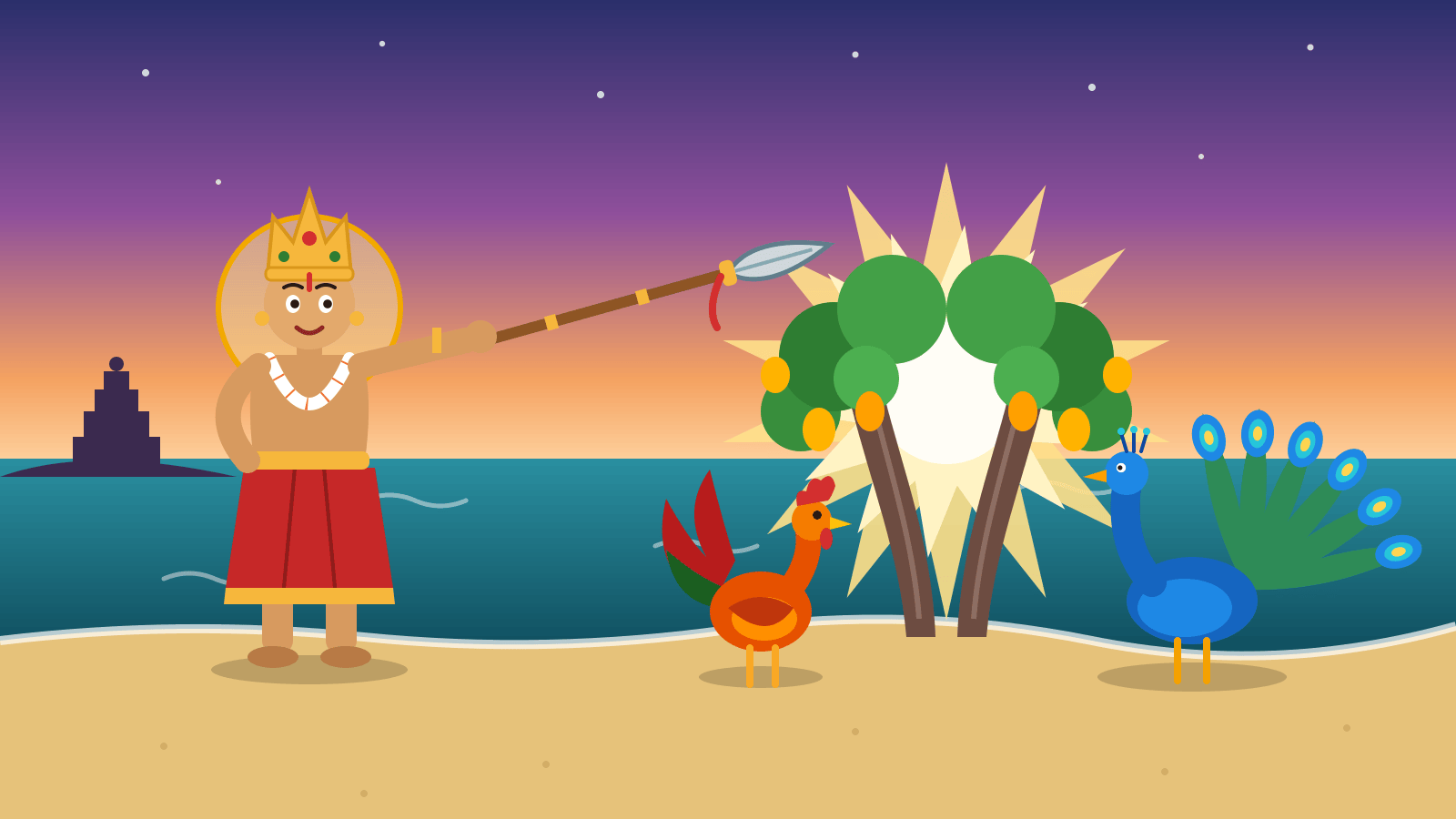
The story goes like this. Surapadma, along with his brothers Simhamukha and Tarakasura, received great boons from Bhagavan Shiva through long penance. Proud of his power, he began to trouble Devas and the Rishis. Devas went to Bhagavan Shiva for help.
From the divine fire of Bhagavan Shiva’s third eye, six sparks came out. They were carried to the Saravana lake, where they became six beautiful babies. The six Krittikas, the divine mothers, took care of them. Later, Mata Parvati joined the six children into one child with six faces. This is why Murugan is called Shanmukha, Arumugan and Karthikeya. His name Karthikeya itself comes from the Krittikas who raised him. Mata Parvati then gave him the Vel, the divine spear.
Bhagavan Murugan, as commander of the Devas, marched with his army to fight Surapadma. The war went on for six days. Surapadma used many illusions and changed his form again and again. On the sixth day, he took the form of a giant mango tree. Bhagavan Murugan hurled his Vel and split the tree into two. One half became a peacock, which became Murugan’s vahana (vehicle), and the other half became a rooster, which now flies on his flag. In this way, Surapadma’s ego was destroyed, but he was also given grace.
The festival is most famous at Tiruchendur, one of the six Arupadai Veedu of Bhagavan Murugan, where the Soorasamharam is enacted on the seashore every year. Devotees fast for six days, chant the Kanda Sashti Kavasam, and visit Murugan temples at Palani, Swamimalai, Thiruparankundram, Pazhamuthircholai. On the next day, Bhagavan Murugan’s wedding with Devi Devasena (also called Devayani) is celebrated as Thirukalyanam.
Kartik Poornima Link
The Kartik month is very special for Murugan worship, since Kartikeya’s very name is linked to it. A few days after Shashti, the full moon of Kartik, called Kartik Poornima, is celebrated across India.
In North India, it is known as Dev Deepawali, especially in Varanasi, when lakhs of diyas light up the ghats of the Ganga. It is also called Tripurari Poornima, because on this day Bhagavan Shiva is said to have destroyed the three demon cities of Tripurasura. Guru Nanak Dev Ji Jayanti is also celebrated on this day. In Tamil Nadu, the full moon of the Tamil month of Karthigai is celebrated as Karthigai Deepam, when rows of lamps are lit in homes and at the Tiruvannamalai temple, and Murugan, the child of the Krittikas, is remembered.
So if we look at the whole season, we see a beautiful pattern. First comes Diwali, the lamp of light. Then comes Shashti, the sixth day, with Surya Dev and Bhagavan Murugan. Then comes Kartik Poornima with the lamps of Bhagavan Shiva and Karthigai. It is one long season of light winning over darkness.
How Are Chhath and Kanda Shashti Connected?
It is important to be honest here. Chhath and Kanda Shashti are different festivals, with different rituals, languages and regions. They are not the same festival under two names. But there are many meaningful links, and many devotees and scholars have pointed them out.
Same tithi. Both are observed on Shashti of the bright fortnight in the Kartik season. The sixth day of the waxing moon is sacred in both traditions. (The Tamil month names differ, but the festivals fall close together on the calendar.)
Devi Shashthi and Devi Devasena. In the Puranic tradition, for example in the Brahmavaivarta Purana, Shashthi Devi, the protector of children, is described as Devi Devasena, the consort of Bhagavan Kartikeya. Seen this way, the Chhathi Maiya of the North and Devi Devasena of the South are closely related, and both are mothers who protect children. This is a traditional belief and should be presented as such, but it is a lovely thread that connects Bihar and Tamil Nadu.
Six days and fasting. Both festivals involve strict vrat. Chhath has a fast of around 36 hours. Kanda Sashti has a six-day fast for many devotees. In both, the body is disciplined so that the mind can be pure.
Victory of light and good. Chhath thanks Surya Dev, the source of light. Kanda Sashti celebrates the victory of good over ego and evil. Surapadma is not just an enemy outside. He stands for the pride and ignorance inside every person.
Devotion without barriers. Both festivals are largely community-driven. Chhath has no priest and no idol. Kanda Sashti brings crores of ordinary people together at the temples. Both belong to the people.
What These Festivals Teach Us
In a country as big as India, it is easy to think that the North and South live in different worlds. But when we look closely at Chhath and Kanda Sashti, we find the same values: gratitude, discipline, protection of children, respect for nature, and faith that goodness will win in the end.
This Shashti, whether we stand in a river at sunset with a bamboo soop, or sit in a temple chanting the name of Bhagavan Murugan, we are doing something very similar. We are saying thank you, and we are praying for strength.
Jai Chhathi Maiyya | Araharo Hara