Ugadi-The Soul’s Spring

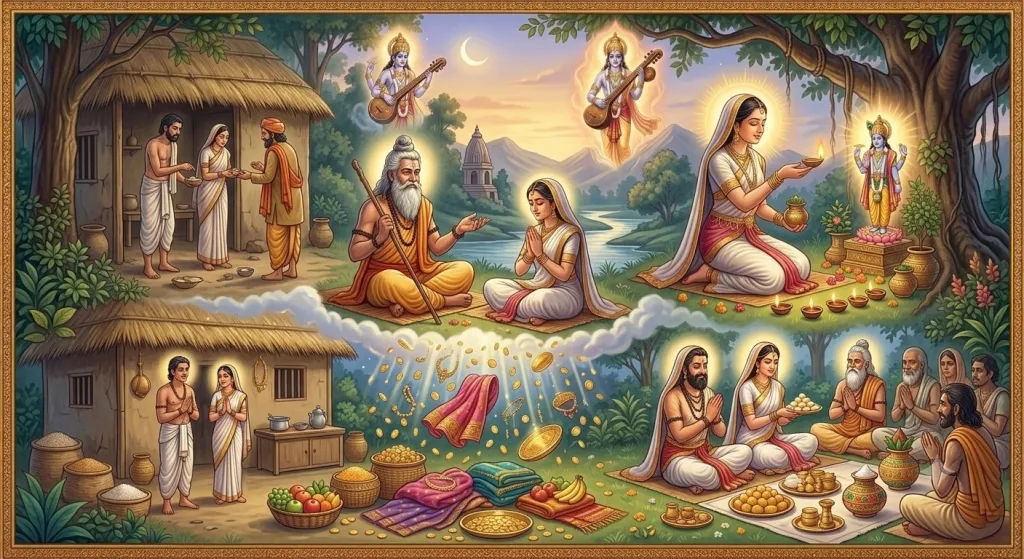
Thanks to AI – Could generate this Near perfect Image

Ugadi marks the beginning of a new year, a moment when the universe resets its clock and the Earth gets draped in the fresh green of spring mirrors this celestial rebirth. In Bharata, this day is not merely a change of date but a profound spiritual and cultural homecoming. It arrives with the fragrance of jasmine and the sight of neem blossoms, signaling that the harshness of winter has passed and a season of potential has arrived.

In Karnataka is celebrated by the first custom the oil bath before daybreak, it is a symbolic purifying procedure that gets us ready for the new year ahead. Fresh mango leaves (torana) and colorful flowers are used to decorate the threshold and other parts of our homes, making the environment pleasing. Another features a joyful group activity by young kids of the family is making rangolis at each home’s entrance, rangoli apart from being a feed for ants and other soil based living beings, also symbolises prosperity and happiness within the family.

The most important ritual of the day centers on a unique dish known as Bevu-Bella. It is a humble yet deep philosophical offering made of neem leaves and jaggery and other ingredients to give you 6 different tastes (Shadruchigalu) . When you take a spoonful, your palate experiences a sharp, sudden bitterness followed immediately by a soothing sweetness. This simple act is a sensory lesson in equanimity; it reminds us that the coming year will inevitably be a tapestry of joy and sorrow, success and struggle. By consuming both together, we resolve to accept life’s duality with a steady heart and a graceful mind.

सुखदुःखे समे कृत्वा लाभालाभौ जयाजयौ ।
ततो युद्धाय युज्यस्व नैवं पापमवाप्स्यसि

– Bhagavad Gita Chapter 2 Verse 38
Meaning
Treating pleasure and pain, gain and loss, victory and defeat as equal,
prepare yourself for the battle of life; thus, you will not suffer

The most important part of the day is when we, the entire family gather for a festive meal that often features Holige or Obbattu, a sweet served with a generous serving of ghee. What makes the air even more greater is the aroma of Obbattu Saaru and the incessant chatter of relatives nicely decked in new clothes. In the evening we move on to another important ritual “The Panchanga Shravana”, where a learned elder (generally it is me) reads the new year’s forecast from the panchanga. This isn’t just about predicting the future; it is a communal recognition of our place within a larger, unfolding universe. Ugadi is, at its core, an invitation to start over, to forgive the past, and to step into the light of a new beginning with hope and resilience.

ಶತಾಯುರ್ವಜ್ರದೇಹಾಯ ಸರ್ವಸಂಪತ್ಕರಾಯ ಚ|
ಸರ್ವಾರಿಷ್ಟವಿನಾಶಾಯ ನಿಂಬಕದಳಭಕ್ಷಣಮ್||

शतायुर्वज्रदेहाय सर्वसम्पत्कराय च।
सर्वारिष्टविनाशाय निम्बकदलभक्षणम्॥

Shatāyur-vajra-dehāya sarva-sampat-karāya cha|
Sarvā-rishta-vināshāya nimbaka-dala-bhakshanam ||
Meaning
I consume these Neem leaves for a life of a hundred years, for a body as strong as a diamond, for the attainment of all prosperity, and for the destruction of all misfortunes.

Shadruchigalu Bevu-Bella Ingredients and Significance

TasteIngredientSignificance
Bitter (Kahi)Neem Buds/FlowersSorrow or Difficulties. Life has challenges; we must face them to grow.
Sweet (Sihi)JaggeryHappiness. The sweet moments that make life worth living.
Sour (Huli)Tamarind JuiceDisgust or Challenges. The “sour” situations that require patience.
Salt (Uppu)SaltFear or Interest. Just as salt adds “life” to food, fear keeps us alert and grounded.
Pungent/Spicy (Khara)Green Chili/PepperAnger. The heat or friction we encounter in relationships or situations.
Tangy (Ogaru)Raw MangoSurprise. The unexpected “tang” or sudden changes in life.

Significance of Neem

While the Shloka focuses on the divine benefits, it aligns with traditional medicine (Ayurveda). Neem is a powerful cleanser and immune booster. By eating it at the start of the New Year (which coincides with the change of seasons), you are symbolically and physically armoring your body against diseases for the year ahead.

Ugadi (2026) Greeting Card for your use

The card above has a pictures clicked by me of a Peepal Tree (Arali mara) at regular intervals from 12th February (when all leaves were shed) till 18th March 2026 (when it was totally green again). 19th March 2026 was Ugadi when everything is renewed and fresh. Reason why our ancestors called this the new year and not 1st January when there is nothing renewed apart from the Gregorian calendar. Nature takes a couple of months more until Ugadi to renew itself

Rudram & Satsang – When Mind Meets Mantras

There is a specific kind of electricity that fills the air when the Pandits from the Art of Living Gurukul begin to chant. Having been part of hundreds of Art of Living Rudra Puja & Satsangs, Trust me when I say this, It isn’t just sound; it is a tectonic shift in the room’s vibration. Conducted generally in the presence of a Swamiji/Sadhvi of Art of Living, the Rudra Puja is less of a ritual and more of a cosmic cleansing. Participating in this sacred ceremony, followed by a soulful Satsang led by our team (the cherry on top), proved to be an experience of sublime elevation that words struggle to fully capture.

With Swami Virupaksha ji of Art of Living

The heart of the Puja lies in the Sri Rudram, a Vedic hymn with two distinct movements that mirror the rhythm of life itself. In the phase of Namakam, the repetitive salutations recognize the Divine in everything—from the beautiful to the fierce—serving as a profound exercise in non-duality. This is seamlessly followed by Chamakam, where the chant shifts to a list of prayers for human needs, acknowledging that spiritual liberation requires a body and world in harmony.

With Sadhvi Nityabodha ji of Art of Living

As the resonance of the mantras peaks, the Abhisheka begins. The most mesmerizing element is the Dhaara, a continuous, unbroken stream of water and milk poured over the Shiva Linga. This flow represents the movement of consciousness, reminding us that our awareness should remain centered and steady amidst the chaos of daily life. Offerings of honey for sweetness, curd for prosperity, and sandalwood for mental clarity are layered into the ceremony, each adding a biological and spiritual resonance to the atmosphere.

Swami Paramanand of Art of Living performing Panchamrita Abhisheka

The Puja follows a precise energetic map, starting with the Sankalpa, where we drop our intentions into the field of consciousness. Through the Mahanyasam, the Pandits effectively turn their bodies into vessels for the Divine vibration. The entire process culminates in the Arati, the final offering where the external light serves as a powerful reminder of the light within.

Alankara Post Rudram
Alankara
Aarti
Vaibhav ji Performing Aarti

Beyond the spiritual masterpiece of the ritual, the impact on the human nervous system is scientifically profound. The mathematical precision of the Sanskrit syllables acts as a sonic scrub for the mind. These specific Vedic accents create a resonance in the cranial cavity that synchronizes the brain hemispheres, leading to a state where you are awake but in a relaxed, meditative, or restful condition. It is a state of flow where daily mental chatter—the Vruttis—is shattered, replaced by a deep, centered stillness.

It reaches a crescendo as we transitioned from the ancient rigor of the Gurukul chants into the Satsang. If the Puja was the deep-cleaning of a vessel, the Satsang was filling that vessel with nectar. The silence earned during the meditation exploded into music, locking in the elevated state we had cultivated. We didn’t just sing; we integrated the peace we had found.

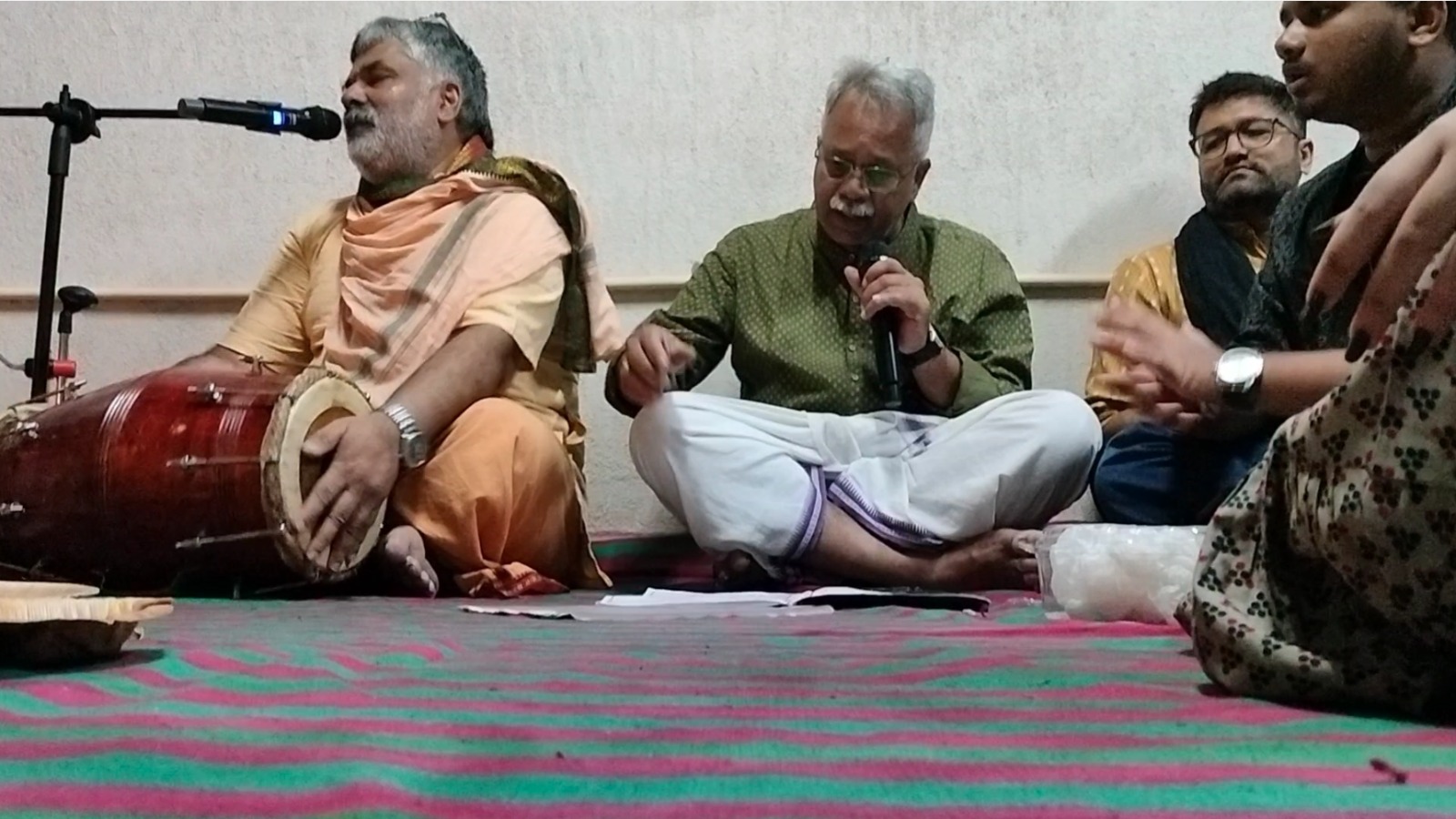
Post Rudra Puja Satsang

This journey from the depths of Vedic silence to the peaks of collective celebration left us in a state of sublime elevation—a peak of consciousness that stays with you long after the last bell has rung.

With Pandits Subbaraya ji and Ganapati ji trained in Art of Living Gurukul – Their amazingly coordinated and perfect Chants makes our day
Satsangis in a Rudra Puja and Satsang

Advaita Corridor: Part 3-Shakatapuram

What a weekend it turned out to be for me and family. We planned to drop in all these three seats of Supreme Knowledge in and around Sringeri enroute to Kumbashi. Flowing through the heart of Karnataka, the Tunga River does more than just nourish the land; it anchors a powerful spiritual corridor. From the foundational seat of Sringeri to the ancient serenity of Hariharapura and the deep-rooted traditions of Shakatapuram, these three Mathas form a golden triangle of Advaita Vedanta. Bound by a shared devotion to Goddess Sharada and the teachings of Adi Shankara, they stand as timeless guardians of India’s Vedic wisdom. Sharing my experience and some information that I gathered over the years in 3 part article, one dedicated for each of the Mathas.

Shakatapuram

Our next stop was Shakatapuram (Bhandgadi), recent addition to our Pilgrimage circuit and this was our 1st Pilgrimage to this amazing Peetha – Sri Jagadguru Badari Shankaracharya Samsthanam. mage (in April 2023) and definitely not our last. This triad peethams is going to be our annual pilgrimage fixture for sure.

Historical records from the 14th and 15th centuries during the Vijayanagar Kingdom provide deep insight into the origins of the Shri Jagadguru Badari Shankaracharya Samsthanam, Shakatapuram Shrividya Peetam. The lineage traces back to 1338 AD when Jagadguru Sri Satyatheertha Mahamuni, then the Pontiff of Jyotishpeeta, fled the foreign invasions and disturbances in Badarinath. Seeking a sanctuary for his Dharmic mission, he traveled south to the banks of the River Tunga in Karnataka and established his peeta parampara at Shakatapuram. This location holds ancient spiritual significance as the Brahmandapurana identifies it as the site where Shakata Maharishi performed penance and attained salvation.

Main Entrance

The sacred temple complex at the Shri Mutt houses shrines for its presiding deities, Srividya Rajarajeswari, Sri Santhana Venugopala Krishna, and Sri Lakshminarisimha, alongside a shrine for Sri Adi Shankara Bhagavadpada and the Adhishtanams of former Acharyas. Currently, the Peetham is led by its 33rd successor, Jagadguru Sri Vidyabhinava Sri Sri Krishnananda Theertha Mahaswamigalu, who ascended the seat at the age of thirteen on February 22, 1981. Highly revered as a master of Veda, Vedanta, and the esoteric Shrividyopasana of Rahoyaga, His Holiness is celebrated nationwide with the titles “Shrividya Taponidhi” and “Shrividya Sadhakottama.”

For over two decades, the Jagadguru has traveled extensively across Bharat to spread Dharma and bless his devotees. Under his leadership, the Shri Mutt and temple complex at Shrikshetra Shakatapuram underwent a massive rebuilding project. Beyond the physical restoration of the shrines, he established vital facilities for spiritual and social welfare, including a Goshala, Veda Pata Sala, Yagna Sala, and Dharma Sala.

The architecture is a masterclass in Hoysala-Dravidian fusion, where stone seems to breathe under the weight of intricate carvings. As you walk toward the main shrines dedicated to Shri Lakshmi Narahari and Shri Vidya Shankara, the symmetry of the temple structures grounds your wandering mind. The grey stone pillars, weathered yet defiant against time, are etched with deities that seem to watch your progress with a silent, knowing grace. The temple’s layout is designed to pull you inward, leading from the expansive, sun-drenched courtyards into the cool, dark sanctum where the flickering oil lamps reflect off the polished surfaces, creating an atmosphere that is as much a fortress of faith as it is a work of art.

Paragon of SymmetryFusion of Hoysala-Dravidian Style
Clicked in front of Dwajastambha

Your spiritual elevation begins the moment you witness the Abhisheka. Watching the rhythmic offerings to the Lord, the resonance of the Vedas echoing against the stone walls starts to vibrate within your own chest. It isn’t just a religious ceremony; it is a recalibration of the soul. You realize that the “Shakata” or “cart” after which the place is named symbolizes the human body, and the Guru’s presence here acts as the driver, guiding the chaotic energy of the mind toward a singular point of peace. Sitting by the Tunga’s edge as the sun sets, the distinction between the self and the universe begins to blur, leaving you with a profound sense of “Aham Brahmasmi”—a realization that the divinity you sought in the stone was actually looking out through your own eyes all along.

Closer View of the Gopura
Bhagwan Shiva, His Avatara Shri Adi Shankara and His Disciples & Shakata Maharshi

Nestled between Hariharapura and Kammaradi, this beautiful Peetham offers a serene escape defined by its calm and cool evening atmosphere. The architectural beauty is highlighted by a stunning Rajagopura and a main entrance that opens up to a breathtaking view of the River Tunga flowing gracefully behind the temple. The well-maintained front garden, featuring tasteful lighting, enhances the tranquil vibe of the complex. Since the location remains relatively uncrowded, it provides a peaceful environment for visitors to soak in the spiritual energy and natural beauty.

Bhagwan Ganesha (on our Right as we face the Main Kshetra adjoining Gopura)
Bhagwan Subramanya (on our Left as we face the Main Kshetra adjoining Gopura)