It is that time of the year – the Blissful retreat from the hustle bustle of the world to “Within” from “Where” you are to “What” you are. Navaratri – the Nine Nights literally. This piece will focus on a few Chants that are beneficial and important during the Navaratri.
All the weblinks to the chants are drawn from the renditions of Artistes from Gurudev Sri Sri Ravi Shankar ji founded The Art of Living. At the time of writing this piece all the links are functional. Please let me know if there are any that doesn’t work
Here we go… Please note that it is not in any order of hierarchy. Each of the chant has its purpose and hopefully we listen to each of them atleast once during the Navaratri. Where possible, please listen to them everyday during Navaratri and beyond
Devi Kavacham
Lalita Sahasranam
Rudram
Durga Devi Stotram
Devi Namana Stotram
Argala Stotram
Lakshmi Astotara
Annapoorna Stotram
Mahishasura Mardhini Stotram
For those interested here are some of my other pieces on Navaratri – Open to corrections and credit will be given for the suggestion
Garbha – Reverence of Maata Durga in Various Forms
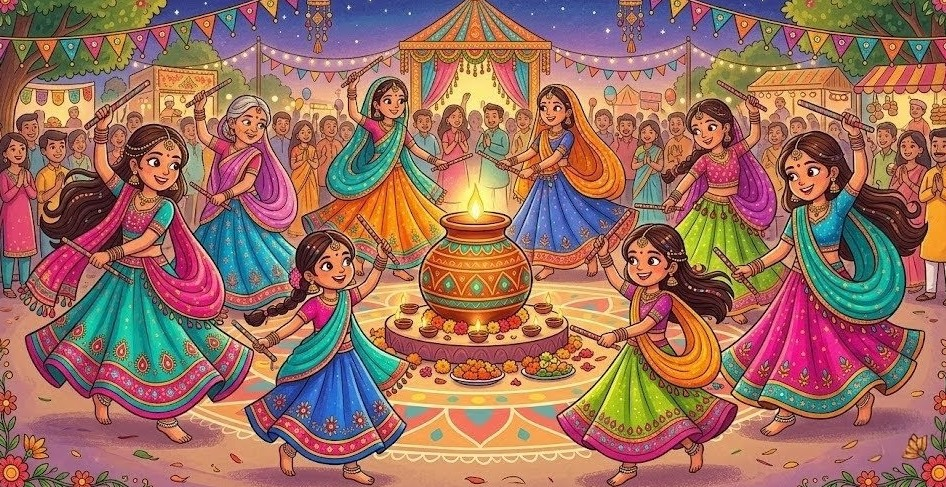
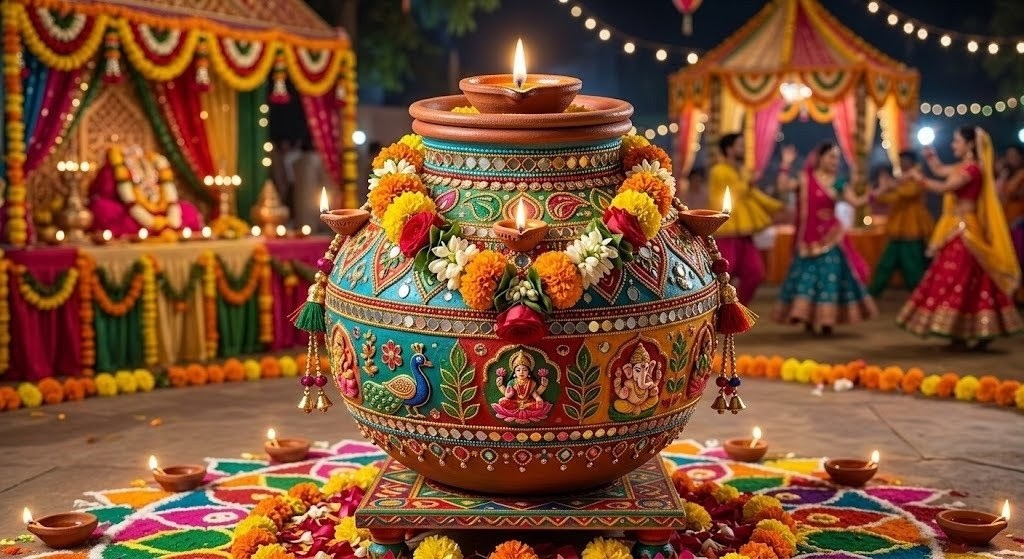
Navaratri festival stands as grand sacred celebration dedicated to Divine Mother in her various glorious manifestations. Among many devotional practices observed across Bharat during nine holy nights, Garba holds central place as spiritual movement filled with profound devotion, rhythm, and cosmic symbolism. Though widely recognized today as vibrant folk dance, Garba is fundamentally sacred Hindu ritual centered around adoration of Jagatjanani Sri Durga Devi. Navaratri Garbha, the lamp inside earthen pot symbolizes the divine light or soul within the human body, while the circular dance represents the eternal cycle of life – an integral belief of Sanatana Dharma.
Garba honors the divine feminine energy (Shakti or Maa Durga), highlighting creation, protection, and transformation The dance celebrates the womb as a sacred space, linking the human body to the cosmic source of life. The participation of women in Garba symbolizes the living power of motherhood, compassion, and courage, while the lamp signifies the spark of Maata Durga within every individual
Garbha-Origin and Etymology
Word Garba originates directly from ancient Sanskrit root term Garbha, which translates to womb or innermost vessel of life. Deeply rooted inShakta traditions, worship revolves around sacred earthen vessel filled with perforated holes called Garbho or Garbha Deep. Inside this perforated clay pot, small oil lamp is lit, glowing continuously throughout nine auspicious nights of Navaratri. The light emerging through the holes symbolizes how inner consciousness manifests through action, speech, and conduct, reflecting the sacred presence of the soul in the physical form
Garbha Pot (or Kalash)
Earthen pot symbolizes human physical body formed out of five basic elements of nature, while small holes represent nine gateways or senses of human vessel. Flame lit inside represents Atman, eternal soul or divine spark residing within every living being. By moving in circular formations around this lit pot, devotees acknowledge presence of Supreme Mother Sri Adi Parashakti as ultimate source of life, creation, and consciousness. Dancers moving in circular formations around Garbha Deep, mirrors the cyclical nature of life – birth, growth, death, and rebirth.
Legends & Scriptural Foundations
Legends detailed in sacred texts like Sri Devi Mahatmyam and Sri Devi Bhagavatam explain spiritual foundation of Navaratri celebrations. As per sacred lore, demon Mahishasura caused widespread chaos across all three worlds after receiving boon that no man, Deva, or earthly creature could defeat him. To protect cosmic order and uphold Dharma, Trimurti consisting of Bhagavan Sri Brahma, Bhagavan Sri Vishnu, and Bhagavan Sri Shiva pooled their supreme cosmic energies, giving rise to Bhagavati Sri Durga Devi.
Equipped with celestial weapons bestowed by Bhagavan Sri Vishnu, Bhagavan Sri Shiva, Bhagavan Sri Indra, and other deities, Mahadevi fought Mahishasura and his demon army for nine full days and nights. On tenth day, celebrated as Vijayadashami, Mahadevi vanquished demon and restored cosmic peace. Garba ritual dance represents blissful cosmic celebration of victory of Dharma over Adharma, divine light over darkness, and spiritual wisdom over ignorance.
Core Rituals and Symbolic Movements
Performing Garba involves specific ritual procedures that carry deep Vedantic philosophy. Before any dance movement begins, sacred Sthapana of Kalash or Garbha Deep takes place alongside holy picture or consecrated idol of Sri Durga Devi. Devotees perform Arati, offer fresh flowers, and light sacred lamp to invoke grace and presence of Divine Mother.
Dance itself is performed in concentric circles around central sanctum containing Garbha Deep or idol of Divine Mother. Circular movement carries profound spiritual meaning. As devotees move in continuous circles, they remember cycle of Samsara, representing continuous birth, life, death, and rebirth across universe.
Only central point containing Garbha Deep remains fixed, stationary, and unchanging, symbolizing Nirguna Brahman or eternal unmanifest Truth. Humans and cosmic bodies may move through endless cycles of existence, but Supreme Mother remains eternal unchanging anchor. Synchronized clapping called Taali rhythmically activates inner energy channels while praising Mahadevi through traditional devotional songs called Garbi.
Regional Variations and Parallel Practices Across Bharat
Devotion to Divine Mother during Navaratri manifests in diverse regional cultural practices across every region of India, sharing same underlying spiritual core as Garba.
Bathukamma in Telangana and Andhra Pradesh
During Navaratri period, women in Telugu lands assemble beautifully arranged floral stacks called Bathukamma, shaped like temple gopuram. They sing traditional devotional hymns praising Sri Maha Gauri Devi and move in graceful circular paths around floral arrangement, echoing core circular movement seen in Garba.
Dhunuchi Naach in West Bengal
In eastern region during Durga Puja celebrations, devotees participate in vibrant Dhunuchi Naach. Devotees hold clay censers filled with burning coconut husk and frankincense, dancing rhythmically before Sri Durga Devi to beats of Dhak drums to invoke divine presence and purify environment.
Kummi and Kolattam in Tamil Nadu
In southern region, women celebrate Navaratri with traditional folk dances like Kummi and Kolattam during Golu celebrations. Dancers form circular groups, clapping hands or striking decorated wooden sticks in rhythm while chanting hymns in praise of Sri Maha Lakshmi Devi, Sri Maha Saraswati Devi, and Sri Parvati Devi.
Bhondla and Tarangamel in Maharashtra and Goa
In western states, Maharashtrian women perform Bhondla or Hadga rituals, dancing in circles around image of Bhagavan Sri Ganesha or elephant symbols during harvest season. Similarly, Goan folk dances celebrate seasonal abundance and invoke protective grace of local Gramadevatas.
Undisputable Hindu Identity
Regardless of modern adaptations or broad community participation, Garba remains fundamentally and undeniably an authentic Hindu ritual deeply rooted in Sanatana Dharma. While its vibrant nature fosters social harmony and cultural togetherness, every aspect of performance, from circular dancing around glowing Garbha Deep to devotional chanting of stotras, is explicitly centered on worship of Jagatjanani Sri Durga. Cultural celebration and social joy are natural expressions of this devotional gathering, but foundation remains sacred Hindu practice. No contemporary reinterpretation or secular narrative can dilute or alter historical truth that Garba is, at its core, spiritual expression of Hindu faith and devotion to Divine Mother.
UNESCO Intangible Cultural Heritage Recognition
In December 2023, UNESCO officially inscribed Garba of Gujarat on Representative List of Intangible Cultural Heritage of Humanity. International body recognized Garba not merely as artistic performance, but as living ancient tradition that fosters social inclusivity, community togetherness, and artistic heritage across generations.
UNESCO highlighted that ritual brings community together, preserving ancient oral knowledge, traditional music, and specialized artisanal craftsmanship involved in creating decorative clay vessels. Global recognition highlights enduring relevance of Indian spiritual heritage on world stage.
NOTE: LAST PARAGRAPH & IMAGES UPDATED AFTER UNESCO RECOGNITION WAS ANNOUNCED
I have compiled from various sources some information of use during your Navaratri (atleast the future ones). Typically a South Indian way of Celebrations (and may be more specific to Karnataka and Tamil Nadu style). The raga links are available at this time (in case the link goes dead it is not a big deal to google for the Raga name mentioned). Here we go..