Aja Ekadashi: Overcoming Suffering and Restoring Righteousness

Aja Ekadashi occurs during Krishna Paksha (dark fortnight) of Bhadrapada month (August-September) according to Amanta calendar or Shravana month according to Purnimanta calendar. It is sacred day observed with deep reverence by devotees of Bhagawan Vishnu to seek freedom from accumulated sins, material hardships, and spiritual darkness. Devotees dedicate this auspicious day to worship Lord Hrishikesha form of Bhagawan Vishnu.

Meaning and Significance of Aja Ekadashi

In Sanskrit, Aja means unborn, eternal, or illusion-free, which refers to birthless divine nature of Lord Vishnu. Therefore, Aja Ekadashi translates to 11th day dedicated to unborn Bhagwan who frees devotees from endless cycle of birth and death.

Human life often undergoes severe tests, grief, and suffering owing to past karma and unfulfilled duties. Observing fast on Aja Ekadashi with pure devotion acts as powerful cleansing force that dissolves deep-rooted negative karma. Scriptures mention that sincere observance of this fast grants benefits equivalent to performing Horse Sacrifice (Aswamedha Yajna), restoring lost dignity, removing poverty, and guiding soul towards Moksha.

Legend associated with Aja Ekadashi

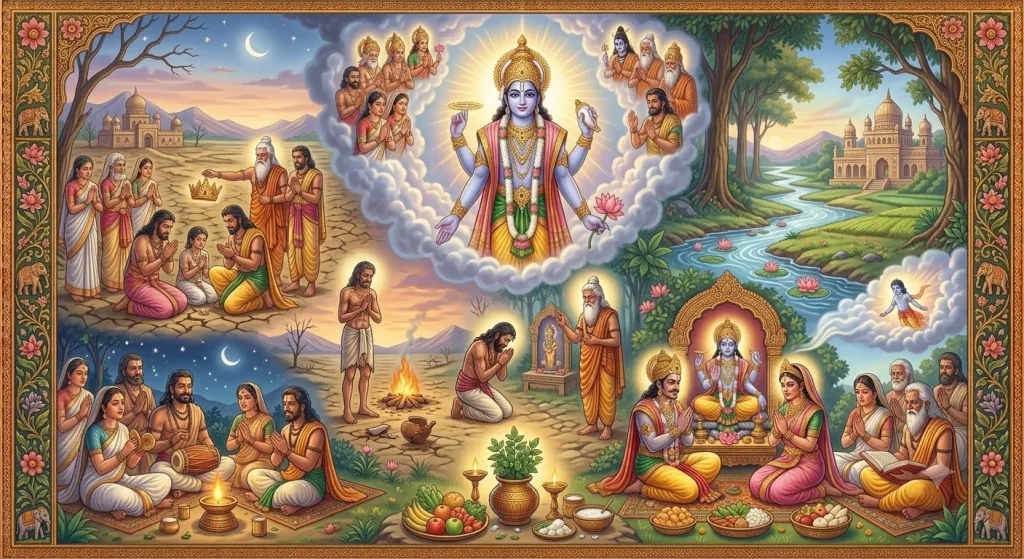
Scriptures describe sacred story narrated by Bhagawan Krishna to King Yudhishthira, involving legendary King Harishchandra of Ayodhya. King Harishchandra was renowned for his absolute truthfulness, righteousness, and unwavering integrity. To test his commitment to truth, Sage Vishwamitra created situations where king had to surrender his entire kingdom, wealth, and royal possessions.

Driven by duty to fulfill promise made to sage, King Harishchandra walked away from his empire along with his wife Queen Taramati and young son Rohitashva. To pay required ritual fee to sage, king sold his wife and son into domestic servitude and sold himself to keeper of cremation ground. King worked tirelessly at cremation ground, performing painful duty of collecting fees from grieving families.

Misfortune struck further when young prince Rohitashva died from snakebite. Heartbroken Queen Taramati brought body of her child to cremation ground, but principled King Harishchandra refused to allow cremation without required fee, staying steadfast to his duty even in moment of unbearable personal grief.

Seeing extreme suffering and despair of king, compassionate Sage Gautama visited him. King Harishchandra bowed at feet of sage and narrated his immense sorrow, asking for way to break free from continuous misery. Sage Gautama advised king to observe Aja Ekadashi fast in Krishna Paksha of Bhadrapada month with complete sincerity and worship Lord Hrishikesha.

King Harishchandra followed advice of Sage Gautama strictly, keeping fast, avoiding food, and praying deeply to Bhagawan Vishnu on Aja Ekadashi. By divine power of this sacred fast, all past sins of king dissolved instantly. Heavenly gods showered flowers from sky, deceased prince Rohitashva came back to life, and queen was restored to her royal status. King Harishchandra got his kingdom back and ruled righteously before attaining Vaikuntha Dham along with his subjects.

Rituals to be performed on Aja Ekadashi

Devotee must wake up early in morning during Brahma Muhurta and take ritual bath using clean water without using soap, shampoo, or such cosmetic products.

Puja area should be cleaned thoroughly and idol or photo of Bhagawan Vishnu, specifically Hrishikesha form, should be placed respectfully.

Light ghee lamp, offer fresh yellow flowers, sandalwood paste, incense, and Tulsi leaves to Bhagwan Vishnu.

Chant Vishnu Sahasranama, Hare Krishna Mahamantra, or Om Namo Bhagavate Vasudevaya continuously throughout day.

Listen to or read Aja Ekadashi Katha with family members in peaceful state of mind.

Offer your respects to parents and other elders, especially Guru, seeking their heartfelt blessings on this sacred morning.

Observe fast during entire day according to individual health capacity. Healthy individuals can observe strict fast without water or taking only water. Milk, curd, and fruits can be consumed if complete fasting is difficult due to health reasons. Rice, wheat, barley, lentils, pulses, and all food grains must be avoided strictly. Heavy spices, regular salt, garlic, onion, tea, coffee, outside processed food, and alcohol must be strictly avoided.

Perform evening Aarti with devotion, offer special Naivedya to Bhagwan Vishnu, and maintain noble thoughts, avoiding anger, backbiting, falsehood, or harsh speech.

Break fast next day on Dwadashi tithi during scheduled Parana time. Fast should be broken after sunrise once Hari Vasara period concludes. Offer naivedya to Bhagwan Vishnu, perform short prayer, and break fast by consuming prasada, water, or fruits before eating regular food.

PS: Article re-formatted into blocks and Header Image changed
Parsva Ekadashi: Cosmic Transformation and Divine Surrender

Parsva Ekadashi occurs during Shukla Paksha (waxing phase of moon) of Bhadrapada month (August-September). It is highly revered Ekadashi occurring during middle of Chaturmas period. On this sacred day, Bhagawan Vishnu changes his sleeping position from left side to right side while in cosmic sleep (Yoga Nidra) on Sheshnag. Devotees dedicate this day to worship Lord Vamana form of Bhagawan Vishnu to seek relief from sins and attain spiritual elevation.

Meaning and Significance of Parsva Ekadashi

In Sanskrit, Parsva means side or flank. Therefore, Parsva Ekadashi translates to 11th day when Lord Vishnu turns on his side during cosmic slumber. It is also popularly known as Vamana Ekadashi, Jaljhulani Ekadashi, or Parivartini Ekadashi owing to cosmic shift occurring on this day.

This day holds special spiritual power as change in cosmic posture of Bhagawan Vishnu symbolizes positive transformation and renewal of spiritual energy. Observing fast on Parsva Ekadashi cleanses mind of past sins and negative tendencies. Scriptures mention that sincere devotion on this day grants merit equal to performing Vajapeya Yajna, bringing happiness, purity, and guiding soul towards ultimate liberation or Moksha.

Legend associated with Parsva Ekadashi

Scriptures describe sacred story narrated by Bhagawan Krishna to King Yudhishthira, involving demon King Bali and Lord Vamana. King Bali, grandson of noble devotee Prahlada, was ambitious and powerful ruler who conquered three worlds, defeating Devas and occupying Svargaloka. Despite being demon by birth, King Bali was deeply righteous, generous, and devoted to performing sacrifices and charity.

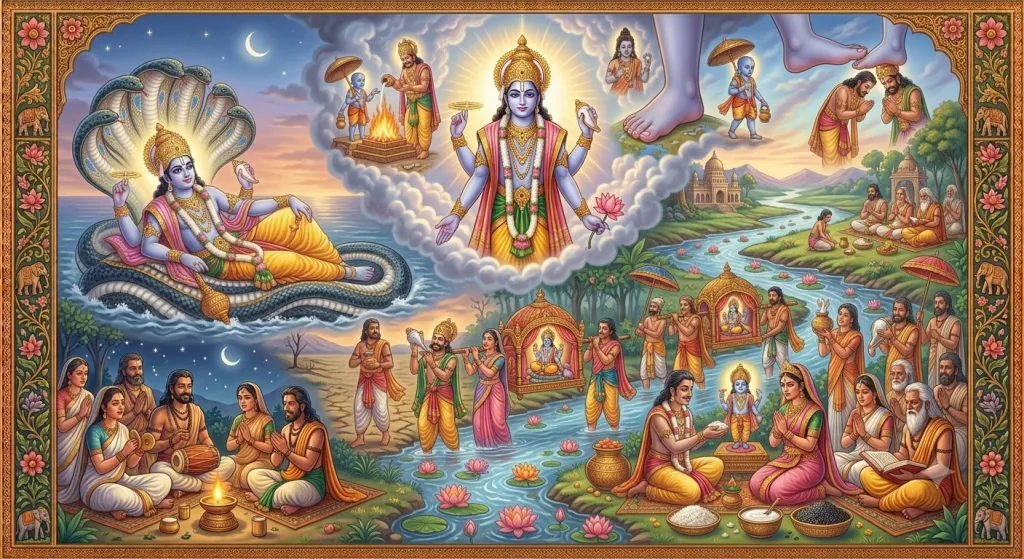
Devendra Indra and other celestial beings approached Bhagawan Vishnu in Ksheera Sagara, seeking help to regain control of Svargaloka. Bhagawan Vishnu promised to protect Devas and took avatar as dwarf Brahmin named Vamana, son of Sage Kashyapa and Aditi. Lord Vamana approached sacrificial hall where King Bali was performing grand Ashwamedha Yajna.

Guru Shukracharya recognized Lord Vamana as divine manifestation of Vishnu and warned King Bali not to offer anything to dwarf Brahmin. However, King Bali refused to go back on his word and welcomed Lord Vamana with total reverence, offering to grant whatever wish young Brahmin possessed. Lord Vamana simply requested land measuring three paces of his small feet for performing penance.

King Bali agreed happily. Instantly, Lord Vamana expanded into his cosmic form (Trivikrama). With his first step, Lord Vamana covered entire earth, and with his second step, he covered entire sky and celestial realms. With no space left for third step, Lord Vamana asked King Bali where to place his foot. Showing ultimate surrender and humility, King Bali offered his own head for third step.

Pleased by extreme devotion and truthfulness of King Bali, Lord Vamana placed his foot on Bali head, pushing him gently into Sutala Loka (underworld). Lord Vamana granted King Bali eternal reign over Sutala Loka and promised to personally guard his kingdom forever. Devotees commemorate this divine event on Parsva Ekadashi by worshiping Vamana form of Bhagawan Vishnu.

Rituals to be performed on Parsva Ekadashi

Devotee must wake up early in morning during Brahma Muhurta and take ritual bath using clean water without using soap, shampoo, or such cosmetic products.

Puja area should be cleaned thoroughly and idol or photo of Bhagawan Vishnu, specifically Lord Vamana form, should be placed respectfully.

Light ghee lamp, offer fresh yellow flowers, sandalwood paste, incense, and Tulsi leaves to Bhagwan Vishnu.

Chant Vishnu Sahasranama, Hare Krishna Mahamantra, or Om Namo Bhagavate Vasudevaya continuously throughout day.

Listen to or read Parsva Ekadashi Katha with family members in peaceful state of mind.

Offer your respects to parents and other elders, especially Guru, seeking their heartfelt blessings on this sacred morning.

Observe fast during entire day according to individual health capacity. Healthy individuals can observe strict fast without water or taking only water. Milk, curd, and fruits can be consumed if complete fasting is difficult due to health reasons. Rice, wheat, barley, lentils, pulses, and all food grains must be avoided strictly. Heavy spices, regular salt, garlic, onion, tea, coffee, outside processed food, and alcohol must be strictly avoided.

Perform evening Aarti with devotion, offer special Naivedya to Bhagwan Vishnu, and maintain noble thoughts, avoiding anger, backbiting, falsehood, or harsh speech.

Break fast next day on Dwadashi tithi during scheduled Parana time. Fast should be broken after sunrise once Hari Vasara period concludes. Offer naivedya to Bhagwan Vishnu, perform short prayer, and break fast by consuming prasada, water, or fruits before eating regular food.

PS: Article re-formatted into blocks and Header Image changed
Utpanna Ekadashi: Birth of Ekadashi Devi

Utpanna Ekadashi occurs during Krishna Paksha (dark fortnight) of Margashirsha month (November-December) according to Amanta calendar or Kartik month according to Purnimanta calendar. It marks sacred origin day of Ekadashi Devi, spiritual energy of Bhagawan Vishnu. Devotees dedicate this day to worship Bhagawan Vishnu and Ekadashi Devi to seek freedom from past sins, protection from negative forces, and spiritual elevation.

Meaning and Significance of Utpanna Ekadashi

In Sanskrit, Utpanna means origin, emergence, or birth. Therefore, Utpanna Ekadashi translates to 11th day that marks birth or manifestation of Ekadashi Devi. It is traditionally considered starting point for anyone who wishes to begin observing annual Ekadashi fasts.

Human mind continuously struggles against internal vices like anger, lust, greed, and delusion. Observing fast on Utpanna Ekadashi with pure devotion generates divine strength to conquer these negative inner forces. Scriptures state that sincere devotion on this day erases sins accumulated over multiple births, bestows good health, peace of mind, and guides soul towards ultimate liberation or Moksha.

Legend associated with Utpanna Ekadashi

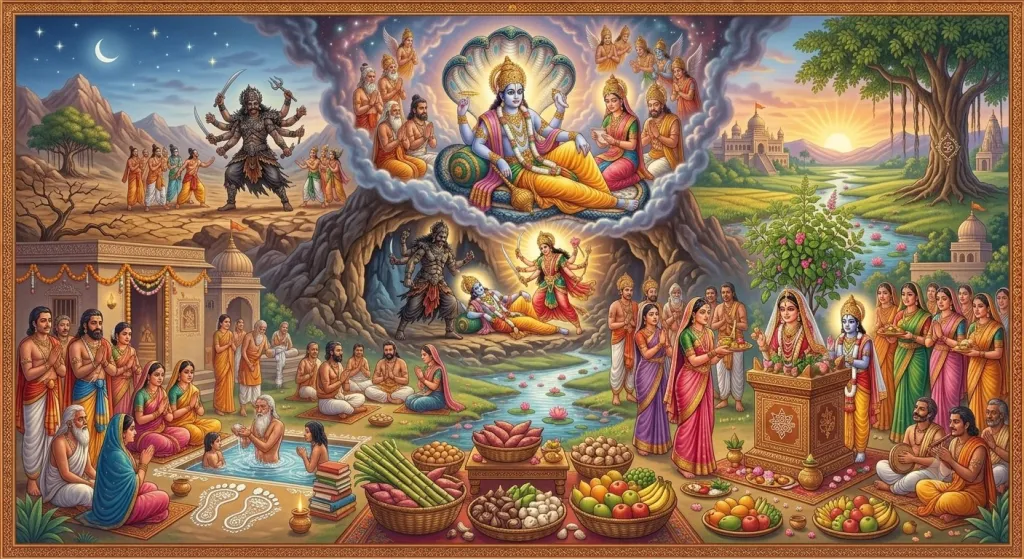
Scriptures describe sacred story narrated by Bhagawan Krishna to King Yudhishthira, involving terrifying demon named Mura who lived during Satya Yuga. Mura defeated Devas, drove Indra out of Svargaloka, and established complete control over celestial world. Distressed and helpless, Devas headed by Indra approached Bhagawan Shiva, who guided them to seek refuge in Bhagawan Vishnu at Ksheera Sagara.

Bhagawan Vishnu promised to protect Devas and waged long war against demon Mura and his army. Battle continued fiercely for thousands of years. Eventually, Bhagawan Vishnu traveled to Chandravati city and entered cave called Simhavati in Badrikashrama to rest and enter Yoga Nidra. Terrible demon Mura followed Bhagawan Vishnu into cave, intending to strike sleeping Bhagawan.

At that moment, radiant divine female energy emerged directly from body of sleeping Bhagawan Vishnu. Goddess possessed extraordinary cosmic power, equipped with divine weapons. She challenged demon Mura to battle and defeated him quickly, destroying villainous demon on spot. When Bhagawan Vishnu woke up from divine sleep, Bhagawan saw slain demon and saw divine goddess standing humbly before him.

Pleased by her loyalty and immense power, Bhagawan Vishnu named her Ekadashi because she emerged on 11th day of waning moon. Shri Hari granted her boon that anyone who observes fast on her emergence day will be cleansed of all sins and achieve eternal place in Vaikuntha. From that day onwards, Utpanna Ekadashi came to be celebrated as birth anniversary of Ekadashi Vrata.

Rituals to be performed on Papamochan Ekadashi

Devotee must wake up early in morning during Brahma Muhurta and take ritual bath using clean water without using soap, shampoo, or such cosmetic products.

Puja area should be cleaned thoroughly and idol or photo of Bhagawan Vishnu along with Ekadashi Devi should be placed respectfully.

Light ghee lamp, offer fresh yellow flowers, sandalwood paste, incense, and Tulsi leaves to Bhagwan Vishnu.

Chant Vishnu Sahasranama, Hare Krishna Mahamantra, or Om Namo Bhagavate Vasudevaya continuously throughout day.

Listen to or read Utpanna Ekadashi Katha with family members in peaceful state of mind.

Offer your respects to parents and other elders, especially Guru, seeking their heartfelt blessings on this sacred morning.

Observe fast during entire day according to individual health capacity. Healthy individuals can observe strict fast without water or taking only water. Milk, curd, and fruits can be consumed if complete fasting is difficult due to health reasons. Rice, wheat, barley, lentils, pulses, and all food grains must be avoided strictly. Heavy spices, regular salt, garlic, onion, tea, coffee, outside processed food, and alcohol must be strictly avoided.

Perform evening Aarti with devotion, offer special Naivedya to Bhagwan Vishnu, donate food or clothes to needy, and maintain noble thoughts, avoiding anger, backbiting, falsehood, or harsh speech.

Break fast next day on Dwadashi tithi during scheduled Parana time. Fast should be broken after sunrise once Hari Vasara period concludes. Offer naivedya to Bhagwan Vishnu, perform short prayer, and break fast by consuming prasada, water, or fruits before eating regular food.

PS: Article re-formatted into blocks and Header Image changed