सशङ्खचक्रं सकिरीटकुण्डलं सपीतवस्त्रं सरसीरुहेक्षणम् ।
सहारवक्ष:स्थलशोभिकौस्तुभश्रियं नमामि विष्णुं शिरसा चतुर्भुजम् ॥
Utpanna Ekadashi occurs during Krishna Paksha (dark fortnight) of Margashirsha month (November-December) according to Amanta calendar or Kartik month according to Purnimanta calendar. It marks sacred origin day of Ekadashi Devi, spiritual energy of Bhagawan Vishnu. Devotees dedicate this day to worship Bhagawan Vishnu and Ekadashi Devi to seek freedom from past sins, protection from negative forces, and spiritual elevation.
Meaning and Significance of Utpanna Ekadashi
In Sanskrit, Utpanna means origin, emergence, or birth. Therefore, Utpanna Ekadashi translates to 11th day that marks birth or manifestation of Ekadashi Devi. It is traditionally considered starting point for anyone who wishes to begin observing annual Ekadashi fasts.
Human mind continuously struggles against internal vices like anger, lust, greed, and delusion. Observing fast on Utpanna Ekadashi with pure devotion generates divine strength to conquer these negative inner forces. Scriptures state that sincere devotion on this day erases sins accumulated over multiple births, bestows good health, peace of mind, and guides soul towards ultimate liberation or Moksha.
Legend associated with Utpanna Ekadashi
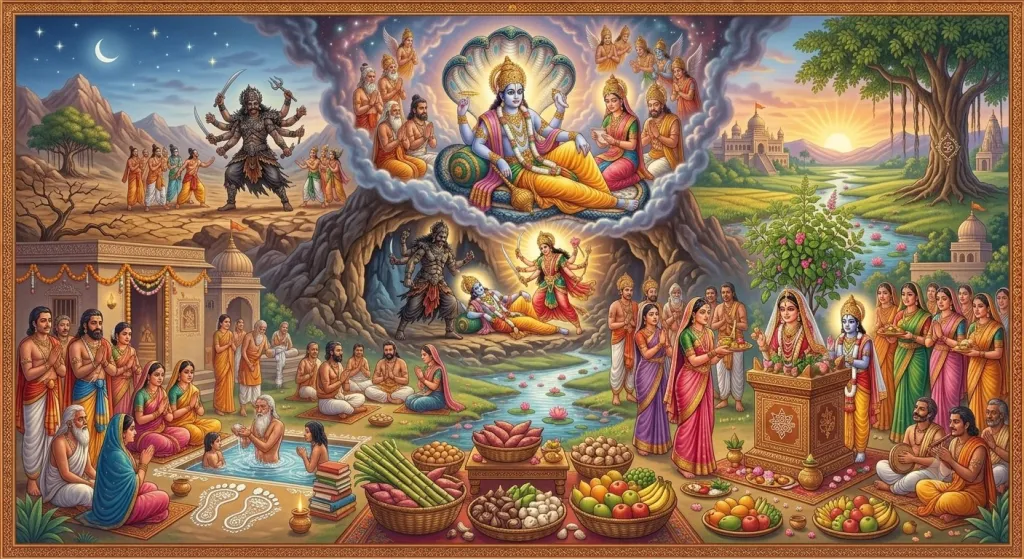
Scriptures describe sacred story narrated by Bhagawan Krishna to King Yudhishthira, involving terrifying demon named Mura who lived during Satya Yuga. Mura defeated Devas, drove Indra out of Svargaloka, and established complete control over celestial world. Distressed and helpless, Devas headed by Indra approached Bhagawan Shiva, who guided them to seek refuge in Bhagawan Vishnu at Ksheera Sagara.
Bhagawan Vishnu promised to protect Devas and waged long war against demon Mura and his army. Battle continued fiercely for thousands of years. Eventually, Bhagawan Vishnu traveled to Chandravati city and entered cave called Simhavati in Badrikashrama to rest and enter Yoga Nidra. Terrible demon Mura followed Bhagawan Vishnu into cave, intending to strike sleeping Bhagawan.
At that moment, radiant divine female energy emerged directly from body of sleeping Bhagawan Vishnu. Goddess possessed extraordinary cosmic power, equipped with divine weapons. She challenged demon Mura to battle and defeated him quickly, destroying villainous demon on spot. When Bhagawan Vishnu woke up from divine sleep, Bhagawan saw slain demon and saw divine goddess standing humbly before him.
Pleased by her loyalty and immense power, Bhagawan Vishnu named her Ekadashi because she emerged on 11th day of waning moon. Shri Hari granted her boon that anyone who observes fast on her emergence day will be cleansed of all sins and achieve eternal place in Vaikuntha. From that day onwards, Utpanna Ekadashi came to be celebrated as birth anniversary of Ekadashi Vrata.
Rituals to be performed on Papamochan Ekadashi
Devotee must wake up early in morning during Brahma Muhurta and take ritual bath using clean water without using soap, shampoo, or such cosmetic products.
Puja area should be cleaned thoroughly and idol or photo of Bhagawan Vishnu along with Ekadashi Devi should be placed respectfully.
Light ghee lamp, offer fresh yellow flowers, sandalwood paste, incense, and Tulsi leaves to Bhagwan Vishnu.
Chant Vishnu Sahasranama, Hare Krishna Mahamantra, or Om Namo Bhagavate Vasudevaya continuously throughout day.
Listen to or read Utpanna Ekadashi Katha with family members in peaceful state of mind.
Offer your respects to parents and other elders, especially Guru, seeking their heartfelt blessings on this sacred morning.
Observe fast during entire day according to individual health capacity. Healthy individuals can observe strict fast without water or taking only water. Milk, curd, and fruits can be consumed if complete fasting is difficult due to health reasons. Rice, wheat, barley, lentils, pulses, and all food grains must be avoided strictly. Heavy spices, regular salt, garlic, onion, tea, coffee, outside processed food, and alcohol must be strictly avoided.
Perform evening Aarti with devotion, offer special Naivedya to Bhagwan Vishnu, donate food or clothes to needy, and maintain noble thoughts, avoiding anger, backbiting, falsehood, or harsh speech.
Break fast next day on Dwadashi tithi during scheduled Parana time. Fast should be broken after sunrise once Hari Vasara period concludes. Offer naivedya to Bhagwan Vishnu, perform short prayer, and break fast by consuming prasada, water, or fruits before eating regular food.
PS: Article re-formatted into blocks and Header Image changed