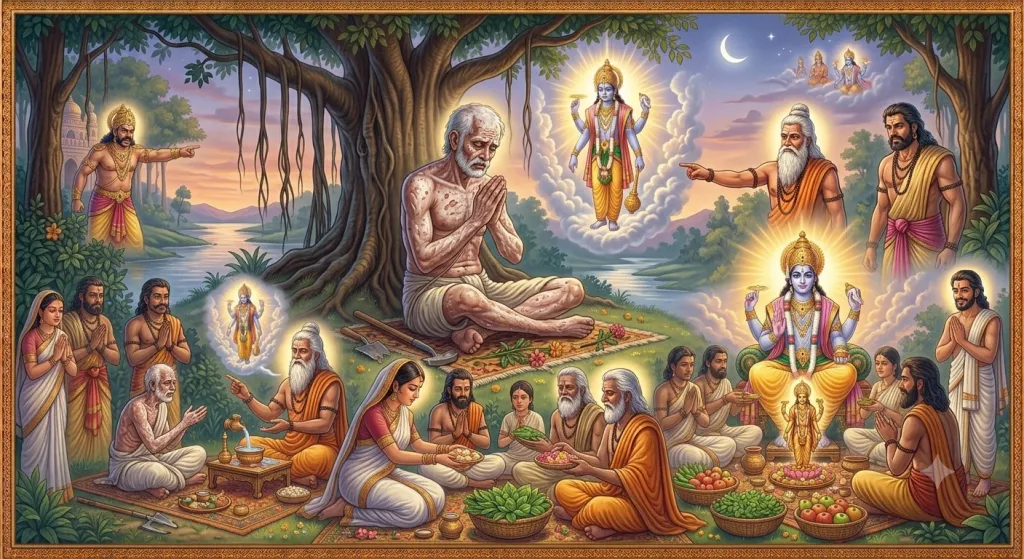
Yogini Ekadashi: Freedom from Disease and Negative Karma

शान्ताकारं भुजगशयनं पद्मनाभं सुरेशं
विश्वाधारं गगनसदृशं मेघवर्णं शुभाङ्गम् ।
लक्ष्मीकान्तं कमलनयनं योगिभिर्ध्यानगम्यं
वन्दे विष्णुं भवभयहरं सर्वलोकैकनाथम् ॥

Yogini Ekadashi falls during Krishna Paksha (dark fortnight) of Ashadha month (June-July) according to Amanta calendar or Jyeshtha month according to Purnimanta calendar. It is highly sacred Ekadashi coming between Nirjala Ekadashi and Devshayani Ekadashi. Devotees dedicate this day to worship Bhagawan Vishnu to get cured of severe skin diseases, physical ailments, and erase accumulated negative karma.

Meaning and Significance of Yogini Ekadashi

Understanding name itself reveals spiritual power of this divine day. In Sanskrit, Yogini relates to spiritual union, yoga, and divine power that connects individual soul with Supreme Lord. Therefore, Yogini Ekadashi translates to 11th day that brings spiritual union with Bhagawan Vishnu and cleanses deep-rooted karmic afflictions.

Physical illness and bodily suffering often result from past wrongdoings and neglect of spiritual duties. Observing fast on Yogini Ekadashi with pure mind acts as divine healing for body and soul. Scriptures state that observing this fast bestows benefits equivalent to feeding eighty thousand righteous people and frees devotee from terrible diseases like leprosy, bringing health, purity, and spiritual elevation.

Legend associated with Yogini Ekadashi

Scriptures describe sacred story narrated by Bhagawan Krishna to King Yudhishthira, involving gardener named Hemamali. Hemamali was Yaksha who lived in beautiful city of Alakapuri, ruled by King Kubera, lord of wealth. Hemamali was ardent devotee of Shiva and his daily duty was to gather fresh flowers from Manasarovar lake for Kubera morning puja. Hemamali was deeply in love with his beautiful wife Swarupavati.

One morning, after picking fresh flowers, Hemamali returned home. Overcome by intense attachment and love for his wife, he forgot his duty and stayed at home, neglecting to deliver flowers to King Kubera. Meanwhile, King Kubera waited for hours to perform his daily worship. When flowers did not arrive, Kubera sent guards to find reason behind delay. Guards returned and informed king that Hemamali was busy enjoying time with his wife.

Enraged by negligence of divine service, King Kubera summoned Hemamali to royal court. Terrified Hemamali appeared with folded hands. King Kubera scolded him for placing personal pleasure above worship of Lord Shiva. In fit of anger, Kubera cursed Hemamali to suffer from severe leprosy and be separated from his beloved wife, falling down to mortal earth.

Instantly, Hemamali body got covered in painful white spots of leprosy and he fell to earth. He wandered through dense forests, enduring extreme physical pain, hunger, and mental agony of separation. Despite intense suffering, Hemamali remembered his past righteous actions and kept seeking spiritual help.

While wandering in Himalayas, Hemamali reached ashram of great Sage Markandeya. Hemamali fell at feet of sage and narrated his sad tale. Moved by compassion, Sage Markandeya advised Hemamali to observe Yogini Ekadashi fast in Krishna Paksha of Ashadha month with complete devotion to Bhagawan Vishnu.

Hemamali strictly observed Yogini Ekadashi fast following all guidelines and praying sincerely to Lord Hari. By divine grace of Bhagawan Vishnu, leprosy vanished completely and Hemamali regained his handsome body, radiant health, and spiritual purity. He reunited with his wife and returned to Alakapuri happily.

Rituals to be performed on Yogini Ekadashi

Devotee must wake up early in morning during Brahma Muhurta and take ritual bath in clean water.

Puja area should be cleaned thoroughly and idol or photo of Bhagawan Vishnu should be placed respectfully.

Light ghee lamp, offer fresh yellow flowers, sandalwood paste, incense, and Tulsi leaves to Bhagwan Vishnu.

Chant Vishnu Sahasranama, Hare Krishna Mahamantra, or Om Namo Bhagavate Vasudevaya continuously throughout day.

Listen to or read Yogini Ekadashi Katha with family members in peaceful state of mind.

Observe fast during entire day according to individual health capacity. Healthy individuals can observe strict fast without water or taking only water. Milk, curd, and fruits can be consumed if complete fasting is difficult due to health reasons. Rice, wheat, barley, lentils, pulses, and all food grains must be avoided strictly. Heavy spices, regular salt, garlic, onion, tea, coffee, outside processed food, and alcohol must be strictly avoided.

Perform evening Aarti with devotion and maintain noble thoughts, avoiding anger, backbiting, falsehood, or harsh speech.

Break fast next day on Dwadashi tithi during scheduled Parana time. Fast should be broken after sunrise once Hari Vasara period concludes. Offer naivedya to Bhagwan Vishnu, perform short prayer, and break fast by consuming prasada, water, or fruits before eating regular food.

PS: Article re-formatted into blocks and change of Header Image
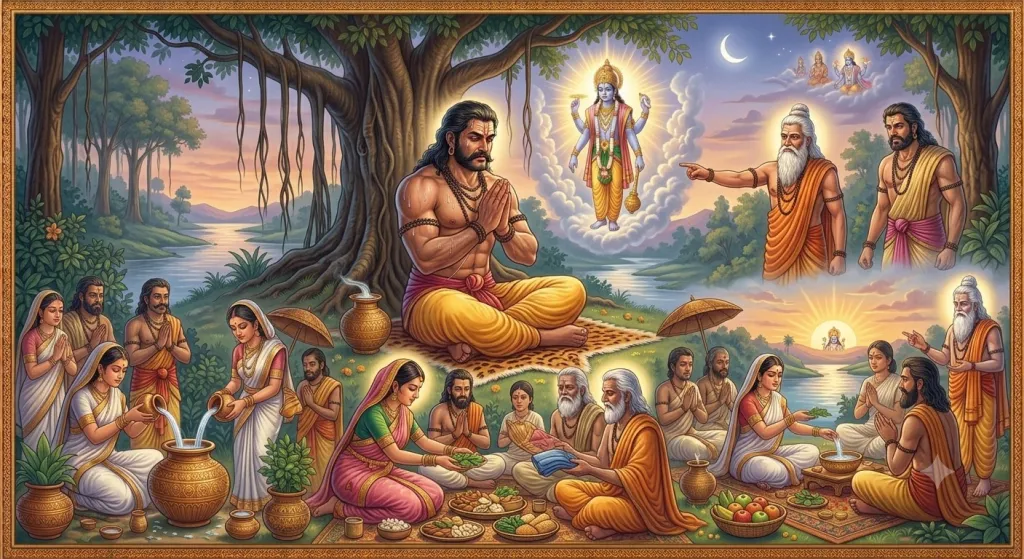
Nirjala Ekadashi: Unlocking Merit of All Ekadashis

यस्य स्मरणमात्रेण जन्मसंसारबन्धनात् ।
विमुच्यते नमस्तस्मै विष्णवे प्रभविष्णवे ॥

Nirjala Ekadashi occurs during Shukla Paksha (waxing phase of moon) of Jyeshtha month (May-June). It is considered most rigorous, spiritually rewarding, and supreme among all twenty four Ekadashis observed in year. Devotees dedicate this day to worship Bhagawan Vishnu with complete self-control, abstaining strictly from food and even single drop of water throughout fast duration.

Meaning and Significance of Nirjala Ekadashi

Understanding name itself reveals supreme nature of this sacred day. In Sanskrit, Nir means without and Jala means water. Therefore, Nirjala Ekadashi translates to 11th day observed completely without water. It is also popularly known as Bhima Ekadashi or Pandava Ekadashi.

Observing fast without water during hot summer month of Jyeshtha tests physical endurance, mental strength, and spiritual determination. Scriptures state that observing Nirjala Ekadashi fast sincerely grants benefits equal to observing all twenty four Ekadashis of year combined. It cleanses accumulated sins, purifies mind, grants good health, prosperity, and ensures path towards ultimate liberation or Moksha.

Legend associated with Nirjala Ekadashi

Scriptures describe sacred story narrated by Maharishi Ved Vyasa to second Pandava brother Bhimasena. While all other Pandava brothers Yudhishthira, Arjuna, Nakula, Sahadeva, and their wife Draupadi observed every Ekadashi fast strictly, Bhima faced great difficulty. Bhima possessed immensely powerful appetite driven by fire of Vrikadhara in his stomach, making it impossible for him to control hunger or fast twice every month.

Feeling distressed that he was missing out on spiritual blessings, Bhima approached Maharishi Vyasa seeking solution. Bhima humbly expressed his inability to control hunger twenty four times year, but expressed deep wish to attain benefits of Ekadashi fasts and reach Vaikuntha.

Maharishi Ved Vyasa advised Bhima to observe single, strict fast on Nirjala Ekadashi in Shukla Paksha of Jyeshtha month. Maharishi explained that on this specific day, devotee must refrain from consuming food and even single drop of water from sunrise of Ekadashi until sunrise of Dwadashi. Sage assured Bhima that by observing this tough penance with devotion to Bhagawan Vishnu, he would obtain complete merit of all twenty four Ekadashis of year.

Bhima accepted advice of Maharishi Vyasa and observed fast with utmost dedication. Due to intense heat and hunger, Bhima collapsed during fast, but by divine grace of Bhagawan Vishnu and guidance of Vyasa, he completed fast successfully. Thus, this sacred day came to be known as Bhima Ekadashi.

Rituals to be performed on Nirjala Ekadashi

Devotee must wake up early in morning during Brahma Muhurta and take ritual bath in clean water.

Puja area should be cleaned thoroughly and idol or photo of Bhagawan Vishnu, along with Goddess Lakshmi, should be placed respectfully.

Light ghee lamp, offer fresh yellow flowers, sandalwood paste, incense, Tulsi leaves, and seasonal fruits like melons to Bhagwan Vishnu.

Chant Vishnu Sahasranama, Hare Krishna Mahamantra, or Om Namo Bhagavate Vasudevaya continuously throughout day.

Listen to or read Nirjala Ekadashi Katha with family members in peaceful state of mind.

Observe strict fast without consuming any food or water for entire twenty four hour period, starting from sunrise of Ekadashi to sunrise of Dwadashi. Healthy individuals should refrain from even drinking water. Elderly people, children, or individuals with medical conditions can consume water, milk, or fruits according to capability. Food grains like rice, wheat, barley, lentils, and pulses must be strictly avoided. Heavy spices, regular salt, garlic, onion, tea, coffee, and alcohol must be avoided completely.

Perform charity on this day by donating pots filled with clean drinking water, hand fans, clothes, food, and umbrellas to needy people or Brahmins.

Perform evening Aarti with devotion and maintain noble thoughts, avoiding anger, backbiting, falsehood, or harsh speech.

Break fast next day on Dwadashi tithi during scheduled Parana time. Fast should be broken after sunrise once Hari Vasara period concludes. Offer water, clothes, and naivedya to Bhagwan Vishnu, perform short prayer, offer water to thirsty people, and break fast by consuming water, prasada, or fruits before eating regular food.

PS: Article re-formatted into blocks and change of Header Image

I have written another article on the same subject. You can read it here

Kamika Ekadashi-Remedy for All Doshas

The last Ekadashi (11th day) in Krishna Paksha (waning phase of the moon) in the Hindu month of Ashada, is observed as Kamika Ekadashi.

Guru Raghavendra Matha, Hulimavu, Bengaluru

Fasting and observing rituals of Ekadashi on this day bestows benefits equivalent of performing a Rajasuya Ashwameda Vajpeya Yaga (used to be performed in earlier times by Kings for fertility, power and peace in the Kingdom). It also blesses the devotee who is unable to complete important tasks due to some obstacle or hindrances. Observing Kamika Ekadashi would ensure completion of such tasks to fruition.

One of the significant benefits is explained by Bhagwan Shri Krishna Himself as answer to question posed by Yudhishtra. Bhagwan Shri Krishna explains, “This legend is originally related by Brahma himself to his son Devarshi Narada. It is a solution to all those who have accrued any type of sins. Those who observe fast and worship Bhagwan Vishnu with Tulsi patra (leaves) will be redeemed of all sins, renders the soul pure and paves way for liberation. Brahma Dosha or Brahmana Hatya Paapa – Sin of killing a Brahmin by anyone in previous or current generation in the family, will be redeemed and the devotee will be freed of the consequences. It also frees the devotee from any Pitru Dosha”

Brahma continues, “Kamika Ekadashi fasting is equivalent to visiting Kashi and also bathing in Ganga Maa. The Vrati or Devotee thus has to observe the day with cleanest of heart, free of lust or greed or pride for deriving the benefit”

Lord Venkateshwara with Sri Vakshasthala Mahalakshmi, Kallahalli, Kanakapura

Legend

There lived a short-tempered and arrogant landlord in a small village. Once he had a fight with the Brahmin of that village and in a fit of rage strikes a blow on his head resulting in the death of the Brahmin. Then he repented and wanted to be a part of his Shradhha Karma (last rites), which the villagers refused. The landlord was deeply hurt by this and approached a visiting Rishi and seeks his advise on the prayashchitta (atonement) for the sin that he had commited by killing a Brahmin. Rishi advised him to observe a fast and worship Bhagwan Vishnu on Kamika Ekadashi. That night when he slept beside Vishnu’s Murti, who sees that the man is truly repentive and seeks sincere atonement, relieves him of his sins.

Vrata and Puja Vidhana

Wake up early in the morning and have a water-only bath (no use of any shampoo or soap or any other such cosmetic products).
Ensure you don’t commit any act hereon that can be considered impure (in deed or thought)
Offer Puja to Bhagwan Vishnu with Tulsi leaves
Pay your respects to Parents and other Elders, especially Guru
Chant Vishnu Sahasranama, Shri Rama Raksha Stotra, and Aranya Kanda of Srimad Ramayana
Make a donation (in cash or kind to a Brahmin)
Do not consume any staple food (Upavas food is allowed)
Continue the fasting until next day (Dwadashi) and do the Parana (breaking of fast at sunrise, ensure it is Dwadashi tithi)

Om Namo Narayana

I have written on the same subject earlier. To read that article click here