शान्ताकारं भुजगशयनं पद्मनाभं सुरेशं
विश्वाधारं गगनसदृशं मेघवर्णं शुभाङ्गम् ।
लक्ष्मीकान्तं कमलनयनं योगिभिर्ध्यानगम्यं
वन्दे विष्णुं भवभयहरं सर्वलोकैकनाथम् ॥
Yogini Ekadashi falls during Krishna Paksha (dark fortnight) of Ashadha month (June-July) according to Amanta calendar or Jyeshtha month according to Purnimanta calendar. It is highly sacred Ekadashi coming between Nirjala Ekadashi and Devshayani Ekadashi. Devotees dedicate this day to worship Bhagawan Vishnu to get cured of severe skin diseases, physical ailments, and erase accumulated negative karma.
Meaning and Significance of Yogini Ekadashi
Understanding name itself reveals spiritual power of this divine day. In Sanskrit, Yogini relates to spiritual union, yoga, and divine power that connects individual soul with Supreme Lord. Therefore, Yogini Ekadashi translates to 11th day that brings spiritual union with Bhagawan Vishnu and cleanses deep-rooted karmic afflictions.
Physical illness and bodily suffering often result from past wrongdoings and neglect of spiritual duties. Observing fast on Yogini Ekadashi with pure mind acts as divine healing for body and soul. Scriptures state that observing this fast bestows benefits equivalent to feeding eighty thousand righteous people and frees devotee from terrible diseases like leprosy, bringing health, purity, and spiritual elevation.
Legend associated with Yogini Ekadashi
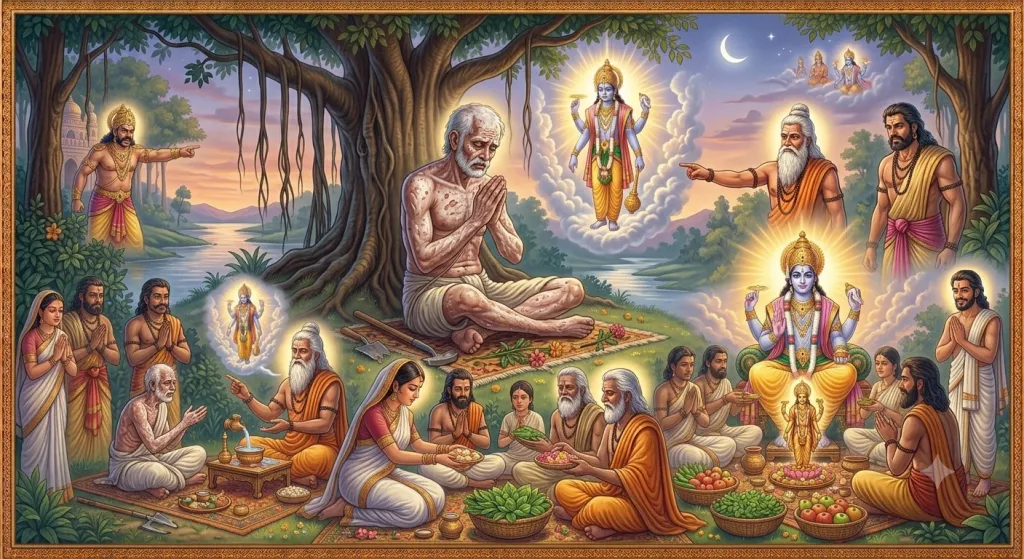
Scriptures describe sacred story narrated by Bhagawan Krishna to King Yudhishthira, involving gardener named Hemamali. Hemamali was Yaksha who lived in beautiful city of Alakapuri, ruled by King Kubera, lord of wealth. Hemamali was ardent devotee of Shiva and his daily duty was to gather fresh flowers from Manasarovar lake for Kubera morning puja. Hemamali was deeply in love with his beautiful wife Swarupavati.
One morning, after picking fresh flowers, Hemamali returned home. Overcome by intense attachment and love for his wife, he forgot his duty and stayed at home, neglecting to deliver flowers to King Kubera. Meanwhile, King Kubera waited for hours to perform his daily worship. When flowers did not arrive, Kubera sent guards to find reason behind delay. Guards returned and informed king that Hemamali was busy enjoying time with his wife.
Enraged by negligence of divine service, King Kubera summoned Hemamali to royal court. Terrified Hemamali appeared with folded hands. King Kubera scolded him for placing personal pleasure above worship of Lord Shiva. In fit of anger, Kubera cursed Hemamali to suffer from severe leprosy and be separated from his beloved wife, falling down to mortal earth.
Instantly, Hemamali body got covered in painful white spots of leprosy and he fell to earth. He wandered through dense forests, enduring extreme physical pain, hunger, and mental agony of separation. Despite intense suffering, Hemamali remembered his past righteous actions and kept seeking spiritual help.
While wandering in Himalayas, Hemamali reached ashram of great Sage Markandeya. Hemamali fell at feet of sage and narrated his sad tale. Moved by compassion, Sage Markandeya advised Hemamali to observe Yogini Ekadashi fast in Krishna Paksha of Ashadha month with complete devotion to Bhagawan Vishnu.
Hemamali strictly observed Yogini Ekadashi fast following all guidelines and praying sincerely to Lord Hari. By divine grace of Bhagawan Vishnu, leprosy vanished completely and Hemamali regained his handsome body, radiant health, and spiritual purity. He reunited with his wife and returned to Alakapuri happily.
Rituals to be performed on Yogini Ekadashi
Devotee must wake up early in morning during Brahma Muhurta and take ritual bath in clean water.
Puja area should be cleaned thoroughly and idol or photo of Bhagawan Vishnu should be placed respectfully.
Light ghee lamp, offer fresh yellow flowers, sandalwood paste, incense, and Tulsi leaves to Bhagwan Vishnu.
Chant Vishnu Sahasranama, Hare Krishna Mahamantra, or Om Namo Bhagavate Vasudevaya continuously throughout day.
Listen to or read Yogini Ekadashi Katha with family members in peaceful state of mind.
Observe fast during entire day according to individual health capacity. Healthy individuals can observe strict fast without water or taking only water. Milk, curd, and fruits can be consumed if complete fasting is difficult due to health reasons. Rice, wheat, barley, lentils, pulses, and all food grains must be avoided strictly. Heavy spices, regular salt, garlic, onion, tea, coffee, outside processed food, and alcohol must be strictly avoided.
Perform evening Aarti with devotion and maintain noble thoughts, avoiding anger, backbiting, falsehood, or harsh speech.
Break fast next day on Dwadashi tithi during scheduled Parana time. Fast should be broken after sunrise once Hari Vasara period concludes. Offer naivedya to Bhagwan Vishnu, perform short prayer, and break fast by consuming prasada, water, or fruits before eating regular food.
PS: Article re-formatted into blocks and change of Header Image
One thought on “Yogini Ekadashi: Freedom from Disease and Negative Karma”