Sabarimala: A Living Tradition, Not a Historical or Legal Artifact

Shri Dharma Shasta Temple in Sabarimala & Its Non-Negotiable Traditions

Beyond the Menstrual Myth: Naishtika Brahmacharya of Sabarimala
The discourse surrounding the Sabarimala hill shrine is frequently reduced to a conflict between modernity and superstition, mischaracterizing restriction on women of reproductive age as a product of menstrual impurity. However, within the framework of Hindu temple traditions (Agama Shastras), the practice is rooted in sovereign nature of the deity’s consecration, a reality that exists in a sphere beyond reach of a deracinated Constitution or secular legal frameworks. This is a compilation with highlights of talks that I have delivered in various forums (both intellectual and spiritual platforms)

Deity & God
While the terms are often used interchangeably, they carry different nuances in theology, philosophy, and linguistics. In Hinduism,manifestations of Bhagwan Ayyappa (since we are on His subject), is a perfect way to see the difference between God and Deity & how they blend together.

  • God: In the highest sense, it is referring to the supreme, all-powerful energy that runs the universe. In Ayyappa’s case, this supreme nature is shown through his birth. He is called Hariharaputra, meaning he is son of both Vishnu (Hari) and Shiva (Hara). By combining the powers of the Preserver and the Destroyer, Ayyappa represents the total, absolute power of God in a single form. He is seen as the Dharma Shastha, the eternal protector of Righteousness and cosmic order.
  • Deity: It is the specific way that supreme power manifests in a particular place or for a particular purpose. For example, at the famous Sabarimala temple, Ayyappa is worshipped as a specific kind of deity, a Naishtika Brahmachari (an eternal celibate). In this form, he is shown sitting in a unique yogic pose (Yogarudha Siddhasana), teaching to Bhaktas how to achieve self-control and mental strength.
    • However, in Achankovil, he is worshipped as a different deity, a Grihasta king with his consorts, Purna & Pushkala, in Kulathupuzha in Balaroopa (Child) and in Aryankavu (Youth) While the God (the divine spirit) is the same, Deity (the form and personality) changes depending on the temple.
    • So, in simple terms, God is the infinite power of Vishnu and Shiva living within him, while the Deity is the specific version of Ayyappa, whether as a child, a king, or a forest yogi, that a devotee talks to and prays to in a temple.

Deity’s Abode vs. Place of Worship
The single biggest challenge in this discourse is convincing modern observers of the distinction between a place of worship and an Abode of God. A Place Of Worship is a facility for humans and an Abode is the home of a Living Deity.

  • Deity as a Person: Legally and traditionally, the Deity is a juristic person with specific rights with status of a perpetual minor. Just as a person has the right to privacy or to set the rules for their own home, the Deity at Sabarimala has the right to maintain His chosen form. Humans can at best be just trustees of His properties never the owners.
  • Kuch Jaankar, Kuch Maankar: In Sanatana Dharma, our practices are based on this dictum. Do Knowing why we do, or Do because you accept (you may not know why) (Kuch Jaankar Chalo, Kuch Maankar Chalo). Relying solely on secular logic for a spiritual space is like using a ruler to measure sound. It is the wrong tool for the task.

Fallacy of Past Violations arguments
Naysayers often hunt for historical evidence to force a change in tradition. Even though records from over 200 years ago confirm these restrictions existed, people cite recent, unsubstantiated instances of entry as proof that the tradition isn’t absolute. However, this logic is fundamentally flawed:

  • Violation vs. Validation: Agreeing for the sake of argument that such entries occurred, it doesn’t cease to be a violation. Just because laws against murder or theft are broken in society does not make those acts legal or the law invalid.
  • Remedy or Parihara: If a person of the restricted age entered, tradition provides for a Parihara (atonement ritual) to restore the sanctity of the space. The act of breaking a rule doesn’t dissolve the rule. It merely necessitates a remedy. It is just like a crime and punishment in our modern deracinated law.
Beyond Constitution or Deracinated Laws

Devaprashnam, The Divine Enquiry
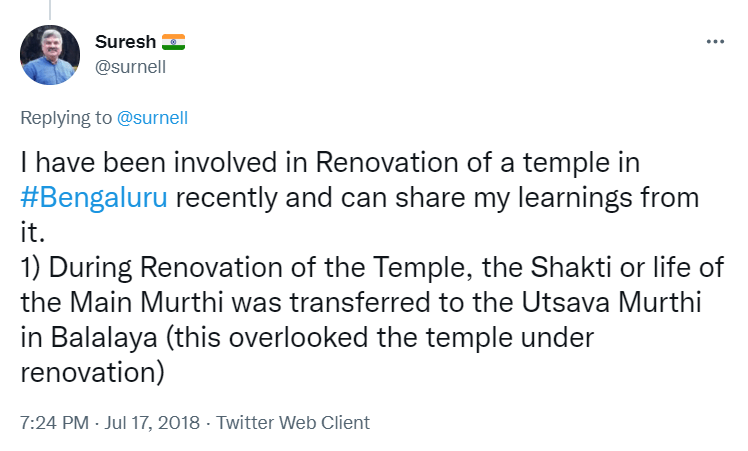
Devaprashanam is a sophisticated ritual used in Vedic astrology and temple traditions to decipher the will of the deity.  It is typically performed when a temple faces difficulties, before major renovations, or to investigate causes of unexplained mishaps. The process (as I observed during construction of Ayyappa Temple in Bengaluru) is meticulous and involved several key stages:

  • Preparation: Astrologer (Daivajna) and temple priests observe strict vows of purity. A specific area is sanctified, and a Padma (lotus mandala) is drawn using coloured powders.
  • Invoking Presence: Through sacred mantras, Divine energy is invited into a ceremonial lamp (Deepam) or a gold coin.
  • Rashi Chakra: A diagram representing zodiac is prepared. The most pivotal moment involves a Swarna-Prashnam. A gold coin is washed in holy water and sandalwood paste. A young child, chosen for their innocence and lack of bias, is asked to place the coin on one of the twelve houses of the zodiac drawn on the floor. The house where the coin lands becomes the Aaroodha Lagna, the focal point of entire reading. This position reveals current state of the deity’s energy.
  • The Nimitta (Omens): The astrologer observes everything—the flame of the lamp, the breath of the questioner, and even external sounds or bird flights—to gather clues.
  • Ashtamangala Calculation: Using 108 small seashells (cowries), astrologer performs complex mathematical calculations (reduction process) he determines a single digit number, called the Ashtamangala number, which reveals the root of the problem and the required remedies, predicting everything from the health of the temple structure to the satisfaction of the presiding deity.

The final verdict provides a roadmap for Parihara (atonement rituals) to restore spiritual sanctity of the deity’s abode.

Daiva Iccha, Will of The Deity
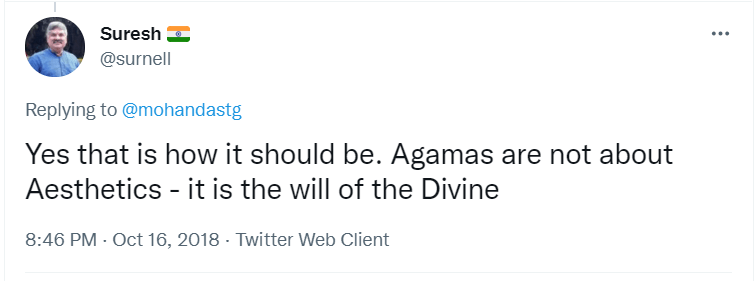
In Hindu tradition, a temple is not merely a place of prayer but the residence of a living deity, a juristic person with specific attributes. The rules of a temple are governed by Deva Iccha (the Will of Deity), which is periodically ascertained through a Devaprashnam, an astrological ritual used to interpret divine intent. Agamas are not about Aesthetics, it is the will of the Divine

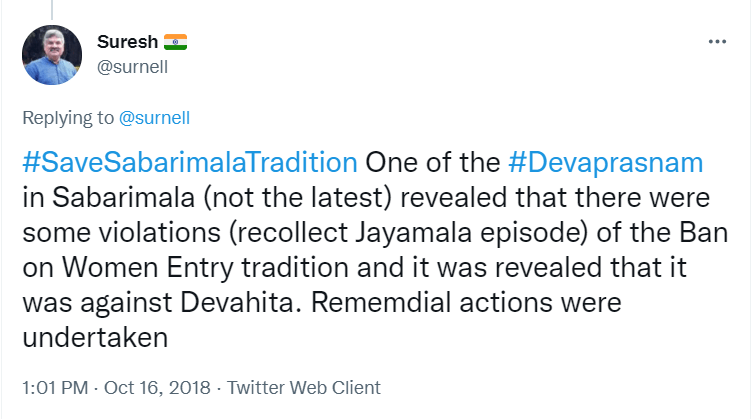
  • Practice as a Living Tradition: A Devaprashnam can determine that a specific practice must change or be upheld to maintain the sanctity of the deity’s presence.
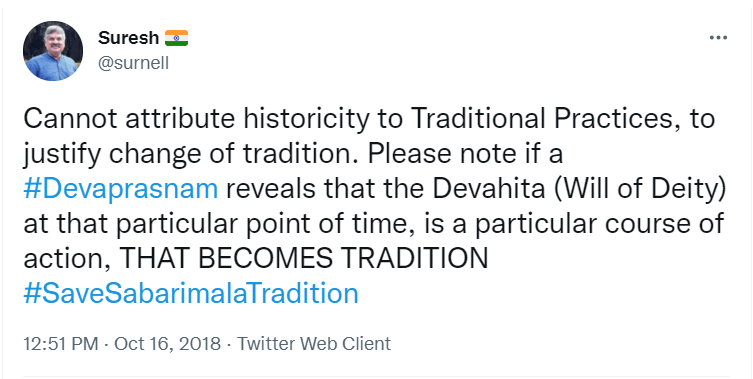
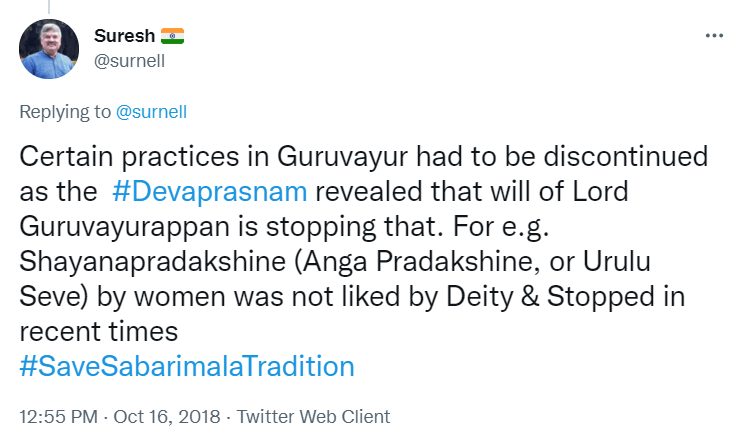
    • Certain practices in Guruvayur had to be discontinued as the Devaprasnam revealed that will of Bhagwan Guruvayurappan is stopping that. For e.g.  Shayanapradakshine (Anga Pradakshine, or Urulu Seve) by women was not liked by Deity & stopped in recent times
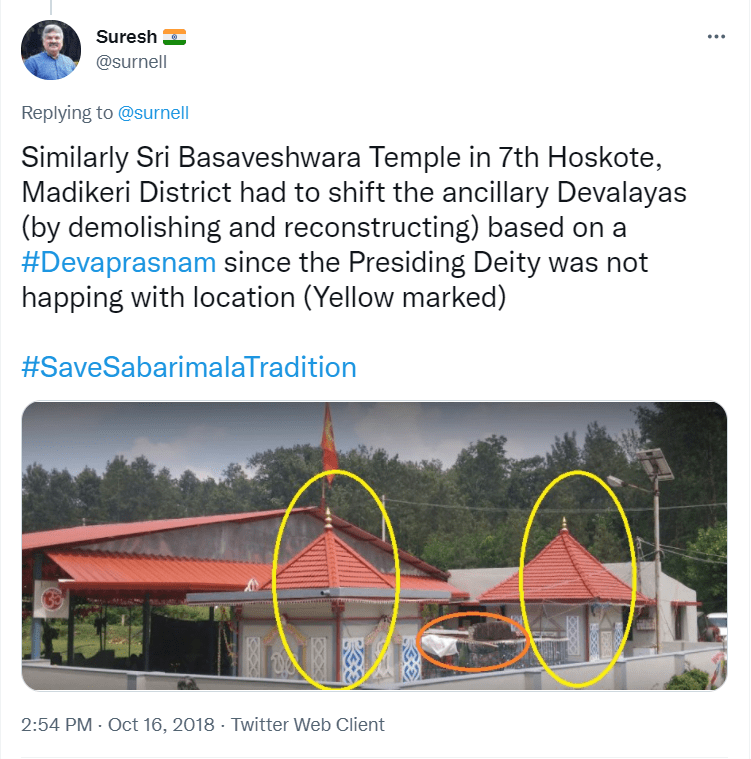
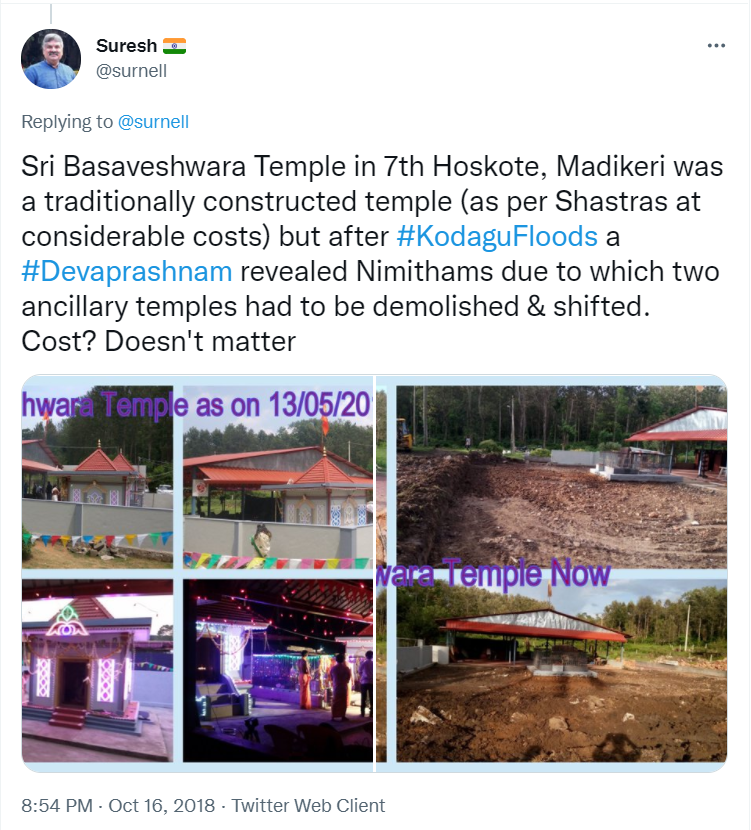
    • Similarly Sri Basaveshwara Temple in 7th Hoskote, Madikeri District had to shift the Upadevalayas (by demolishing and reconstructing a newly built temple) based on a Devaprashnam since the Presiding Deity was not happy with location of upadevalayas
  • Sabarimala Context: As noted in the writings on yensures.com (particularly regarding the spiritual context of the Kerala Floods), these traditions are not static artifacts but living pulses of faith. If a Devaprashnam reveals that the Devahita (Will of the Deity) requires a particular course of action, that becomes the tradition, regardless of modern secular interpretations.

Tradition Over Codification: Insights from Sanatana Dharma
One of the common traps modern learned observers fall into is seeking a single user manual or scriptural code for Hindu practices. Unlike Desert Cults who are governed by a single book which is their manual, Sanatana Dharma is not always codified in a single book.

  • Diverse Variants: Rituals often vary by family or Sangha. For instance, while some families strictly wear black for the Sabarimala pilgrimage, others may follow different color codes. Neither is wrong, as these practices are often born of sincere, localized tradition rather than a rigid central command.
  • Spirit of Worship: Whether it is an elderly woman teaching her grandchild a unique way to worship at a Banyan tree or the specific rituals of a Sadhak, validity lies in the sincerity (Bhava) and tradition handed down through generations.

Fallacy of Historicity
The modern obsession with Historicity (proving when a practice started) is a byproduct of the Desert Cult or Abrahamic mindset. These faiths rely on a linear timeline: a spiritual chief appeared, a book was written, and rules were codified at a specific moment in history and they departed.

  • Conflict: If you treat Sanatana Dharma like a historical artifact, you try to box Sri Rama or Sri Krishna into a timeline. Figures like Sri Rama and Sri Krishna are beyond time, what they symbolised or lessons from their lives are true for all Yugas. When you try to make them or our practices historical, it suits an agenda that seeks to prove a practice is recent and therefore changeable.
  • The Truth: For a Sadhak, truth is Sanatana (eternal). Practices like the Sabarimala pilgrimage are beyond the reach of a calendar. Whether a rule was written down 2,000 years ago or established via Devaprashnam 20 years ago, its validity remains identical because both originate from the same source The Divine Will.
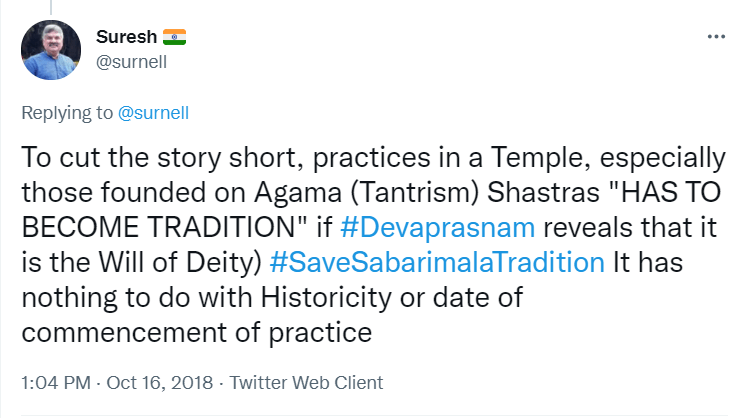
  • To summarise, In Tantric (Agama) Shastras, a practice becomes tradition because it is the revealed Will of the Deity. Its age or historical proof is irrelevant to its spiritual validity. Using the lack of historical evidence to force a change in tradition is a fundamental misunderstanding of how a consecrated space operates.

Why Sabarimala is Unique
A common critique asks why other Ayyappa temples allow women if Sabarimala does not. The answer lies in the Prana Pratishtha (consecration), differentiated right in the beginning of this article – Deities and God.

  • Naishtika Brahmachari: At Sabarimala, Bhagwan Ayyappa is in a state of intense, perennial celibacy.
  • Functional Requirement: Exclusion of women of a certain age is a functional requirement to maintain the specific energy of this shrine. It is not a moral judgment on women or a statement on impurity, but a respect for the deity’s chosen form of penance.

Conclusion: Resisting Armchair Intervention
Whether it is the sudden environmental concern over Deepavali crackers or the legal intervention into temple customs, these often stem from an echo chamber of armchair experts who place the onus of proof on the believer. However, for the true Sadhak, the tradition is self-evident, anchored in Deva Iccha, and preserved through the lived experience of generations.

For further reading: You can refer to more detailed perspectives on these traditions and the spiritual significance of regional events at yensures.com.
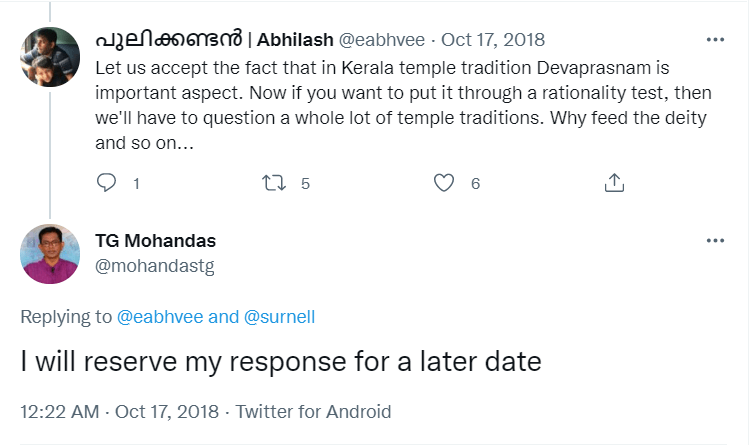
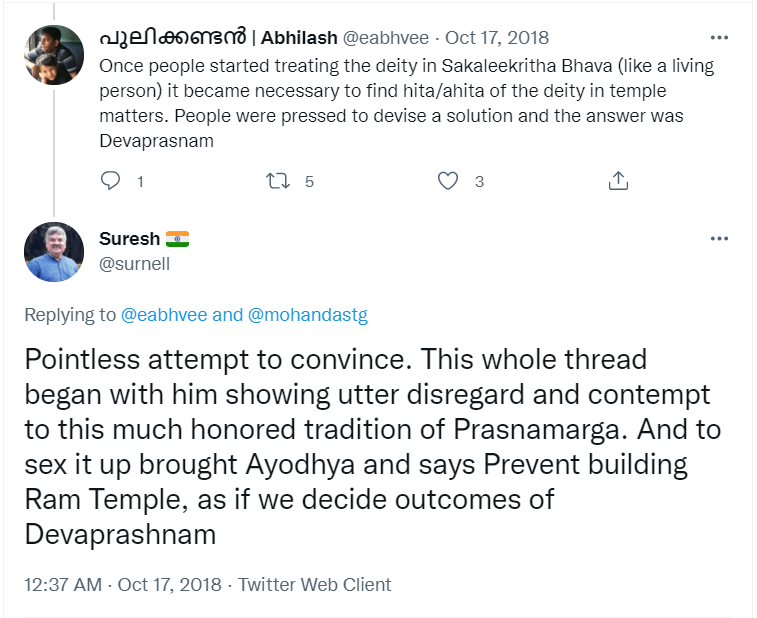
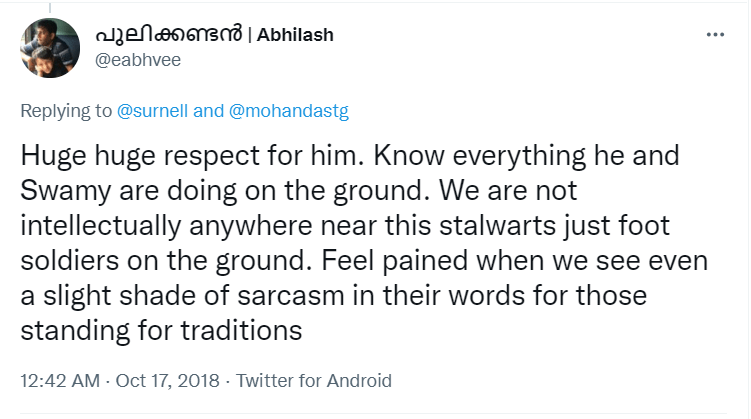
Prasnamarga and Historicity

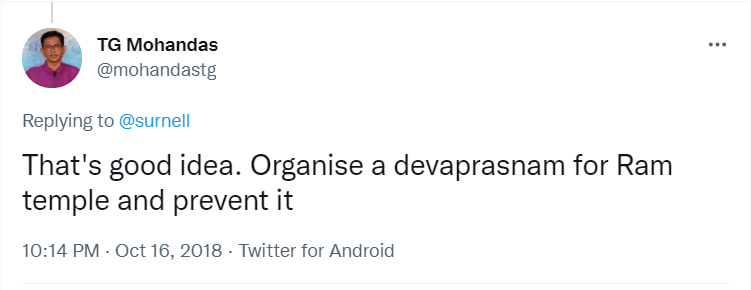
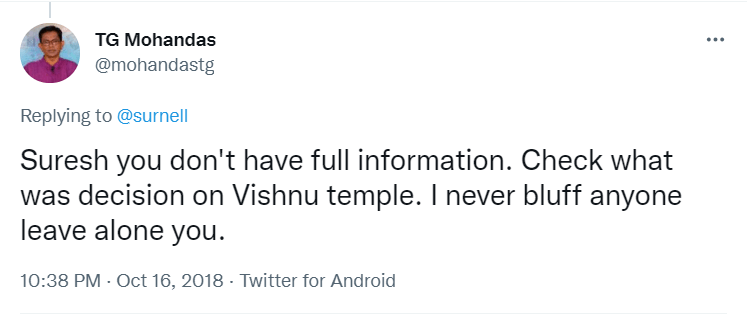
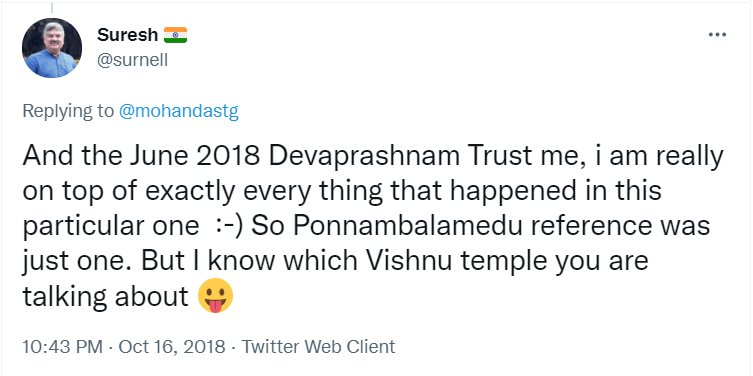
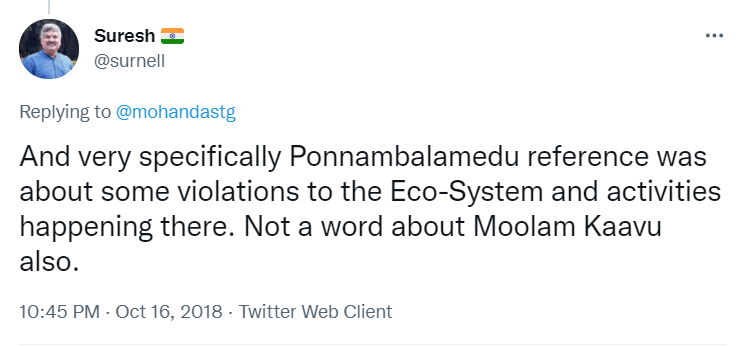
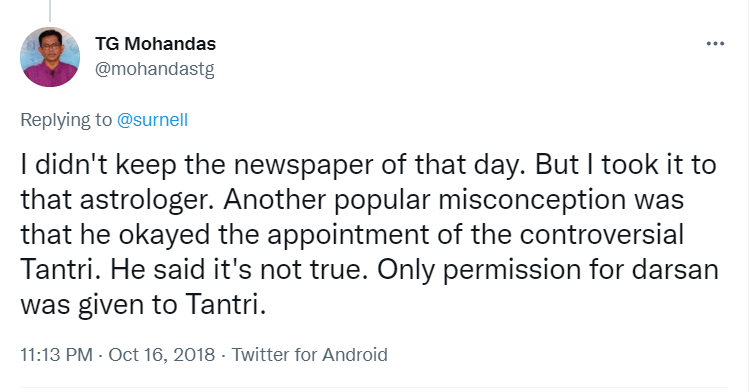
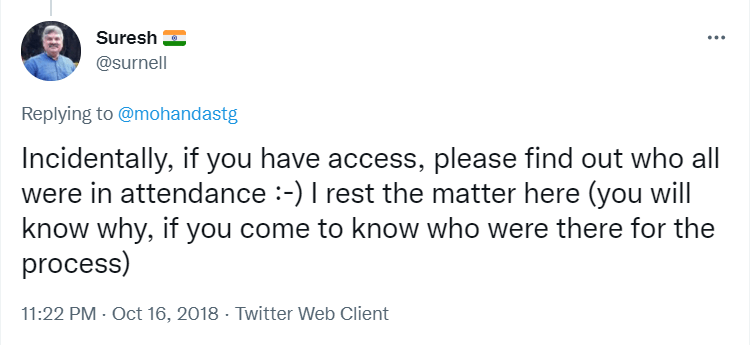
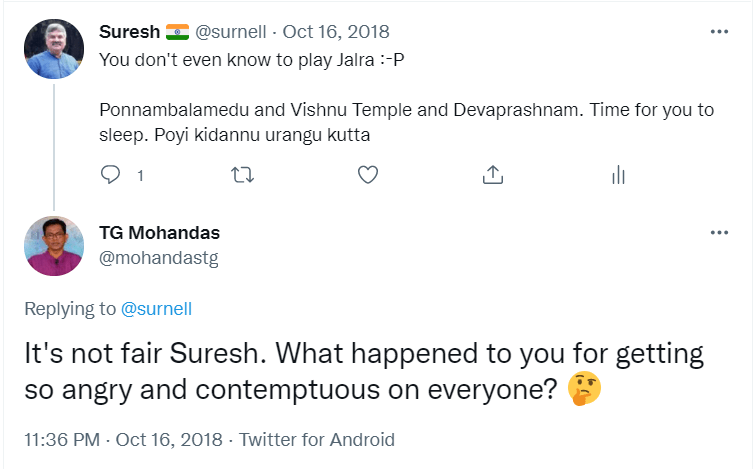
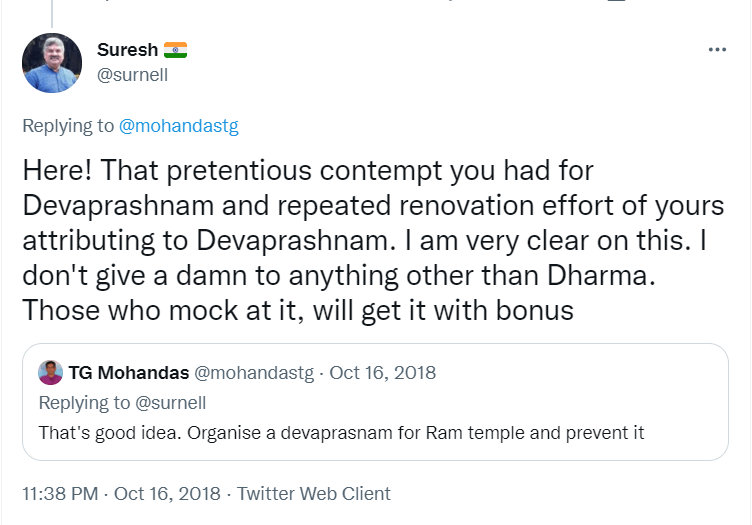
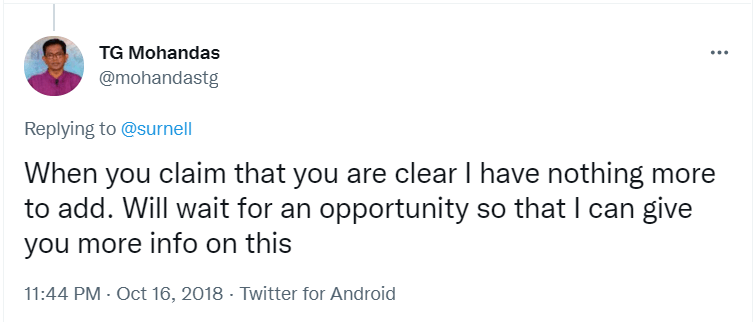
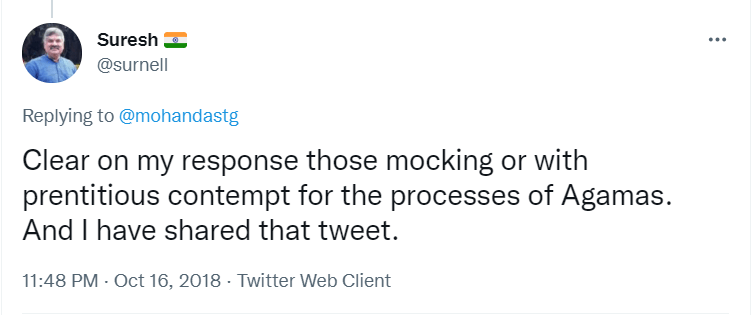
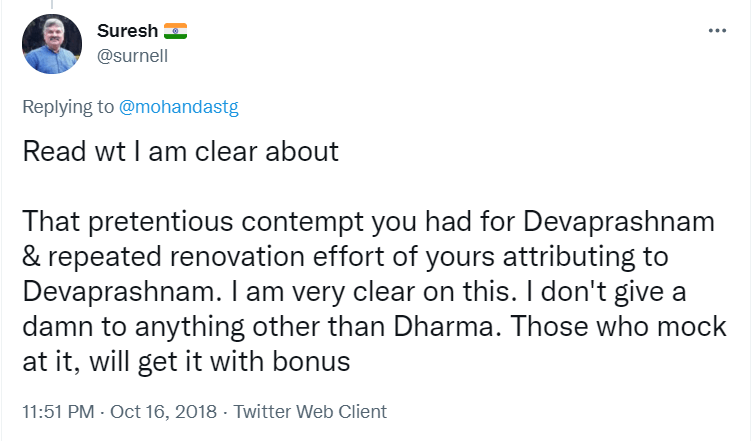
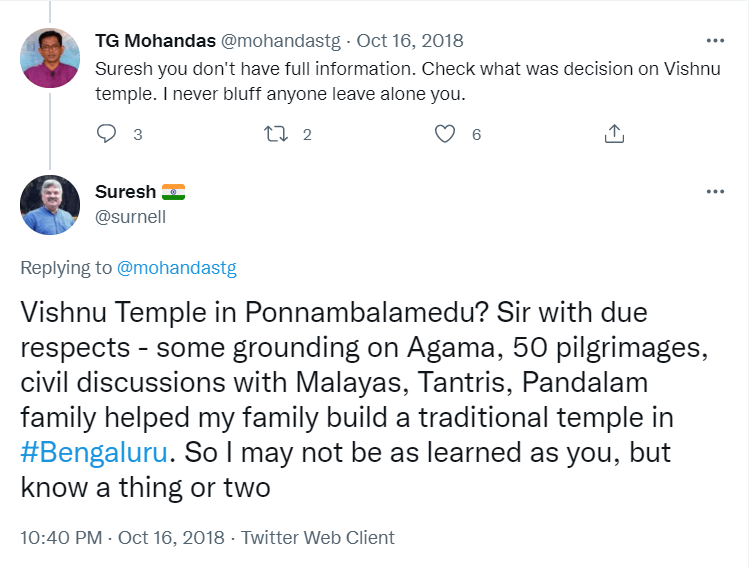
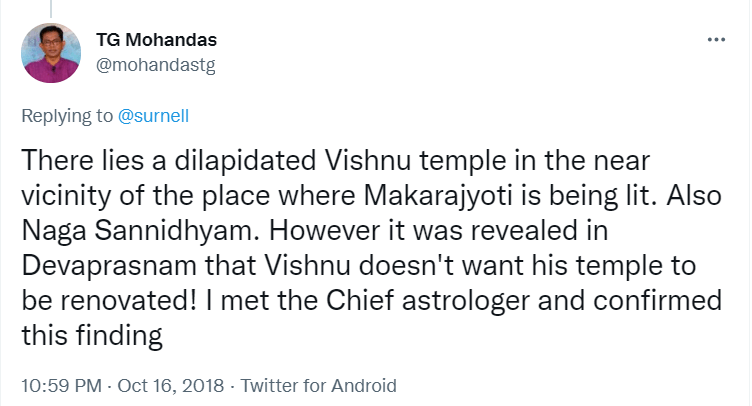
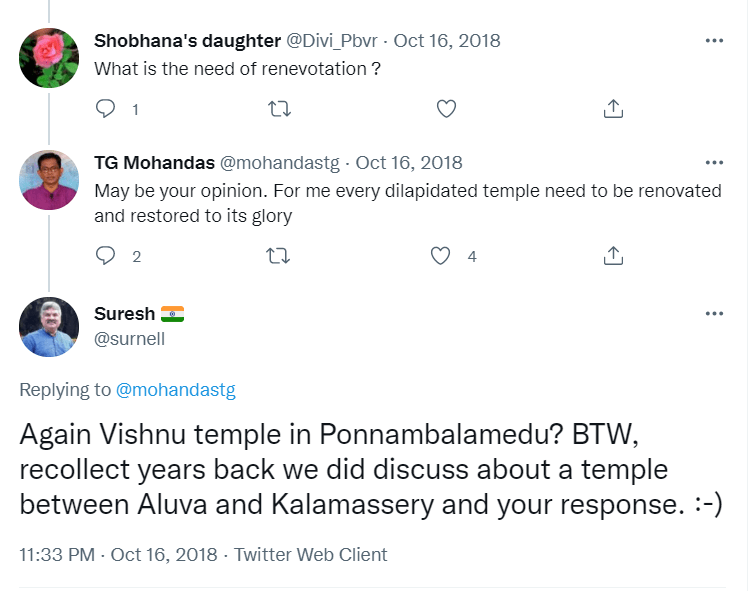
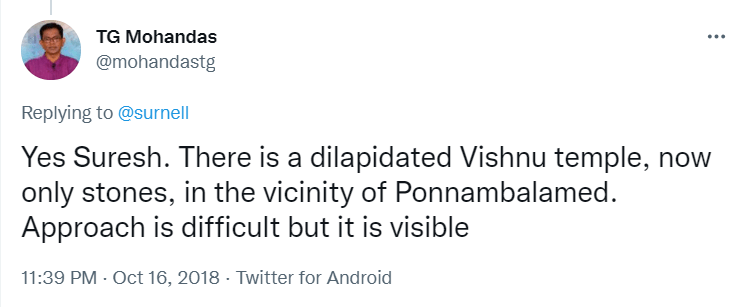
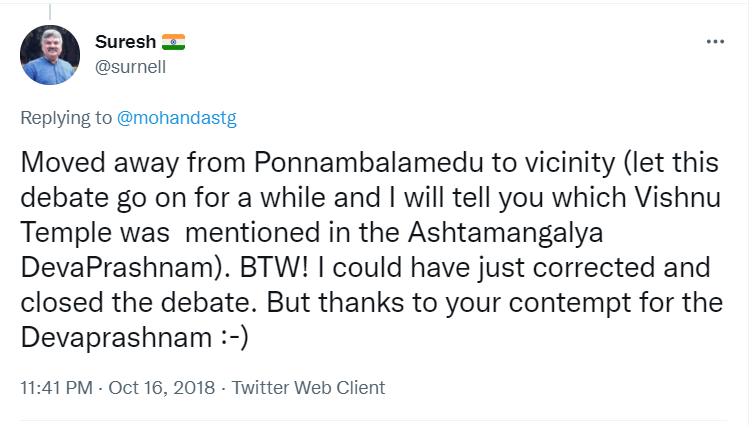
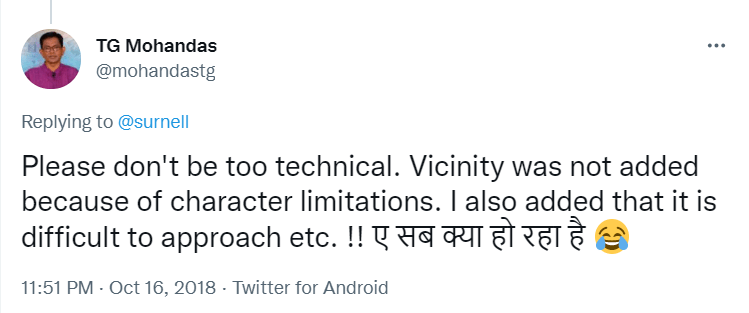
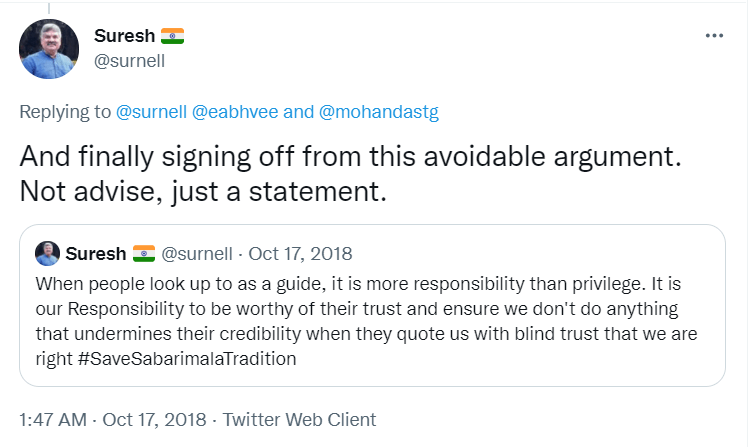
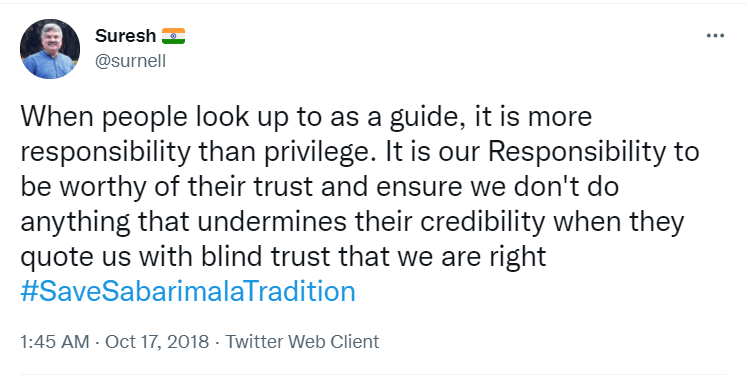
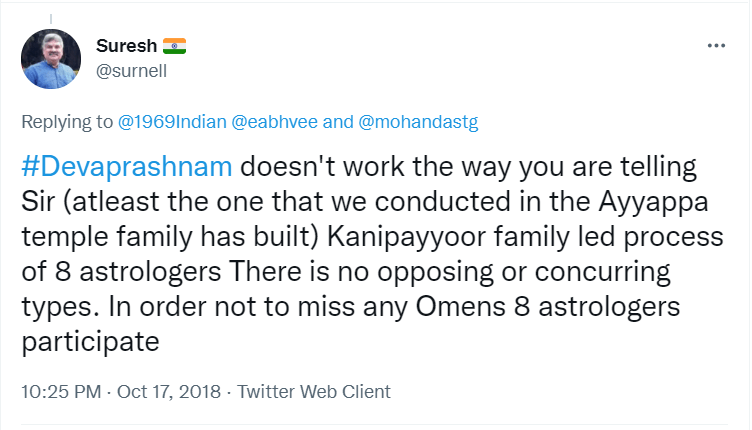
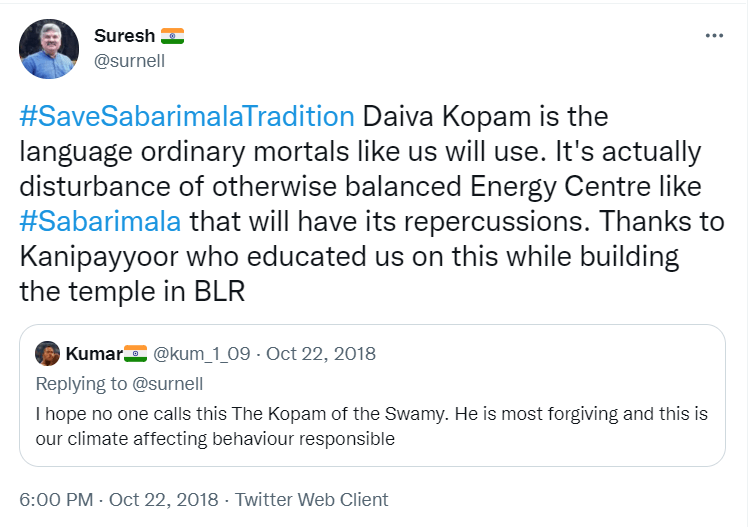
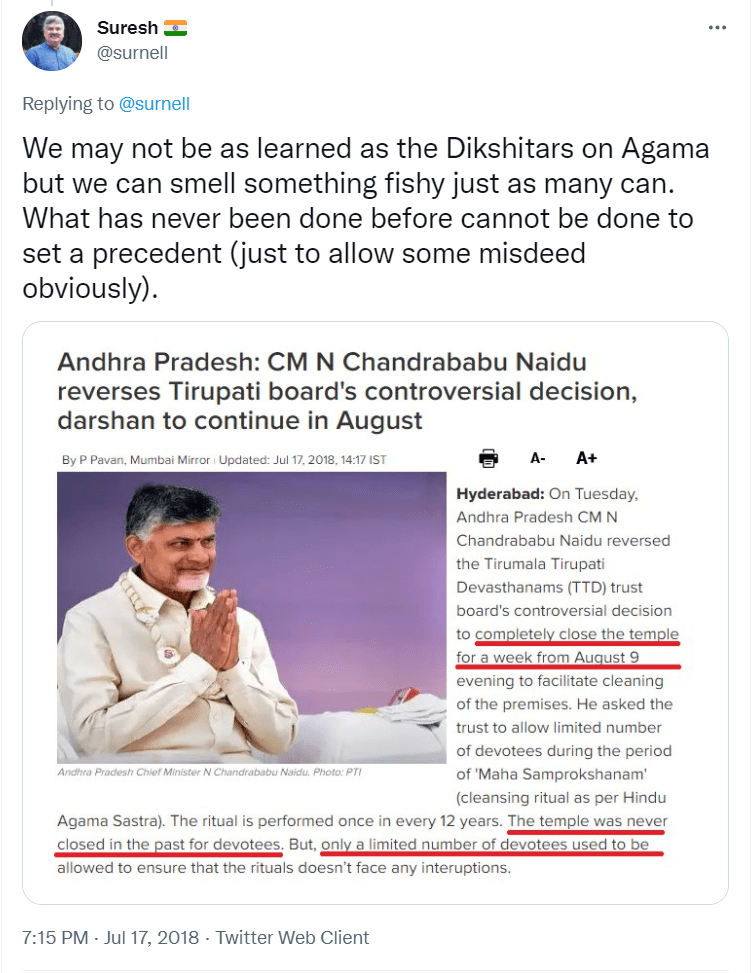
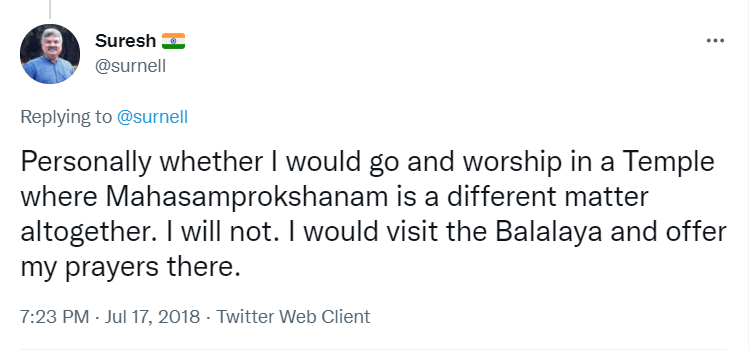
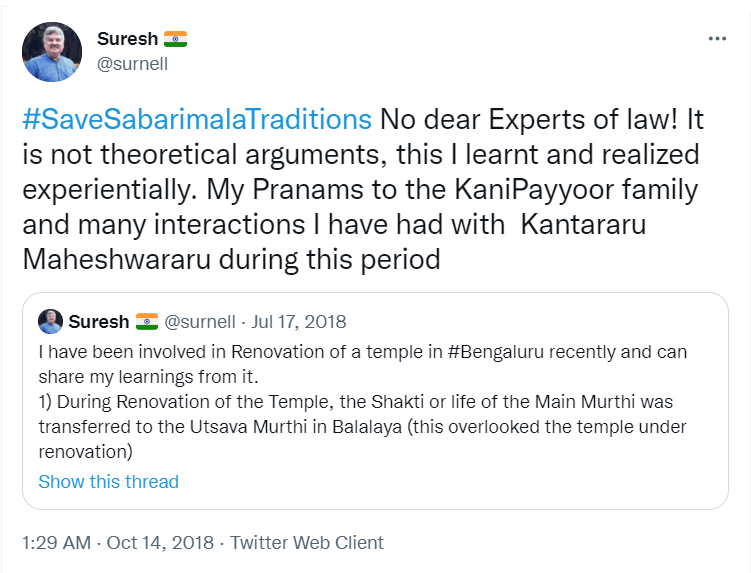
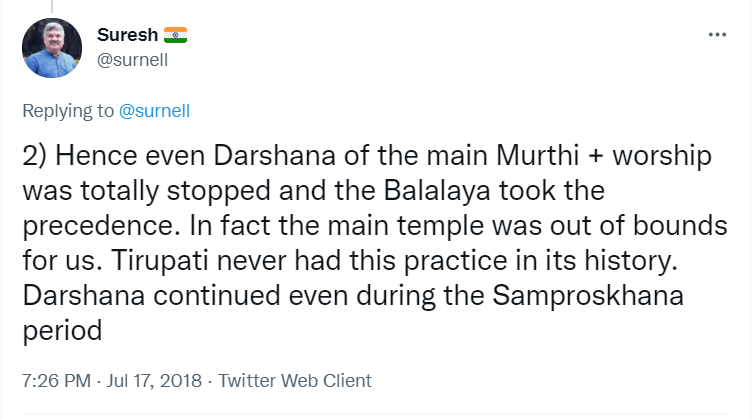
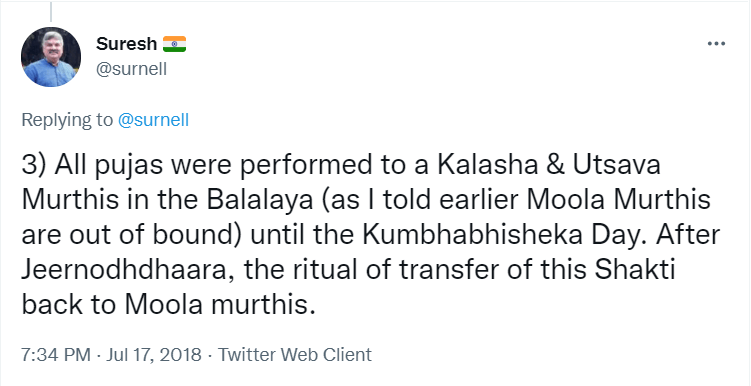
This thread on Twitter was written when a Commie in Saffron protagonist, a newbie lawyer who with half baked knowledge of deracinated laws began seeking history of certain practices in Temples. His logic, if it is not dated to a time he cannot remember, it is not acceptable. Height was when he mocked much revered, time tested traditions of the state that feeds him (both bread for living and political affiliation that is supposed to uphold those traditions)

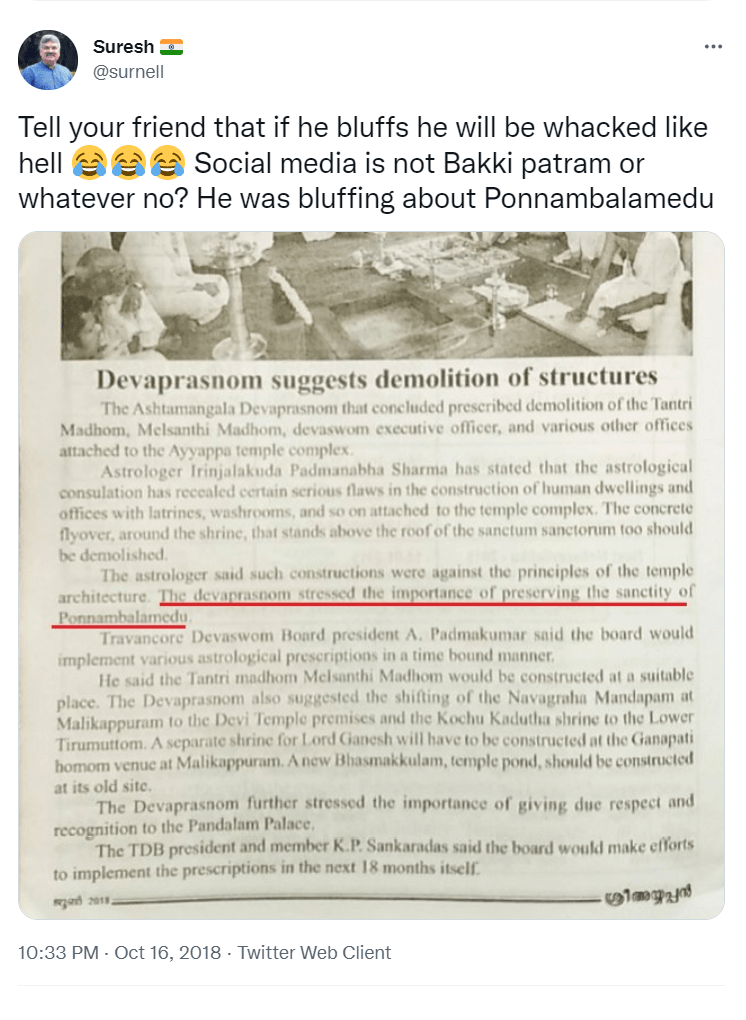
It began when he bluffed about an outcome of a Devaprashnam, and his advise on Sabarimala which his mentor took seriously and shot his mouth off, which was beginning of his steep downward slide. Despite changing the stance subsequently damage was done to him and there was no reversal.

(You can read about the power and accuracy of Devaprashnam, the Prasnamarga of the Jyotisha Shastra in my piece #KeralaFloods: Devaprashnam – Conversation with the Divine in Sabarimala & Warnings Ignored)

I cannot endorse nor refute the Shastra since I consider myself absolute ineligible to even talk about it leave alone judge it. Just reproduced the Facts as it were.

https://twitter.com/surnell/status/1052097243669569536
https://twitter.com/surnell/status/1052098235228131328
https://twitter.com/surnell/status/1052099673014657024
https://twitter.com/surnell/status/1052128241341923328
https://twitter.com/surnell/status/1052218716174409729
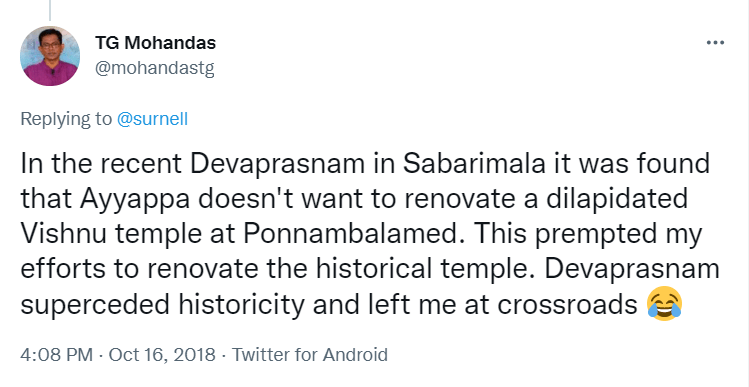
https://twitter.com/mohandastg/status/1052146811031367681
https://twitter.com/surnell/status/1052216816066600961
https://twitter.com/mohandastg/status/1052238949043777537
https://twitter.com/surnell/status/1052100342622621697
https://twitter.com/surnell/status/1052243752172040193
https://twitter.com/mohandastg/status/1052244815457517568
https://twitter.com/surnell/status/1052246107294785536
https://twitter.com/surnell/status/1052246593066426368
https://twitter.com/mohandastg/status/1052253736720977920
https://twitter.com/surnell/status/1052255960151023616
https://twitter.com/mohandastg/status/1052259482259136513

When he tried to cosy up when someone jumped in to defend his contempt (see next tweet). Fact that all those supported him realised what he was and deleted their tweets in support
https://twitter.com/surnell/status/1052260057625313282
https://twitter.com/mohandastg/status/1052261639947350016
And he did not have any information yet dissed a time tested and much honored tradition!
https://twitter.com/surnell/status/1052262518251433984
https://twitter.com/surnell/status/1052263165738782721
https://twitter.com/surnell/status/1052245358267564032
https://twitter.com/mohandastg/status/1052250302768979969
https://twitter.com/surnell/status/1052258871463428096
https://twitter.com/mohandastg/status/1052260164391309318
https://twitter.com/surnell/status/1052260829868032000
https://twitter.com/mohandastg/status/1052263282185302017
https://twitter.com/mohandastg/status/1052270975318933506
https://twitter.com/surnell/status/1052274845587791872
https://twitter.com/eabhvee/status/1052275994793598978
https://twitter.com/surnell/status/1052290982451048449
https://twitter.com/surnell/status/1052292365937991680
https://twitter.com/surnell/status/1052291844929986562
https://twitter.com/surnell/status/1052603915236139008

Not sure what was the argument of that tweep. But my clarification is here

Adding some related tweets on the subject

https://twitter.com/surnell/status/1054349194838843392
https://twitter.com/surnell/status/1019216407266054144
https://twitter.com/surnell/status/1019218456099606528
https://twitter.com/surnell/status/1019218728490291201
https://twitter.com/surnell/status/1019219264660819972
https://twitter.com/surnell/status/1019221195739287552

https://twitter.com/surnell/status/1019218728490291201
https://twitter.com/surnell/status/1051200723793383424

#KeralaFloods: Devaprashnam – Conversation with the Divine in Sabarimala & Warnings Ignored

Now that the worst phase of the man made (to be specific, Communists made, click here #CommieMadeDisaster for what Twitter felt about it)  disaster in Kerala, the worst flood of the century, is over and has entered Rehabilitation phase, time to look back at possible lessons (that we will still not learn). Starting this series with a Mystical Event (based on experiences shared by many who have partaken it in the past) that took place in Sabarimala – The Ashtamangala Devaprashnam. While the focus of this piece is not to explain or defend the practice (I am a non-entity to write a commentary on much revered Prasna Marga, leave alone Deva Prashna which is altogether a different realm. It is to highlight the findings which got published in various media way back in June 2018 (that is 2 months before the disaster struck Kerala). Point is not even that, why selectively some recommendations (that got material or pecuniary benefit to some) got accepted and implemented in a jiffy but that which (with benefit of hindisight) affected much larger population were not even deemed worthy of a look-in
The Devaprashnam was primarily called for, because of the incident where an Elephant carrying the Idol from Sannidhanam to Arattu Kadavu ran amok injuing a few pilgrims and setting panic. (Manorama News Report below)

Video Courtesy: Youtube Channel of Manorama Online

The Devaprashnam was delayed and held only in June 2018, because of passing away of Tantri Kandararu Maheshwararu.

Here is the article published in June 2018 Edition of “Sree Ayyappan” official monthly of Akhila Bharatha Ayyapa Seva Sangham on the findings of the Devaprashnam.

The one below is another clipping I recieved on Whatsapp from a friend

There was a Television report telecast (according to information given to me) on June 18th 2018, where the findings and warning about disasters in Pamba was mentioned.

Credit: TV Janam

Summary of the findings and remedies (from the Sree Ayyappan Magazine)

The changes that has been brought in the rituals is not to the liking of the Lord Ayyappa. The 5 day Ezhunallathu ritual (Procession) done after Makara Vilakku for Malikapurattamma has deviated a lot. There is a  displeasure seen in Lord for discontinuing the practice of using Elephant for this ezhunallathu during the Makara (Jan-Feb) month. If there has been trouble with Elephant, the remedy is not to discontinue using Elephants for the rituals, but to determine the causes for the trouble. However use of Elephant in the Meena (March-April) month is not mandatory. The defects on the Thidambu (The idol carried on the Elephant during ceremonial processions) has to be rectified immediately. Lord is unhappy for discontinuing the use of accompanying Vaal (Sword) from the ceremonial proceedings. This is an essential accessory for the Ezhunallathu.

Blocking the vision of Lord Ayyappa is the Shelter built on top of 18 Holy steps. This has to be rectified immediately. Ponnambalamedu has to be protected. Lot of shortcomings in the Naivedya also is seen. Along with Aravana, even Milk payasam has to be offered on all days. The night puja before Lord retires for resting, has to essentially have Paalpayasam as naivedya along with Tambula puja. The Tila Payasam (Sesame seed Payasam) which is currently only offered on Saturdays has to be done everyday. Ensure purity of all offerings including Sandal paste. Newly built Bhasma Kulam has no natural flow. It has to be rebuilt.

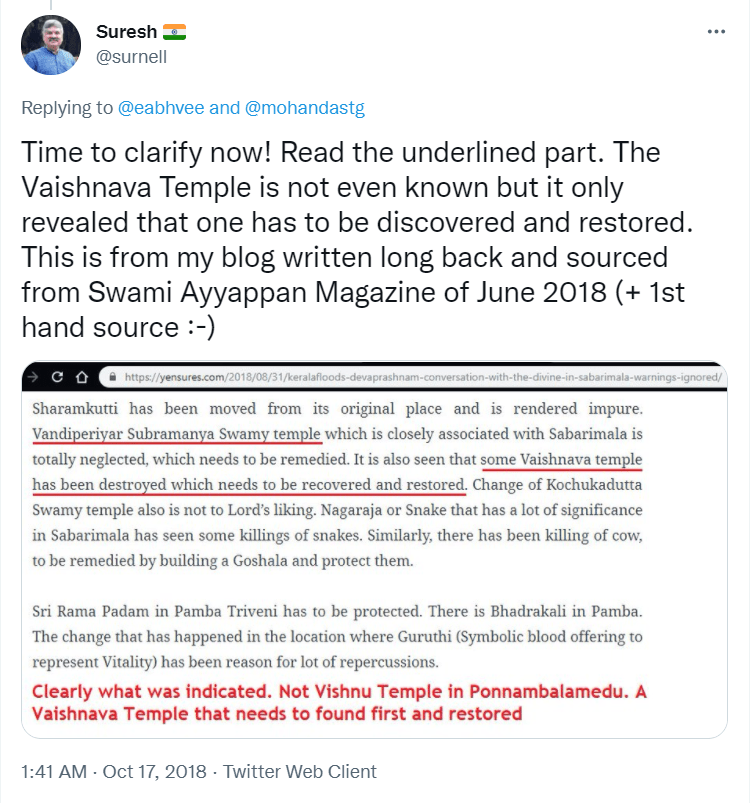
Sharamkutti has been moved from its original place and is rendered impure. Vandiperiyar Subramanya Swamy temple which is closely associated with Sabarimala is totally neglected, which needs to be remedied. It is also seen that some Vaishnava temple has been destroyed which needs to be recovered and restored. Change of Kochukadutta Swamy temple also is not to Lord’s liking. Nagaraja or Snake that has a lot of significance in Sabarimala has seen some killings of snakes. Similarly, there has been killing of cow, to be remedied by building a Goshala and protect them.

Sri Rama Padam in Pamba Triveni has to be protected. There is Bhadrakali in Pamba. The change that has happened in the location where Guruthi (Symbolic blood offering to represent Vitality) has been reason for lot of repercussions.

Malikappuratamma also has to be given equal importance as in Sabarimala. THERE IS A POSSIBILITY OF A CALAMITY IN PAMBA 

TV Janam reports over and above that Kandararu Maheswararu, who expired in May, died out of pain due to removal of Mohanaru  as Sabarimala thantri over a scandal. It was found the cause for the demise of the thantri was due to son Kandararu Mohanaru’s misfortunes. Rectification of the senior thantri’s cause of worry was needed.

Translation of the picture that has point to point findings.

  1. Location of the Temple doesn’t indicate any fault
  2. Likelihood of land related disputes against Sabarimala for which some Prayaschitta (Atonement measures) have to be undertaken
  3. Increase Naivedyam (offerings) to Lord Ganapathi
  4. Need to give attention to satiating Lord Ganapathi which is ignored at this time
  5. The second installation of Lord Ganapathi in front of Homa Kunda (Sacrificial Fire place) has to be moved to appropriate location, installed and regular Puja and Abhishekham to be performed
  6. Tantri (Vedic and Spiritual Head  who decides on the Primary and core rituals and practices in a Temple) and Melshanti (Chief Priest) who currently reside within the compound of the Main Temple complex have to be moved out and located outside the compound walls.
  7. All the priests including Chief Priest should be given Orientation classes every year by Tantri on the rituals, traditions and practices.
  8. Kalabam (Sandal Paste) Abhishekam is not part of the Temple tradition. Since it is being done, ensure it is done the right way.
  9. As per the signs emerging, Lord Ayyappa is not getting comfortable and adequate rest. Tantri has to find a remedy for this.
  10. The doors of the Sanctum Sanctorum doesn’t close properly, this needs to be addressed on priority and changed at the earliest
  11. Many such defects on the structures outside the temples needs to be fixed too
  12. Most problems would be solved, just by proper worship of Lord Ayyappa
  13. Priests, Security and Police have not been noble and have been faulty through their deeds and words. This has to be remedied
  14. Priests, Police & Devaswom Security should behave properly with the Pilgrims.
  15. One of the primary reasons for these problems is misbehaviour with the devotees and pilgrims. Staff who are related to pilgrim management or interaction should be given proper training
  16. We can see signs that there is concerted efforts by various organization to defame Ayyappa Temple. Remedial (Parihaara) and Atonement (Prayaschitta) actions would help us to hear Good news in this regard.
  17. Lord is being used as a means of conducting business. This has to be stopped.
  18. Do not indicate in any forms sponsors inside the temple premises.
  19. THE DAIVAJNAS (ASTROLOGERS ASKING QUESTIONS) SEE IMPENDING CALAMITY IN PAMBA
  20. Proper puja and Naivedya (Divine Offering) to be performed in Ganapathi temple in Pamba
  21. Mahamrutjunajaya Homam to be performed every month in Sabarimala. This has to be done for one year.
  22. The rivalry between Alangad and Ambalapuzha petta thullal teams is not being liked by Lord Ayyappa. This is easy to be remedied. (For more reading about the ritualistic significance of these two teams, click HERE)
  23. Bhasmakulam (The temple pond in Sannidhanam) has to be rebuilt.
  24. Lord Ayyappa wants a part of the revenue to be earmarked for the needy.
  25. The current Devaswom board has the will to issue orders to the Management committee.

Additional Reading : 

  1. http://www.newindianexpress.com/states/kerala/2018/jun/17/devaprasnam-for-reinstatement-of-kandararu-mohanaru-as-thantri-1829247.html
  2. https://timesofindia.indiatimes.com/city/thiruvananthapuram/decks-cleared-for-the-return-of-kandararu-mohanaru/articleshow/64628998.cms

Effects of 2018 Pampa Floods (August 2018)

(Collection from various Main Stream Media)

Fury of Violated Pampa-August 2018

Pampa in Full Fury (in July 2018 during our Pilgrimage before Floods)
Pampa – July 2018 before Floods

Photos of Pampa Post destruction during our Pilgrimage in November 2018

Post flood Condition of Pampa-November 2018