शान्ताकारं भुजगशयनं पद्मनाभं सुरेशं
विश्वाधारं गगनसदृशं मेघवर्णं शुभाङ्गम् ।
लक्ष्मीकान्तं कमलनयनं योगिभिर्ध्यानगम्यं
वन्दे विष्णुं भवभयहरं सर्वलोकैकनाथम् ॥
Every Ekadashi occurring twice every month holds spiritual value, but Papamochani Ekadashi carries special importance in Hindu tradition. It falls during Krishna Paksha (dark fortnight) of Chaitra month (March-April) according to Amanta calendar or Phalguna month according to Purnimanta calendar. It is final Ekadashi of Hindu lunar calendar year, coming just before Chaitra Navratri and New Year. Devotees dedicate this day to worship Bhagawan Vishnu to seek relief from past sins and negative karma.
Meaning and Significance of Papamochan Ekadashi
Understanding name itself reveals purpose of this auspicious day. In Sanskrit, Papa means sin or wrong actions, while Mochan means liberation, release, or destruction. Therefore, Papamochani Ekadashi translates to 11th day that liberates devotee from sins.
Human life often carries burden of past mistakes, wrong deeds, anger, and ignorance. Observing this fast with pure mind helps wash away accumulated guilt and negative tendencies. Scriptures mention that sincere devotion on this day grants peace of mind, removes obstacles, and helps devotee march towards ultimate liberation or Moksha.
Legend associated with Papamochan Ekadashi
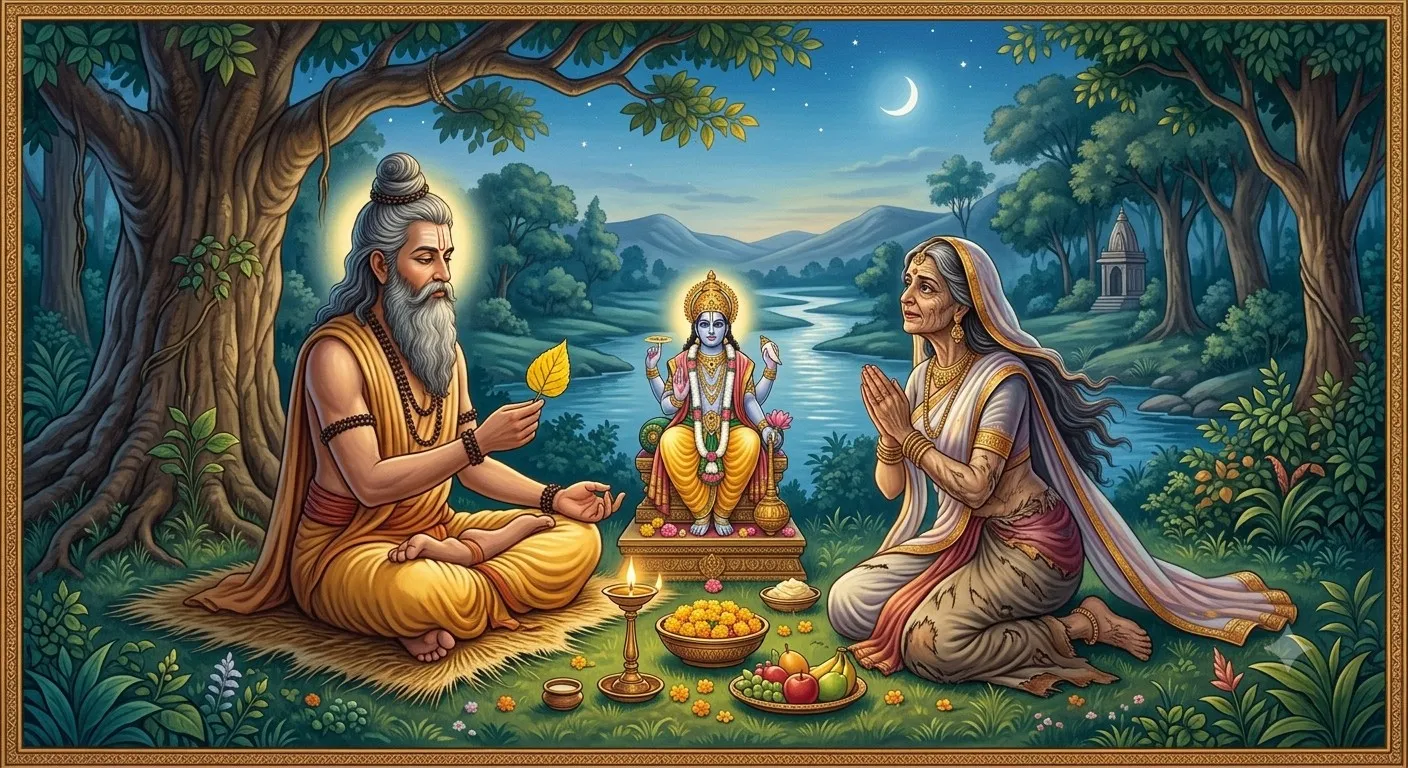
Scriptures describe famous story behind origin of this sacred fast, involving Sage Medhavi and Apsara Manjughosha. Sage Medhavi, son of Sage Chyavana, was performing intense penance in beautiful Chaitraratha forest, which was garden of Devata Kubera. Devendra Indra felt threatened by deep meditation of Medhavi and decided to disturb his penance.
Indra sent celestial dancer Manjughosha to distract young sage. Manjughosha reached forest, sang sweetly, and danced near ashram. Medhavi got spellbound by her beauty and charm. He lost control over his senses and forgot his daily rituals, prayers, and spiritual duties. They spent many years together in forest.
One day, Manjughosha requested permission to return to Svargaloka. At that moment, Medhavi realized that decades had passed while he was trapped in worldly desires. He realized loss of his spiritual power gained through years of austerity. Filled with rage, Medhavi cursed Manjughosha to turn into Pisachini (she-demon).
Realizing her mistake, Manjughosha fell at feet of sage and begged for mercy. She admitted her guilt and pleaded for way to break curse. Medhavi, feeling remorse for his own anger and loss of composure, advised her to observe Papamochan Ekadashi fast dedicated to Bhagawan Vishnu.
Medhavi then returned to ashram of his father Sage Chyavana. Seeing his son devoid of spiritual glow, Chyavana scolded him for falling into trap of lust and anger. Chyavana instructed Medhavi to also observe Papamochan Ekadashi fast to cleanse himself of sin. Both Medhavi and Manjughosha strictly observed fast with complete devotion to Bhagawan Vishnu. By divine grace of Hari, Manjughosha got freed from curse of demon body and regained her celestial form, while Medhavi restored his lost spiritual energy and purity.
Rituals to be performed on Papamochan Ekadashi
- Wake up early in morning during Brahma Muhurta and take ritual bath.
- Clean puja area and place idol or photo of Bhagawan Vishnu.
- Light ghee lamp, offer fresh yellow flowers, sandalwood paste, and Tulsi leaves to Bhagwan.
- Chant Vishnu Sahasranama, Hare Krishna Mahamantra, or Om Namo Bhagavate Vasudevaya throughout day.
- Listen to or read Papamochan Ekadashi Katha with family members.
- Observe fast during entire day according to individual capability.
- Strict fast without water (Nirjala) or taking only water is ideal for healthy individuals.
- Milk, curd, and fruits can be consumed if complete fasting is not possible due to health.
- Avoid rice, wheat, barley, lentils, pulses, and all food grains strictly.
- Avoid heavy spices, regular salt (use sendha namak if required), garlic, and onion.
- Avoid tea, coffee, outside processed food, and alcohol completely.
- Perform evening Aarti and maintain spiritual thoughts, avoiding anger, backbiting, or harsh words.
- Break fast on Dwadashi day during Parana time.
- Fast should be broken next day after sunrise during Dwadashi Tithi.
- Ensure Parana is done after completion of Hari Vasara period.
- Offer bhog naivedya to Bhagwan Vishnu, perform small prayer, and break fast by consuming prasada, water, or fruits before regular food.
PS: Article re-formattied into blocks and Changed the Header Image