Direct Rebuttal
Defending 2021 trial court acquittal of Tarun Tejpal requires high stakes intellectual gymnastics. Commentary like Sanjay Hegde’s, attempting to sanitize Sessions Court judgment by painting it as rigorous application of reasonable doubt misses fundamental point. Trial court ruling was not masterpiece of judicial caution. It was textbook example of patriarchal bias disguised as legal reasoning. Defending it legitimizes dangerous legal fallacy that woman trauma must mirror outdated cinema script to receive justice.
(Not sharing the link to original article for a reason) But here it is, from the X post that so called Vakeel has shared.

Bombay High Court conviction of Tejpal in August 2026 obliterated deeply flawed regressive premises defending lower court relied upon.
Deconstructing Trial Court Judgment Flawed Legal Foundation
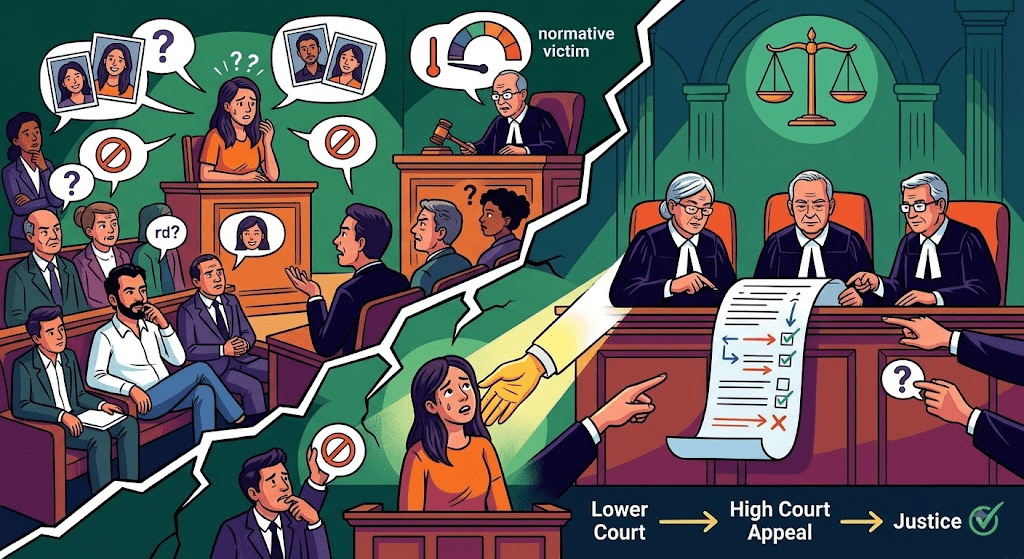
2021 Goa Sessions Court decision received heavy criticism from legal scholars because it rested on debunked stereotypes regarding sexual violence. Lower court misapplied basic principles of evidence and criminal jurisprudence in several critical ways.
Demanding Ideal Victim Narrative
Trial court penalized complainant for not fitting arbitrary image of broken victim. It fixated on fact that she continued duties at event spoke with colleagues and appeared composed or smiling in photographs after incident. Treating composure as proof that no assault occurred ignored complex reality of survival instincts professional obligation and coping mechanisms.
Misinterpreting Physical Resistance and Power Dynamics
Trial judge drew adverse inferences because survivor lacked severe physical injuries implying she should have fought back harder. This completely disregarded sudden freeze response common in traumatic events as well as overwhelming power imbalance between powerful editor in chief and junior employee. In fact he did threaten her reminding her that HE IS THE BOSS!
Permitting Unlawful Character Assassination
Most glaring procedural failure was allowing defense to subject survivor to invasive questioning regarding personal life past relationships and social habits. Indian evidence law under Sections 53A and 146 of Evidence Act strictly prohibits using victim past sexual character or moral views to judge consent or credibility. Trial court allowed statutory guards to be bypassed effectively putting survivor on trial.
Dismissing Direct Written Admissions
Trial court brushed aside Tejpal initial written apology emails labeling them as coerced or describing minor misunderstanding. It created hyper technical barrier to dismiss explicit admissions while holding victim memory to impossibly flawless standard.
How Bombay High Court Corrected Course
Reversing acquittal and sentencing Tejpal to 10 years rigorous imprisonment Bombay High Court described trial court reasoning as perverse and directly contrary to evidence on record.
High Court affirmed that perfect victim is cultural myth. Survivor credibility cannot be judged by whether she breaks down immediately or retreats from public view. High Court held that victim testimony was sterling inspiring total confidence and recognized Tejpal written apologies as clear proof of non consensual acts.
Role of Appeals Designed Check Not Aberration
(Some lesson from a Student to the so called Vakeel)
When High Court overturns trial court acquittal critics frame it as systemic instability. In truth appellate process is deliberately engineered safeguard essential to fair constitutional order.
Accounting for Human and Judicial Error
Trial court judges operate under strict time constraints and are subject to personal societal or cognitive biases. Legal system explicitly anticipates that lower court may misinterpret statutes fall prey to victim blaming assumptions or misread key evidence.
Multi Tiered Review Ensures Systemic Health
Appeal is not failure of legal system. It is proof that built in self correction tools work. Division Benches at High Court level evaluate trial records against constitutional protections and binding Supreme Court precedents filtering out errors made at ground level.
Setting Binding Standards for Future
Higher courts do more than rectify individual case. They establish binding jurisprudence. Striking down perfect victim trope in this appeal Bombay High Court sent clear message to all trial courts across India that victim blaming stereotypes and character assassination have no place in court of law.
Final Takeaway
Tejpal case illustrates why appellate review exists. Without higher forum to reexamine flawed logic trial court judgment built on regressive assumptions would have stood as final law. Appellate structure guarantees that trial courts remain accountable to Constitution ensuring justice is rooted in hard evidence rather than societal prejudice.
This video provides clear concise breakdown of High Court reversal highlighting how court rejected trial court normative behavior argument and held Tejpal accountable based on record. (Though I don’t like to share anything from The Print, credit where due – this video has broken down the judgement well
Legal Apologia
He writes
Two minutes in a lift. Two storeys of a hotel. Two stories, hers and his, each told with conviction, each carrying a life within it. One court found the first story unproved. Another found it proved beyond reasonable doubt, on the same record. That divergence is not an embarrassment to the system. It is the reason the system builds in a final, full appeal. Let that appeal be heard. Let the analysis be dispassionate. And until then, let the rest of us have the humility to say the three hardest words in public life: we don’t know.
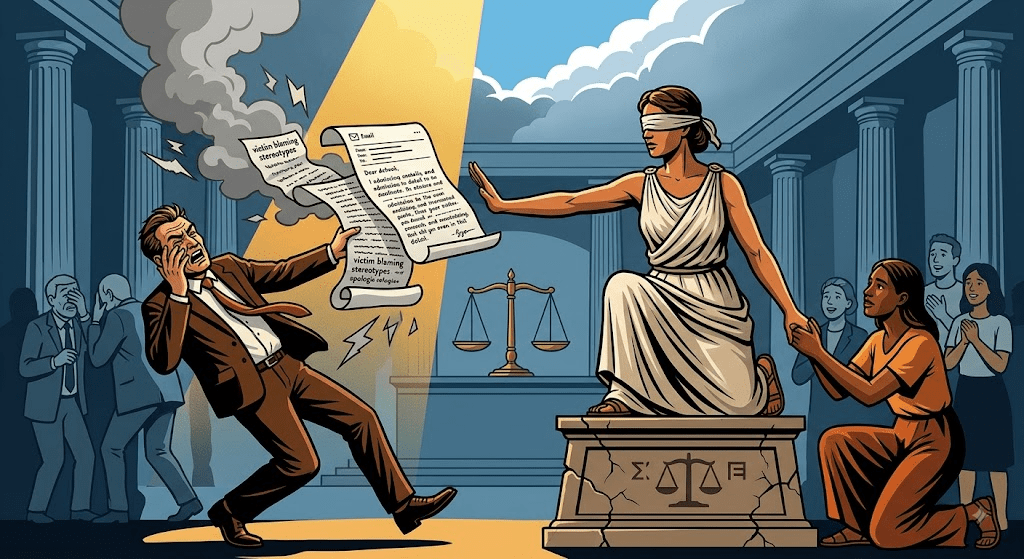
Framing case as mere conflict of two stories represents complete legal dud. Calling on public to say “we do not know“ deliberately ignores most damning evidence on record written admissions made by accused immediately following incident. Claiming ignorance when written confessions exist is not judicial humility. It is selective blindness designed to erase concrete evidence. These kind of agenda driven opinions under the guise of Legal commentary, performs grave disservice to justice.
“We know”, the whole world knows except those who chose to say “we do not know”, and man, “We know” why “you don’t know”.
Articles pushing this commentary rely on faulty legal premises misapply statutory protections on consent and ignore binding appellate precedents. By substituting sound constitutional analysis with sophisticated victim blaming commentary fails both on legal merit and moral integrity. When prominent legal voices trivialize survivor trauma or validate victim blaming stereotypes they reinforce systemic barriers victims face in courtrooms. High Court verdict stands as decisive rejection of such regressive commentary proving that legal analysis must never become shield for victim blaming logic.
PC: Gemini