This story is inspired by a real incident last Friday, where a moment of quiet professional validation was abruptly interrupted by an awkward display of public insecurity. While the setting, industry, and individual identities have been completely changed to protect the privacy of those involved, the underlying behavior remains entirely authentic. The intent behind sharing this narrative is not to criticize or demean anyone, but rather to highlight a valuable workplace lesson on professional maturity, true competence, and the self-defeating nature of unprovoked insecurity.
Insecurity and incompetence are inseparable companions. A person who truly knows his craft remains composed, content to let his work do the talking. When real expertise is missing, however, every gathering feels like a threat to a fragile ego. Insecurity drives incompetent people to make noise at the most unexpected moments, desperately hoping to appear important. Sadly for them, this urge to steal the spotlight usually backfires, transforming simple ignorance into comedy for everyone else in the room.
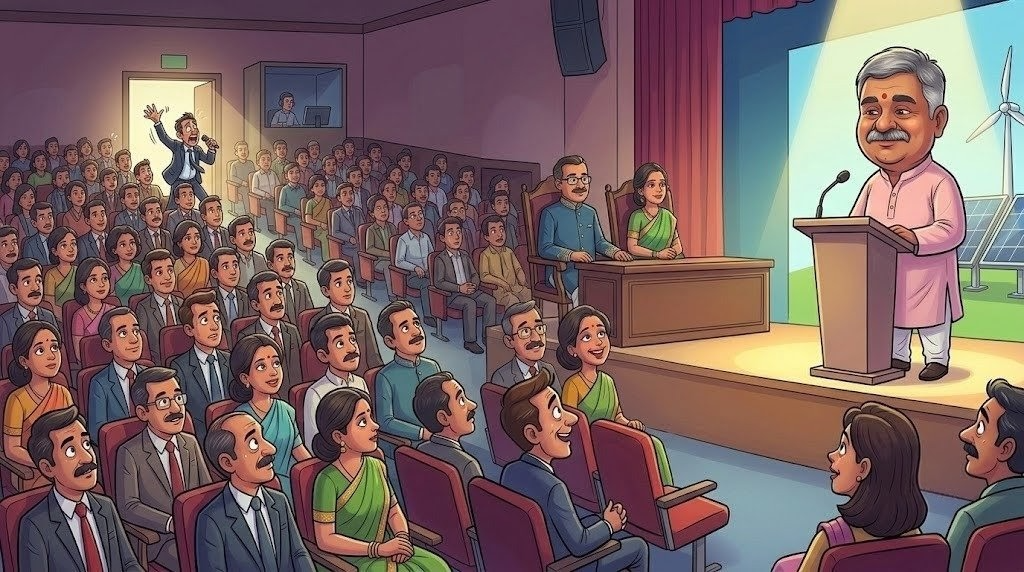
This tendency unfolded in full glory during a grand renewable energy summit at a plush hotel in Hyderabad. The hall was packed with Ministers, corporate leaders, policy makers and engineers, all discussing solar power policies for rural India. On stage sat a veteran engineer, a man who had spent thirty years in dusty fields actually building power grids while others merely made presentations. The organizer invited him to address complex grid integration rules. With effortless calm, the veteran dismantled difficult technical doubts raised by nervous investors. Impressed by this intervention, one the ministers on stage introduced him as a true pioneer who had built foundational solar models during his long tenure at a reputed national energy agency.
Sitting in the last row, dressed in a suit three sizes too sharp, was a newly baked successor, Sharma from that very same agency. Sharma possessed very little knowledge about power grids, but he had an endless supply of self importance. Watching the veteran receive unanimous praise was too much for Sharma to digest. Insecurity hit him like a jolt of high voltage electricity.
Before anyone could stop him, Sharma leaped out of his chair like a jack in the box. He practically began shouting his name and company title into it. I am Sharma from National Energy, I am Sharma, he declared, as if announcing a grand arrival. The room fell silent, expecting some brilliant technical insight. Instead, Sharma launched into an energetic speech about two rural electrification drives, completely missing the fact that the conference was discussing solar grid integration, not basic wiring. To make matters funnier, those two projects he boasted about were actually designed and executed years ago by the veteran himself, long before Sharma even learned how to spell infrastructure. Sharma gesticulated wildly, dropping buzzwords that made no sense together, while senior engineers in the audience exchanged suppressed giggles.
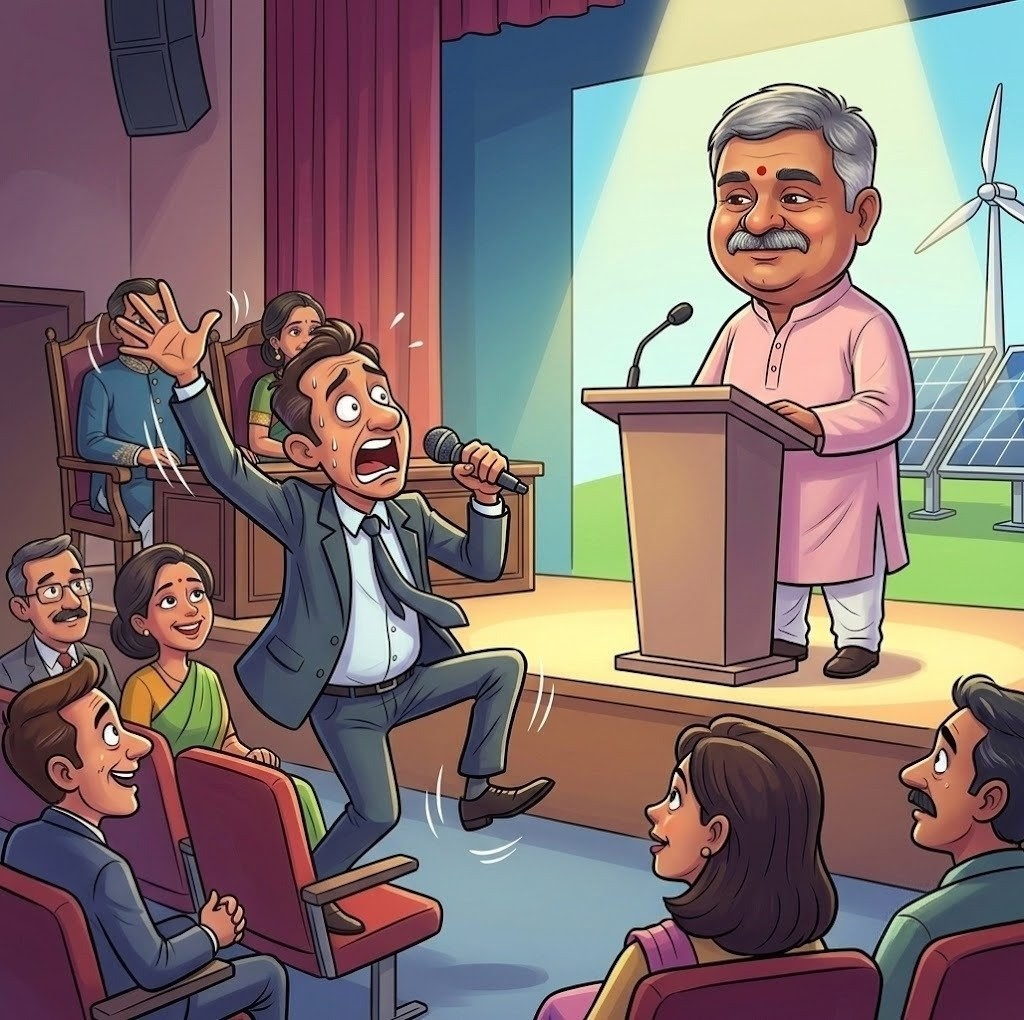
The moderator, trying hard to keep a straight face, finally interrupted the performance. Mr Sharma, the moderator asked politely, do you have any specific suggestion regarding rural grid policy, or should we move back to the agenda? Sharma froze. His mouth stayed open for a second like a landed fish. He looked around, realized nobody was clapping, stammered something about how his organisation has managed projects and that they plan to also empanel under the project, and quickly collapsed back into his seat. His desperate attempt to make his presence felt, born purely out of insecurity and incompetence, turned what could have been a silent afternoon into the best entertaining break of the summit.
A classic case of
Trying to Steal Thunder ending up Catching Lightning

