सशङ्खचक्रं सकिरीटकुण्डलं सपीतवस्त्रं सरसीरुहेक्षणम् ।
सहारवक्ष:स्थलशोभिकौस्तुभश्रियं नमामि विष्णुं शिरसा चतुर्भुजम् ॥
Amalaki Ekadashi occurs during Shukla Paksha (waxing phase of moon) of Phalguna month (February-March). It falls during vibrant atmosphere of Holi festival, marking arrival of spring season. Devotees dedicate this sacred day to worship Bhagawan Vishnu along with sacred Amalaki tree (Indian Gooseberry or Amla), seeking good health, removal of past sins, and ultimate spiritual liberation.
Meaning and Significance of Amalaki Ekadashi
In Sanskrit, Amalaki refers to Amla tree, while Ekadashi means 11th lunar day. Therefore, Amalaki Ekadashi translates to 11th day where sacred Amla tree is worshiped as manifestation of Bhagawan Vishnu.
Human life often suffers due to health issues, spiritual darkness, and karmic burdens. Observing fast on Amalaki Ekadashi with pure devotion cleanses physical body and mind. Scriptures mention that Bhagawan Vishnu and Maata Lakshmi reside permanently in sacred Amla tree. Worshiping this divine tree on Amalaki Ekadashi grants merit equal to donating thousand cows, bestows sound health, removes accumulated sins, and ensures residence in Vaikuntha.
Legend associated with Amalaki Ekadashi
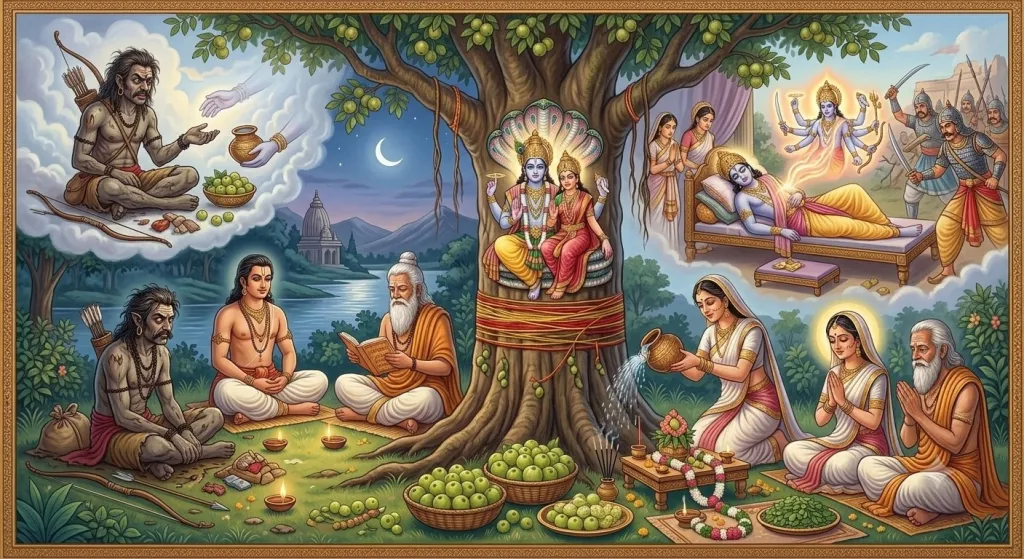
Scriptures describe sacred story narrated by Sage Vasishtha to King Mandhata, involving pious King Chaitraratha who ruled prosperous kingdom of Vaidisha. King Chaitraratha was noble ruler, and all citizens in his kingdom were devoted to Bhagawan Vishnu. Every year, king and subjects observed all Ekadashi fasts with deep faith.
On Shukla Paksha Ekadashi of Phalguna month, King Chaitraratha along with subjects visited holy temple on riverbank where majestic Amalaki tree stood. They established sacred Kalash near tree, offered flowers, incense, sandalwood paste, and kept night vigil (Jagaran), singing devotional hymns in praise of Bhagawan Vishnu.
During night, hunter who was cruel, sinful, and survived by killing forest animals reached temple compound while searching for food. Hunter was extremely hungry and exhausted. Seeing large gathering of devotees praying before Amalaki tree, hunter sat quietly in corner of temple and watched whole night worship without eating anything. Unknowingly, hunter observed complete fast and kept night vigil on Amalaki Ekadashi.
Years later, hunter died and got reborn as powerful King Vasuratha in next life due to spiritual merit earned from watching Amalaki Ekadashi rituals. One day, King Vasuratha lost his way in dense forest while hunting and fell asleep under tree due to tiredness. Tribal bandits spotted sleeping king and tried to kill him with weapons. However, divine radiant energy emerged from body of King Vasuratha and destroyed all wicked bandits. When king woke up, heavenly voice informed him that divine protection was granted to him because of observing Amalaki Ekadashi in his previous life as hunter. King Vasuratha ruled righteously for long time and eventually attained Moksha.
Rituals to be performed on Amalaki Ekadashi
Devotee must wake up early in morning during Brahma Muhurta and take ritual bath using clean water without using soap, shampoo, or such cosmetic products.
Puja area should be cleaned thoroughly and idol or photo of Bhagawan Vishnu should be placed respectfully.
Visit Amalaki tree if available nearby, clean area around tree, establish sacred Kalash, and wrap clean cloth around trunk. Light ghee lamp, offer fresh yellow flowers, sandalwood paste, incense, Amla fruits, and Tulsi leaves to Bhagwan Vishnu and sacred tree.
Chant Vishnu Sahasranama, Hare Krishna Mahamantra, or Om Namo Bhagavate Vasudevaya continuously throughout day.
Listen to or read Amalaki Ekadashi Katha with family members in peaceful state of mind.
Offer your respects to parents and other elders, especially Guru, seeking their heartfelt blessings on this sacred morning.
Observe fast during entire day according to individual health capacity. Healthy individuals can observe strict fast without water or taking only water. Milk, curd, and fruits can be consumed if complete fasting is difficult due to health reasons. Rice, wheat, barley, lentils, pulses, and all food grains must be avoided strictly. Heavy spices, regular salt, garlic, onion, tea, coffee, outside processed food, and alcohol must be strictly avoided.
Perform evening Aarti with devotion, offer special Naivedya, donate Amla fruits, clothes, or food to Brahmin or needy person, and maintain noble thoughts, avoiding anger, backbiting, falsehood, or harsh speech.
Break fast next day on Dwadashi tithi during scheduled Parana time. Fast should be broken after sunrise once Hari Vasara period concludes. Offer naivedya to Bhagwan Vishnu, perform short prayer, and break fast by consuming prasada, water, or fruits before eating regular food.
PS: Article re-formatted into blocks and Header Image changed