Red soil of Jamshedpur carried fragrance of hot iron and honest sweat when old Gurdeep Singh laid foundation of Swadeshi Steel. Gurdeep spent young years saving every single rupee, skipping meals to purchase tiny plot near Subarnarekha river. He worked alongside handful of blacksmiths, forging simple tools with relentless dedication to quality. Workers ate together under shade of banyan tree, bound not by contracts but by deep mutual respect. Town knew that metal from Gurdeep’s foundry would never bend under pressure because founder put his heart into every blast of furnace.
His son Harpreet turned small workshop into towering industrial titan. Harpreet possessed vision of architect and stamina of bull, erecting massive chimneys that painted sky with gray industrial plumes. Under his leadership, factory expanded across acres, supplying steel beams for bridges and railways across country. Harpreet walked shop floor daily, greeting seasoned workers by name and ensuring that core values of safety, honesty, and legendary quality remained untouched. Swadeshi Steel became beating heart of town, supporting hundreds of local families and earning unshakable trust across market.
Tragedy struck when leadership passed to grandson Vikram, who returned from fancy foreign business schools carrying deep disdain for traditional ways. Vikram viewed moral values as slow outdated liabilities standing between him and quick wealth. He cut worker safety budgets, replaced high grade iron ore with cheap filler materials, and silenced veteran managers who dared to object. When quality ratings plunged and debts piled up, Vikram did not try to fix core problems. Instead, he sold ancestral controlling shares to ruthless private equity firm, pocketing quick fortune and abandoning loyal workforce overnight.
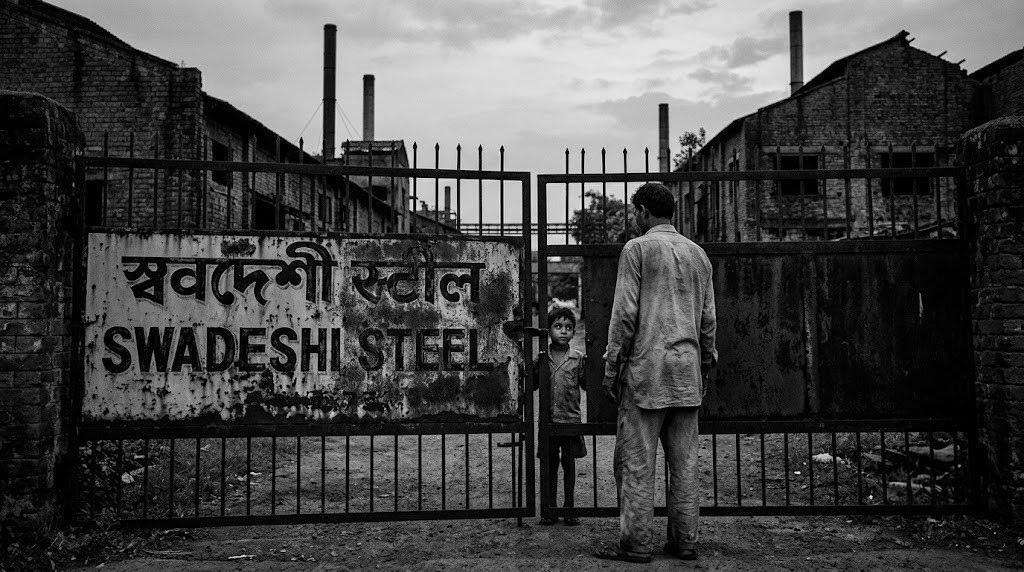
Decades later, ghost of ruined enterprise hung heavy over cold rusted gates. Asset strippers had gutted machinery, sold off land pieces, and left entire community shattered. Today, Vikram’s young son stands in line outside those very gates among crowds of hopeless laborers, begging daily wage contractors for single shift of heavy lifting. Hot sun burns down on broken signboards as great-grandson of pioneer searches for work on soil his family once owned, fulfilling ancient warning of lost values and ruined heritage.
When orders flooded in initially despite lower quality, Vikram mistook this quick cash flow for strategic genius. He failed to see that early sales were driven merely by novelty and lingering prestige of his family name, not by any real value in his cheapened product. Temporary spikes in success often blind leaders into believing they have conquered market, when in truth, short-term hype can never replace deep structural strength. True sustenance only comes when roots run deep into uncompromising quality and trust, making organization resilient enough to weather shifting trends rather than collapsing moment initial curiosity fades.
Swadeshi Steel stands today as a stark reminder of the age-old Scottish proverb: the father buys, the son builds, grandchild sells, and his son begs. Sustainable growth is never just about balance sheets, bottom lines, or quarterly metrics on Tally software. True organizational legacy rests on the invisible bedrock of foundational values- integrity, trust, and human connection, that built it in the first place. When modern enterprises abandon these core principles in pursuit of hyper-growth or reckless reformation, they strip away the very soul of the brand. Beyond spreadsheets and profit margins, a brand lives in the hearts of its workers, its community, and its patrons, and once that trust is broken, no amount of financial engineering can buy it back.