सशङ्खचक्रं सकिरीटकुण्डलं सपीतवस्त्रं सरसीरुहेक्षणम् ।
सहारवक्ष:स्थलशोभिकौस्तुभश्रियं नमामि विष्णुं शिरसा चतुर्भुजम् ॥
Kamika Ekadashi falls during Krishna Paksha (dark fortnight) of Shravana month (July-August) according to Amanta calendar or Ashadha month according to Purnimanta calendar. It is first Ekadashi coming during sacred period of Chaturmas. Devotees dedicate this auspicious day to worship Bhagawan Vishnu, seeking forgiveness for past sins and protection from negative energy.
Meaning and Significance of Kamika Ekadashi
Understanding name itself reveals supreme nature of this divine day. In Sanskrit, Kama refers to righteous desires and wishes, while Kamika signifies fulfiller of pure desires. Therefore, Kamika Ekadashi translates to 11th day that fulfills pure wishes of devotees while granting liberation from worldly sins.
Human life often suffers due to unintentional mistakes, bad karma, and fear of spiritual decline. Observing fast on Kamika Ekadashi with pure mind acts as divine shield, washing away accumulated sins and granting spiritual energy. Scriptures state that merit obtained by worshiping Lord Vishnu on this day is far greater than taking holy dips in sacred rivers or donating massive wealth. Worshiping Bhagawan Vishnu with Tulsi leaves on Kamika Ekadashi pleases Lord immensely, removing all spiritual obstacles and guiding devotee towards Moksha.
Legend associated with Kamika Ekadashi
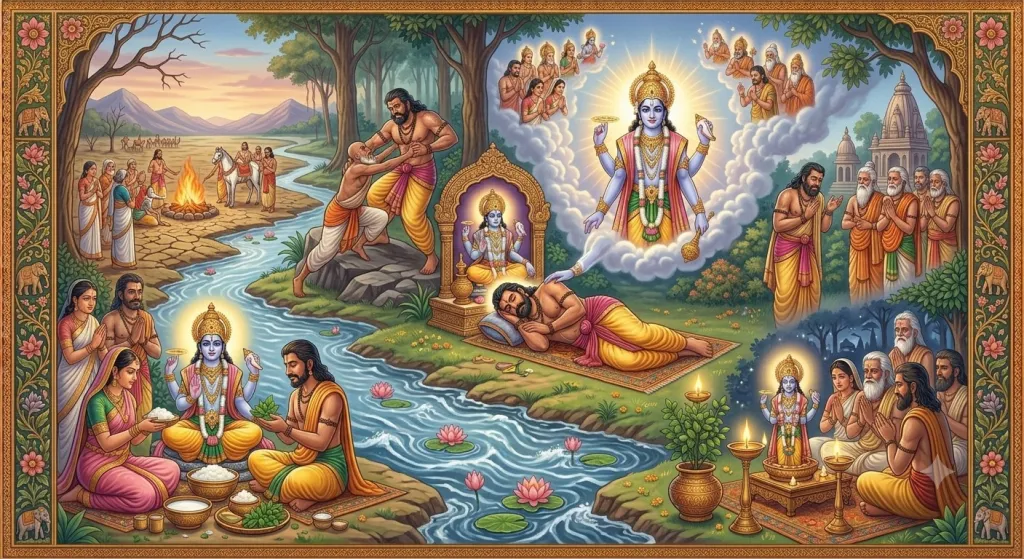
Scriptures describe sacred story narrated by Lord Brahma to Sage Narada and later by Bhagawan Krishna to King Yudhishthira, involving wealthy landlord who lived in prosperous village. Landlord was short tempered and aggressive in nature. One day, landlord got into heated argument with local Brahmin. In fit of extreme anger, landlord physically attacked Brahmin, leading to accidental death of Brahmin.
Realizing gravity of his crime, landlord felt deep guilt and remorse. He wanted to attend funeral rites of Brahmin to seek forgiveness, but villagers refused his presence and boycotted him completely due to sin of Brahma Hatya (killing of Brahmin). Ostracized by society and burdened with immense guilt, landlord approached pious sage seeking way to cleanse his soul.
Sage felt compassion for genuinely repentant landlord and advised him to observe Kamika Ekadashi fast in Krishna Paksha of Shravana month. Sage instructed him to worship Bhagawan Sridhara form of Lord Vishnu with complete devotion, keep fast, and pray sincerely for forgiveness.
Landlord strictly observed Kamika Ekadashi fast, keeping night vigil near idol of Bhagawan Vishnu. During night, Lord Vishnu appeared in his dream and declared that his sincere repentance, complete devotion, and observance of sacred fast had cleansed him of sin. Landlord regained spiritual peace, got rid of heavy guilt, and spent rest of his life in devotion to Lord Hari.
Rituals to be performed on Kamika Ekadashi
Devotee must wake up early in morning during Brahma Muhurta and take ritual bath in clean water. Do not use soap, shampoo or any such cosmetic products.
Puja area should be cleaned thoroughly and idol or photo of Bhagawan Vishnu, specifically Sridhara form, should be placed respectfully.
Light ghee lamp, offer fresh yellow flowers, sandalwood paste, incense, and fresh Tulsi leaves to Bhagwan Vishnu. Offering Tulsi leaves on this day holds special significance and brings supreme blessings.
Chant Vishnu Sahasranama, Hare Krishna Mahamantra, or Om Namo Bhagavate Vasudevaya continuously throughout day.
Listen to or read Kamika Ekadashi Katha with family members in peaceful state of mind.
Observe fast during entire day according to individual health capacity. Healthy individuals can observe strict fast without water or taking only water. Milk, curd, and fruits can be consumed if complete fasting is difficult due to health reasons. Rice, wheat, barley, lentils, pulses, and all food grains must be avoided strictly. Heavy spices, regular salt, garlic, onion, tea, coffee, outside processed food, and alcohol must be strictly avoided.
Perform evening Aarti with devotion, offer special Naivedya to Bhagwan Vishnu, and maintain noble thoughts, avoiding anger, backbiting, falsehood, or harsh speech.
Break fast next day on Dwadashi tithi during scheduled Parana time. Fast should be broken after sunrise once Hari Vasara period concludes. Offer naivedya to Bhagwan Vishnu, perform short prayer, and break fast by consuming prasada, water, or fruits before eating regular food.
PS: Article re-formatted into blocks and Header Image changed