शान्ताकारं भुजगशयनं पद्मनाभं सुरेशं
विश्वाधारं गगनसदृशं मेघवर्णं शुभाङ्गम् ।
लक्ष्मीकान्तं कमलनयनं योगिभिर्ध्यानगम्यं
वन्दे विष्णुं भवभयहरं सर्वलोकैकनाथम् ॥
Shravana Putrada Ekadashi falls during Shukla Paksha (waxing phase of moon) of Shravana month (July-August). It is deeply auspicious Ekadashi observed by devotees of Bhagawan Vishnu, especially couples seeking healthy lineage, protection for children, and domestic bliss. Devotees dedicate this day to worship Bhagawan Vishnu with complete devotion to erase obstacles in progeny and achieve spiritual fulfillment.
Meaning and Significance of Shravana Putrada Ekadashi
Understanding name itself reveals divine blessing of this sacred day. In Sanskrit, Putra means son or child, while Da means giver. Therefore, Shravana Putrada Ekadashi translates to 11th day in Shravana month that bestows progeny and protects children.
Having virtuous child is considered major blessing in human life as children carry forward family legacy and perform ancestral rites. Observing fast on Shravana Putrada Ekadashi with pure heart removes negative karmic blockages delaying parenthood. Scriptures state that observing this fast grants merit equivalent to performing grand sacrifices, blessing devotees with healthy children, family happiness, and ultimate liberation or Moksha.
Legend associated with Shravana Putrada Ekadashi
Scriptures describe sacred story narrated by Bhagawan Krishna to King Yudhishthira, involving prosperous king named Mahijit who ruled kingdom of Mahishmati. King Mahijit was wealthy, just, and kind ruler who looked after his subjects like own family. However, despite enjoying all worldly comforts, king felt deep sorrow because he had no children to continue his royal line.
Distressed by lack of heir, King Mahijit called assembly of learned Brahmins, ministers, and wise citizens. King humbly asked why he remained childless despite never committing evil deeds or misusing royal power. Wise citizens and Brahmins decided to seek advice of great Sage Lomasa, who lived in deep forest performing severe penance.
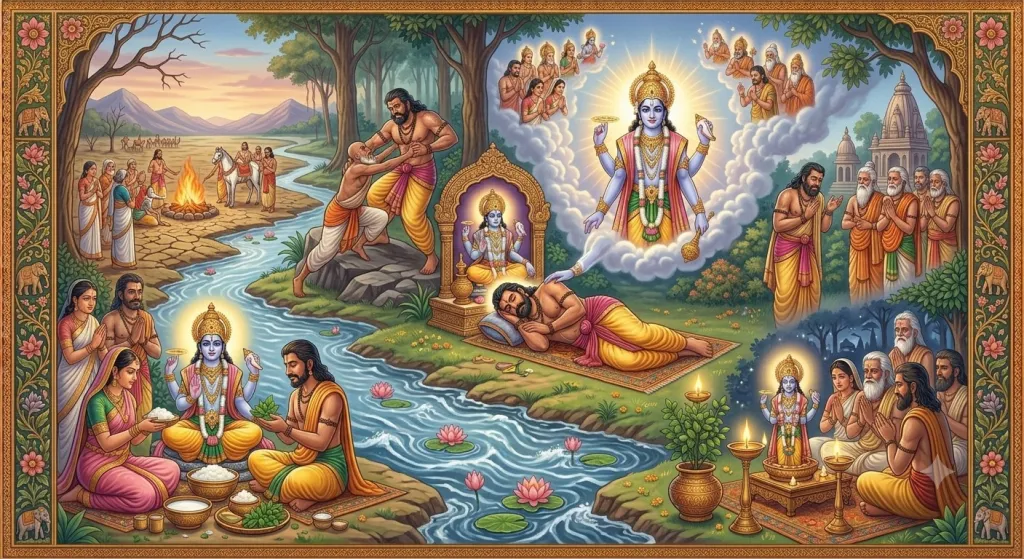
Sage Lomasa listened to plight of king and used his yogic vision to see past life of King Mahijit. Sage revealed that in previous birth, king was poor merchant who committed sinful act. On hot summer day of Jyeshtha month, thirsty merchant reached lake to drink water. At same time, thirsty cow with newborn calf arrived to drink water. Driven by selfishness, merchant drove cow away and drank water himself.
Sage Lomasa explained that while merchant gained royal status in present life due to past good deeds, sin of torturing thirsty cow and calf left him childless. To neutralize this past karma, Sage Lomasa advised citizens, ministers, and royal family to observe Shravana Putrada Ekadashi fast in Shukla Paksha of Shravana month with complete devotion and transfer spiritual merit (Punya) to King Mahijit.
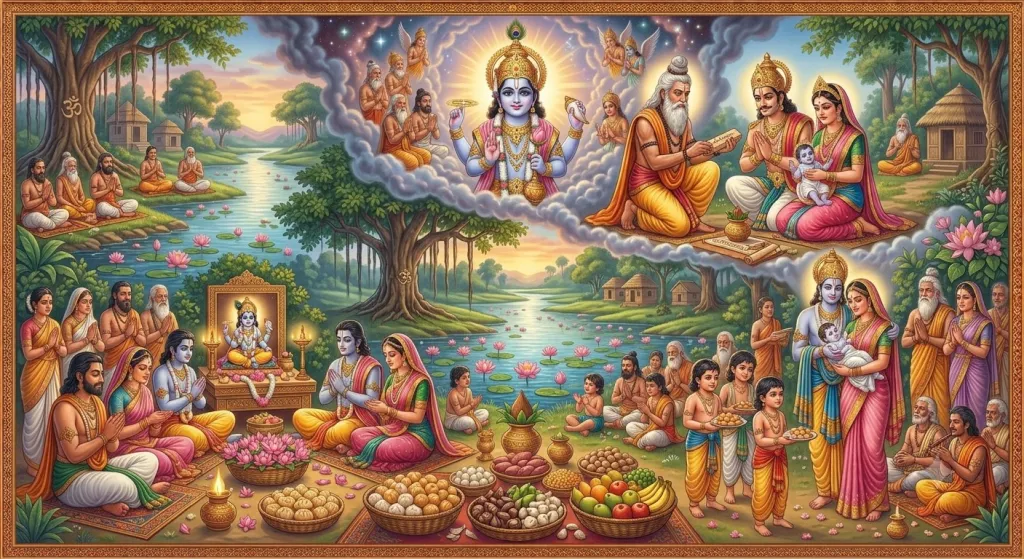
Subjects returned to capital and observed strict fast on Shravana Putrada Ekadashi along with king. They worshiped Bhagawan Vishnu with complete faith and offered collective merit to king. By divine grace of Bhagawan Vishnu, queen soon conceived and gave birth to beautiful, healthy son. Whole kingdom celebrated with joy and peace was restored.
Rituals to be performed on Shravana Putrada Ekadashi
Devotee must wake up early in morning during Brahma Muhurta and take ritual bath using clean water without using soap, shampoo, or such cosmetic products.
Puja area should be cleaned thoroughly and idol or photo of Bhagawan Vishnu in the form of Balakrishna should be placed respectfully.
Light ghee lamp, offer fresh yellow flowers, sandalwood paste, and Tulsi leaves to Bhagwan Vishnu.
Chant Vishnu Sahasranama, Hare Krishna Mahamantra, or Om Namo Bhagavate Vasudevaya continuously throughout day.
Listen to or read Shravana Putrada Ekadashi Katha with family members in peaceful state of mind.
Offer your respects to parents and other elders, especially Guru, seeking their heartfelt blessings on this sacred morning.
Observe fast during entire day according to individual health capacity. Healthy individuals can observe strict fast without water or taking only water. Milk, curd, and fruits can be consumed if complete fasting is difficult due to health reasons. Rice, wheat, barley, lentils, pulses, and all food grains must be avoided strictly. Heavy spices, regular salt, garlic, onion, tea, coffee, outside processed food, and alcohol must be strictly avoided.
Perform evening Aarti with devotion, offer special Naivedya to Bhagwan Vishnu, and maintain noble thoughts, avoiding anger, backbiting, falsehood, or harsh speech.
Break fast next day on Dwadashi tithi during scheduled Parana time. Fast should be broken after sunrise once Hari Vasara period concludes. Offer naivedya to Bhagwan Vishnu, perform short prayer, and break fast by consuming prasada, water, or fruits before eating regular food.