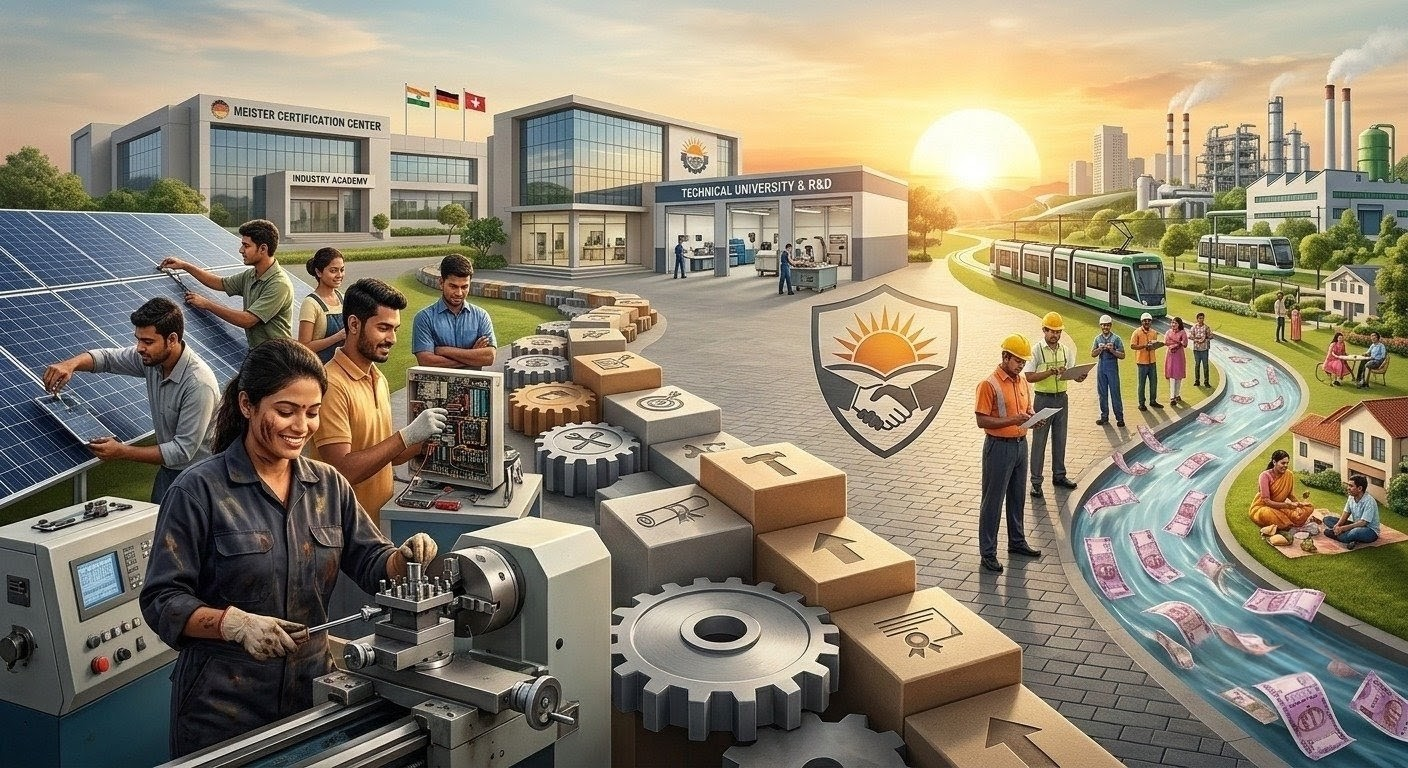
As leaders, policymakers, and industry experts gather at the Bengaluru Skill Summit 2026 under the banner of Workforce 2030: Scale, Systems, Synergy, the conversation around human capital in India stands at a critical crossroads. Building a resilient economy demands that we move beyond expanding skilling numbers to addressing the fundamental societal perception of vocational careers. True progress requires making skilled craftsmanship an aspirational primary choice rather than a fallback option. Here is two bits on what it takes to make this happen on the ground
Skill development in India historically suffers from deep-seated perception issue where vocational training gets categorized as backup option. Society views hands-on learning as route for candidates who fail to secure traditional academic seats. Real progress demands structural shift where vocational tracks become intentional choice rather than compromise. Integrating skill modules into early school education exposes students to practical disciplines, allowing them to pursue craftsmanship out of genuine passion. When youth opt for technical trades as primary ambition, standards of quality, innovation, and expertise naturally rise across industries.
Cultural Trap of White-Collar Aesthetics
Deeply rooted social biases often overshadow actual economic success and career progression, as illustrated by real-life example from Andhra Pradesh. Daughter of farm labourer independently chose vocational training as specialized Tool Maker, driven by genuine interest in technical machinery despite her parents lacking formal education to guide her. Upon visiting her industrial workspace, her parent was dismayed to find her in heavy overalls, drenched in sweat with hands covered in grease.
This shock persisted despite her earning significantly higher salary than her elder brother, who held traditional University Engineering Degree and was in his third year of corporate employment. Furthermore, her specialized program offered structured academic pathway allowing her to complete her Engineering Degree concurrently while enjoying strong headstart in her career. Parent continually insisted that educated daughter should be working in air-conditioned halls, wearing formal suit, and operating computer. This stark contrast demonstrates how societal obsession with white-collar aesthetics creates artificial barrier against making technical craftsmanship aspirational.
Dignity of Craftsmanship
Nations like Germany and Switzerland demonstrate power of dual-education systems where master craftspeople enjoy equal social prestige alongside university degree holders. German Meister qualification carries immense public respect and opens structured career pathways. India requires similar cultural transformation to break long-standing bias that favors white-collar desk jobs over practical mastery. Recognizing skilled workers as indispensable drivers of economic growth instills pride in craftsmanship. Elevating public perception around technical skills validates efforts of artisans and encourages future generations to pursue vocational careers with confidence.
Overhaul of Regulatory Frameworks
Seamless academic mobility and aspirational skill pathways demand massive improvement in effectiveness of regulatory bodies and qualification architectures. While National Council for Vocational Education and Training (NCVET), National Skills Qualifications Framework (NSQF), and National Credit Framework (NCrF) provide policy intent, ground-level execution gaps prevent real-world impact. Higher education institutions frequently resist recognizing skill-based credit transfers under NCrF, forcing students into repetitive learning loops.
NSQF levels require drastic restructuring in close alignment with industry standards to ensure certifications signal practical mastery rather than theoretical hours. Furthermore, NCVET must shift from passive accreditation to active quality enforcement, auditing assessment agencies and streamlining Recognition of Prior Learning (RPL) so informal skilled workers gain credible credentials, wage enhancements, and formal economic standing.
From Minimum to Proud Wages
National conversation around workforce compensation must move away from bare survival figures toward sustainable income. Framing labor value around statutory minimum wages keeps skilled workers in state of perpetual financial uncertainty. Industry and policymakers must collaborate to establish proud wages that truly reflect expertise, precision, and effort involved in skilled trades. Fair and lucrative compensation structures create strong economic incentives, motivating workers to constantly upskill while transforming technical professions into highly attractive long-term career choices for ambitious youth.
Trap of Gig Economy
Unregulated expansion of gig platform economy actively hinders long-term skill development among Indian youth. Delivery platforms and ride-hailing services offer immediate daily cash payouts, luring young workers into low-skill algorithmic tasks. While gig work provides short-term financial relief, it lacks structured career progression, formal training, or skill accumulation. Workers spend productive years completing repetitive tasks without building specialized expertise required for higher-value trades. Algorithmic management leaves gig workers highly vulnerable to sudden pay cuts, arbitrary account suspensions, and total lack of social safety nets, trapping energetic labor force in precarious cycle without sustainable future growth.