Various conversations with key stakeholders across Indian skilling landscape reveal sharp contrast between policy design and field implementation. Interactions with teams at NCVET and NSDC and also as an observer of their activities, highlight clear national blueprint aimed at unifying qualification standards.
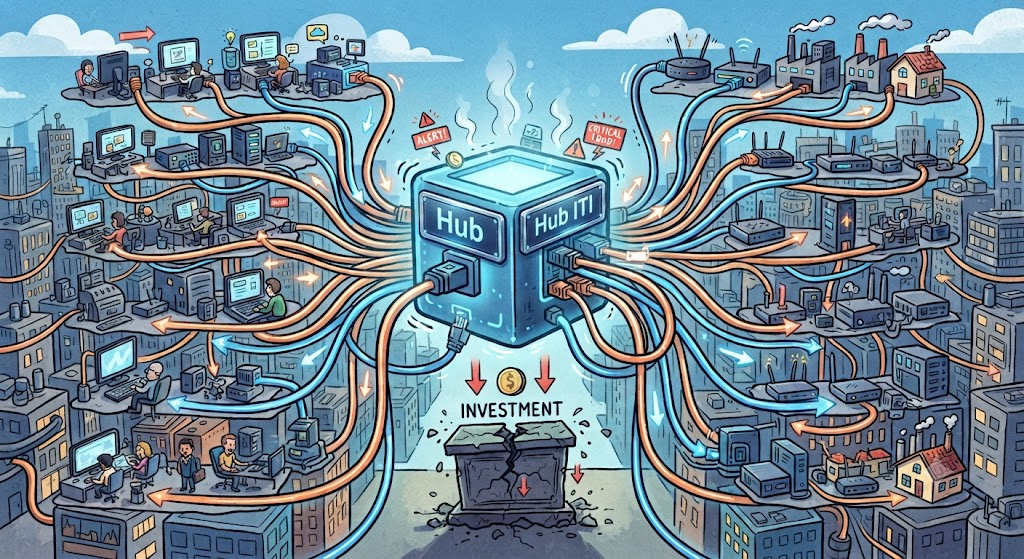
However, direct feedback from Colleges, Schools, Technical and Vocational Education and Training institutions, referred to as TVETs, and Industry partners uncovers operational friction points. School administrators report resource constraints when rolling out early vocational modules. TVET centers express concerns regarding high capital expenditure needed for modern lab infrastructure. Colleges highlight administrative difficulties when mapping legacy curricula to credit standards. Private industry partners continue to voice skepticism regarding practical readiness of certified candidates.
NSQF Adoption in Indian Skilling Ecosystem
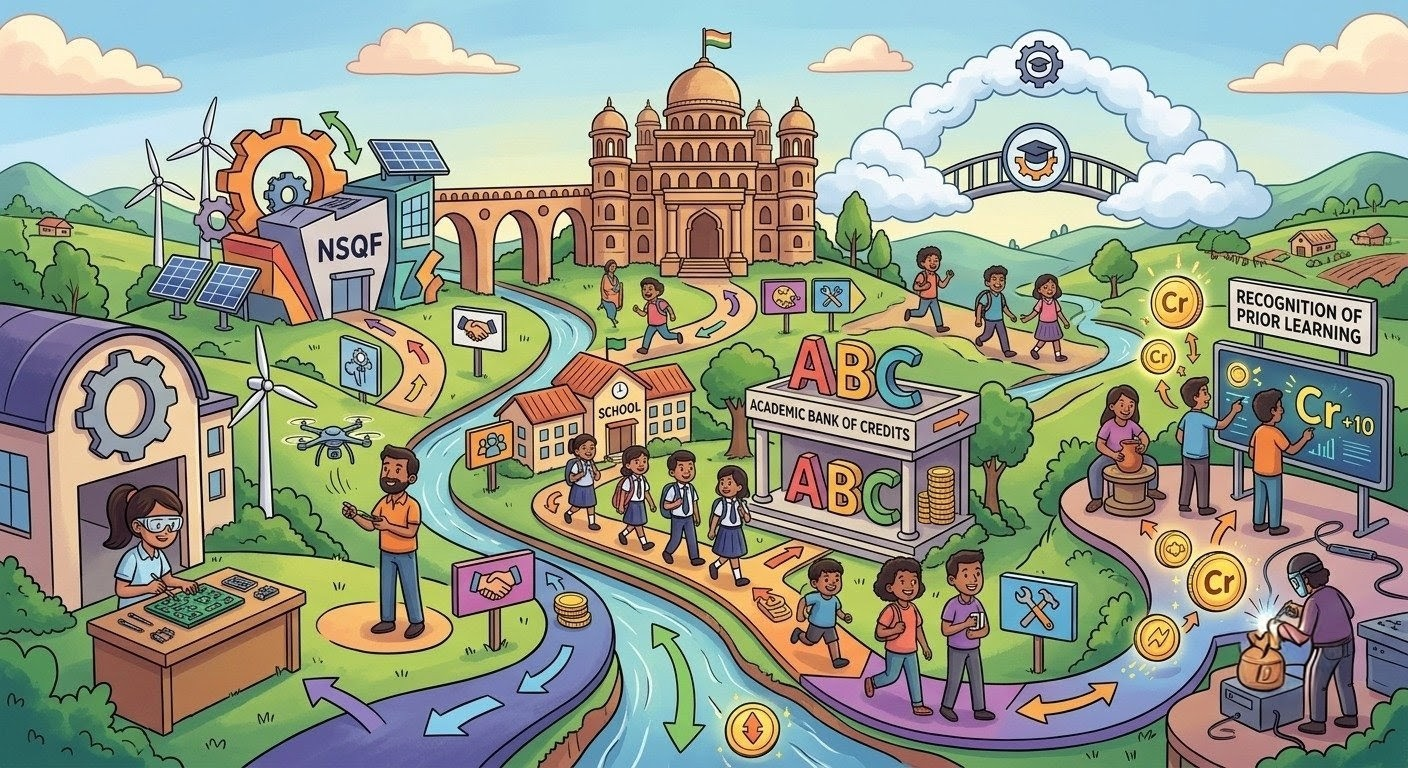
National Skills Qualifications Framework, widely known as NSQF, has emerged as main backbone of Indian vocational education and training sector. Supported by National Education Policy 2020 and National Credit Framework, short for NCrF, NSQF is bridging gap between academic learning and practical vocational skills across country.`
Major Achievements and Drivers of Growth
Implementation of NSQF has picked up speed across multiple domains in India. Integration with school and higher education through NCrF allows students to move between academic and vocational streams without losing study time. Under Samagra Shiksha scheme, over 25,000 schools across Indian states now offer NSQF aligned vocational courses covering more than 130 job roles.
Ministry of Skill Development and Entrepreneurship together with National Council for Vocational Education and Training, known as NCVET, has rationalized old qualifications. Outdated courses are removed, making space for modern domains like Artificial Intelligence, Green Energy, Cybersecurity, Cloud Computing, and Drone Technology.
Major national skilling schemes like Pradhan Mantri Kaushal Vikas Yojana, Industrial Training Institutes, and PM Vishwakarma mandatory map their curriculum to NSQF levels. Skill India Digital Hub platform enables seamless digital certification and tracking for learners across country. Furthermore, Recognition of Prior Learning allows millions of informal workers and traditional Indian artisans to get official NSQF certificates based on existing workplace skills.
Systemic Bottlenecks in the Indian Skilling Framework
Despite ambitious structural reforms under NSQF and National Credit Framework, several deep-rooted systemic bottlenecks continue to slow down real ground impact. Primary issue remains social mindset surrounding vocational training, which is still widely viewed as secondary alternative for students who fail in general academic streams. This perception gap severely dampens student enrolment numbers and reduces willingness of parents to choose skill courses early in school life.
On industry front, major disconnect exists between official NSQF certifications and private sector hiring criteria. While government departments and public sector undertakings recognize NSQF levels, private employers across India still rely heavily on traditional university degrees or conduct separate internal tests, largely ignoring NSQF level scores during recruitment.
Fragmented governance among various awarding bodies and state level training missions often leads to compliance focused implementation rather than outcome-based learning. Many training providers focus on completing mandatory short-term targets to claim government subsidies instead of tracking long term job placement or wage growth.
Quality of infrastructure and availability of certified trainers present another massive operational challenge, particularly across tier two and tier three towns. Trainers themselves often lack exposure to modern industrial tools and digital tools, leaving students with theoretical knowledge rather than true practical competencies.
Lastly, execution of seamless credit transfers under NCrF requires high level of digital readiness and administrative alignment across universities, ITIs, and school boards. Many higher educational institutions lack necessary operational guidelines or motivation to grant lateral entries to vocational diploma holders, creating friction in multiple entry and exit pathways envisioned by National Education Policy.
Role of Sector Skill Councils in NSQF Integration
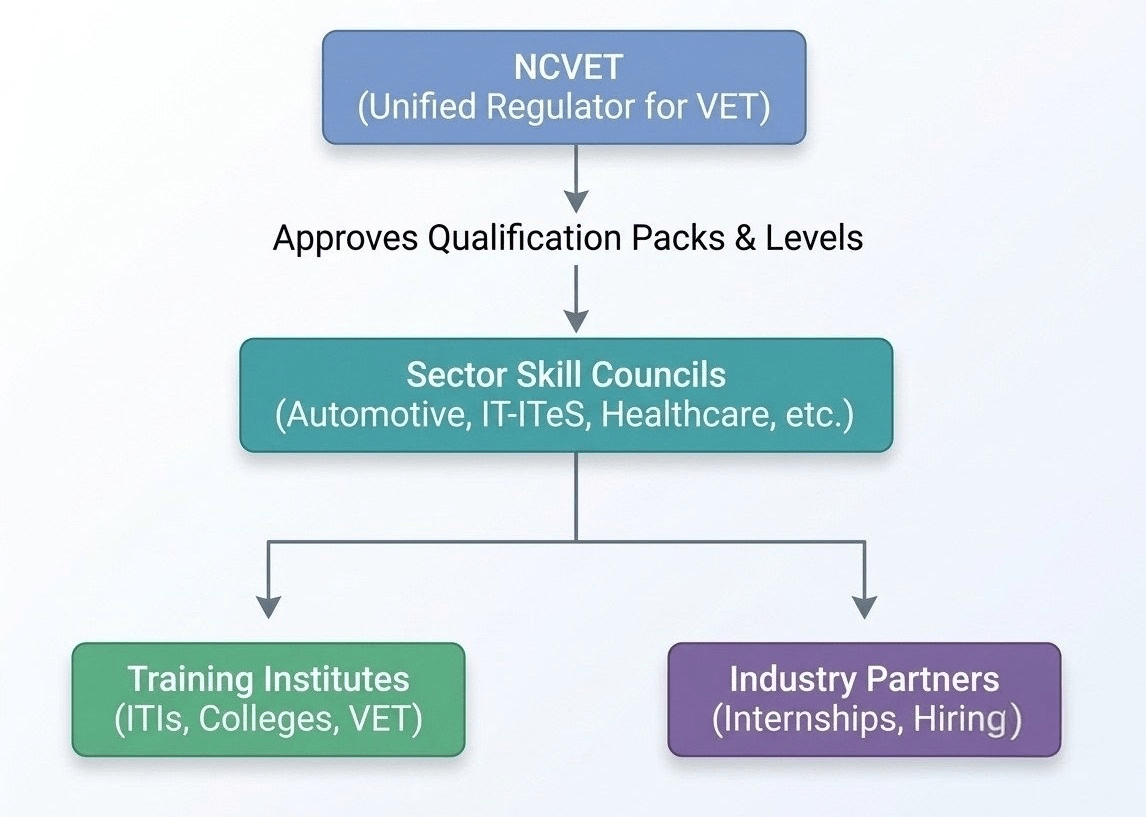
Sector Skill Councils, commonly called SSCs, act as crucial bridge between Indian industry requirements and skilling standards. Operating under regulation of NCVET, SSCs shape quality and relevance of skill training in India.
Key Functions of SSCs
SSCs define job roles and performance standards across more than 30 major sectors including Automotive, Healthcare, Retail, Electronics, and IT-ITeS. These standards form base for Qualification Packs approved by NCVET.
SSCs continuously update curriculum to match future industry needs like Green Hydrogen and Electric Vehicles. Leading corporate houses and original equipment manufacturers partner directly with SSCs to align in-house employee training with national standards. SSCs also supervise independent assessment agencies to conduct outcome-based practical tests across training centers.
Credit Transfers under National Credit Framework
National Credit Framework unifies credit allocation across school education, higher education, and vocational training in India.
Credit System Architecture
One credit equals roughly 30 hours of total learning effort. One full academic year of 1,200 learning hours translates to 40 credits.
| Learning Type | Hours per Week | Credits Earned |
| Theory or Lecture | 1 hour | 1 Credit |
| Practical or Lab Work | 2 hours | 1 Credit |
| On the Job Training / Field Work | 3 hours | 1 Credit |
| 3 Month Apprenticeship | Full Duration | 10 Credits |
NCrF Levels Overview
| NCrF Level | Qualification / Education Stage |
| Level 8.0 | Doctoral or Post Doctoral Studies |
| Level 7.0 | Master Degree or Advanced Vocational |
| Level 6.0 | Bachelor Degree 4th Year Honours |
| Level 5.5 | Bachelor Degree 3rd Year |
| Level 5.0 | Diploma or Higher Vocational Training |
| Level 4.5 | Undergraduate Certificate |
| Level 4.0 | Class 12 or ITI National Trade Certificate |
| Level 3.0 | Class 10 or Foundation Skills |
Flaws of Equating NCrF Levels directly to Academic Levels
Equating NSQF competency levels directly to standard educational qualifications like Class 10, Class 12, or Bachelor degrees risks undermining fundamental purpose of skill framework. Main objective of NSQF is to measure practical capability, hands on mastery, and workplace performance rather than classroom seat time or academic test scores. When skill levels are strictly mapped to formal academic degrees, system shifts focus back to earning certificates rather than demonstrating actual workplace competence. Training providers end up designing courses to meet traditional academic equivalency guidelines instead of customizing learning to dynamic industry needs. This approach reduces NSQF to mere degree equivalent system, encouraging rote memorization and academic bureaucracy while leaving core issue of industry unemployability unaddressed.
How Mobility Works for Learners
Every student gets unique APAAR ID linked to Academic Bank of Credits. Earned credits from ITIs, school vocational courses, or university programs deposit digitally into this account.
Students can easily transfer credits between general academic subjects and vocational courses. Higher Education Institutions allow up to 50 percent of total degree credits through NSQF aligned vocational courses, internships, or industrial apprenticeships.
Multiple entry and exit options allow student to leave degree program after first year with certificate, work in industry, and return later to resume higher studies using accumulated credits. Workplace knowledge acquired without formal education can also be evaluated through RPL assessment and credited directly to student account.
Slow Adoption of Multiple Entry and Exit Options
Implementation of Multiple Entry and Multiple Exit, commonly called MEME, remains one of most struggling components within Indian higher education and skilling frameworks. Designed under National Education Policy 2020 to offer flexible learning pathways, ground execution suffers from massive institutional hesitation and logistical barriers.
| NEP Implementation Metric | Current Adoption Level |
| Higher Education Institutions offering MEME | 36 percent |
| ABC Registered HEIs maintaining active credit logs | 64 percent |
| Universities fully adopting NCrF framework | Under 7 percent |
National implementation studies show only 36 percent of Higher Education Institutions across Indian states have actually operationalized multiple exit options for their students. Furthermore, while over 2,800 institutions registered on Academic Bank of Credits platform, under 7 percent of registered universities have integrated full NCrF equivalence guidelines required for seamless credit mobility. Nearly 36 percent of registered institutions fail to update active credit records on ABC portal, making cross-university student transfers nearly impossible in practice.
Root cause of poor adoption lies in administrative complexity and lack of trust among academic bodies. Most top rank universities hesitate to accept re-entry students from other regional colleges, fearing diluted academic standards. Each institution requires setting up independent Equivalence Committees to manually evaluate prior credits, creating massive red tape and processing delays.
Additionally, industry value of exit awards like Undergraduate Certificates after year one or Diplomas after year two remains unproven. Private sector recruiters rarely view one year certificate holders as job ready graduates, forcing most students to complete full four year degree without opting for early exit options.
Path Forward for the Skilling Ecosystem
Transforming Indian skilling landscape from policy vision into functional reality requires closing implementation gaps across all ecosystem players. While foundational frameworks like NSQF, NCrF, and credit banking systems offer promising architecture, true success depends on active collaboration among regulators, educational institutions, and private industry. National level bodies like NCVET and NSDC must streamline accreditation processes while encouraging universities and TVET institutions to simplify credit transfers. Simultaneously, private sector employers need to align entry level hiring requirements with NSQF competencies rather than relying strictly on conventional degrees. Addressing social perceptions around vocational education, strengthening teacher training quality, and establishing clear industry recognition for exit certificates will ensure Indian youth gain meaningful employability through seamless skill pathways.