सुपिच्चगुच्छमस्तकं सुनादवेणुहस्तकं अनङ्गरङ्गसागरं नमामि कृष्णनागरम्
Eternally I worship Bhagawan Krishna, Nanda’s son, Vraja’s sole ornament, who breaks all sins into pieces, and who delights the devotees’ hearts.
I offer my respectful obeisances to the hero Bhagawan Krishna, whose head is decorated with peacock feathers, whose hand holds a melodious flute, and who is an ocean of Kamadeva’s pastimes.
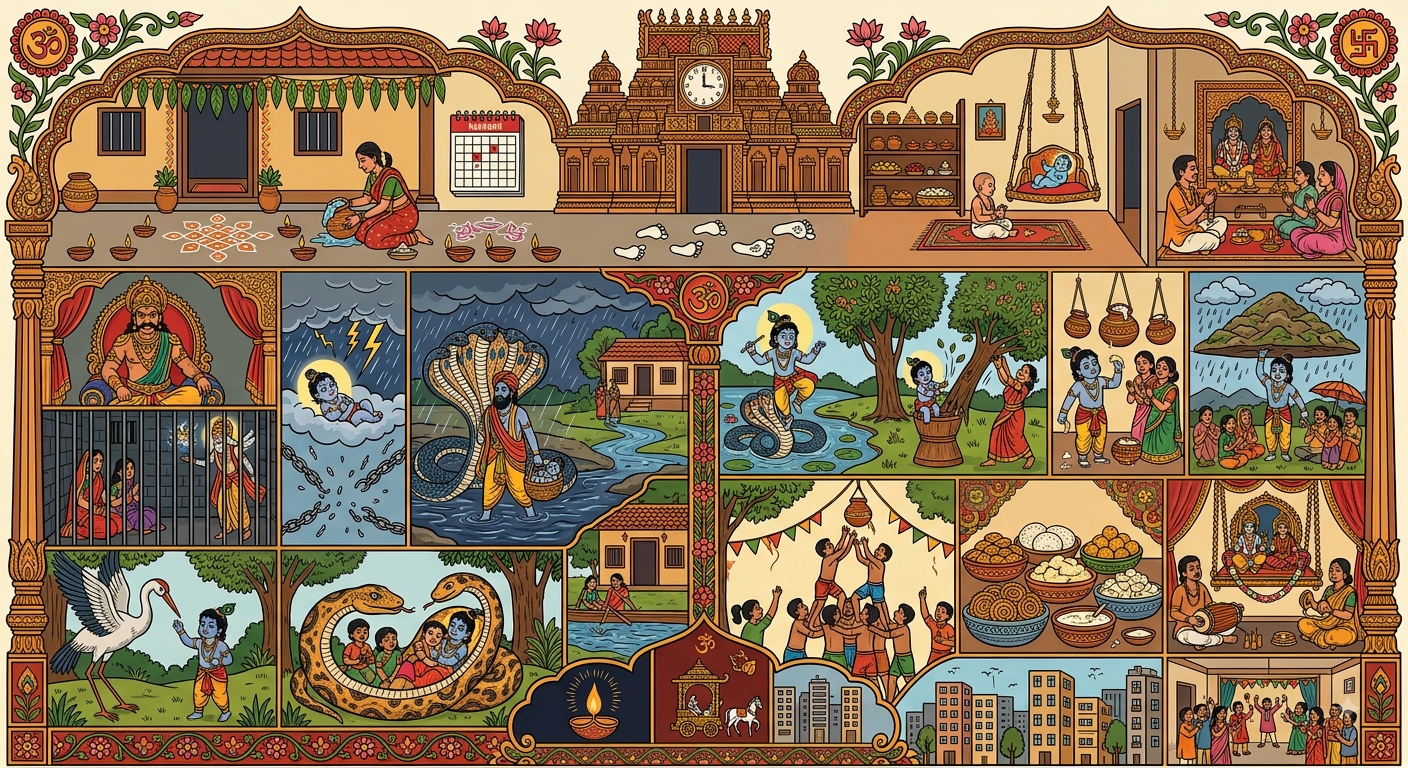
Shri Krishna Janmashtami marks birth of Shri Krishna, who is eighth avatar of Bhagwan Vishnu. festival occurs during Hindu month of Shravana or Bhadrapada, falling in month of August or September in modern calendar. Specific day is decided based on Ashtami tithi or eighth day of Krishna Paksha combined with Rohini nakshatra. Across all states of South India, whether Tamil Nadu, Karnataka, Kerala, Andhra Pradesh, or Telangana, festival brings immense joy and warmth into homes. Preparation starts days ahead with deep cleaning of entire house, washing vessels, and getting all traditional ingredients ready. On festival day, families wake up early during brahma muhurtham, clean their houses thoroughly, and decorate entrance with fresh green mango leaves and vibrant rangoli or kolam patterns. Whole atmosphere fills with scent of incense, jasmine flowers, and sweet dishes cooking in kitchen.
Divine Birth of Mathura
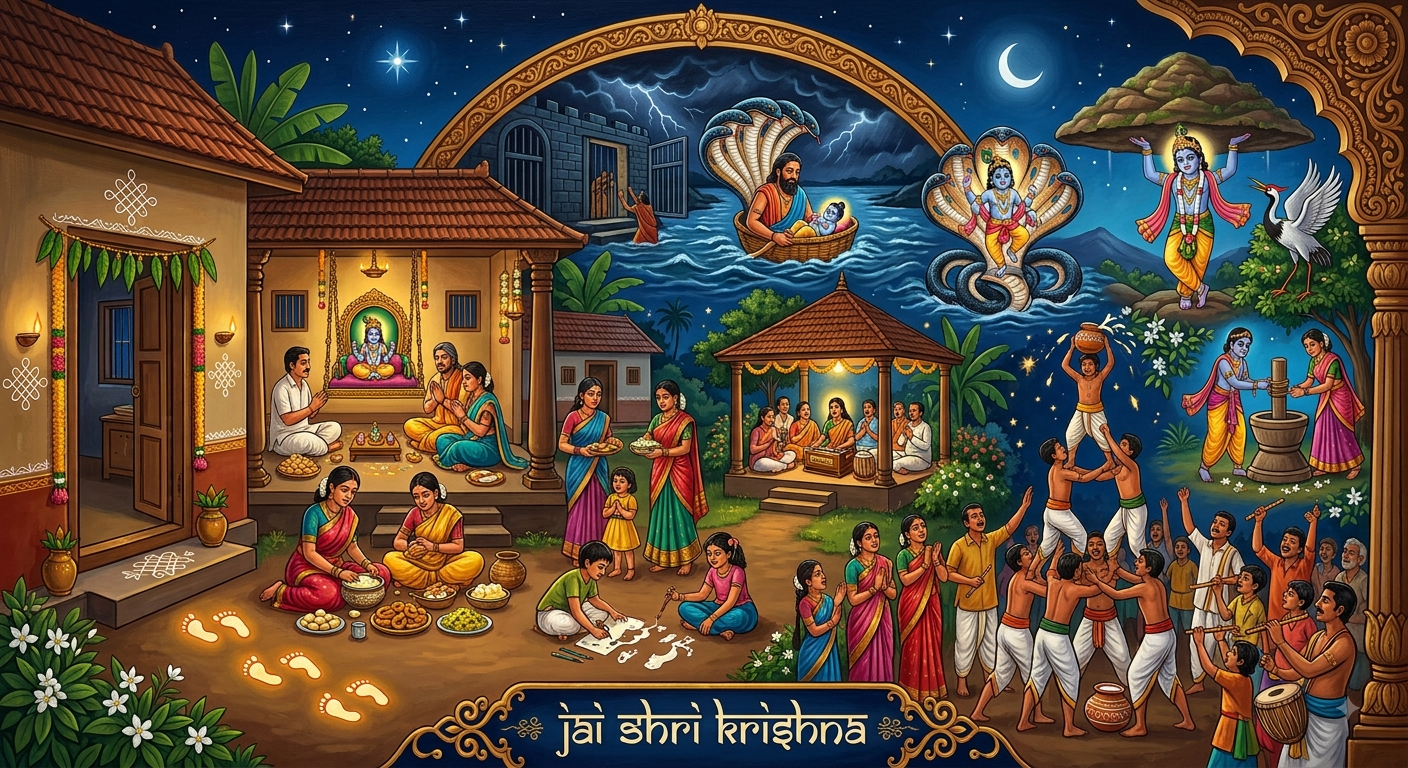
Legend of Janmashtami takes us back to ancient city of Mathura. Wicked king Kamsa ruled region with cruelty, arrogance, and pride. On day of his sister Devaki’s wedding with Vasudeva, heavenly voice announced that eighth child of Devaki would destroy Kamsa. Terrified by prophecy, Kamsa immediately imprisoned Devaki and Vasudeva. He brutally killed their first six children one by one as soon as they were born. Seventh child Balarama was transferred miraculously to Rohini’s womb in Gokul. On stormy midnight of Ashtami tithi under Rohini star, Shri Krishna was born in dark prison cell. Entire nature celebrated his divine advent. Heavy iron gates opened automatically, prison guards fell into deep slumber, and chains fell off Vasudeva’s hands. Vasudeva put newborn baby in wicker basket and carried him across flooded Yamuna river. Great serpent Adishesha spread its multi-headed hood over basket like umbrella to protect baby from torrential rain. Vasudeva reached village of Gokul, exchanged baby with newborn girl of Nanda and Yashoda, and returned to prison cell safely. Shri Krishna grew up happily in Gokul under mother Yashoda’s care, bringing endless delight to village with his divine childhood plays.
Childhood Legends and Miracles
Another famous legend associated with Krishna’s childhood is story of Putana. Kamsa sent fierce demoness Putana to poison all newborn babies in region. Putana disguised herself as beautiful woman and tried to nurse baby Krishna with poisoned milk. Shri Krishna recognized her true identity and sucked out her life force along with milk, liberating her soul. Another popular story is Kalinga Nartanam, where young Krishna jumped into Yamuna river to defeat multi-hooded venomous serpent Kalinga who was polluting water. Krishna danced on serpent’s hoods, removing its poison and pride, and asked it to leave river peacefully. Stories of Krishna stealing butter hidden in earthen pots hung from ceilings, charming gopis with his mesmerizing flute music, and lifting huge Govardhan hill on his little finger to protect villagers from torrential rain show both his playful human charm and supreme divine power.
Legends of Liberation and Divine Protection
Another captivating legend involves release of two heavenly demigods, Nalakuvara and Manigriva. When mother Yashoda got tired of naughty Krishna’s butter stealing pranks, she tried to tie him to heavy wooden grinding mortar. Curiously, rope kept falling short by two fingers no matter how many extra lengths she added, showing that supreme Lord can only be bound by selfless love. Once bound, toddler Krishna crawled toward two gigantic Arjuna trees in courtyard, dragging heavy wooden mortar between them. As mortar got stuck, Krishna gave gentle pull, bringing both massive trees down with thunderous crash. From fallen trees emerged two cursed celestial beings who bowed to Shri Krishna, expressed gratitude for liberating them from long curse, and departed to their heavenly abode.
Yet another remarkable story involves vanquishing of Bakasura, giant crane demon sent by Kamsa. Bakasura swallowed young Krishna whole, but Krishna became so red hot inside demon’s throat that demon had to spit him out. Krishna then seized two halves of demon’s beak and tore them apart effortlessly, protecting all his cowherd friends. Similarly, when demon Aghasura turned into giant python with mouth stretched open like mountain cave, cowherd boys wandered inside unknowingly. Krishna entered python’s mouth, expanded his divine body size until demon suffocated, and brought all his friends back to life safely.
Traditions and Regional Rituals
South Indian traditional observances carry very sweet, gentle, and intimate touch. Most famous ritual is drawing small baby footprints using rice flour paste mixed with water. Footprints start from main doorstep outside house, pass through living area, and lead directly into altar room, representing little Krishna walking into home to bless family with happiness and prosperity. Devotees observe day long fast, breaking it only at midnight after performing special puja, which is exact time when Krishna was born. Houses resound with chanting of Vishnu Sahasranamam, Hare Krishna mahamantra, and sweet devotional songs composed by saint poets like Purandara Dasa, Kanaka Dasa, and Annamacharya. In Kerala, day is celebrated widely as Ashtami Rohini, and special prayers take place at Guruvayur temple where deity is worshiped as Unnikrishnan or baby Krishna. In Karnataka, grand celebrations take place at Udupi Sri Krishna Mutt, where famous Kanakana Kindi window has special historical significance. In Tamil Nadu, people set up small idols of Krishna in swing and offer special slokas. In Andhra Pradesh and Telangana, devotional gatherings and night long bhajan sessions keep spirit alive.
Naivedyam Offerings and Community Festivities
Food offerings or naivedyam play huge central role in South Indian Janmashtami celebrations. Since Shri Krishna is fond of milk products, devotees prepare fresh butter, sweetened curd, and homemade ghee. Main dish offered is seedai, which comes in both sweet and savory varieties made from rice flour and urad dal. Other traditional delicacies include murukku, appam, chakli, laddoo, and flattened rice cooked with jaggery and coconut known as sweet poha or aval. In major temples like Parthasarathy temple in Chennai, Rajagopalaswamy temple in Mannargudi, and Udupi Krishna Mutt, special alankaram, grand abhishekam, and decorative processions take place. In parts of Karnataka, Andhra Pradesh, and Tamil Nadu, traditional outdoor games like Uri Adi or Vitla Pindi are organized. Youngsters form enthusiastic groups to build human pyramids or use wooden sticks to break earthen pot filled with curd, milk, turmeric water, and coins hung high above ground, recreating joyful spirit of Gokul butter thieves.
Core Spiritual Significance
Significance of this divine day lies in celebration of hope, faith, and victory of righteousness over tyranny. Shri Krishna was born inside dark prison cell during pitch black midnight hour when evil forces seemed completely unstoppable. His arrival proved that no amount of darkness or oppression can block divine light when right time comes. He took birth to protect virtuous people, destroy wickedness, and re-establish Dharma on earth. Festival reminds us that truth always prevails over falsehood, no matter how strong evil appears temporarily.
Modern Relevance and Life Lessons
Takeaway of Janmashtami for modern life is deeply practical, comforting, and grounding. Simple offerings of butter, curd, and poha show that God values pure devotion, love, and sincerity over lavish material display. Tiny footprints at doorway remind us to keep innocence, playfulness, and divine love alive inside our hearts and homes despite everyday stress and busy schedules. Shri Krishna later taught timeless wisdom in Bhagavad Gita to Arjuna on battlefield of Kurukshetra. His core teaching of Nishkama Karma guides us to focus entirely on doing our duty sincerely without constantly worrying about final results or rewards. In fast-paced modern world, observing Janmashtami inspires us to face life’s daily challenges with calm smile, remain detached from unnecessary mental stress, maintain mental balance in success and failure, and trust that light will always overcome darkness.
Community Satsangs and Local Celebrations
Spirit of Janmashtami truly comes alive when local communities gather together for devotion and celebration. Over past few years, our team had the privilege and experienced immense joy conducting special Janmashtami satsangs across various residential communities. We have been part of satsang sessions (click on the links to watch the videos) in various community celebrations in DLF Newtown, Suraksha Silveroak Purva Westend, Vedant Vayun, Elegant Whispering Woods, Walmark Amoda, Padma Nilayam, Purva Panorama-1 & Purva Panorama-2 in the past. Residents of these apartments participated with great enthusiasm and deep devotion. We had soul stirring bhajans while children dressed as little Krishna and Radha danced along joyfully. Entire atmosphere vibrated with pure spiritual energy and neighborhood bonding. Encouraged by overwhelming response and beautiful community spirit witnessed in past, we have scheduled more such special satsangs this year too. We look forward to bringing divine message of Lord Krishna to even more homes, filling every heart with peace, love, and spiritual bliss.
You can visit our Youtube Channel of our Team, AnantAnsh(Click this link) for watching videos of our Satsangs
🙏Jai Shri Krishna🙏