Pausha Putrada Ekadashi occurs during Shukla Paksha (waxing phase of moon) of Pausha month (December-January). It is highly sacred occasion falling during winter season, dedicated to worshiping Bhagawan Vishnu in his Narayana form. Devotees observe this fast to seek divine blessings for healthy progeny, protection of children, removal of past sins, and ultimate liberation.
Meaning and Significance of Pausha Putrada Ekadashi
In Sanskrit, Putra means son or child, while Da means giver or bestower. Therefore, Pausha Putrada Ekadashi translates to 11th day of Pausha month that bestows righteous children and protects family lineage.
Human life often carries sorrow due to childlessness or obstacles in growth and well-being of children due to past karma. Observing fast on Pausha Putrada Ekadashi with pure heart acts as spiritual remedy to overcome such karmic hurdles. Scriptures mention that sincere devotion on this day blesses childless couples with worthy offspring, protects existing children from harm, bestows family harmony, and elevates devotee towards Vishnu Loka.
Legend associated with Pausha Putrada Ekadashi
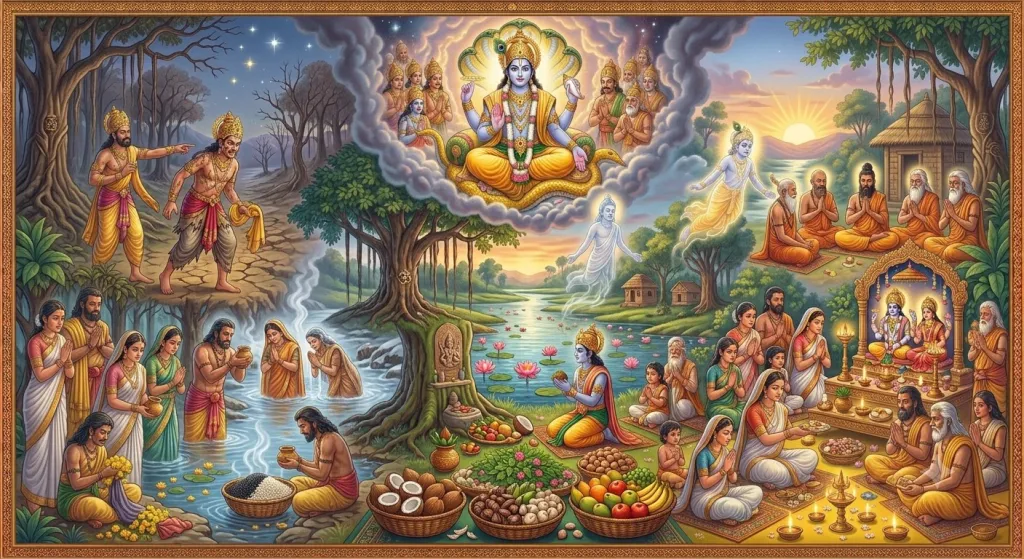
Scriptures describe sacred story narrated by Bhagawan Krishna to King Yudhishthira, involving noble King Suketuvarman who ruled kingdom of Bhadravati. King Suketuvarman was righteous ruler and his queen was named Shaibya. Though kingdom enjoyed prosperity and peace, king and queen were deeply unhappy because they had no children to continue royal lineage and offer ancestral rites.
Worried about future of kingdom and ancestral debt, King Suketuvarman left his palace one day and wandered deep into forest in great despair. After wandering for hours, king reached serene lake surrounded by beautiful hermitages of holy sages. Holy sages were chanting Vedic mantras and performing penance near water.
King Suketuvarman approached sages respectfully, bowed at their feet, and shared his deep sorrow regarding childlessness. Sages informed king that day was Shukla Paksha Ekadashi of Pausha month, highly auspicious day known as Putrada Ekadashi. Sages advised king to observe fast with total devotion and pray to Bhagawan Vishnu for noble child.
Following instructions of holy sages, King Suketuvarman took bath in sacred lake and observed strict fast on Pausha Putrada Ekadashi with pure mind and deep faith. Upon returning to Bhadravati, queen Shaibya also observed fast. By divine grace of Lord Hari and spiritual merit of fast, queen soon conceived and gave birth to healthy, brave, and virtuous son who grew up to rule kingdom righteously and brought immense joy to parents.
Rituals to be performed on Pausha Putrada Ekadashi
Devotee must wake up early in morning during Brahma Muhurta and take ritual bath using clean water without using soap, shampoo, or such cosmetic products.
Puja area should be cleaned thoroughly and idol or photo of Bhagawan Vishnu, especially Bal Gopal or Lord Narayana form, should be placed respectfully.
Light ghee lamp, offer fresh yellow flowers, sandalwood paste, incense, and Tulsi leaves to Bhagwan Vishnu.
Chant Vishnu Sahasranama, Hare Krishna Mahamantra, or Om Namo Bhagavate Vasudevaya continuously throughout day.
Listen to or read Pausha Putrada Ekadashi Katha with family members in peaceful state of mind.
Offer your respects to parents and other elders, especially Guru, seeking their heartfelt blessings on this sacred morning.
Observe fast during entire day according to individual health capacity. Healthy individuals can observe strict fast without water or taking only water. Milk, curd, and fruits can be consumed if complete fasting is difficult due to health reasons. Rice, wheat, barley, lentils, pulses, and all food grains must be avoided strictly. Heavy spices, regular salt, garlic, onion, tea, coffee, outside processed food, and alcohol must be strictly avoided.
Perform evening Aarti with devotion, offer special Naivedya to Bhagwan Vishnu, pray for well-being of family and children, and maintain noble thoughts, avoiding anger, backbiting, falsehood, or harsh speech.
Break fast next day on Dwadashi tithi during scheduled Parana time. Fast should be broken after sunrise once Hari Vasara period concludes. Offer naivedya to Bhagwan Vishnu, perform short prayer, and break fast by consuming prasada, water, or fruits before eating regular food.
PS: Article re-formatted into blocks and Header Image changed
Sanatani traditions and Indian culture have always viewed creation through lens of deep reverence, recognizing divine energy present in every living being and non-living object. Soil under feet is worshipped as Earth Mother, flowing rivers are treated as sacred life-giving mothers, trees are preserved as sacred abodes of devatas, and celestial bodies like planets are venerated as conscious divine forces shaping human life journey. Human existence is not seen as separate from nature, but as integral part of cosmic web where macrocosm outside reflects microcosm within.
Festivals like Angaraka Sankashti Chaturthi reflect this ancient worldview. On this occasion, human beings pause daily routine to express gratitude, perform penance, and offer prayers to planet Mars, aligning personal thoughts and actions with grand movements of cosmos.
Angaraki Sankashti Chaturthi, is deeply revered event in Hindu tradition. It occurs when Sankashti Chaturthi, which falls on fourth day of waning moon phase (Krishna Paksha), coincides with Tuesday. In Vedic tradition, Tuesday is governed by Angaraka, who is planet Mars. When intense energy of Mars meets supreme grace of Bhagwan Ganesha on Chaturthi, day becomes immensely powerful. Observing fast on this single day is believed to yield spiritual merit equivalent to keeping Sankashti Chaturthi fasts for whole year.
Astrological and Spiritual Significance
In Sanskrit language, word Angaraka means something shining bright red like burning coal, which describes fiery nature of planet Mars. According to astrology, Mars represents strength, courage, drive, leadership, and physical energy. It acts as protector, giving person power to stand up for truth and overcome difficulties. However, weak or unfavorable placement of Mars in birth chart can manifest as anger, financial trouble, delays in marriage, blood-related ailments, and unnecessary arguments.
Bhagwan Ganesha represents wisdom, grounded intellect, and absolute stability. He is presider of Muladhara Chakra, foundation of energy system in human body. When devotees worship Him on Angaraka Chaturthi, His divine grace balances fiery, volatile energy of Mars and turns it into constructive courage, clear thinking, and strong determination.
Keeping fast on this day brings many spiritual benefits. It is considered effective remedy for reducing bad effects of Mangal Dosha in marriage horoscopes. Devotees also observe this fast to remove long-standing obstacles in career, pay off heavy debts, settle land disputes, and clean past karmic burdens.
Legend of Angaraka Jayanti
Angaraka Jayanti or his birthday occurs on Shukla Paksha Dvitiya in Bhadrapada, with the tithi at sunrise governing the observance and not related to Agaraka Sankashti
Story of Angaraka comes from ancient Puranic texts and describes devotion of Angaraka towards Bhagwan Ganesha.
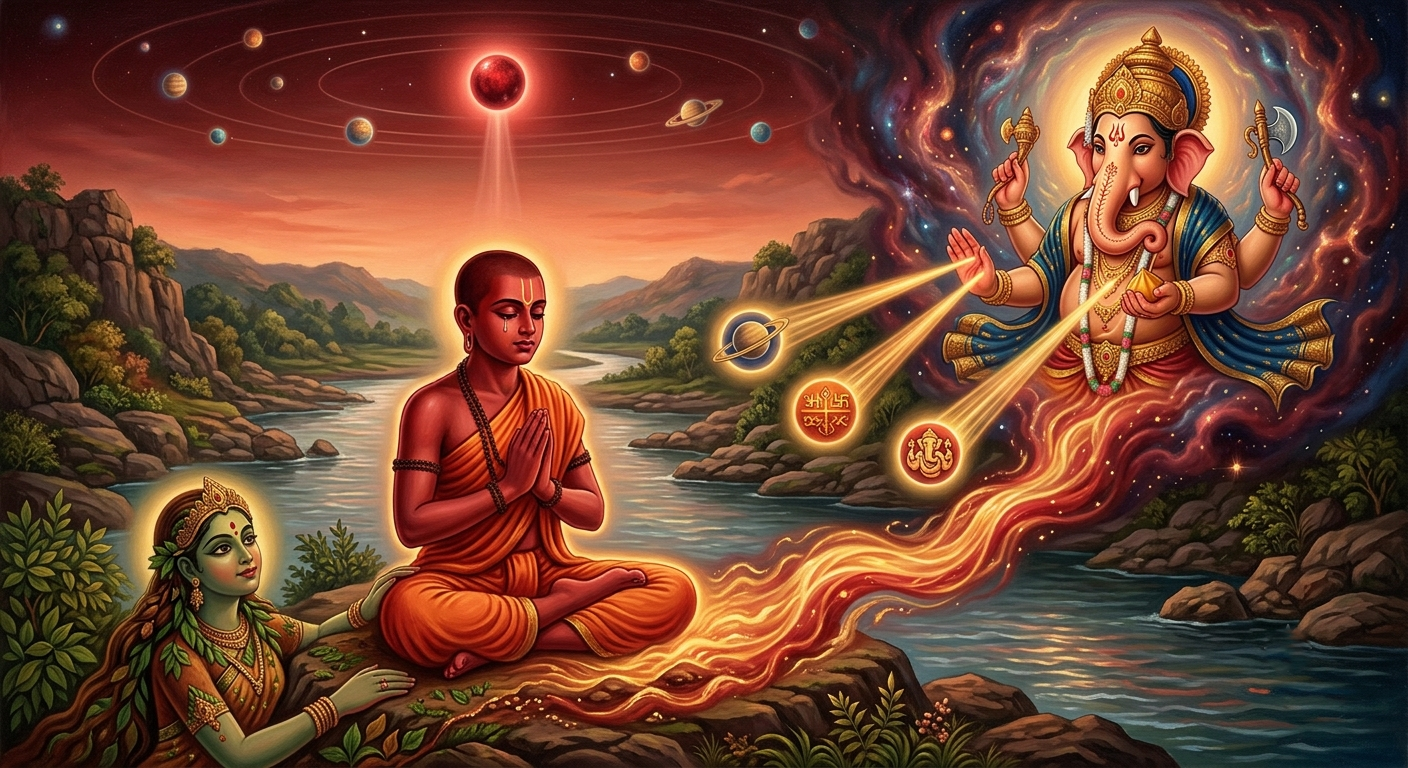
Maharshi Bharadwaja was once engaged in deep meditation when drop of divine sweat fell on Bhumi Devi. From lap of Mother Earth, child was born with glowing red complexion. Bhumi Devi took care of boy, and he was named Bhauma and Angaraka due to his origin and color.
When Angaraka reached seven years of age, Maharshi Bharadwaja took him under guidance and taught him Vedas, Upanishads, and sacred scriptures. Desiring place among celestial planets, Angaraka went to banks of sacred river Narmada and started severe penance dedicated to Bhagwan Ganesha. He meditated without taking food or water for long time, keeping his focus fixed entirely on divine form of Ganesha.
Angaraka Blessed by Bhagwan Ganesha
Pleased by intense devotion, Bhagwan Ganesha appeared before Angaraka on Krishna Paksha Chaturthi of Magha month, which happened to be Tuesday. Bhagwan Ganesha granted him three boons. First, Angaraka was elevated to status of planet in solar system. Second, he was given name Mangal, meaning auspicious one, assuring that he would bring goodness to devotees despite his fiery nature. Third, Bhagwan Ganesha declared that whenever Sankashti Chaturthi falls on Tuesday, it will be called Angaraki Chaturthi, and anyone worshipping Him on this day will be freed from all troubles.
Step-by-Step Rituals for Devotees
Observing Angaraka Chaturthi fast requires simple living, physical purity, and sincere devotion from morning till night.
Morning Preparation and Vow
Devotees wake up early during Brahma Muhurta, take bath, and wear fresh clothes. Red colored clothes are preferred on this day as red is color associated with Angaraka. Standing before home altar, devotee holds water, rice grains, and flower in hand to take vow to keep mind pure and observe fast faithfully throughout day.
Peetha Setup and Puja
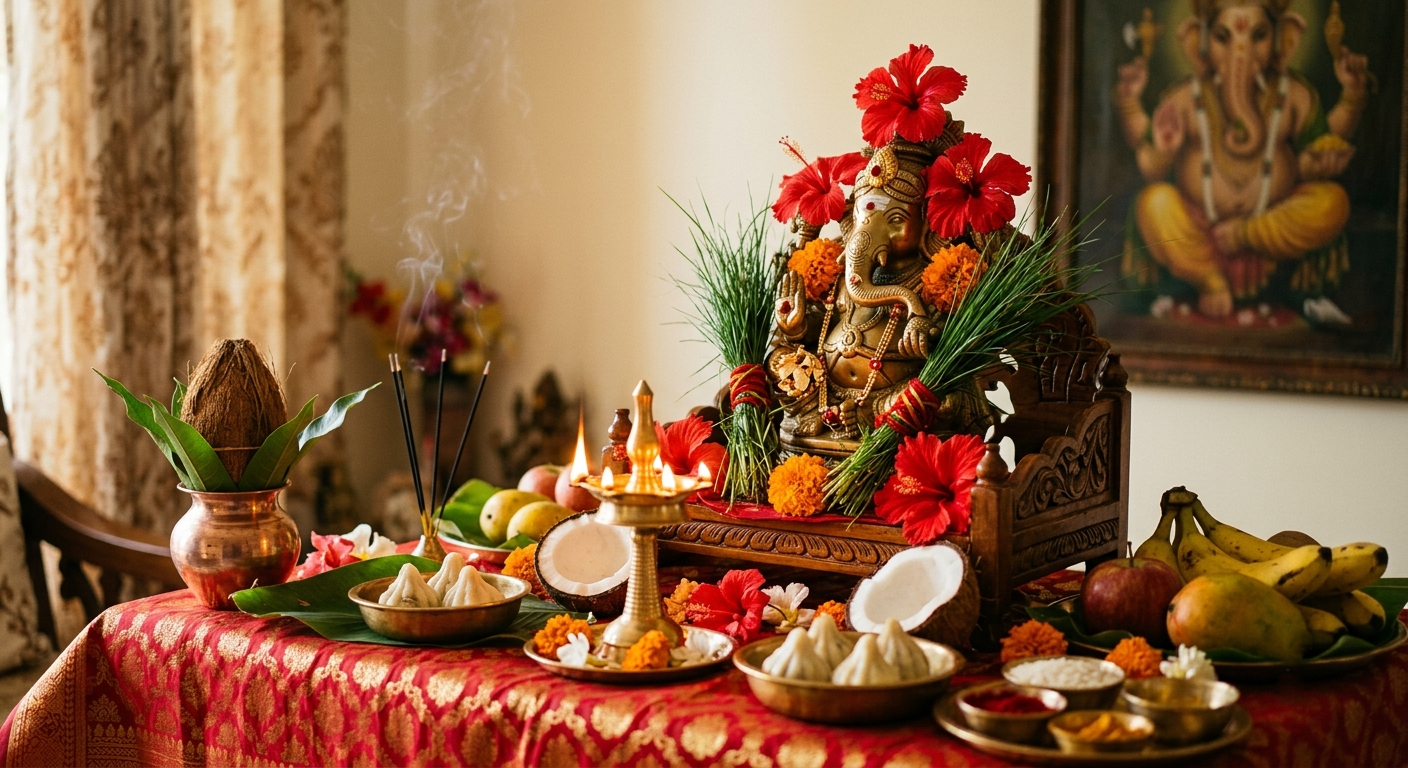
Home peetha is cleaned thoroughly and red cloth is spread over wooden platform. Murti or photo of Bhagwan Ganesha is placed gently on cloth. Devotees offer red flowers like hibiscus and bundle of twenty-one Durva grass blades, which are very dear to Ganesha. Offerings like steam cooked Modaks, jaggery, fresh coconut, and sesame sweets are prepared at home and offered as Naivedyam. Ghee lamp and incense sticks are lit to fill home with spiritual energy.
Fasting and Chanting
During day, devotees maintain fast. Some take only water, while others consume fruits, milk, sabudana, and peanuts. Grains, pulses, salt, onion, and garlic are avoided throughout fast. Devotees continuously chant Ganesha mantras like Om Gam Ganapataye Namah or recite sacred Ganapati Atharvasheersha. Reading stories of Bhagwan Ganesha helps keep mind focused on spiritual thoughts.
Moon Sighting and Breaking Fast
Fast concludes only after sighting moon in evening. Devotees check moonrise time and prepare water in small copper pot mixed with little milk, red sandalwood powder, rice grains, and red flower petals. Looking at moon, water is offered to lunar deity while offering humble prayers.
Finally, family members partake of Modak prasad, and simple food cooked without heavy spices is eaten to break fast. Devotees also donate red lentils, jaggery, red clothes, or copper items to needy people on this day to gain additional blessings.
Some Vrat Kathas
Puranas and traditional folklore contain several powerful anecdotes demonstrating immense grace bestowed on those who observe fast on this sacred day.
King Krtavirya and the Lost Kingdom
Ancient legend speaks of King Krtavirya, noble ruler who faced sudden downfall when enemy kings formed alliance and attacked his realm. Driven into forest with his queen, king spent years in misery, unable to understand why his righteousness could not protect his throne. During their exile, couple met Sage Agastya in forest ashram.
Observing suffering of king, Sage Agastya revealed that king was under severe influence of malefic Mars aligned with past karma. Sage advised king to observe Angaraki Chaturthi Vrat with total surrender to Bhagwan Ganesha. King Krtavirya followed instructions meticulously, fasting whole day and breaking fast only after offering Arghya to moon.
By grace of Bhagwan Ganesha, fiery energy of Mars turned into overwhelming strength for king. Internal conflicts broke out among enemy alliance, and loyal ministers of king regrouped to invite him back. King Krtavirya reclaimed his lost kingdom without bloodshed, proving how this Vrat restores lost position and peace.
Poor Brahmin and Pot of Gold
Another well known traditional story tells of poor Brahmin named Dharmagupta who lived in state of extreme poverty. Despite his honest living and devotion, he could not provide basic meals for his family, and heavy debts kept accumulating. Distressed by his helpless condition, he sought guidance from learned Maharshi Veda Vyasa.
Maharshi Vyasa counseled him that severe financial blockages and poverty often arise from heavy karmic debts represented by afflicted Angaraka in chart. He instructed Dharmagupta to observe strict fast on upcoming Angaraka Chaturthi, worship Bhagwan Ganesha with Durva grass, and donate red lentils to needy person.
Dharmagupta observed Vrat with pure heart alongside his wife. On very night after breaking fast upon moonrise, while digging small patch of land behind his modest hut to plant sacred Tulsi, his spade struck brass vessel filled with ancient gold coins. Anecdote highlights belief that sincere observance of Angaraka Jayanti fast burns past financial karma and brings unexpected prosperity.
Princess Damayanti and Reunion with Nala
In Mahabharata tradition, story of Nala and Damayanti also mentions subtle power of Ganesha Vrat during times of acute distress. When King Nala lost his kingdom in game of dice and got separated from Queen Damayanti in deep forests, Damayanti faced countless dangers from wild beasts and wicked men.
During her wanderings, she met holy ascetics who advised her to pray to Bhagwan Ganesha on Tuesday falling on Sankashti Chaturthi. Damayanti observed strict fast, praying for protection of her husband and reunion of her family. Power of fast protected her through severe trials, brought about unexpected circumstances that reunited her with King Nala, and eventually helped them regain lost glory.
Vaikunta Ekadashi, Shri Guru Raghavendra Matha, Hulumavu, Bannerghatta Road, Bengaluru
Every Ekadashi that appears twice every month is significant but the 11th day (Ekadashi) of the Waxing Phase of the Moon (Shukla Paksha) in the Margashira (December-January) which is observed as Vaikunta Ekadashi (Vaikunta is the abode of Bhagawan Vishnu) is considered a special one. It is believed that the portals of Vaikunta is left open for sincere devotees of Bhagawan Vishnu.
Significance of the word Vaikunta is relevant here. Kunta means “Inability or Incapability” Vikunta means something that can never slip in the course of life, which means liberated. Thus Vaikunta is where all incapabilities are overcome.
Vaikunta Dwara Open
Hare Shrinivasa – Shri Venkateshwara in Guru Raghavendra Matha, Hulimavu
It is on this day that the Amrita or the Divine Nectar that grants immortality to the consumer emerged after Ksheera Sagara Manthana (Churning of the Ocean of Milk) on this day. Devotees who leave their bodies on this day thus directly get liberated from the cycles of life and death and attain Lotus Feet of Bhagawan Vishnu and attain Moksha. It is also observed as Bheeshma Ekadashi in some parts of India since it is on this day that Bheeshma Pitamaha revealed the Vishnu Sahasranama (You can listen to the rendition of MS Subbulakshmi Amma here. Personally it is one the the best renditions by any human being) to the Pandavas while dying on the bed of arrows awaiting his passage which he attains on this day. (Though there are conflicting versions on when it happened). Bheeshma revealed it in the presence of Bhagawan Krishna, who is an Avatar of Vishnu.
Some other legends associated with this Auspicious day
An asura (Demon), Murasura, who had a boon from Brahma was terrorising the Devas and Humankind assuming his invincibility. Devas then approached Vishnu, who fought against the asura in a battle, but was unable to defeat him. He retired to cave called Simhavati near Badarikashrama, where he was pursued by Murasura. On a day when Vishnu was sleeping Murasura thought of overpowering Vishnu and kill him and take His position in the Devaloka. Unfortunately for the asura, Vishnu summoned Haimavati (Yogamaya) a goddess created from His divine energy, who appeared and killed Murasura. Pleased with this, Yogamaya was blessed by Vishnu and named Her ‘Ekadashi’, declared that she would be capable of erasing the sins and provide succour to devoted people on earth. This is the legend behind observing all the rituals associated with Ekadashi and Vaikunta Ekadashi is no different insofar as Ekadashi observance goes.
Another legend associated with day – Ambarisha, King of Ayodhya who regularly observed Upavasa or Fasting on Ekadashi and who observes three days of fasting for Vaikunta Ekadashi was about to break his fast, when the Rishi Durvasa appeared at his palace. He received the Rishi with utmost honour, and offered him a anna prasada befitting Rishi’s stature. Rishi told that he will return after his ritual ablutionsand even after a long wait he did not return. Just as the period of observing fasts, it is important also to strictly observe the auspicious moment for breaking one’s fast. As that moment was fast approaching Ambarisha was in a fix. His Upavasa will not bear fruits if he did not break his fast before the day was over. But he did not want to disrespect the Rishi by eating before Rishi Durvasa returned. In Hindu traditions it is considered disrespectful to eat any meal before the Atithi (Guest) – even worse when it is someone far more respected and revered. Ambarisha decides to sip some water which broke the fast and assumed that it won’t be considered disrespectful by Rishi. Rishi Durvasa, famous for his Temper, was enraged when he came to know that Ambarish broke his fast by consuming water and fact that he had not eaten even a morsel of rice did not calm down the furious Rishi. He pulled a tuft of hair from his head, and flung it at the king. Ardent devotee of Bhagwan Vishnu that Ambarisha was, had to flee to save his life. Vishnu then released Sudarshana Chakra to destroy the tuft of hair and went after the Rishi. Durvasa began fleeing and sought protection of Brahma and Shiva, but was refused any respite. Finally, Durvasa sought refuge from Vishnu himself, who says that his protection lay in the hands of Devotees and none else. Rishi Durvasa sought forgiveness from Ambarisha, and was saved on Vaikunta Ekadashi
Rituals to be performed on this day 1) Wake up before Brahmi Muhurta and have a ritualistic bath 2) Visit any temple of Bhagawan Vishnu (or His Avatars) 3) Pass through/beneath the Vaikunta Dwara 4) Chant Hare Krishna Mantras 5) Listen to Vaikunta Ekadashi Katha 6) Observe Fast during the entire day (Check with the Panchanga for the start and end times) – Milk and fruits (without seeds) can be taken on for Vaikunta Ekadasi fast. – We need to observe a strict fast and indulge in prayers of Vishnu. – Chant or recite Vishnu mantra for desired results. -Rice and other grains like cereals, wheat, vegetables and fruits with seeds are avoided on Vaikunta Ekadashi. -Participate in yagnas and rituals organized to honor Vishnu. -Visit temples dedicated to Vishnu. -Avoid vegetables, such as cauliflower, eggplant, tomatoes, and leafy vegetables. -Spices, salts should also be avoided. -Curd or yogurt, buttermilk, coffee and tea are avoided. 7) Break the fast as per the scheduled Parana muhurta (See note below)
Ekadashi Parana should be done after sunrise on the next day of Ekadashi fast. To bear fruits of Ekadashi Upavasa, perform Parana (breaking the fast) within Dwadashi Tithi, ensuring that it is not done during Hari Vasara. Hari Vasara is believed to be the first quarter part of Dwadashi Tithi. Hence it make it ideal to break your fast during Pratahkala (morning) so that the Hari Vasara would have got over. Never break the Vaikunta Ekadasi vrat during Madhyahna (Noon). If for any reason breaking the fast during Pratahkala is not possible, do it after Madhyahna.
Vaikunta Dwara
Sri Ranganathaswamy Temple, in Chickpet Bengaluru This entry into the inner Praakara for Pradakshine is opened only on VaikuntaEkadashi
Another Vaikunta Dwara
Shri Guru Raghavendra Matha, Hulumavu, Bannerghatta Road, Bengaluru