Koodal Manikyam – Where Two Rubies Merged

Koodal Manikyam Temple – Main Entrance Tower
Koodal Manikyam – Temple

Located in Irinjalakuda (Thrissur Distrcit) of Kerala, an ancient temple dedicated to Shri Bharatha, brother of Bhagwan Shri Rama. Though I have visited this Devalaya many times before, it was different this time, with specific focus on learning about the Sthala Purana and also to fulfill a personal vow.

Etymology of name – Koodalmanikyam or Sanghameshwara
According the legend briefed by Melshanti and a representative of the original owners family (Shri Kaimal) the name of the place Koodalmanikyam is derived from two words, Koodal (meaning merging) and manikyam (ruby) – merging of two rubies. Hence the Deity here is also known as Shri Sangameshwara

Legend has it that one morning, Bhaktas noticed that there was a very birth red light radiating from the Agnya Chakra (forehead) of the Moorthi surprising everyone there. Precious stones during those days were only in the possession of the royals and Bhaktas approached then King of Kayamkulam to request him to bring his Ruby for comparison of this bright light. During this process, the ruby from King’s hand slipped and fell down and merged with the gem stone present on the moorthi and hence the name Koodalmanikyam or Sanghameshwaran. The lore also has it that it again happened during early 1900s. It is also believed that Irinjalakuda got its name as it was confluence or Sangamam of two rivers Chalakudi and Kurumali and hence the Deity is called Sanghameshwaran.

The Pushkarini – Kulipini Theertham

Lord Vishnu is present here eternally in accordance with the boon granted to severe penance carried out by Maharshi Kulpini. The present Kulpini theertham was the homa kundam where the yagnas were performed by the Maharshi and believed to have Holy Ganga, Yamuna and Saraswati

There are certain distinctive features about the Koodalmanikyam temple. It is the only ancient temple (dates back to 9 century) dedicated to Bharata (Rama’s younger brother) in the whole of India. Even today, it is believed that Hanuman lives in the temple kitchen. Brinjal naivedyam is another important offering made to Bharata. It is considered to be a prime medicine to cure stomach ailments.

Some unique practices: Only three flowers are offered to the Deity here – Lotus, Tulsi and Chethi (Ixora) Only 3 poojas are performed (as against 5) everyday and 3 Seevelis in a year as against done everyday in other temples, (Seeveli is a daily ritualistic & ceremonial procession of the Moorthi on caprisoned elephants).

Devotees pray here to prevent raining on any special celebration day in the family like marriages or other such functions. We visited here to fulfill our vow having prayed for a rainless day on our daughter’s wedding (during peak rainy season in Bengaluru)

The beauty of this temple is long standing tradition (well, until Koodalmanikyam Devaswom Board took over, it was owned/managed by Shri Kaimal who derived the rights from Travancore Kings. Today it is an independent Devaswom (the only other being Guruvayur Devaswom Board). Similarly even the Amabalvasi (literally meaning Temple residents) for each tasks related to temple are carried out by families with hereditary rights for the task. Sweeping of Sopanam, making garlands for Deity, playing temple related music etc. All religous and spiritual practices of this Devalaya is distinct to this abode and the Deity’s guardian being Chief Thantri, he decides on the each aspect of the custom and traditions and his words in these matters are considered final and injudicable, by and large. In temporal (non religious or non-spiritual) matters, the Devaswom’s committees takes a call and shall be guided by the advice given by the Chief Thantri, Nedumbally Tharananelloor Govindan Nampoothiripad or other Tantris who belong to Tharananelloor family

Shattila Ekadashi: Cleansing Power of Sesame Rituals

मङ्गलम् भगवान विष्णुः, मङ्गलम् गरुणध्वजः।
मङ्गलम् पुण्डरी काक्षः, मङ्गलाय तनो हरिः

Shattila Ekadashi occurs during Krishna Paksha (dark fortnight) of Magha month (January-February) according to Amanta calendar or Pausha month according to Purnimanta calendar. It is sacred occasion during peak winter season, dedicated to worshiping Bhagawan Vishnu with sesame seeds (Til). Devotees observe this fast to seek relief from past sins, gain physical health, secure abundance, and attain ultimate spiritual liberation.

Meaning and Significance of Shattila Ekadashi

In Sanskrit, Shat means six and Tila means sesame seeds. Therefore, Shattila Ekadashi translates to 11th day where sesame seeds are used in six specific sacred ways to earn spiritual merit and cleanse karma.

Human life often suffers due to lack of charity, self-centered behavior, and accumulated negative deeds. Observing fast on Shattila Ekadashi with pure heart emphasizes importance of selfless donation, especially food and sesame seeds. Scriptures mention that using sesame seeds on this day purifies body and mind, removes poverty, bestows good health, and elevates soul toward eternal abode of Bhagawan Vishnu.

Legend associated with Shattila Ekadashi

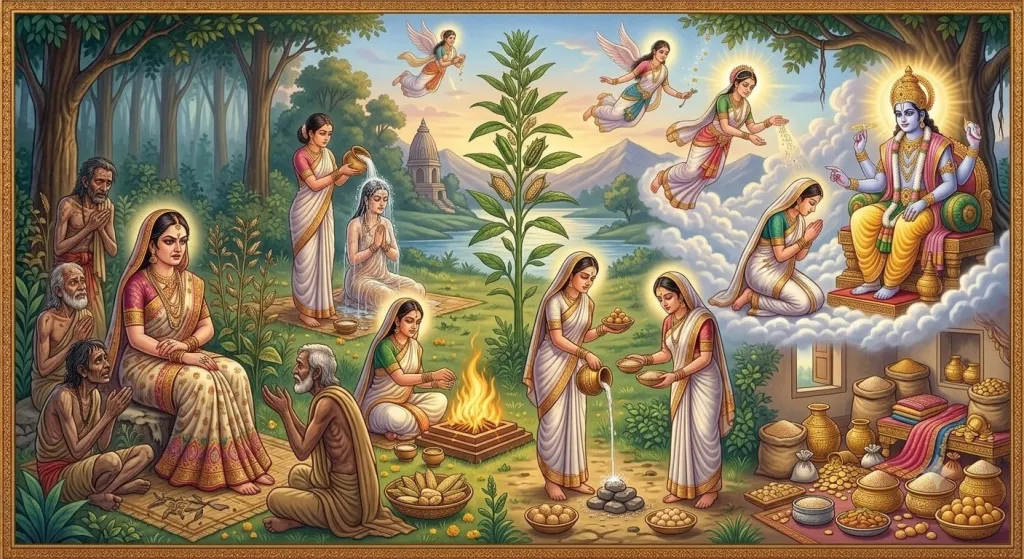
Scriptures describe sacred story narrated by Sage Dalbhya to Sage Pulastya, involving wealthy Brahmin woman who lived in ancient times. Brahmin woman was deeply religious, performed strict penance, and observed all holy fasts with devotion. However, despite her immense piety, she had one major flaw. She never donated food, money, or clothes to poor people, Brahmins, or hungry travelers.

To teach her value of charity, Bhagawan Vishnu visited her house in guise of mendicant begging for alms. Wealthy woman refused to offer food and angrily placed clump of mud in begging bowl of Lord. Bhagawan Vishnu accepted mud and returned to Vaikuntha Dham.

Due to her intense fasts, woman attained Vaikuntha after her death. However, when she entered her celestial palace, she found it completely empty with no food or comforts, only lump of mud she had donated. Realizing her mistake, she prayed earnestly to Bhagawan Vishnu for guidance. Lord Hari appeared and advised her to wait for celestial maidens to visit her. Lord instructed her to learn rituals of Shattila Ekadashi from maidens before opening door of her palace.

Brahmin woman followed divine instruction, learned sacred procedure of Shattila Ekadashi from celestial maidens, and observed fast strictly using sesame seeds in six ways. By virtue of observing Shattila Ekadashi, her empty palace became filled with abundant food, jewels, and divine comforts. Story highlights that fasting without charity remains incomplete, and donating sesame seeds on Shattila Ekadashi brings eternal prosperity.

Rituals to be performed on Shattila Ekadashi

Devotee must wake up early in morning during Brahma Muhurta and take ritual bath adding sesame seeds to clean water without using soap, shampoo, or such cosmetic products.

Puja area should be cleaned thoroughly and idol or photo of Bhagawan Vishnu should be placed respectfully.

Light ghee lamp, offer fresh yellow flowers, sandalwood paste, incense, Tulsi leaves, and sweet preparations made of sesame seeds to Bhagwan Vishnu.

Chant Vishnu Sahasranama, Hare Krishna Mahamantra, or Om Namo Bhagavate Vasudevaya continuously throughout day.

Listen to or read Shattila Ekadashi Katha with family members in peaceful state of mind.

Offer your respects to parents and other elders, especially Guru, seeking their heartfelt blessings on this sacred morning.

Observe fast during entire day according to individual health capacity. Healthy individuals can observe strict fast without water or taking only water. Milk, curd, and fruits can be consumed if complete fasting is difficult due to health reasons. Rice, wheat, barley, lentils, pulses, and all food grains must be avoided strictly. Heavy spices, regular salt, garlic, onion, tea, coffee, outside processed food, and alcohol must be strictly avoided.

Use sesame seeds in six divine ways on this day, including bathing with sesame water, applying sesame paste on body, offering sesame in Hawan, offering water mixed with sesame, donating sesame seeds to needy, and consuming sesame items during meal breaking.

Perform evening Aarti with devotion, offer special Naivedya to Bhagwan Vishnu, donate sesame seeds, warm clothes, and food to poor people, and maintain noble thoughts, avoiding anger, backbiting, falsehood, or harsh speech.

Break fast next day on Dwadashi tithi during scheduled Parana time. Fast should be broken after sunrise once Hari Vasara period concludes. Offer naivedya to Bhagwan Vishnu, perform short prayer, and break fast by consuming prasada containing sesame seeds, water, or fruits before eating regular food.

PS: Article re-formatted into blocks and Header Image changed