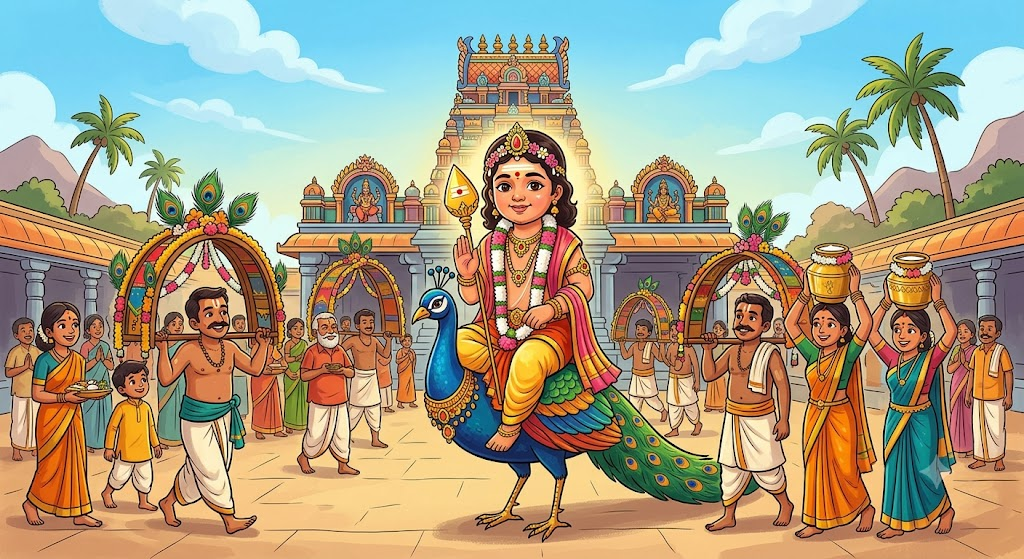
Aadi Krithigai – Ultimate Ritual of Faith and Surrender

Aadi Krithigai is an important festival celebrated mostly in Tamil Nadu and South India. It falls in Tamil month of Aadi, which usually comes between July and August. This day is dedicated to Swami Murugan, who is also known as Kartikeya, Subramanya, or Skanda.

In Hindu tradition, Aadi is considered a deeply spiritual month. During this month, power of Maata Shakti and her blessings are very strong. Krithigai star or Nakshatra comes every month, but when it aligns with Aadi month, it becomes extra special. Devotees believe that worshipping Swami Murugan on this day removes obstacles, removes bad karma, and brings peace, good health, and success in life.

Legend Behind the Festival – Swami Murugan and Krithigai Stars

According to ancient scriptures, Swami Murugan was born from divine third eye of Bhagwan Shiva. Bhagwan Shiva released six divine sparks of fire to destroy demon Tarakasura, who was troubling gods and innocent people. These sparks were so bright and hot that even wind god Vayu and fire god Agni could not hold them.

Sparks were carried to Ganges river and then reached Saravana lake. There, six sparks transformed into six beautiful baby boys. To nurture these infants, Bhagwan Shiva and Maata Parvati appointed six maidens known as Krittikas. These six maidens represent six stars of Pleiades star cluster in astronomy.

Six Krittika maidens showered pure love and care on six babies. Later, Maata Parvati came and embraced all six children together. By her divine touch, six babies joined together to become one single deity with six faces and twelve hands. This form of Murugan is called Shanmukha.

Maata Parvati and Bhagwan Shiva were pleased with loving service of Krittika maidens. Bhagwan Shiva granted a boon that these six maidens would be immortalized as stars in sky. He also declared that anyone who worships Swami Murugan on star day of Krithigai will receive special blessings of both Murugan and divine mothers.

Scriptural References

Story of Swami Murugan, his birth from divine sparks, and his nurturing by six Krittika maidens appears primarily in major Puranas and classical epics.

  • Skanda Purana: This is main and most detailed source for complete life story of Swami Murugan. Entire text is named after Skanda or Murugan, and it contains entire chronicle of his birth, role of six Krittika mothers, receiving his holy weapon Vel, and victory over demon Tarakasura.
  • Shiva Purana: Story appears in detail during narrative of Shiva and Parvati marriage and creation of warrior deity to save gods from demon oppression. It explains how divine energy was carried by Agni and Ganga before reaching Saravana lake and six Krittika maidens.
  • Mahabharata and Ramayana: In Vana Parva section of Mahabharata, story of Skanda birth and his connection with Krittika star mothers is narrated in detail to Yudhishthira. In Ramayana Bala Kanda, Sage Vishwamitra narrates divine story of Kartikeya birth to Bhagwan Rama.
  • Kumarasambhava by Kalidasa: This famous Sanskrit epic poem written by poet Kalidasa focuses entirely on courtly retold version of events leading up to birth of Kumara or Swami Murugan to defeat demon Tarakasura.
  • Sangam Literature and Tamil Texts: In Tamil tradition, story and worship practices are recorded in ancient Sangam literature works like Tirumurugatrupadai composed by Nakkeerar, as well as medieval masterwork Kanda Puranam written by Kachiyappa Sivachariyar.

Associated Legends and Stories

Story of Idumban and Origin of Kavadi

Agastya sage wanted to bring two hills named Sivagiri and Shakti Giri from Himalayas to South India for worship. He requested his disciple Idumban to carry them. Idumban tied two hills to two ends of wooden beam using snakes as ropes and carried them on his shoulder. This setup became first Kavadi.

On his way near Palani, Idumban felt tired and kept hills down to rest. When he tried to lift them again, hills would not move. He saw a young boy standing on top of hill. Boy claimed hills belonged to him and refused to step down. Idumban got angry and tried to fight boy, but boy defeated him easily.

Idumban realized that boy was Swami Murugan himself and begged for forgiveness. Swami Murugan restored Idumban back to life and blessed him. Murugan declared that anyone carrying Kavadi on shoulder with devotion, especially on holy days like Aadi Krithigai, will have their desires fulfilled and burdens lifted.

Story of Peace at Thiruttani

Another legend connects Aadi Krithigai to Thiruttani temple, which is fifth abode of Swami Murugan. After ending long battle against demon Surapadman, Swami Murugan was filled with intense heat and anger. He needed quiet place to calm his mind and rest.

He chose top of Thiruttani hill to cool down his anger. Devotees and celestial beings gathered there on Krithigai day to offer him cool water, milk, and fragrant flowers. Swami Murugan became peaceful and granted deep mental relief to everyone present.

Because of this event, devotees believe worshipping Murugan at Thiruttani during Aadi Krithigai cools down anger, stress, and anxiety from life.

Legend of Divine Mango and Palani Hill

Sage Narada once brought rare mango of knowledge to Kailash and gave it to Swami Shiva and Maata Parvati. Both parents decided to give fruit to child who circles world first. Swami Murugan immediately sat on his peacock and flew around world. Bhagwan Ganesha simply walked around his parents, saying they were his entire world, and won fruit.
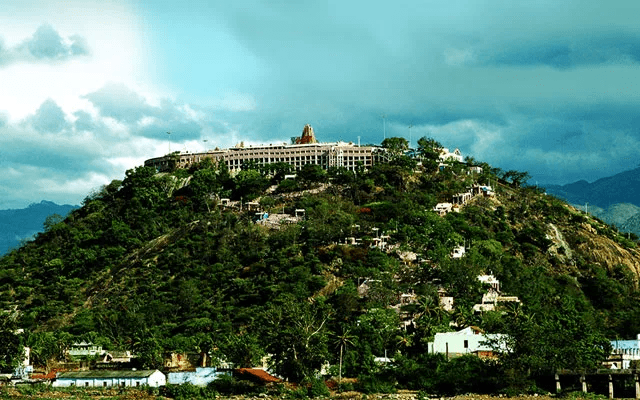
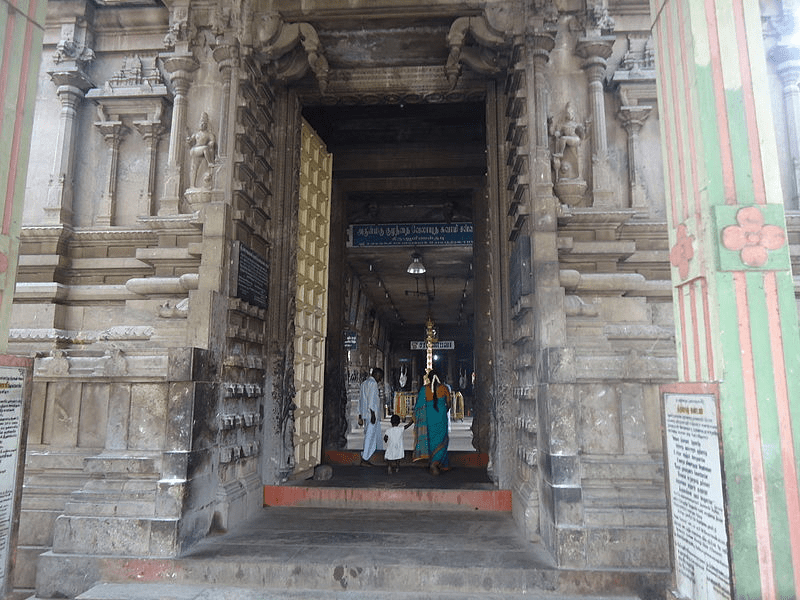
Pazhani Malai

When Murugan returned and saw fruit given to Ganesha, he felt upset. He left Kailash and went south to settle on Palani hill as hermit with simple staff and loincloth. Maata Parvati and Shiva came down to console him and explained that he himself was ultimate fruit of divine knowledge.

Devotees celebrate Aadi Krithigai to honor simplicity of Swami Murugan on Palani hill and seek true wisdom over worldly possessions.

Rituals Followed & Beginning of the Practice

Practice of celebrating Aadi Krithigai started centuries ago as a way to show gratitude to Krittika mothers and honor birth purpose of Swami Murugan. Since Swami Murugan was raised by mothers who gave him love and protection, devotees honor this bond by observing strict vows on this day.

Devotees wake up early during Brahma Muhurtham, take bath, and visit Murugan temples. Many people undertake fast for whole day or eat only simple fruits and milk.

One major ritual associated with Aadi Krithigai is carrying Kavadi. Devotees carry a decorated wooden arch on their shoulders as symbol of surrender and sacrifice. They often walk miles barefoot to reach famous Murugan shrines like Palani, Thiruttani, Swamimalai, and Tiruchendur. Carrying milk pots or Paal Kudam on head is another popular practice to offer holy bath or Abhishekam to Swami Murugan.

Flowers like marigold and red rose are offered to Swami Murugan during special prayers. Temples echo with chants of Vel Vel Muruga and songs praising his courage and compassion. By performing these simple acts of devotion, believers seek inner strength and divine protection for their families.

Thiruporur – Land of Divine War – Part 2

This is the 2nd part of the Two Part Article, the first part (Click on the link for the 1st Part) includes some information about 8th and 9th of the Shodasha (16) Samskaras (loosely the rites of passage in English) and also about the temple, Shri Kandaswamy Temple that we were blessed to visit for performing these Samskaras. The Second Part (this one) is a related temple, Arulmigu Baalambiga Sameta Kailasanathar Temple (Dedicated to Bhagwan Shiva) situated on the North Western side of the famous Shri Kandaswamy Temple.

This amazing temple is situated on top of Pranavamalai, Thiruporur the on Old Mahabalipuram Road, about 40 kms from Chennai and 10kms before Mahabalipuram. Click on this link Google map location of the Thiruporur Arulmigu Shri Kailasnathar Temple.

Arulmigu Balambigai Sameta Shri Kailasanathar Temple.

Arulmigu Balambigai Sameta Shri Kailasanathar Temple Main Entrance (South Side)
Shri Kailasanathar (Bhagwan Shiva)
Shri Balambigai Temple
The Temple – West Side View
The Temple Welcome Arch
Arch at the Beginning of 100-step ascent over Pranavamalai
100 Easy to Climb Steps leading to the Temple

The Legend

It is in this place that Murugan expounds meaning of Pranava (Om) to Agastya Muni. The very Pranava Principle itself worshipped Murugan in Thiruporur and took the form of a Hill, called Pranavamalai on which Shri Kailasanathar with His Consort, Shri Balambigai made their abode. Bhagwan Vishnu and Lakshmi who were cursed by Sage Kanva were redeemed of the curse after they worshipped Shiva as Vanmeeganathar in this temple. It is believed that Muruga Himself worshipped Arulmigu Vanmeeganathar (Shiva) and washed off his sins of killing Asura Shoorapadman (even if it were of Asuras, one accumulate sins).

Mahalakshmi took the form of a Neem tree and did penance for redemption due to curse of Sage Kanva. There is a temple of Ganapati below this tree and He is known as Vembadi Vinayagar here.

Ganesha Temple At the Foothills
The Author’s Better Half – She enjoyed the Ascent
With His Blessings Scorching heat and Sun did not Erase our smiles during the Climb
Vembadi Vinayagar Temple below the Neem Tree (Mahalakshmi)
Vembadi Vinayagar Temple View from the top of Pranavamalai

What is unique (and Unusual) to this temple pair is that Bhagwan Shiva’s abode is on top of a hill and his son, Murugan (as Shri Kandaswamy) is at the bottom. The Temple entrance is on the southern side of Main Deities (Kailasanathar and Balambigai) who are facing East and the Dwajasthamba and Nandi is on the Eastern side facing the Sanctum Sanctorum through a Window.

Dwajasthambam and Nandi on the Eastern Side of the Sanctum Sanctorum
Closer View – Window Through which Nandi and Dwajasthambam faces Sanctum Sanctorum

The abode of Srimad Chidambara Swamigal is on the Northern side of the Temple and there is a secret underground tunnel which is believed to divide into two paths midway, one leading to Chidamabara Swamigal’s Jeeva Samadhi and the other to Shri Kandaswamy Temple. Currently the tunnel is closed.

The Secret Tunnel – Connecting Kailasanathar Temple, Shri Kandaswamy Temple and Jeeva Samadhi of Chidambara Swamigal
Shri Kandaswamy Temple Gopuram – From top of Pranavamalai

On the Koshta (outer wall around the garbhagriha or inner sanctum sanctorum) we can find Ganesha, Dhakshinamoorthy, Lingodhbavar, Brahma and Durga. The prakara has upadevalayas for Kasi Viswanatha, Shri Kalabhairava, Surya & Veerabadhra.

The lady selling Flowers and Bilva Patra, an old timer in this temple also said, “Not many know that we are supposed to visit Kailasanathar Temple, before visiting Shri Kandaswamy Temple. Many pilgrims skip this temple. A Pilgrimage to Thiruporur is never considered complete without visiting Kailasanathar and then Muruga Temple”

||Om Namah Shivaya||

Thiruporur – Land of Divine War – Part 1

This is a Two Part Article, the first one includes some information about 8th and 9th of the Shodasha (16) Samskaras (loosely the rites of passage in English) and also about the temple, Shri Kandaswamy Temple that we were blessed to visit for performing these Samskaras. The 2nd Part is a related temple, Arulmigu Baalambiga Sameta Kailasanathar Temple.

The auspicious occasion of Karnavedha (Ear Piercing) and Choodakarma (Tonsuring) samskaras of our Grandson Anay, is what took us back after nearly 20 years to this amazing temple town on Old Mahabalipuram Road, about 40 kms from Chennai and 10kms before Mahabalipuram. Click on this link Google map location of the Thiruporur Arulmigu Shri Kandaswamy Temple.

Choodakarma Samskara (Mundan or Tonsuring rites of passage)

शि॒वो नामा॑सि॒ स्वधि॑तिस्ते पि॒ता नम॑स्तेऽअस्तु॒ मा मा॑ हिꣳसीः।
निव॑र्त्तया॒म्यायु॑षे॒ऽन्नाद्या॑य प्र॒जन॑नाय रा॒यस्पोषा॑य सुप्रजा॒स्त्वाय॑ सु॒वीर्या॑य ॥Yajurveda 3.63॥

This sacred instrument (razor), made of metal (steel) which is as strong as Vajra (a weapon), be fit for cutting the hair. Let it not cause any pain whatsoever or inflict any harm to this child.
O Child! I perform this ceremony so that you can attain a long life, possess positive power, strength and wealth, good progeny and vigour.

There are some schools where Choodakarma is 9th Samskara, but we follow this as 8th one, followed by Karnavedha (as 9th).

This Samskara has been in practice since Vedic ages as evidence by its mentions in Yajurveda, Atharva Veda and various other Samhitas. Symbolically hair is considered to represent our Raga and Dwesha (Extreme Preferences and Aversions). Since hair is countless just like the sins and undesirable traits that are accumulated over several births and lifetimes, removal of the same symbolises a clean start. A small tuft called Shika or Chooda to represent the roof of a chariot (our body) is left behind on the head. According to Sushruta (the Sage who performed the first Surgery of mankind), on the top portion is the Marma Sthana, a junction of critical blood vessels where life force is supposed to be stored. Death is instant if any damage occurs to the marma sthana. Therefore the Shikha also acts as a protective shield.

Karnavedha Samskara (Ear-piercing rites of passage)

The 9th of the 16 Samsakaras, Karnavedha is during which the lobes of the ears of an infant are pierced through for protecting it from diseases Raksha-nimit (protection) and for the purpose of ornamentation (Abhushanartha). The procedure is described in Chapter 16, Volume 1 of Sushruta Samhita

What was admirable was the way the Goldsmith in the temple, looked through the earlobe, marking the perfect spot for piercing. He later explained that a natural fissure can be detected and marked by him. Piercing is done exactly at that spot and if we pierce in any other place, it would cause bleeding and pain and chances of infection too.

Karnvedha is performed on right ear first in male child and left ear first in female child, which is to balance and harmonize the male and female energy flow in the body organ system subsequently. It is also believed that the first injury has to be with some precious metal where the natural healing characteristics develop and immunity is built into the body without injuring itself not causing infection. From the Ayurvedic angle (Sushruta), it is believed that sun’s rays give good health, when they pass through the holes of the ear. When a metal like gold is used, it removes diseases like hernia etc. Also, there are special nerve centers (such as between eyebrows, temple etc.) in various parts and they get activated when ear lobes are pierced.

Not writing much about both the samskaras as there are enough material on the web. The rituals were performed in Arulmigru Shri Kandaswamy Temple in Thiruporur. This 2-part Article is more about both Arulmigu Shri Kandaswamy Temple and Shri Balambigai Sameta Arulmigu Shri Kailasanathar Temple both ancient temples, and related to each other historically and also ritualistically.

Arulmigru Shri Kandaswamy Temple

Thiruporur, a town in Chengalpet district has come a long way from being a coastal hamlet in 2004 when I had visited in 2004. Located on the Old Chennai-Mahabalipuram road, it now a well developed town with modern eateries (branded ones) and excellent lodging and stay facility.

According to the legend Murugan fought demons in three geographies – on land in Thirupurakundram, on sea in Thiruchendur and in air in Thiruporur. After slaying slaying Asura Shoorapadman in Thiruchendur, Murugan as Kandaswamy encounters Asura Thalayaya. He fights fiercely and kills him in the war carried out in Air (Ether). This signifies victory over Pride and arrogance and helps devotees to overcome these negative traits. Thiruporur gets its name after “Por” in Tamizh means war/battle waged by Murgan to vanquish Thalayaya asura.

It is believed that Muruga Himself worshipped Arulmigu Vanmeeganathar (Shiva) and washed off his sins of killing Asura Shoorapadman (even if it were of Asuras, one accumulate sins) in Shri Kandaswamy Temple. It is in this place that Murugan expounds meaning of Pranava (Om) to Agastya Muni. The very Pranava Principle itself worshipped Murugan in Thiruporur and took the form of a Hill, called Pranavamalai. Bhagwan Vishnu and Lakshmi who were cursed by Sage Kanva were redeemed of the curse after they worshipped Shiva as Vanmeeganathar in Thiruporur on the Pranavamalai.

In History

Tirupporur temple has Pallava and Chola inscriptions from as early as the 10th and 12th century respectively. There is an inscription on a stone pillar that confirms that temple must have been built by Pallavas because of the engravings, Atyantakama Pallava and Adiranachandra clearly attributable to Pallava Supremo, Rajasimha (Narasimha Varma II). Though it is clear that Tirupporur was its resplendent best during that era, it somehow fell off the glory in the interim until Thiruporur Adheenam Founder, Srimad Chidambara Swamigal, descendant of a poet of Madurai Tamil Sangam, acting on a vision he got of Madurai Meenakshi with instructions to restore and rebuild Temple for Murugan in Thiruporur somewhere around 17th Century. Some of the inscriptions also refer to Thiruporur as Samarapuri and Yuddhapuri (all meaning the same – Place of the battle)

Srimad Chidambara Swamigal

One of the most revered figure closely associated with Thiruporur is Founder of the Adheenam, Srimad Chidambara Swamigal, a direct descendant of a Tamil Sangam Poet of Madurai and an ardent devotee of Madurai Meenakshi. He began a severe penance seeking vision of Mother Meenakshi and gave up food completely as part of penance. Pleased with his devotion, Meenakshi appears before him and as he opened his eyes, he sees her Divine Feet and hears sounds of her anklets. She then raised him to his feet and upon Her touch, his skin turns into Gold Color. She then instructs him to build a Temple for Muruga in Thiruporur as Six earlier attempts to do it had failed. He then reaches Thiruporur and finds that it as just a Palm Tree forest and no signs of any Temple construction earlier. Murti of Murugan as Swayambhu (self emerging) lay covered by an anthill. While he was in despair at this futility, Murugan Himself appears as a small boy and leads Swamigal to the location where the Swayambhu Murtis of Seven Feet Tall Shri Muruga with His Consorts, Valli and Devayani laid covered by Anthill beneath a Palm Tree. Muruga is also believed to have given him a vision of the plan for Sanctum Sanctorum. Since the Moola Murtis are Swayambus and are under the Palm tree, no Abhishekam is performed to these murtis and Abhisheka and Aradhanas are performed on Abhishekam is performed only to the Utsava Deities installed in the Temple. Srimad Chidambara Swamigal has installed a powerful Yantra in the temple premises.

The priest in charge of this explained that the Yantra has the Bheejaksharas of Ganesha, Subramanya, Valli, Devayanai, Shiva, Parvati, Chandikeshwara, Ashta Dikpalakas, Bhairava engraved on it. The Yantra is a reflection of powerful energies of the Temple. Performing Mantra Japa in front of the Yantra or performing Pradakshina arthe Powerful form of Worship that will fulfill our prayers. The Peetam/Base of the Yantra is held by Koorma, Ashtagaja and Ashtanaga.

The Pushkarni-Valliyar Odai

The Pushkarini or Thirukulam called Valliyar Odai is situated on the Southern direction of the Temple and maintained extremely well.

In literature, Arunagirinatha has composed Tiruppugazh in praise of Shri Kandaswamy as also has Ashtavadanam Sabhapati Mudaliar. Other noteworthy works relating to this Temple are Tirupporur Kovali, Tirupporur Anadadi and the songs of Ramalinga Vallalar and Pamban Swamigal.

Sharing some pictures clicked in the temple

The Temple Arch
Close up of the Temple Arch Exquisite Art
Pushkarni – Another view
A closer shot of the Pushkarni
The Main Temple Threshold
A Dip in the Pushkarini after Choodakarma (Tonsuring)
Temple Entrance and Threshold
The Dwaja Sthamba
The Vahana-Peacock
Gopuram View from the Left
Gopuram View from the Right
The Ornamental Doorway
Arulmigu Vinayagar
Towards the entrance of Garbha Gudi of Moolasthana
Sendhil ji & Family
Can any Engineering or Technological Advancement Beat this? The Sculpture, The Symmetry and Precision
Naga Devatas
Srimad Chidambara Swamigal

Arulmiga Kandawami ku Ara aro hara;

Vertivel Muruganikkku Ara aro hara

Please provide your valuable feedback, especially if there are any errors in the documentation. The priest explaining it was using literature form of Tamizh and I could have comprehended it wrong