कायेन वाचा मनसेन्द्रियैर्वा बुद्ध्यात्मना वा प्रकृते: स्वभावात्।
करोमि यद्यत्सकलं परस्मै नारायणायेति समर्पयामि॥
Jaya Ekadashi occurs during Shukla Paksha (waxing phase of moon) of Magha month (January-February). It is highly auspicious day celebrated across India, coming shortly after Shattila Ekadashi. Devotees dedicate this day to worship Bhagawan Vishnu to achieve victory over negative tendencies, cleanse severe karmic sins, and attain ultimate spiritual liberation.
Meaning and Significance of Jaya Ekadashi
In Sanskrit, Jaya means victory, triumph, or success. Therefore, Jaya Ekadashi translates to 11th day that grants complete victory over life obstacles and internal vices.
Human life often suffers due to ignorance, attachment, and consequences of past negative actions. Observing fast on Jaya Ekadashi with pure devotion cleanses mind and soul from deepest sins, including heinous deeds. Scriptures mention that sincere observance of this fast protects devotee from taking rebirth in low or demonic forms, granting inner strength, spiritual victory, and residence in Vaikuntha Dham.
Legend associated with Jaya Ekadashi
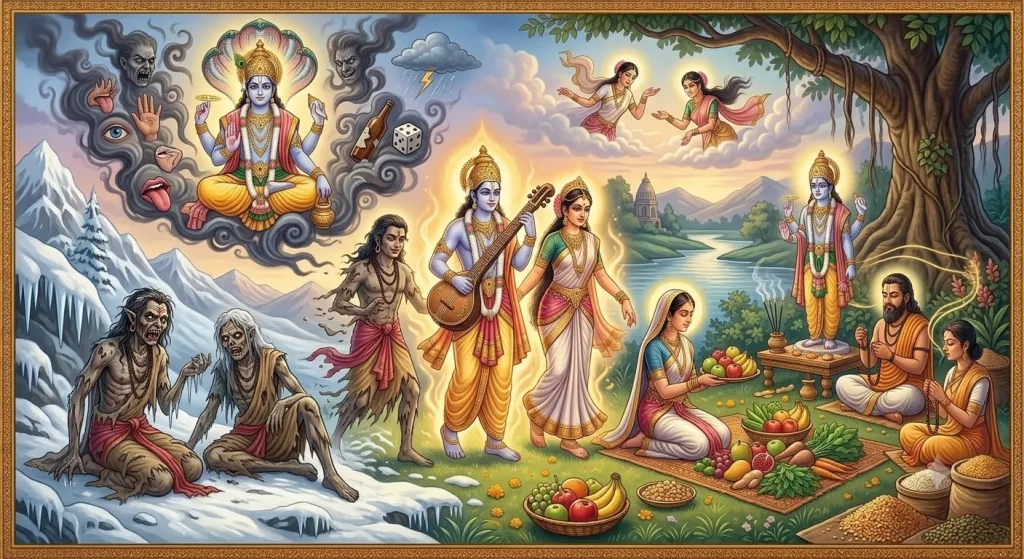
Scriptures describe sacred story narrated by Lord Krishna to King Yudhishthira, involving celestial singer Pushpavan and his talented troupe in Indraloka. Lord Indra was enjoying dance and music performance in Nandan Kanan forest along with celestial musicians and dancers. Gandharva singer named Malyavan and beautiful celestial dancer named Pushpavati were performing together before Lord Indra.
During performance, Pushpavati became deeply attracted to Malyavan and began making subtle gestures to captivate him. Malyavan also got spellbound by her beauty and charm. Losing control over their minds and focus, both Malyavan and Pushpavati made repeated mistakes during performance, ruining rhythm and song.
Observing their disrespectful behavior and lack of decorum in royal court, Lord Indra grew extremely furious. Lord Indra cursed both Malyavan and Pushpavati to lose their celestial status and suffer on Earth as flesh eating demons (Pisacha).
Instantly transformed into hideous demons, Malyavan and Pushpavati fell down to Himalayas. They suffered immense pain, severe cold, hunger, and extreme misery due to demonic bodies. On Shukla Paksha Ekadashi of Magha month, freezing cold was unbearable. They stayed awake whole day and night without eating any food or drinking water, weeping in deep repentance under tree.
Unknowingly, Malyavan and Pushpavati had observed strict fast on Jaya Ekadashi and stayed awake throughout night. By divine grace of Bhagawan Vishnu and immense power of Jaya Ekadashi fast, their demonic bodies dissolved next morning. They regained their original divine celestial forms and returned to Svargaloka. Lord Indra welcomed them back, recognizing supreme cleansing power of Lord Hari grace.
Rituals to be performed on Jaya Ekadashi
Devotee must wake up early in morning during Brahma Muhurta and take ritual bath using clean water without using soap, shampoo, or such cosmetic products.
Puja area should be cleaned thoroughly and idol or photo of Bhagawan Vishnu should be placed respectfully.
Light ghee lamp, offer fresh yellow flowers, sandalwood paste, incense, and Tulsi leaves to Bhagwan Vishnu.
Chant Vishnu Sahasranama, Hare Krishna Mahamantra, or Om Namo Bhagavate Vasudevaya continuously throughout day.
Listen to or read Jaya Ekadashi Katha with family members in peaceful state of mind.
Offer your respects to parents and other elders, especially Guru, seeking their heartfelt blessings on this sacred morning.
Observe fast during entire day according to individual health capacity. Healthy individuals can observe strict fast without water or taking only water. Milk, curd, and fruits can be consumed if complete fasting is difficult due to health reasons. Rice, wheat, barley, lentils, pulses, and all food grains must be avoided strictly. Heavy spices, regular salt, garlic, onion, tea, coffee, outside processed food, and alcohol must be strictly avoided.
Perform evening Aarti with devotion, offer special Naivedya to Bhagwan Vishnu, light lamps, and maintain noble thoughts, avoiding anger, backbiting, falsehood, or harsh speech.
Break fast next day on Dwadashi tithi during scheduled Parana time. Fast should be broken after sunrise once Hari Vasara period concludes. Offer naivedya to Bhagwan Vishnu, perform short prayer, and break fast by consuming prasada, water, or fruits before eating regular food.
PS: Article re-formatted into blocks and Header Image changed