PC: Gemini
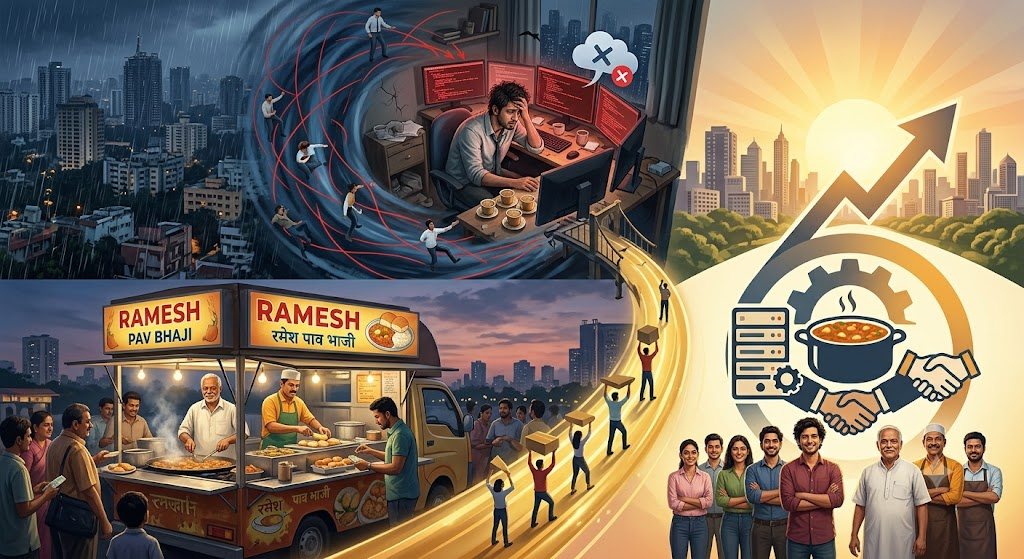
There is old saying in Bengaluru startup corridors that if you throw stone in HSR Layout, it will either hit tech founder or delivery executive carrying cold coffee. Two years back, young software developer named Rohan decided he was too smart to work for multinational company. He packed his bag, quit his job with dramatic speech, and started artificial intelligence startup named BrainWave Solutions. Rohan was typical genius coder who wrote hundred lines of code before breakfast. He believed single human mind powered by caffeine and determination can build next Google. In his head, other people were just distractions who took long lunch breaks and asked silly questions in meetings. So for first six months, he worked eighteen hours every day, sitting in dark room with three monitors. He was chief executive officer, chief technology officer, janitor, and social media manager, all packed into one exhausted body.
Everything went smoothly until big venture capital firm showed interest in his app. They called him for live demo on Monday morning. On Sunday night, server crashed, payment gateway threw error, and landing page started displaying pictures of stray cats instead of financial dashboard. Rohan tried fixing everything alone. He drank four cups of strong filter coffee, but by three in morning, his eyes were burning and brain stopped working completely. He accidentally deleted main database while trying to fix minor button color. Next morning, he walked into venture capital office looking like ghost, holding broken app and empty promise. Board members looked at him with sympathy and asked simple question. They did not ask about algorithm or cloud storage. They asked where his team was. That day Rohan learned hard lesson. One brilliant mind can spark idea, but it takes whole squad to keep fire burning when storm hits.
Now jump from glossy glass building of tech park to busy street corner near Dadar railway station in Mumbai. Here stands Ramesh and His Magical Pav Bhaji Truck. Ramesh is not wearing branded hoodie or talking about series funding, but he runs enterprise that feeds five hundred hungry customers every single evening. Few years back, Ramesh thought he could run food truck all by himself to save money on staff salaries. He was master cook, so he decided he would take orders, chop onions, fry pav in butter, pack parcels, and collect cash. First day of experiment was complete disaster. By seven in evening, crowd of angry commuters surrounded his truck like swarm of bees. Somebody got pav without butter, somebody got bhaji without salt, and one tired uncle waited forty minutes only to receive extra spicy dish he never ordered. Ramesh was sweating like butter on hot tawa, shouting at customers, and making mistakes every two minutes.
By eight o’clock, Ramesh gave up, sat on wooden crate behind truck, and closed shop early after losing half his inventory and all his peace of mind. Next morning, Ramesh realized cooking great dish is only twenty percent of food business. Remaining eighty percent is smooth coordination between hands. He immediately hired three young boys from his village. He did not organize expensive corporate retreat in hill station with trust falls and laser tag. Instead, he built simple team rhythm right on pavement. He appointed Suresh as master chopper, Ganesh as butter king responsible for frying bread, and Asif as cash collector and order manager. Every afternoon before opening shop, four of them sat together over tea to discuss evening plan. They talked about who handles extra rush, how to pass plates quickly without crashing, and who takes over when someone needs water break.
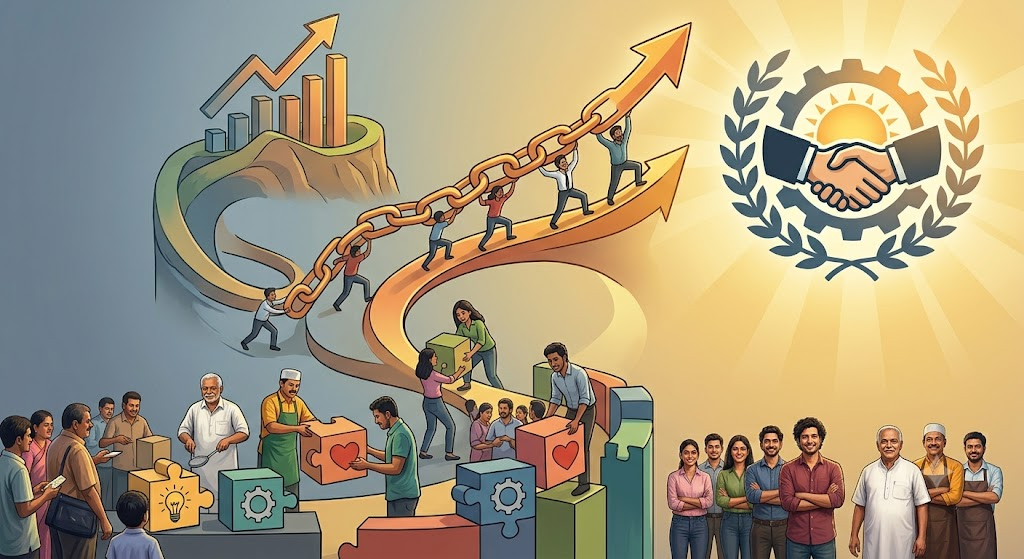
Magic happened within one week. Ramesh’s food truck started running like Swiss watch. Order time dropped from fifteen minutes to three minutes. Ganesh knew exactly when Suresh needed fresh batch of chopped coriander without even asking. Asif managed angry customers with smile while Ramesh focused purely on main taste. Business tripled in one month. Small food truck on noisy street proved same principle that big corporate boards pay millions to consultancies to learn. Team building is not luxury activity saved for big companies with massive human resource budgets. It is fundamental law of physics for any work involving more than one task.
Look around modern business world today, whether it is small hair salon in Chennai, digital marketing agency in Delhi, or massive automobile factory in Pune. Pattern is completely identical. Lone ranger approach looks heroic in movies, but in real life, single point of failure is dangerous risk. When business relies on one hero, that business is always one headache, one sick leave, or one mental burnout away from total shutdown. Team building creates safety net. It allows individual strengths to multiply while covering up individual weaknesses. Rohan might be genius at coding, but he needs designer who understands colors and marketer who knows how to talk to customers. Ramesh makes world class bhaji, but he needs fast hands of Ganesh and calm face of Asif to deliver that hot food to hungry worker before train arrives.
Real team building does not mean forcing employees to wear matching colored shirts or making them sing company song every Friday morning. It is simply process of building trust, clarity of role, and mutual respect among people working for common goal. In Rohan’s company, after his failure, he hired two junior coders and customer support girl. First month was bumpy because he kept micro-managing them. But slowly he learned to trust their work. He realized that even if junior coder takes two hours extra to solve problem, it frees up his own mind to think about long term product growth. In Ramesh’s food truck, team building meant sharing small portion of daily profit with his assistants so they felt like partners rather than daily wage helpers.
Inevitability of team building comes from simple fact that human capacity has strict limit. Hours in day are fixed at twenty-four, and human energy drains after continuous effort. When business grows, workload increases exponentially, not linearly. Single business owner trying to handle sales, operations, quality control, customer complaint, and tax filing simultaneously will eventually break down. Modern market is fast and unforgiving. Customer standing at food truck wants pav bhaji in three minutes, and client downloading software app expects bug fix in ten minutes. Speed demands specialization, and specialization demands team structure.
Today, Rohan’s startup has grown into twenty member team with proper departments, while Ramesh has expanded his food truck business to three different locations across Mumbai. Both leaders came from completely different worlds, used different tools, and catered to different customers. Yet both reached exact same conclusion through painful trial and error. You can dream alone, you can start alone, and you can even celebrate short term win alone. But if you want to build something that lasts, something that survives bad weather and heavy traffic, you must step back, put away your ego, and build strong team around you. Lone wolves make great stories, but pack of wolves wins hunt every single time.
PS: Both are True Stories (Names and places changed)

