DISCLAIMER: While this article outlines a fabricated spiritual backstory, it actually originated (the story at the end of this article) as a clever marketing campaign by Maharashtra Times. Over time, it evolved into a delightful, innocent tradition that brings people together across all faiths today.
Navratri is a vibrant celebration of devotion, culture, and timeless traditions. Across these nine auspicious days, each day honors a distinct form of Maa Durga, brought to life through sacred rituals, deep symbolism, and a specific color that embodies the goddess’s unique energy. Though there is no spiritual significance, wearing these daily colors is more than just a style statement, it is a beautiful way to align with the divine spirit of the festival, invite positivity, and join millions in a unified celebration of faith.
Explore this complete day-by-day Navratri guide below to discover the significance, the reigning goddess, and the color for each day of this grand festival!
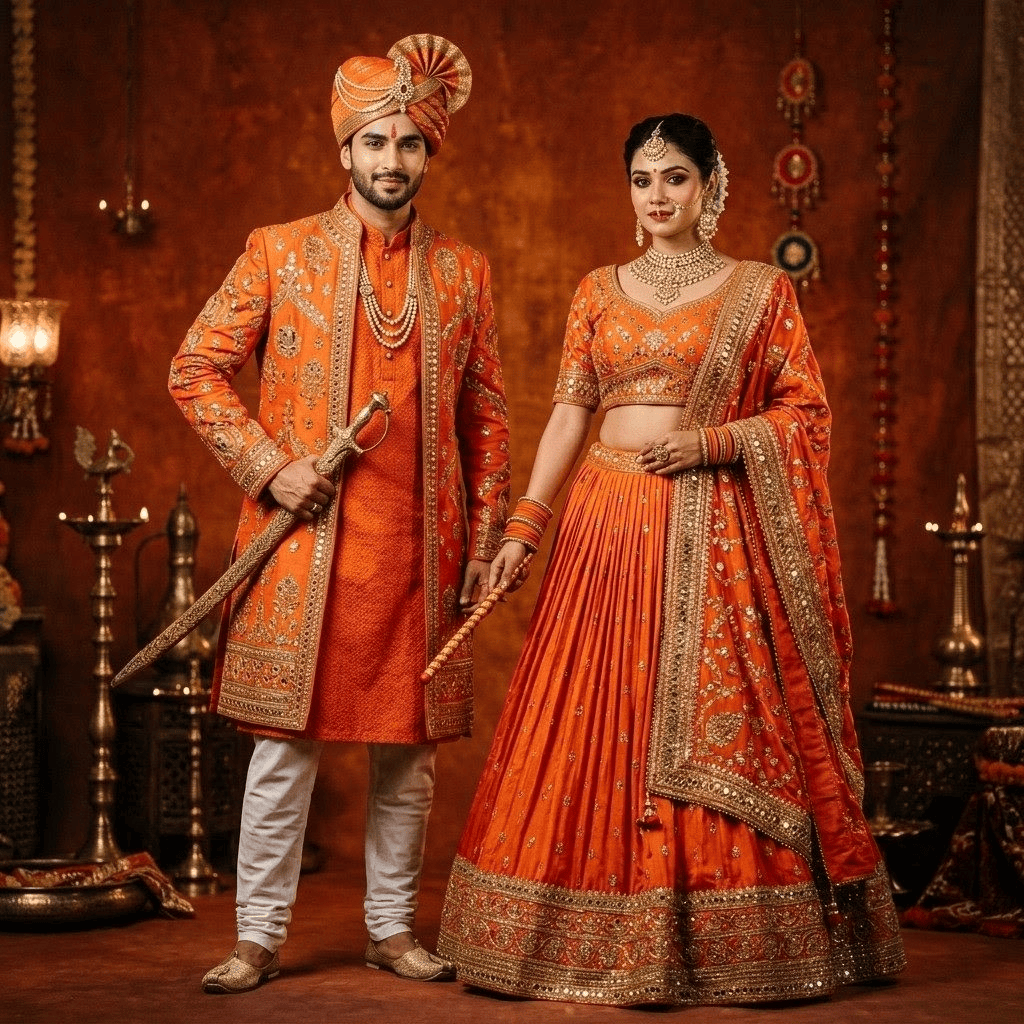
First Day – Paadyami: Shailaputri Maa is the first amongst Navadurgas worshipped during Navaratri. ‘Orange‘ is the colour of the day. It represents purity, peace, serenity and new beginnings.
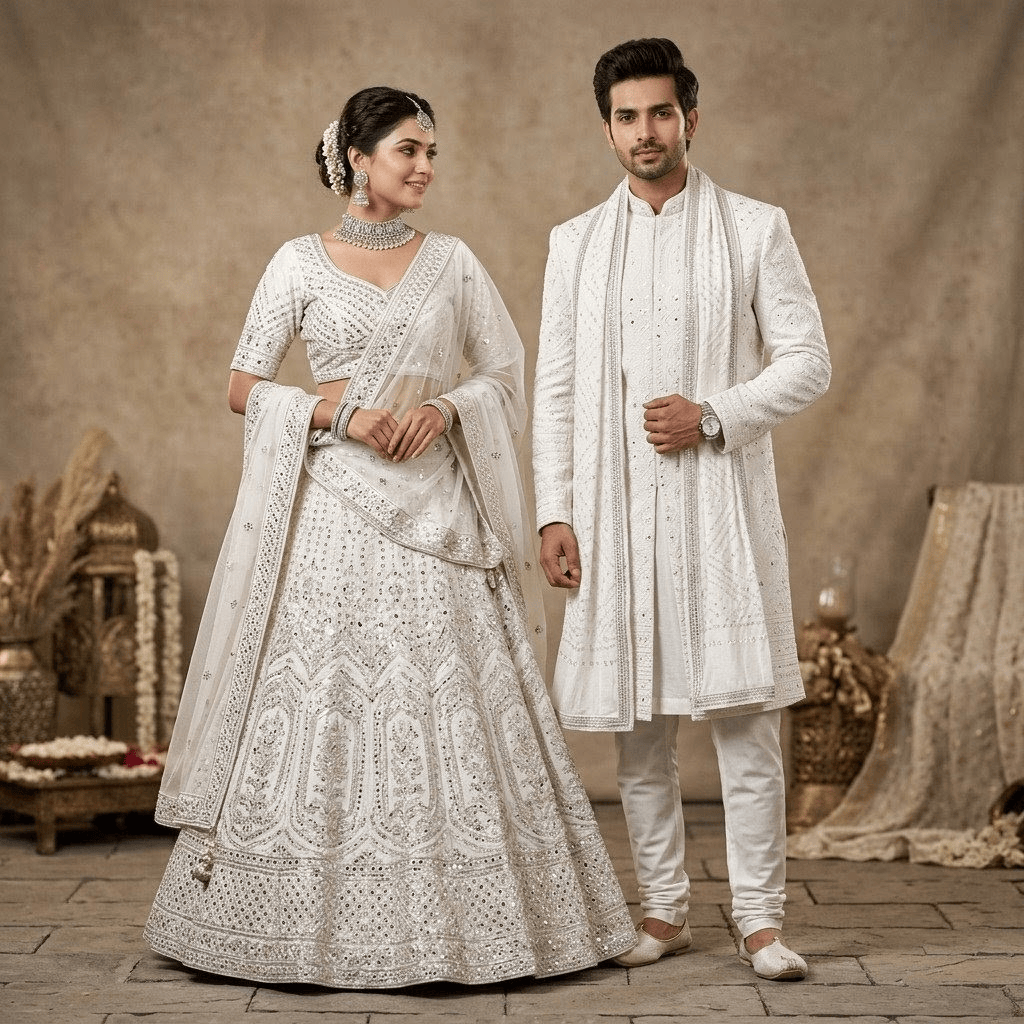
Second Day – Dwitiya: Maa Bharmacharini is the form of mother goddess which is worshipped on the second day. ‘White’ is the color of the day, which represents love, passion, and strength.
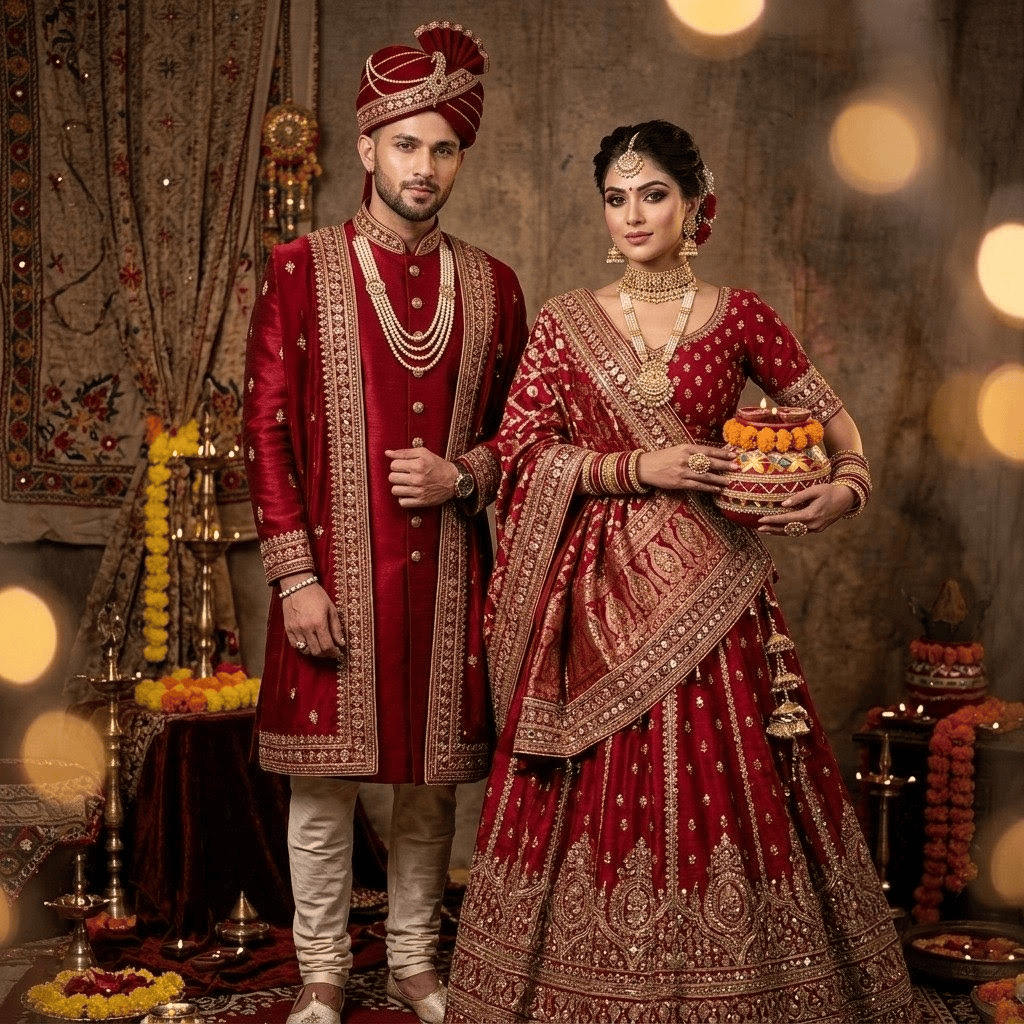
Third Day – Tritiya : Chandraghanta is the form of the goddess worshipped on the third day of Navaratri. ‘Red’ is the color of the day and it represents calmness, divine energy and stability
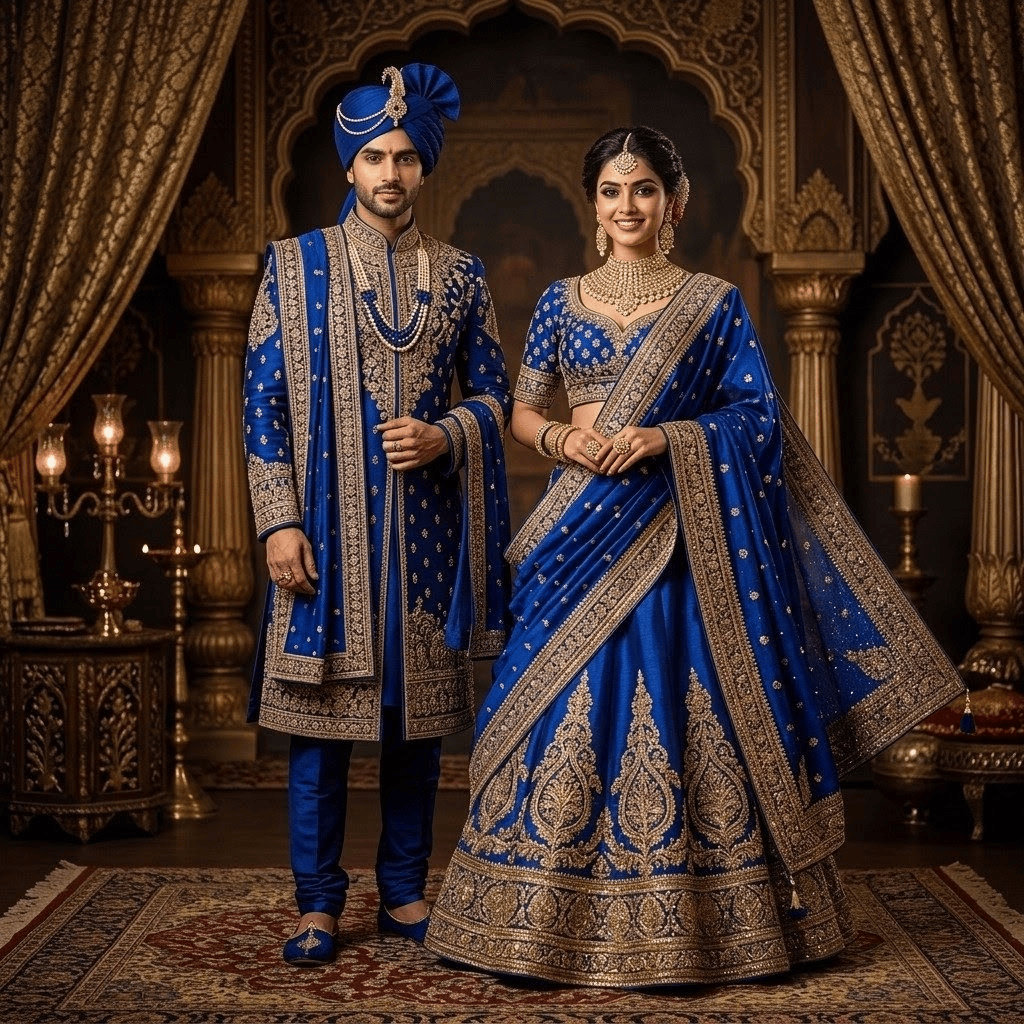
Fourth Day – Chaturthi: Kushmanda is the fourth form of goddess that is worshipped on the fourth day ofNavratri. ‘Royal Blue’ is the color of the day and it symbolizes joy and brightness, and brings a sense of unparalleled optimism and joy.
Fifth Day – Panchami: Skandamata is a face of Maa Durga always known for demolishing the demons and worshipped on day 5 of Navaratri. ‘Yellow’ is the color to be worn on this day and it represents growth, nature, and fertility. Green also represents new beginnings in life.
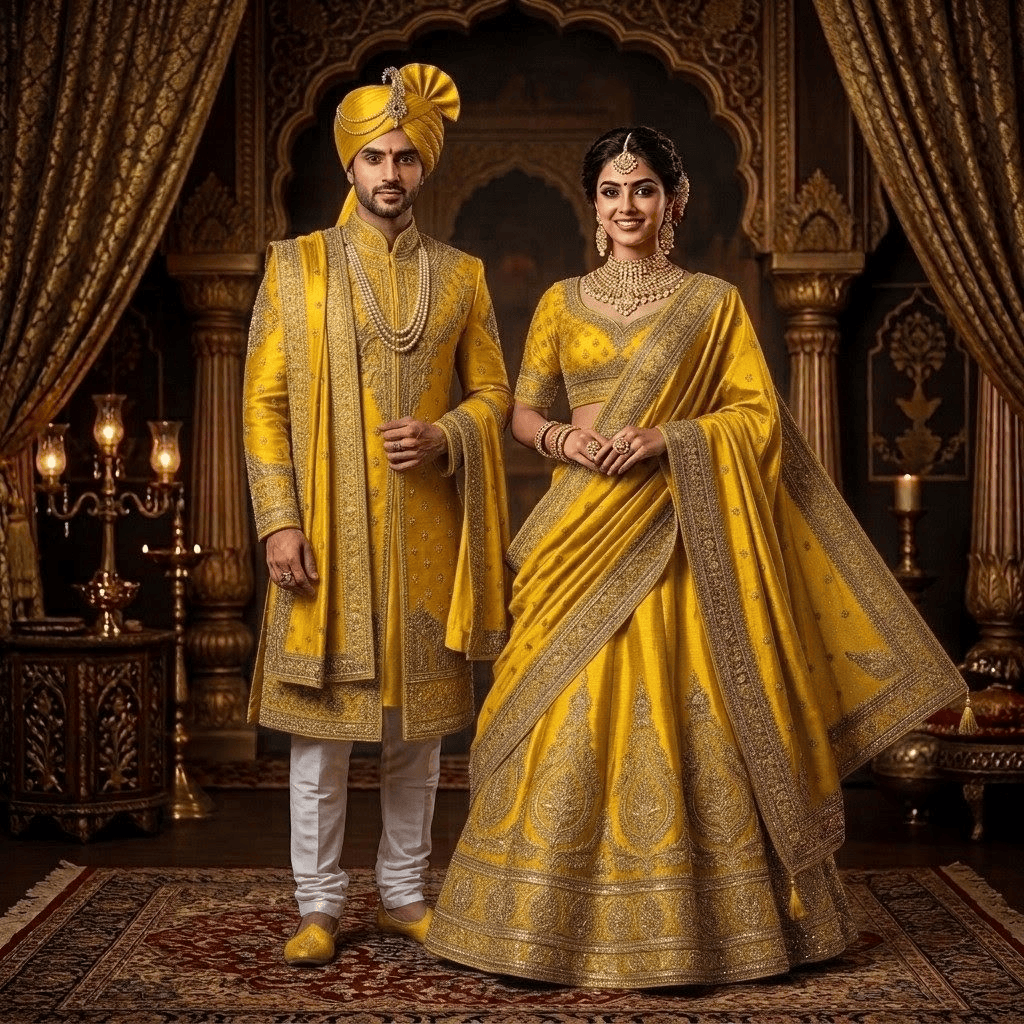
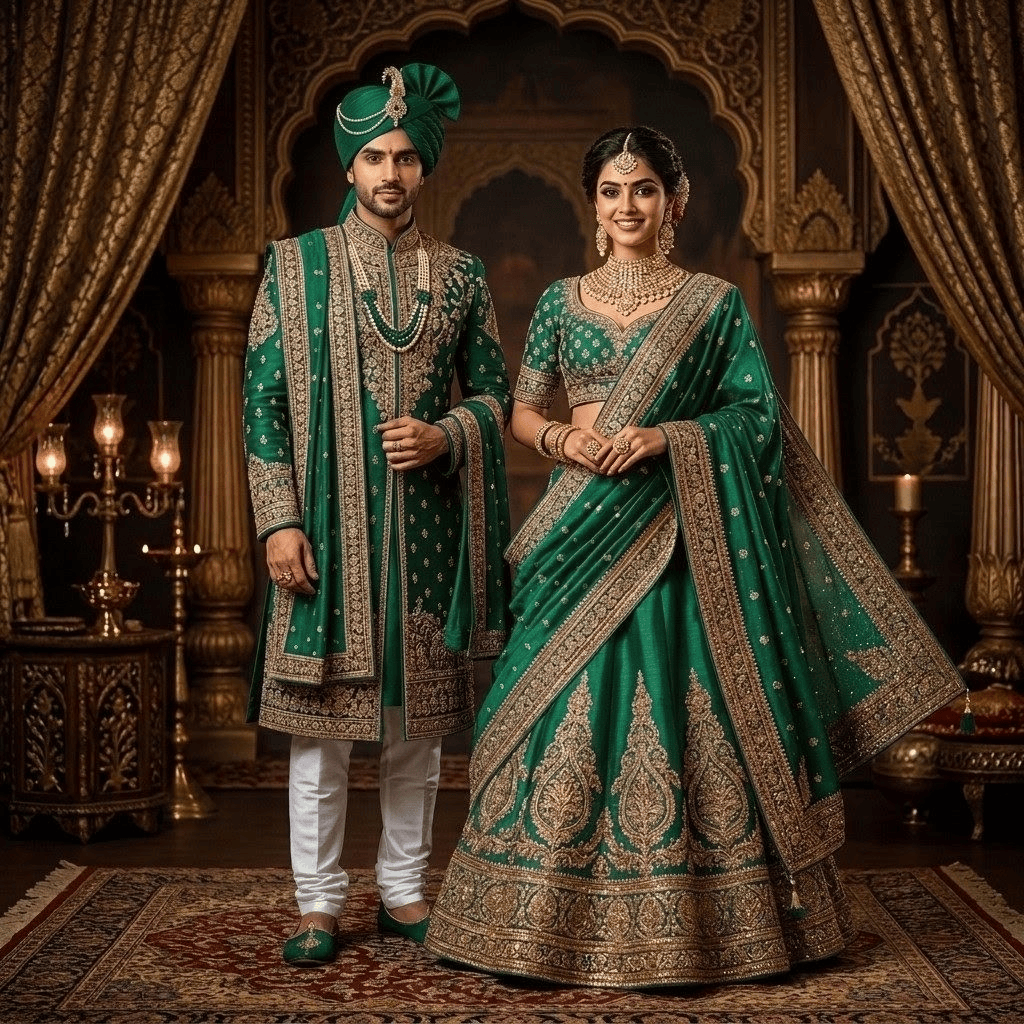
Sixth Day – Shashti: Katyayani is worshipped on the sixth day of Navratri. ‘Green‘ is the color of the day which is symbolic of control and balance emotions and keeps the person down-to-earth. It also represents overcoming darkness in a calm manner.
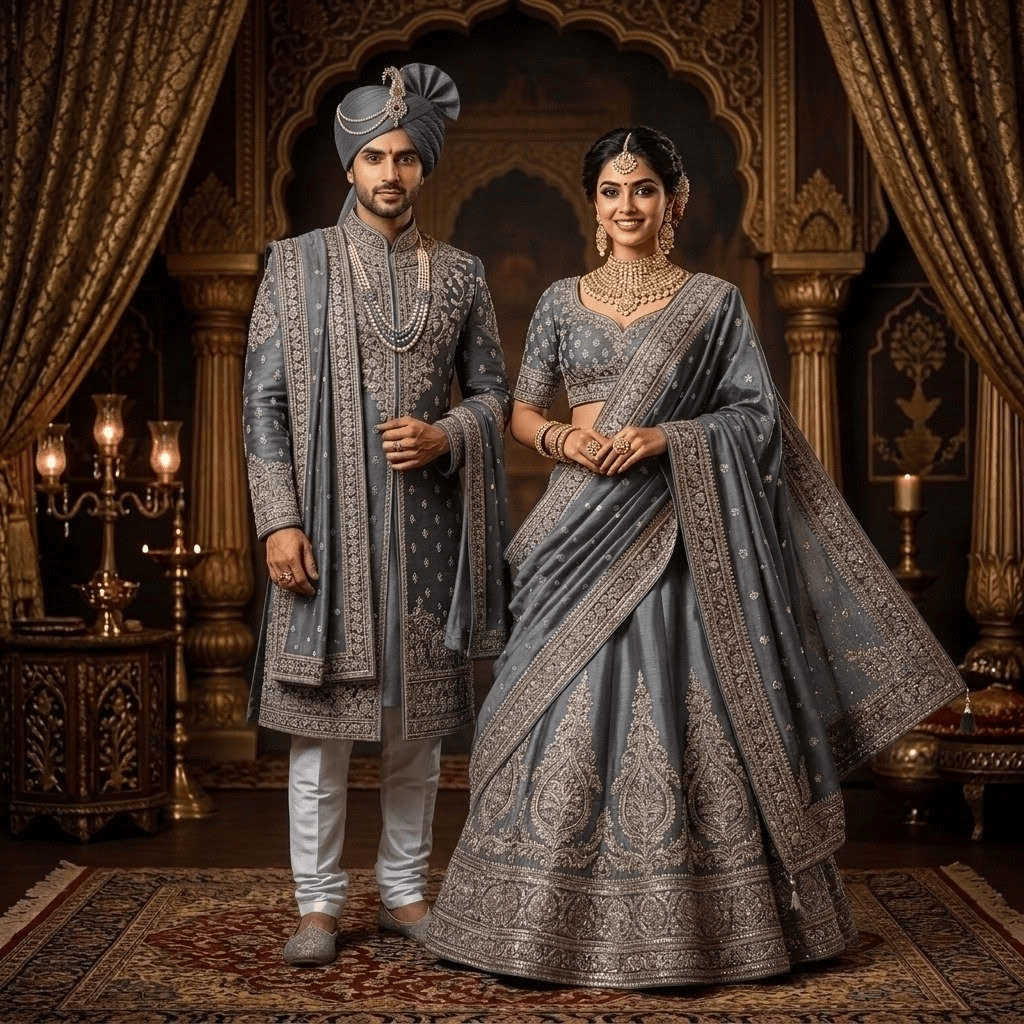
Seventh day – Sapthami: Kaalratri is the seventh figure of Goddess Durga. Maha Saraswathi Devi is also worshipped on this day. ‘Grey‘ is the color of the day and it represents energy and strength, or courage and determination.
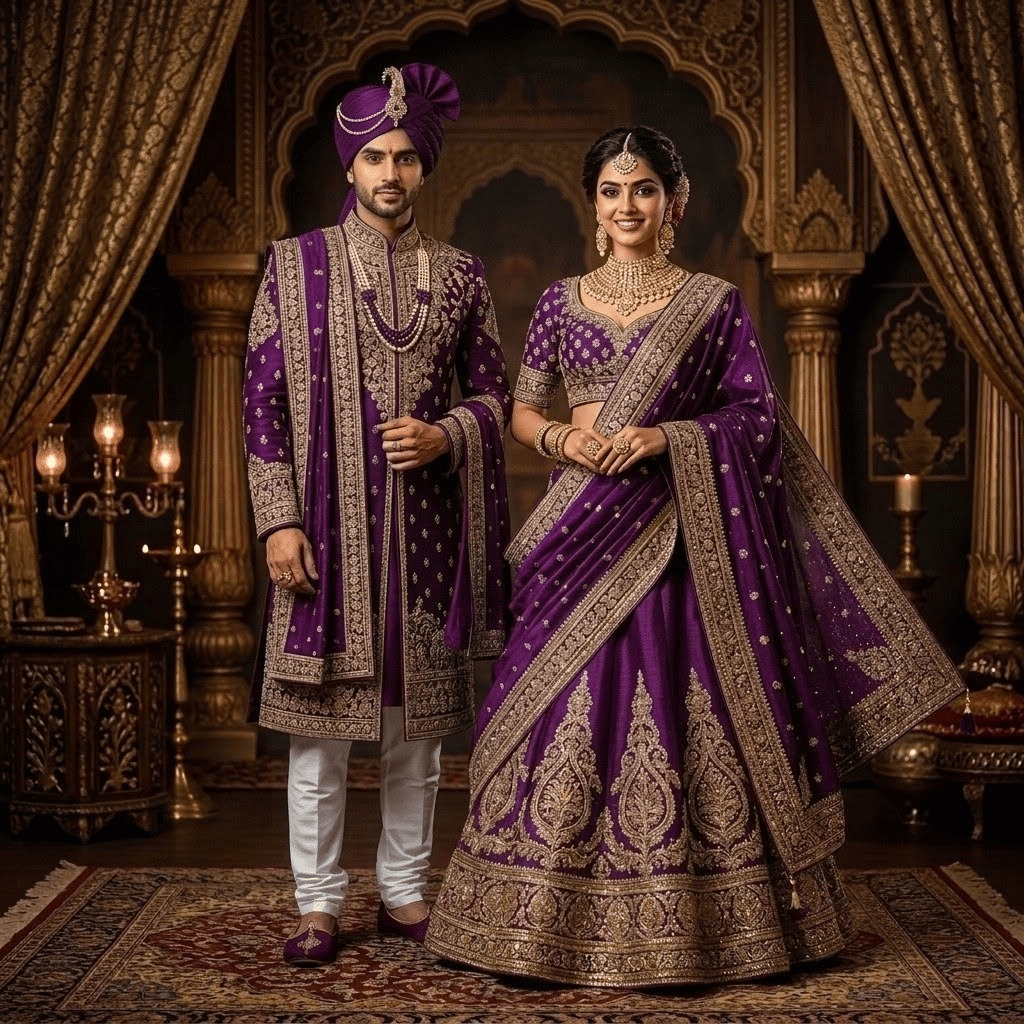
Eighth day – Durga Ashtami: Maha Durga is worshipped on the eighth day(Durgashtami). On this day, ‘Purple‘ is regarded as the colour for all, which signifies beauty, grace, and positivity.
Ninth day – Maha Navami: Siddhidatri is the form of Maa Durga for the ninth day of Navratri. ‘Peacock Green‘ is the colour of the day for devotees which is the color that signifies love, compassion, and universal harmony
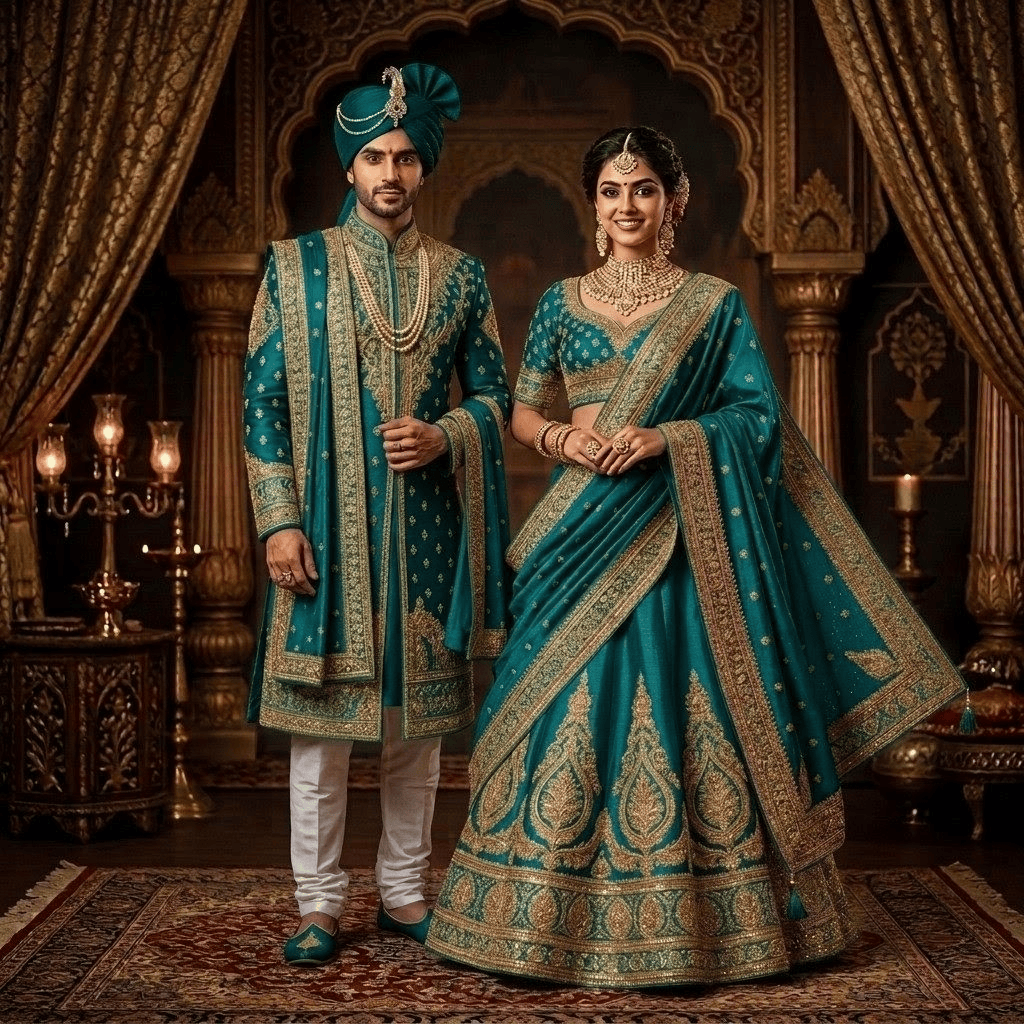
Tenth day – Vijaya Dashami: Vijayadashami is the day of Victory of Good over Evil. Goddess is dressed in Glowing Gold & the color for devotees is also Gold.
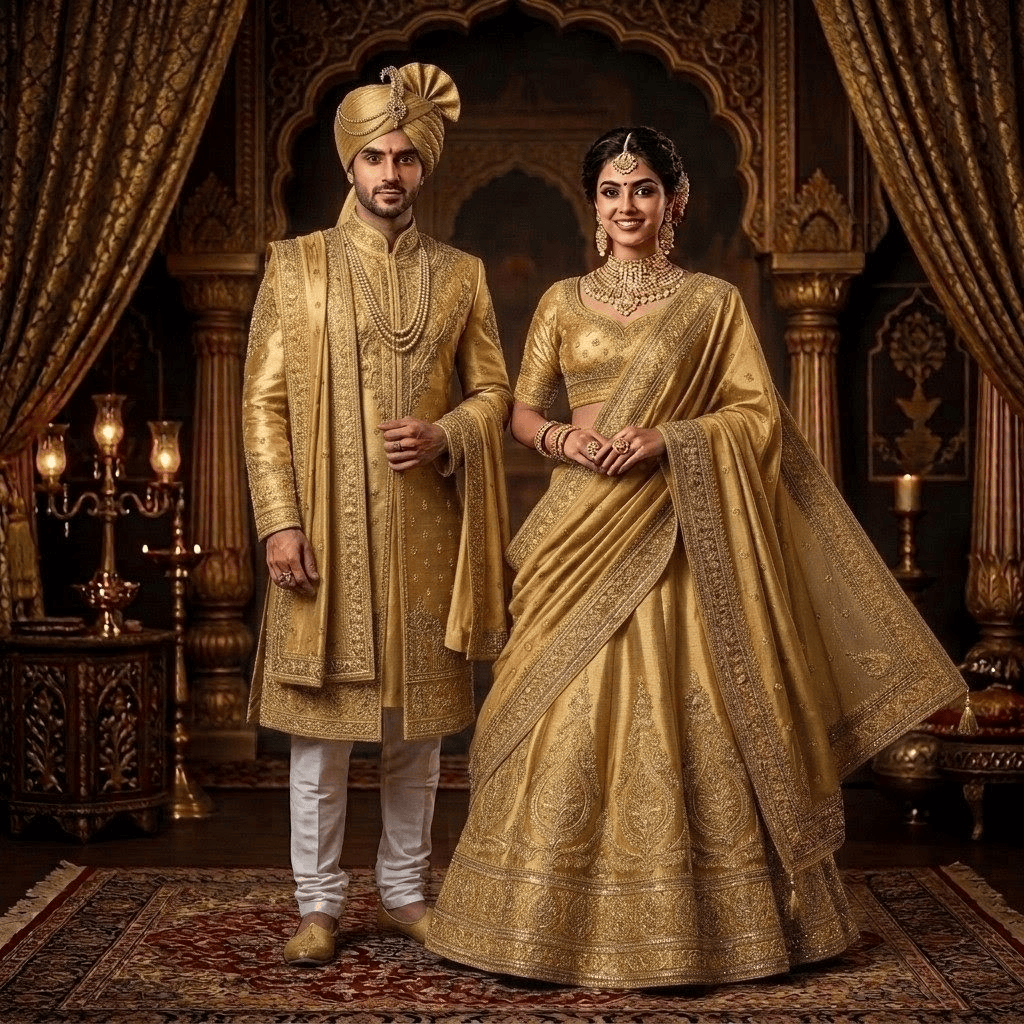
Happy Navaratri & Vijaya Dashami!
Enjoy a synchronized & colorful days dedicated to Maa Durga in Her Various Forms
🙏Jai Mata Di🙏
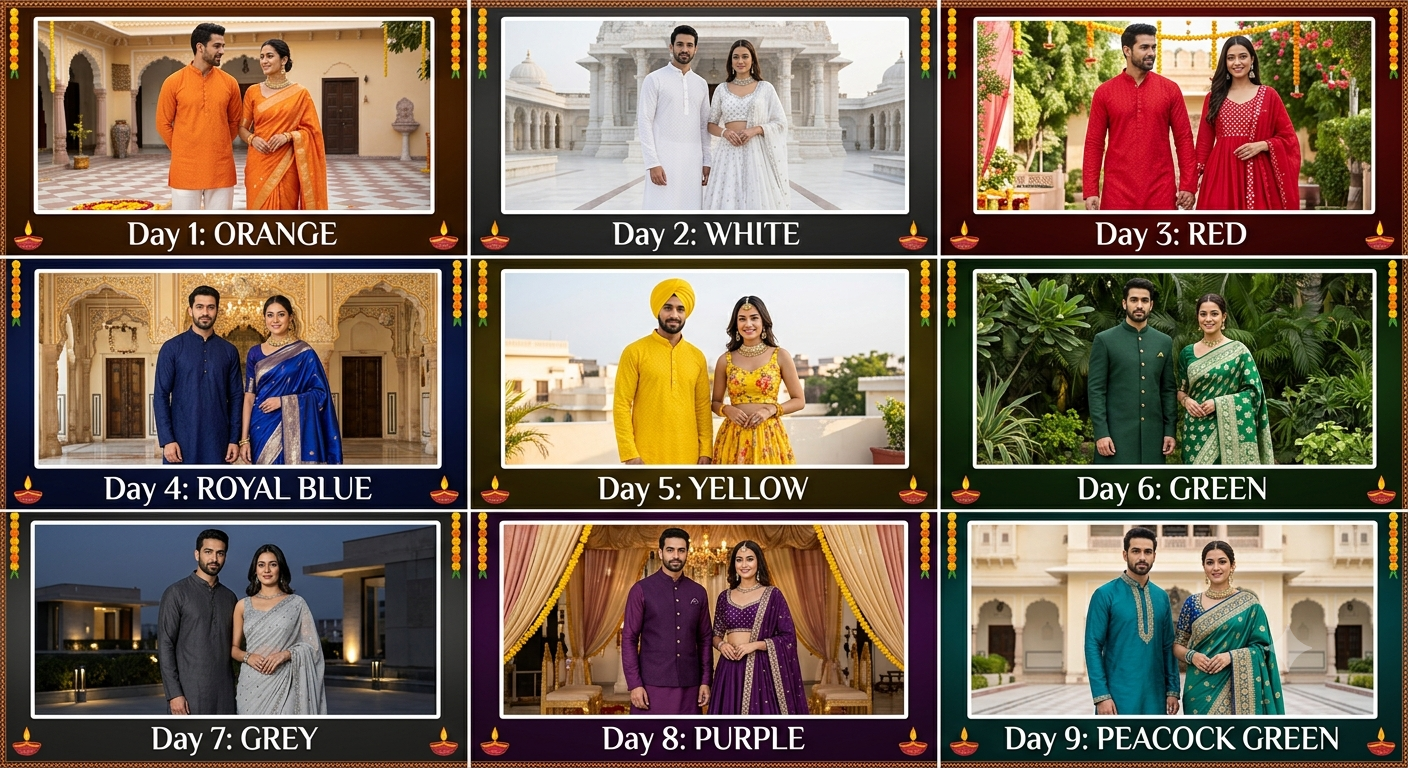
| Day 1 | 11 Oct (Sun) | Orange | Maa Shailaputri |
| Day 2 | 12 Oct (Mon) | White | Maa Brahmacharini |
| Day 3 | 13 Oct (Tue) | Red | Maa Chandraghanta |
| Day 4 | 14 Oct (Wed) | Royal Blue | Maa Kushmanda |
| Day 5 | 15 Oct (Thu) | Yellow | Maa Skandamata |
| Day 6 | 16 Oct (Fri) | Green | Maa Katyayani |
| Day 7 | 17 Oct (Sat) | Grey | Maa Kalaratri |
| Day 8 | 18 Oct (Sun) | Purple | Maa Mahagauri |
| Day 9 | 19 Oct (Mon) | Peacock Green | Maa Siddhidatri |
Origin of the Practice
Birth of Modern Tradition
Back in 2003, Maharashtra Times marketing team came up with a clever plan to connect with more women readers. Festival of Navratri was right around corner, and team decided to introduce a new concept. They printed a story assigning nine specific colours to nine days of grand celebration. To make this idea feel authentic, each colour was carefully mapped to a specific form of Mata Durga. Orange was linked to Mata Shailputri, white to Mata Brahmacharini, red to Mata Chandraghanta, green to Mata Katyayani, and other shades to remaining manifestations of Divine Mother.
Power of Print Media
Strategy worked like magic across print media. Every day during nine-day festival, newspaper published bright photos of women dressed in specified color of day. Seeing these pictures created a strong sense of excitement and aspirational appeal among readers. Paper also asked women to send in their own group photographs wearing matching outfits. Best entries were published next day, which encouraged more groups, offices, and neighborhood societies to participate actively in this new festive habit.
Spreading Across Nation
Led by former editor Bharatkumar Raut, campaign became a massive hit. Trend started in Maharashtra but soon caught fire in other parts of India, including major cities like Delhi. What began as a simple newspaper contest turned into a widely followed festival habit. Today, Maharashtra Times continues this tradition on its website through annual photo contests, where readers upload group pictures in matching clothes. Even Corporate offices and HR departments have adopted this practice for team bonding and desk decorations during festive season.
Cultural Legacy Beyond Marketing
Most fascinating aspect of this story is how a brand campaign transformed into a lasting cultural habit. Created well before rise of social media and viral hashtags, idea showed immense influence of print newspapers in shaping daily lives. Instead of fading away like a normal marketing gimmick, practice has embedded itself deeply into modern celebrations of Navratri across India.
My Past Articles related to Navaratri for quick reference