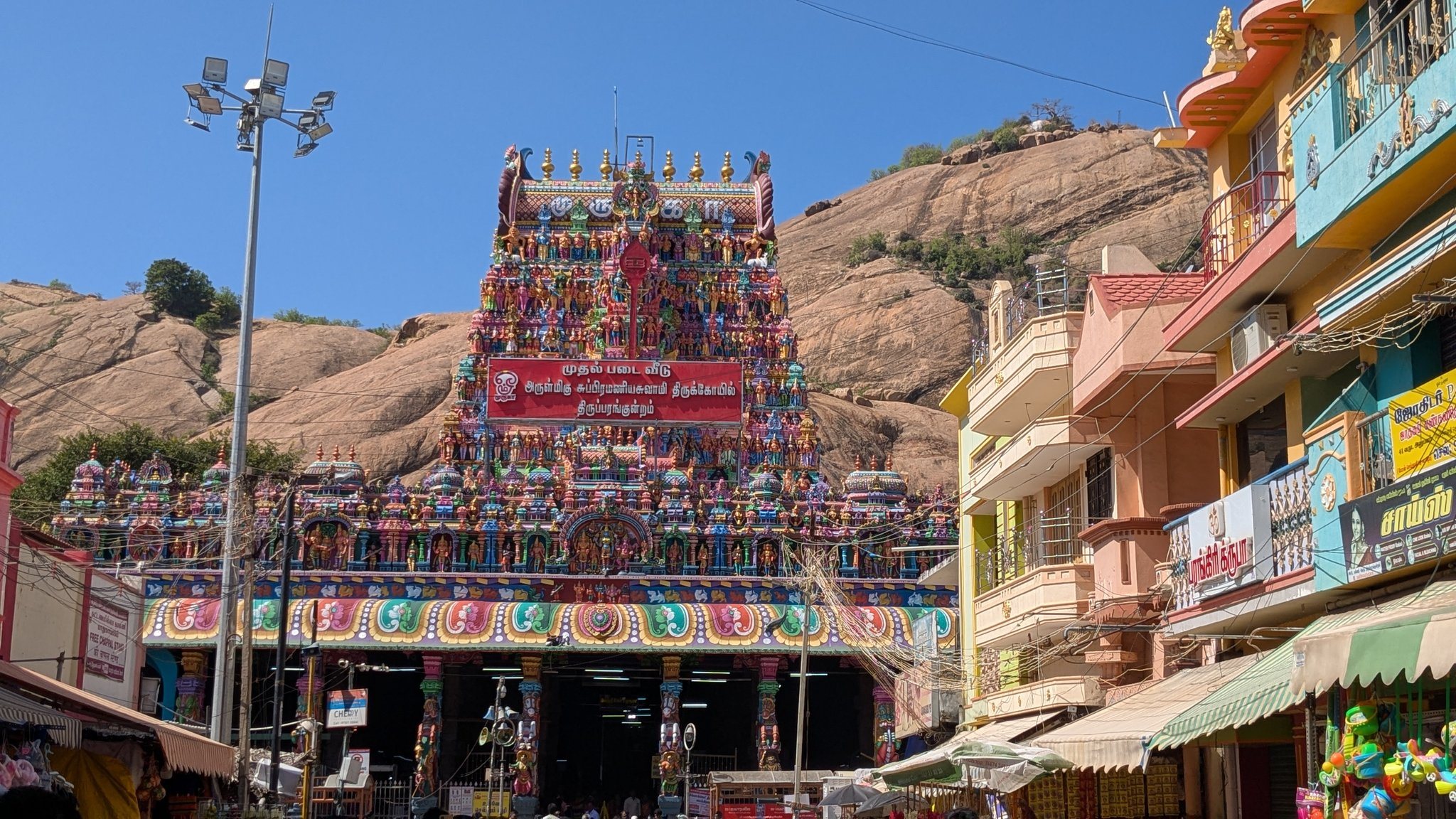
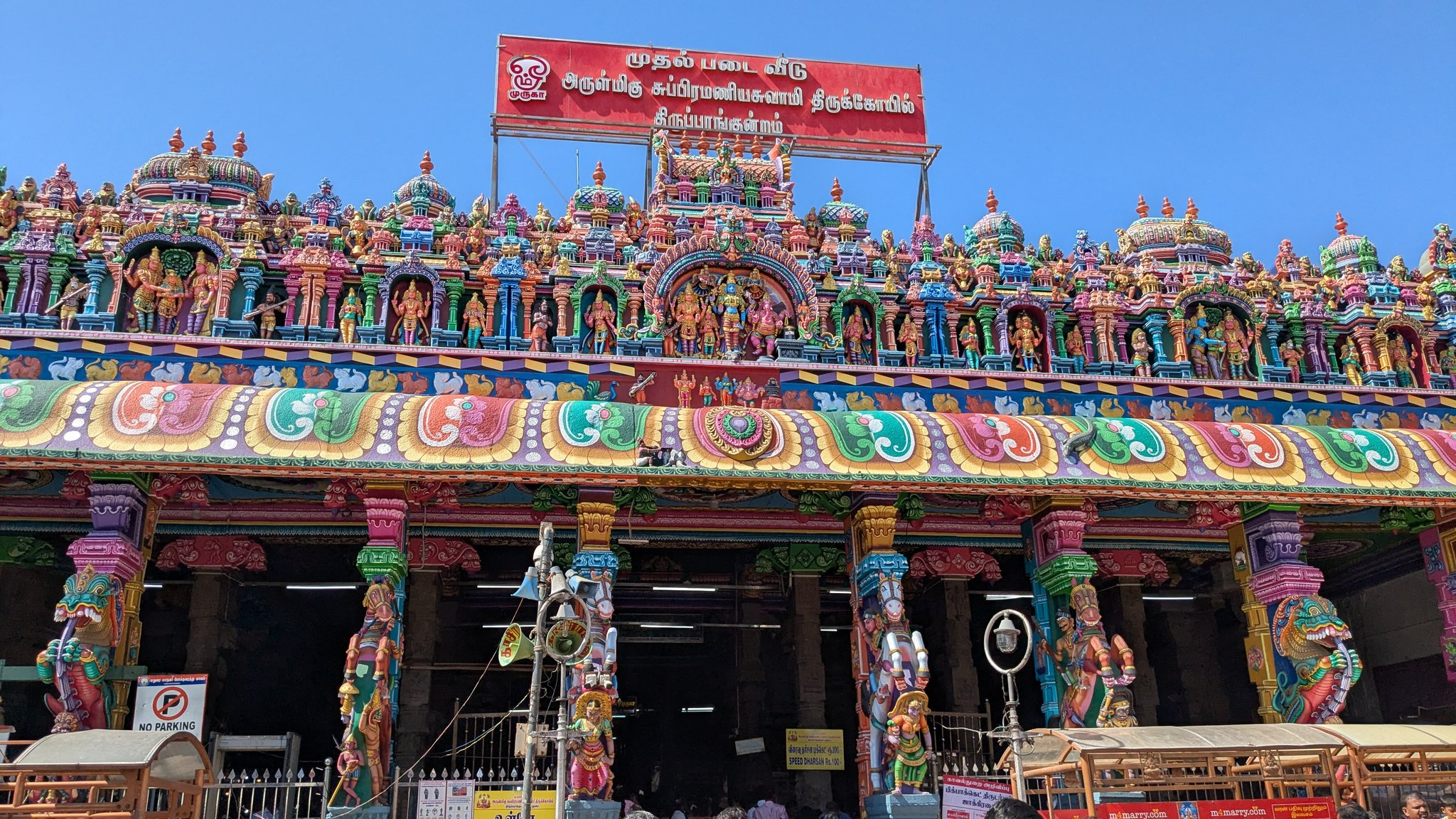

On 20 November 2026, a Supreme Court bench of Justices Aravind Kumar and Vipul Pancholi permitted the ceremonial lighting of the Karthigai Deepam lamp at the Deepathoon on Thiruparankundram Hill as a strictly controlled, one-time arrangement for 24 November 2026. While granting this temporary relief ahead of the festival, the apex court stayed paragraphs 1 to 140 of the Madras High Court judgment and scheduled final arguments for the second week of January 2027.
Customary Practice and the Question of Precedent
Historical records and judicial observations indicate no unbroken modern custom of lighting the Karthigai Deepam lamp at the Deepathoon. For decades, the traditional festival lamp at Thiruparankundram has been lit at the customary mandapam near the Uchipillaiyar Temple rather than at the disputed stone pillar situated roughly fifty metres from the Hazrat Sultan Sikandar Badusha Auliya Dargah. Disputes over shifting the ritual higher up the hill surfaced during mid-1990s litigation, and following December 2025 High Court orders and subsequent administrative restrictions, routine worship remained anchored at the traditional temple spot.
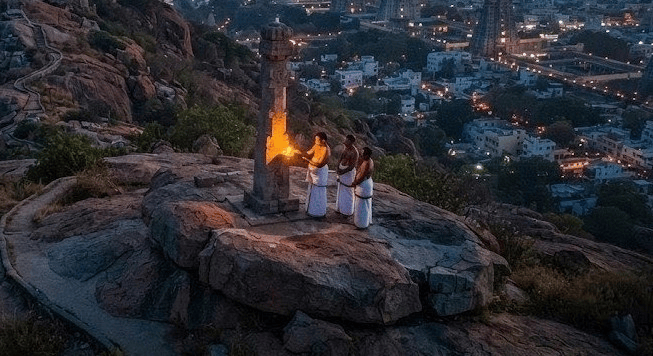
Even though the Supreme Court labelled its 20 November 2026 directive a narrowly confined relief incapable of legal consequence, practical reality operates differently. Once authorised Devasthanam personnel light the lamp at the Deepathoon under judicial supervision, the event becomes an undeniable historical fact. In future hearings, petitioners will inevitably point to the peaceful completion of the 24 November 2026 ceremony as proof that the ritual can proceed without disrupting public order or infringing upon the dargah.
High Court Mandate Versus Supreme Court Restraint
The Supreme Court interim order marks a sharp departure from the approach taken earlier by the Madras High Court. In December 2025 and January 2026, both a Single Judge and a Division Bench of the High Court treated the lighting of the lamp at the Deepathoon as an enforceable right and duty of the temple administration. The High Court rejected the Tamil Nadu government argument that the pillar was a colonial British survey marker, affirmed that the structure stood on temple land, and ordered execution under central police cover while initiating contempt proceedings against resisting officials.
By contrast, the Supreme Court paused every substantive legal conclusion reached below. Staying the first 140 paragraphs of the High Court ruling stripped away judicial findings on land title, archaeological identity, and religious custom. Instead of sidelining local authorities, the apex court placed the District Collector in charge as nodal officer to select a small authorised team, bar the general public and slogans, prohibit structural alterations, ensure immediate departure after the ritual, and submit a compliance report within three days.
A Century of Litigation Over the Hill
The controversy over the Deepathoon is the latest chapter in a legal battle stretching back more than a hundred years. In 1920, civil litigation erupted between the management of the Arulmigu Subramaniaswamy Temple and the Sikandar Badusha Dargah over ownership of Thiruparankundram Hill. A 1923 trial court decree divided the terrain, vesting the unoccupied hill and pilgrim pathways in the temple while confirming Muslim ownership over the topmost summit housing the mosque, the Nellithope area, and the flight of steps leading up. The Privy Council in London affirmed this settlement in 1931.
Subsequent decades tested the edges of that colonial demarcation. In 1996, the Madras High Court directed that the Karthigai Deepam continue at the Uchipillaiyar mandapam, permitting alternate locations only if situated at least fifteen metres away from the dargah, steps, and Nellithope area. Fresh disputes arose in 2021 over replacing a wooden flagstaff near the dargah with an iron pole, and in early 2025 when a three-judge bench banned animal sacrifice atop the hill under protected monument rules. Those tensions culminated in the November 2025 writ petitions, the January 2026 Division Bench affirmation, the Tamil Nadu government appeal in June 2026, and the Supreme Court interim order of November 2026.
Competing Claims Over Title and Heritage
At the heart of the dispute lie three conflicting interpretations of the stone pillar and its surrounding terrain. Temple authorities and devotee petitioners maintain that the Deepathoon is an ancient lamp column standing on a lower rocky outcrop owned by the temple, well outside the summit plateau belonging to the dargah. Dargah representatives counter that the entire upper plateau forms part of their settled property, barring new rituals nearby regardless of exact measurements. Meanwhile, the Tamil Nadu government and the Hindu Religious and Charitable Endowments Department contend that the stone column is a secular British-era survey marker rather than a consecrated shrine.
Heritage governance adds another layer of complexity. Organisations such as the Hindu Dharma Parishad have urged the Supreme Court to hand over the hill complex to the Archaeological Survey of India under the Ancient Monuments and Archaeological Sites and Remains Act, alleging state failure to safeguard ancient rock-cut heritage. The state government has strongly resisted any ASI takeover, arguing that statutory religious endowment administration cannot be displaced once property rights stand settled.
The 1931 Decree and the Road to January 2027
When the Supreme Court reconvenes for final arguments in the second week of January 2027, the 1931 Privy Council decree will serve as the binding baseline under the doctrine of res judicata. Neither side can reopen the broad division of the hill settled a century ago. Instead, the court will map those 1923 survey boundaries onto modern topography to determine whether the Deepathoon falls inside temple land or within the dargah summit zone.
Even if the bench concludes that the pillar stands on temple property, ownership alone will not settle the constitutional question. Under Article 25 jurisprudence, the court must weigh whether lighting the lamp at the Deepathoon constitutes an essential religious practice or an established custom preserved by the 1931 settlement, or whether it represents a unilateral expansion of ritual near a sensitive shared site. Having cleared away the stayed High Court findings, the Supreme Court will examine original revenue maps, archaeological records, and historical custom afresh to decide if the flame lit on 24 November 2026 remains a solitary event or becomes an enduring tradition.
Verti Vel Murganukku Araharohara