सशङ्खचक्रं सकिरीटकुण्डलं सपीतवस्त्रं सरसीरुहेक्षणम् ।
सहारवक्ष:स्थलशोभिकौस्तुभश्रियं नमामि विष्णुं शिरसा चतुर्भुजम् ॥
Saphala Ekadashi occurs during Krishna Paksha (dark fortnight) of Pausha month (December-January) according to Amanta calendar or Margashirsha month according to Purnimanta calendar. It is first Ekadashi coming after Mokshada Ekadashi, bringing new hope and spiritual progress. Devotees dedicate this day to worship Bhagawan Narayana form of Bhagawan Vishnu to ensure success in all righteous endeavors and seek liberation from accumulated sins.
Meaning and Significance of Saphala Ekadashi
In Sanskrit, Saphala means fruitful, successful, or reward yielding. Therefore, Saphala Ekadashi translates to 11th day that makes every noble task, prayer, and effort fruitful.
Human efforts often face hurdles, delays, and failures due to past karma, lack of focus, or unrighteous habits. Observing fast on Saphala Ekadashi with pure heart transforms failure into ultimate success. Scriptures mention that worshiping Bhagawan Vishnu on this day pleases Lord Hari more than thousands of years of severe penance, bestowing success, family prosperity, inner peace, and ultimate residence in Vaikuntha Dham.
Legend associated with Saphala Ekadashi
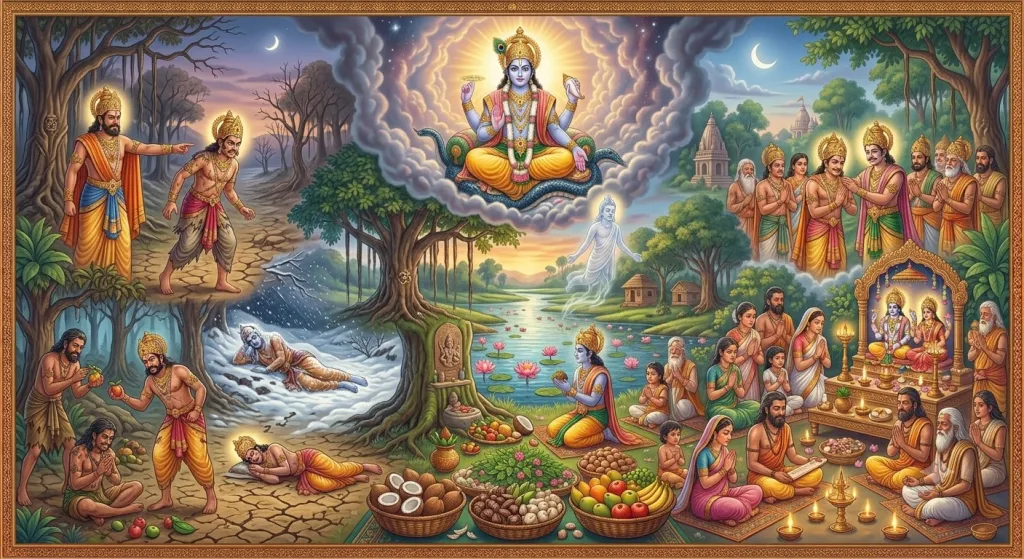
Scriptures describe sacred story narrated by Bhagawan Krishna to King Yudhishthira, involving wicked prince named Lumpaka who lived in kingdom of Champavati. King Mahishmat ruled Champavati righteously, but his eldest son Lumpaka was cruel, sinful, and disrespectful toward Gods, Brahmins, and spiritual duties. Prince indulged in gambling, drinking, and looting innocent citizens.
Exasperated by continuous evil deeds of Lumpaka, King Mahishmat banished his son from kingdom. Lumpaka went into deep forest and started living under large banyan tree, surviving by hunting animals and stealing from neighboring villages at night. Though living in forest, Lumpaka never gave up his wicked mindset.
Severe cold season of Pausha month arrived, and on eve of Krishna Paksha Dashami, Lumpaka froze due to harsh winter weather, losing consciousness throughout night. Next morning on Saphala Ekadashi day, Lumpaka woke up extremely weak, shivering, and unable to move or hunt. He spent whole day starving, unable to eat anything. Toward evening, Lumpaka gathered few wild fruits, walked to base of banyan tree, and placed fruits at roots, crying out in helplessness and offering fruits unknowingly to Bhagawan Narayana.
Without knowing, Lumpaka had kept complete fast on Saphala Ekadashi, stayed awake all night due to cold, and offered fruits to Bhagawan Vishnu. Pleased by unconscious observance of this sacred fast, compassionate Bhagawan Vishnu forgave all past sins of Lumpaka. Next morning, divine horse appeared before prince, and heavenly voice announced that his sins were destroyed. Lumpaka returned to Champavati, asked forgiveness from his father, received kingdom, ruled righteously for many years, and eventually attained Moksha.
Rituals to be performed on Saphala Ekadashi
Devotee must wake up early in morning during Brahma Muhurta and take ritual bath using clean water without using soap, shampoo, or such cosmetic products.
Puja area should be cleaned thoroughly and idol or photo of Bhagawan Vishnu, specifically Bhagawan Narayana form, should be placed respectfully.
Light ghee lamp, offer fresh yellow flowers, sandalwood paste, incense, seasonal fruits like pomegranate, coconut, or guava, and Tulsi leaves to Bhagwan Vishnu.
Chant Vishnu Sahasranama, Hare Krishna Mahamantra, or Om Namo Bhagavate Vasudevaya continuously throughout day.
Listen to or read Saphala Ekadashi Katha with family members in peaceful state of mind.
Offer your respects to parents and other elders, especially Guru, seeking their heartfelt blessings on this sacred morning.
Observe fast during entire day according to individual health capacity. Healthy individuals can observe strict fast without water or taking only water. Milk, curd, and fruits can be consumed if complete fasting is difficult due to health reasons. Rice, wheat, barley, lentils, pulses, and all food grains must be avoided strictly. Heavy spices, regular salt, garlic, onion, tea, coffee, outside processed food, and alcohol must be strictly avoided.
Perform evening Aarti with devotion, offer special Naivedya to Bhagwan Vishnu, light lamps, and maintain noble thoughts, avoiding anger, backbiting, falsehood, or harsh speech.
Break fast next day on Dwadashi tithi during scheduled Parana time. Fast should be broken after sunrise once Hari Vasara period concludes. Offer naivedya to Bhagwan Vishnu, perform short prayer, and break fast by consuming prasada, water, or fruits before eating regular food.
PS: Article re-formatted into blocks and Header Image changed
One thought on “Saphala Ekadashi: Transforming Failures into Success”