Koilvenni Vennikarumbeshwarar Temple – Diabetic Sweet Spot

On our repeated pilgrimages to Kumbakonam region, a visit to Kovilvenni a town near Needamangalam in Thiruvarur District about 24 km away from Thanjavur, was missed due to some reasons or the other. When we went to Kumbakonam Navagraha circuit in December 2021, we had resolved that we had to have a darshan in this temple at any cost. But then Arulmigu Soundara Nayagi sameta Shri Vennikarumbeshwararar blessings was not forthcoming as we had to rush back to Bengaluru. Finally on 14th August 2022, our wishes fructified and By Shiva! What an amazing time was in the offing. It only goes on to prove, it is His time and call not ours anyway. The highlight for us, after Darshan of the Bhagwan, was very learned and knowledgeable Chief Archaka Shri Prabhakar Shivacharya AVL – his affable, patient explanation of the sthala purana (Historical Significance of the Shrine).

Koilvenni Arulmigu Karumbeshwarar Temple

The temple dedicated to Shiva, as the Moolavar (Presiding deity), manifested as Shri Vennikarumbeswarar. Upadevata is His consort, Parvati, known as Arulmigu Soundaranayagi. The historical name of the place is Tiruvenni. It is one of the shrines of the 275 Paadal Petra Sthalams – Shiva Sthalams glorified in the early medieval Tevaram poems by Tamil Saivite Nayanars Tirugnanasambandar and Tirunavukkarasar. Koilvenni Arulmigu Karumbeshwarar Temple in 102nd of Paadal Petra Sthalams on the Southern bank of River Kaveri. He is also known as Venni Nathar, Rasapureeswarar, Triambakanathar It is believed that patients suffering from any ailments especially diabetes will be cured of the disease if they make an offering of sugar to the main deity at this temple. “Karumbu” in Tamizh means sugarcane and the main linga is in the form of a bunch of sugarcane stems tied together.

Sthala Purana or Historical Significance

In ancient times, the sthala vruksham was Nandivardhanam, a flower white in colour and hence called Venni or Nandivardhanam Flower (Pinwheel Flower or Crepe Jasmine). This is one of the favourite flowers of Bhagawan Shiva and used in His worship.

Venni Flower (Tabernaemontana divaricata) Pinwheel Flower/Crepe Jasmine

This place was also surrounded by dense Sugarcane fields. In Tamizh Sugarcane is called Karumbu. King Musukunda Chola Chakravarthy was a Chola ruler who ruled the parts of Chola Kingdom from Aarur (Thiruvarur). He was a great devotee of Bhagawan Shiva. He also had renovated the Thiruvarur Sri Thyagarajaperumal temple, after which he was passing by Venniyur with his troops. and when he overheard two Sages arguing between them on the sthala Vruksha of the place – one saying it was “Sugarcane” and the other claiming that it was “Venni“. Not wanting to take any sides, fearing curse of the other sage, King asked them why this argument about the Temple Tree, when there is neither a temple nor a Vigraha of Bhagawan Shiva. They hear an Akashavani (A voice from the Skies) which was that of Bhagawan Shiva saying that He should be named after Sugarcane (Karumbu) and the Temple Tree or Sthala Vruksha will be Venni. He also says that He is present in a self manifested form (Swayambhu), in a form that has seen all the Yugas (Krita or Satya Yuga, Treta Yuga, Dwapara Yuga, and Kali Yuga), whose stem looks like a bunch of Sugar cane tied together, a form that has been worshipped by Devas and Rishis over the yugas. He continues saying He be found deep inside the earth below the very place the argument was going on, bring it up, build a shrine and perform Kumbhabhishekam. It is also said in Kanda Puranam that the wedding invitation of Devasena – Subramanya was sent to this place. 

King then uses his men to dig the field and he finds the Shiva Linga whose stem part was spread deeper and deeper and he was lost how to bring it up. Once again Bhagwan Shiva gives him a solution to tie it up at the stem and lift it up. The height of this Linga pratishthe from Surya Teertham towards the East is 36 feet, signifying surpassing of 36 tatvas or elements. This incident is believed to have happened 5000 years ago. After the historic “Venni war” the Chola King , Karikala Chola rebuilt and renovated this temple.

Swayambhu Shri Vennikarumbeshwarar

This place which gained prominence even in the Sangam times, had found significance in the songs of Thirugnanasambandar  and Thirunavukkarasar. Sundarar had hailed the Lord here as the one who heals diseases, in his song “ Kshetra Kovai.” So, the Lord of this temple, “ Sri Venni Karumbeswarar,” remains the Lord who heals all the diseases , especially diabetes, of his devotees.  Thirunavukkarasu had sung in praise of the Lord in his “ Thiruthandakam” , singing the history of the Lord’s marriage in Mayiladuthurai. 

The Goddess of this place is Shri Soundaranayaki. True to her name, this Goddess is amazingly beautiful, and showers her blessings. It is believed that if ladies whose Seemanta (Valai Kappu) ceremony is over visit Her to seek Her blessings and tie bangles in front of the Goddess, for having a safe delivery.

Shri Soundaranayaki

The holy waters of this place, “ Surya Pushkarani” and “ Chandra Pushkarani,” have the power to heal all diseases. 

Surya Teertham

The Main Temple, Shri Vennikarumbeshwarar faces East and the Surya Teertham is right opposite to Him. Shri Soundara Nayaki faces South in this Temple in standing position with four hands, one of which shows the Abhaya Hastham. Surya Theertham, is where Surya worshipped the Lord. Since it is an East facing Lingam, the rays of the Sun fall on Him on 2nd, 3rd and 4th days of Tamil month Panguni (Mid of March) during Sun rise. Ambal Soundara Nayaki is in a south facing shrine. The shrine of Nataraja is in between the shrines of the Lord and the Mother.

Panoramic Shot with Surya Teertham and Main Gopuram of the Temple

Sri Ikshupureeswarar (another name of the presiding Deity,  who is self – manifested remains with so much greatness , is also called” Sri Venninathar “ and “ Sri Venni Karumbeswarar.” ( The word “ Ikshu” means sugarcane.) 

Other deities in the temple include Murugan,Narthana   Vinayagar, Gajalaxmi, Bairavar and Navagraha. Goshta moorthies include Narthana Vinayagar, Dakshinamoorthy, Lingothbavar and Durga.

The sanctorum is constructed in such a way that the outer mandapam looks like a moat. The Peetham or the Base of the Shiva Linga is Square as against Round that we usually find elsewhere just as the form of Linga is square and not round. In the recent past, this temple saw extensive renovation, done by Nattukottai Chettiar community.

The main offering here is Rava and Sugar. After the Sankalpam and offering at His feet, Rava and Sugar is mixed and strewn around the temple. The ants eat the Sugar and only Rava is left behind. This is said to cure Devotees of Diabetes. Once they are cured, Bhaktas return back and perform a Ghee Abhisheka to Bhagawan Shiva.

Since there are not any shops around, it is better to carry all Puja offerings when we go to the temple. Typically we will need to carry Betel Leaves, Betel Nuts, Some fruits, Coconuts, Ghee and Flowers, apart from about a kg each Rava and Sugar.

Driving Directions to the Temple
https://goo.gl/maps/U3fJaFr9iyP6qVnv8

Temple Opening Hours:
8:00am to 12 noon; 4pm to 8pm

Chief Archaka Shri Prabhakar Shivacharya AVL Contact
99768 13313

Requesting Bhaktas to donate for Conduct of Abhishekas on Pradoshas (2 per month) which costs about ₹1501 per Pradosham or ₹3001 a month

Also requesting Bhaktas to donate liberally for maintenance and renovation of the temple. Please contact Chief Archaka on the number given before for the same.

Signing off with the link to Sthala Purana (in Tamizh) recorded by me on 14th August 20222 explained beautifully by Shri Shri Prabhakar Shivacharya AVL

Om Namah Shivaya

PS: If there are any errors please leave it in the comment and I shall edit this article after verification.

Sharing some more pictures clicked

Kuttumuck Shri Mahadeva Temple

कैलास राणा शिव चंद्रमौळी | 
शिव स्तुती मराठी | 
तुजवीण शंभो मज कोण तारी

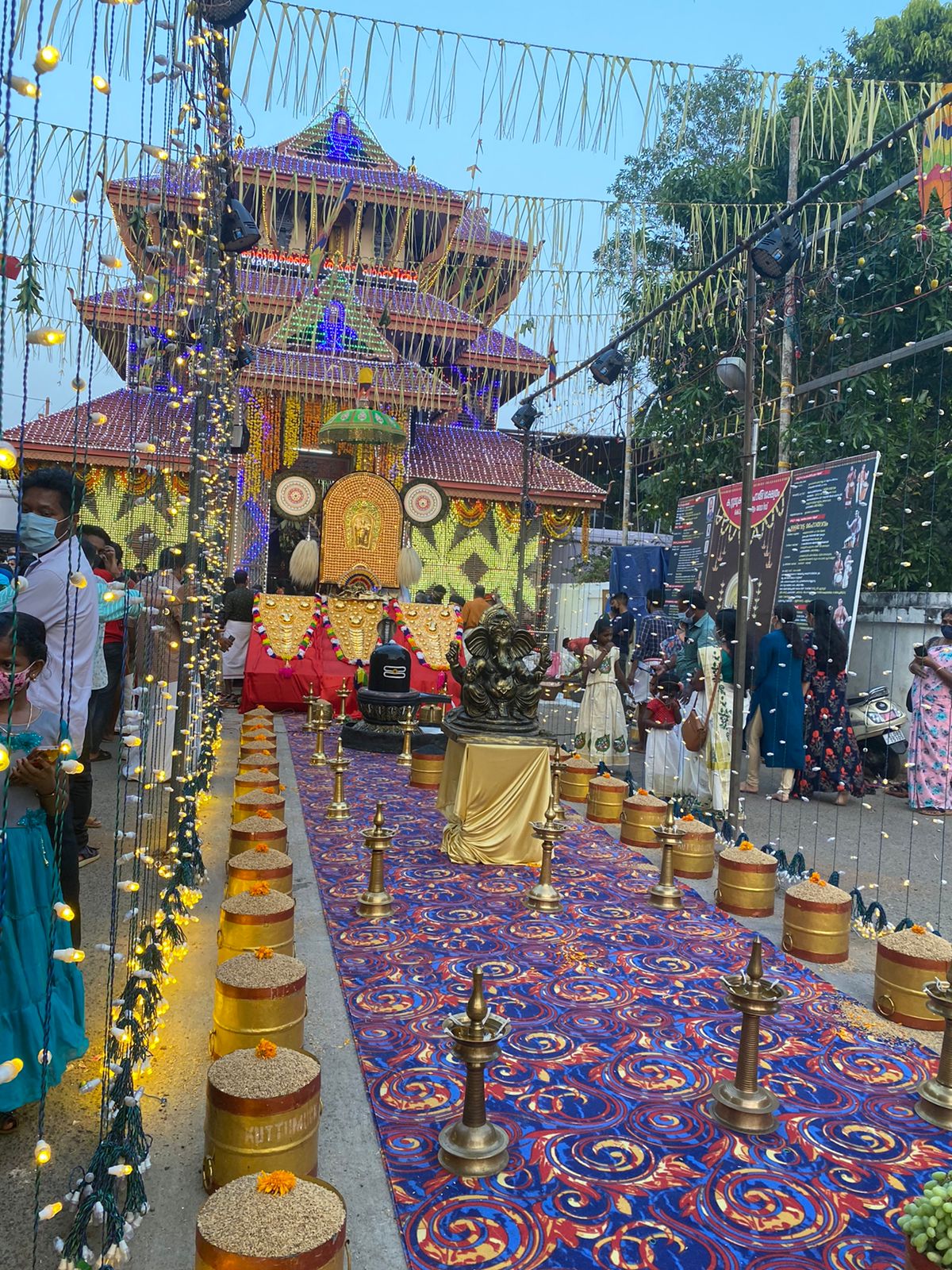
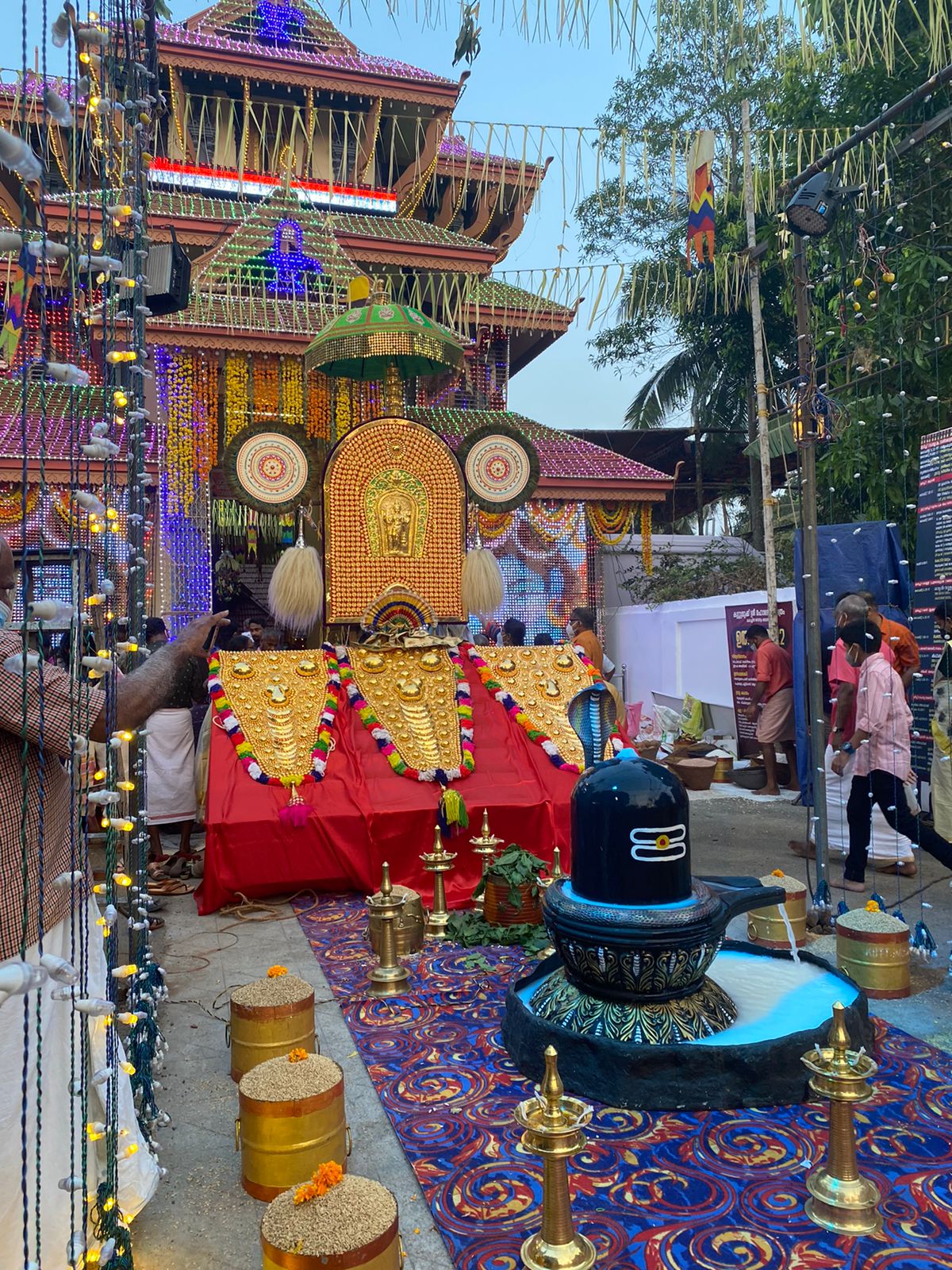
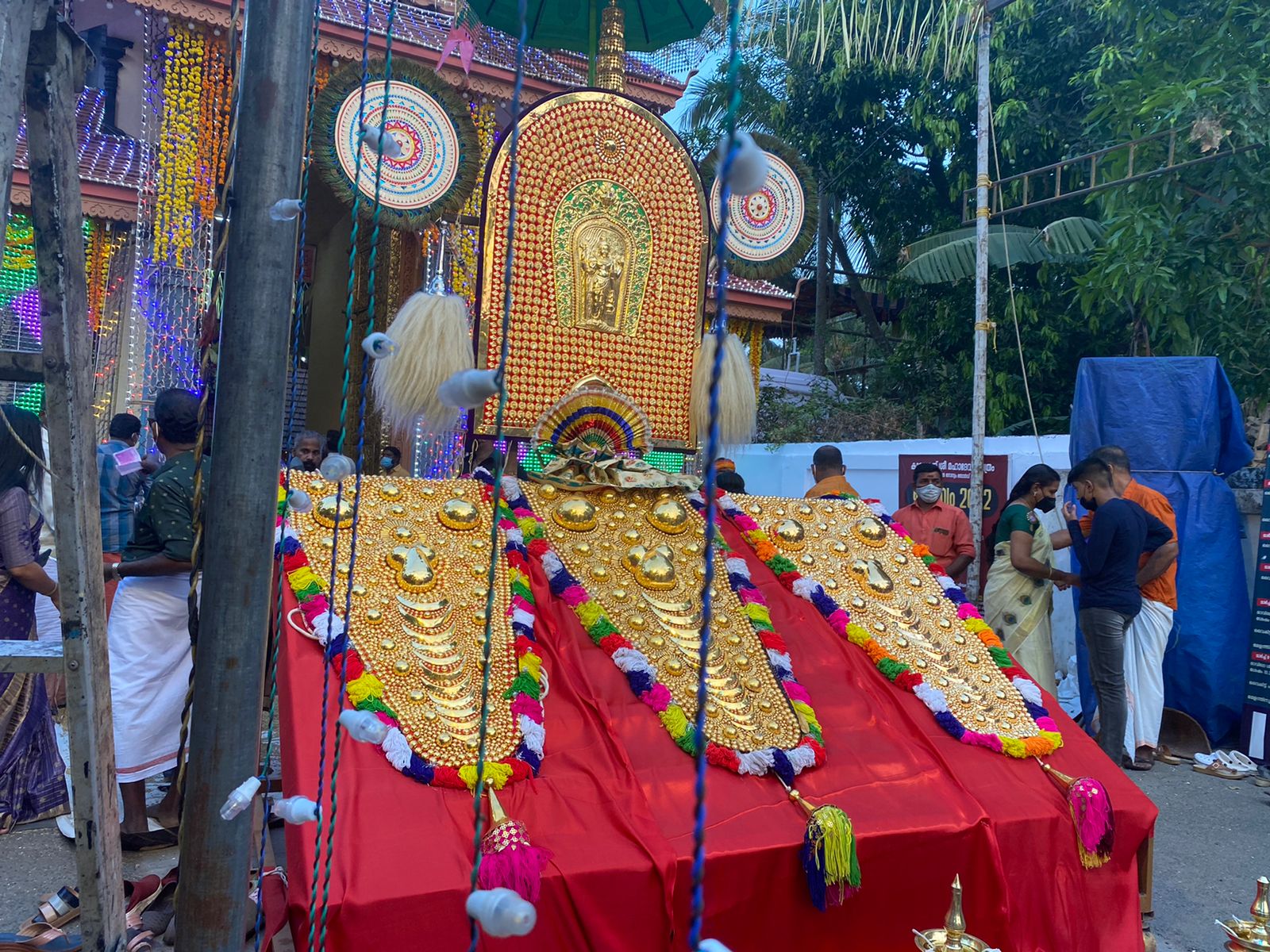
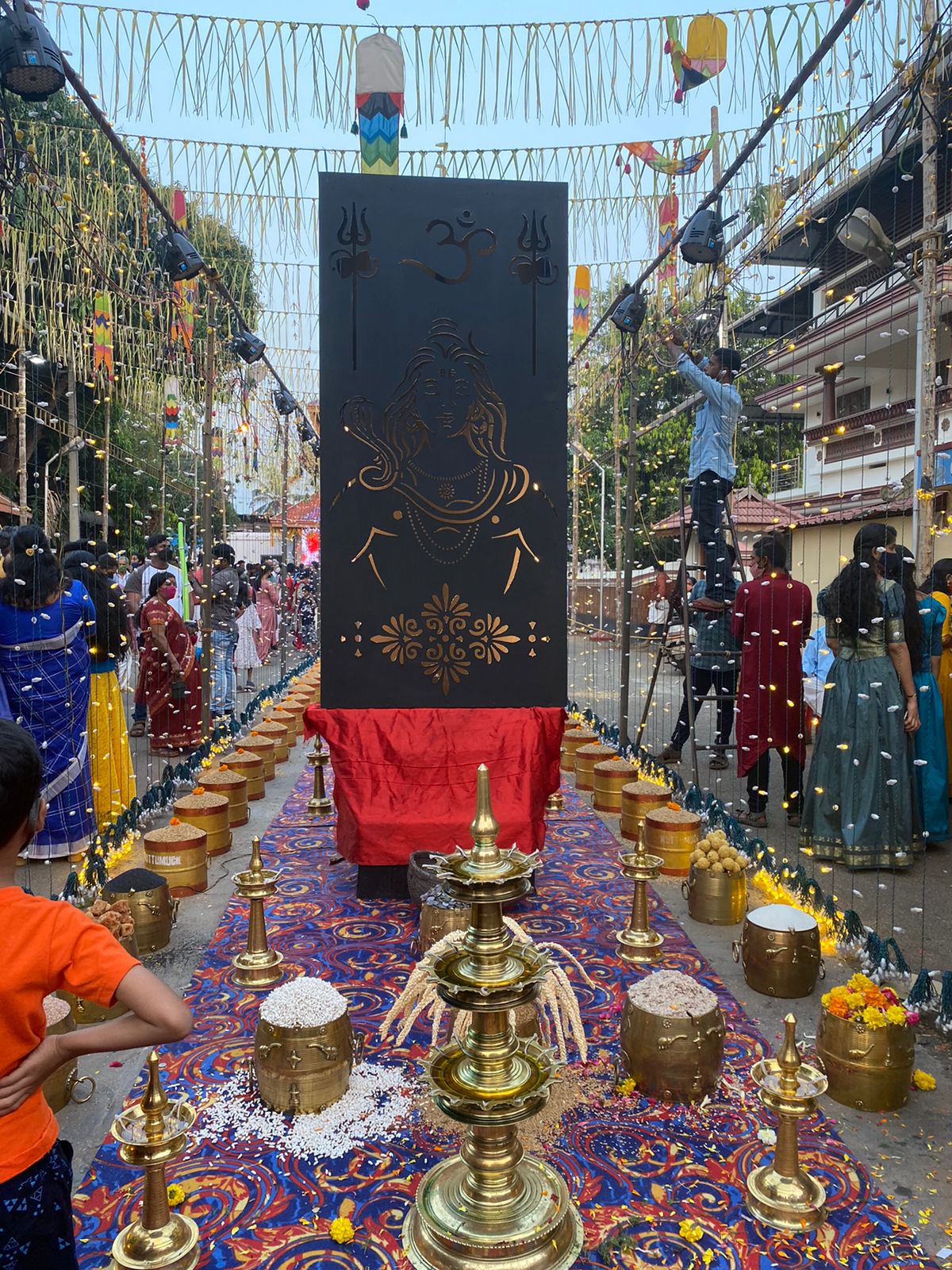
March 12th 2022 – it was conclusion of the Utsava in the legendary and ancient Devalaya Kuttumuck Shri Mahadeva Kshetram in Thrissur. The Utsava that began on 3rd March (Poorvabhadra Nakshatra, called Pooruruttati in Malayalam) of Kumbha Maasa (month) and concluded on the Arudra Nakshatra (Thiruvathira Nakshatram in Malayalam) with the traditional Aaraattu (bathing of the Deity’s Vigraha in the temple pushkarni or river associated with the Devalaya.

Gratitude – first up

This temple holds a special place in my heart as this was the place we came to rest enroute for a a few hours, during my 1st Pilgrimage to Shabarimala as a 8 year old boy. We brothers had severe motion sickness and were totally dehydrated and a dip in Kadampuzha Bhagavathi Temple Pushkarni did a world of good, freshening up and a localite suggested visiting and praying in this temple in Thrissur too enroute. May Bhagawan Shiva bless this noble localite for ushering us towards this amazing temple (which was not as developed as you in the pictures shared in this article. Waiting for his call to pray here again and wish it happens very soon.

The Temple

The current temple structure built in Kerala Architecture style (very different from with other architectural styles in the rest of India) is believed to be more than 300 years old and the Vigraha which is much older, is believed to have been consecrated by Maharshi Khara.

The Vigraha or the Murti (Idol) – The Legend

Mahadeva Shiva is consecrated in the fierce and highly powerful Kiratha form (Hunter form) in this Kshetra. After the Khandava Yuddha (battle), Indra offers all his weapons as a gift to Arjuna for defeating him in battle, the only condition being that Bhagawan Shiva is pleased. Arjuna seeks Bhagawan Shri Krishna’s advice, who asks him to go on tapasya (penance) to please Shiva and attain divine weapons. Arjuna left his brothers for a penance, gets a deeksha mantra from Maharshi Vedavyasa and begins his penance.

Duryodhana upon learning this, sends Mukasura, who takes the form of a wild boar to kill Arjuna and for his Vrata Bhanga (breach of the penance and vows). Bhagawan Shiva as He always does appears in the form of a Hunter accompanied by 4 dogs (4 Vedas) to protect Arjuna. Arjuna shoots and arrow and kills the boar – at the same instant the Hunter also shoots the arrow. There arises a dispute between hunter and Arjuna as to whose arrow downed the boar. They end up in a fierce fight which bow/arrow, then with sword, and then wrestling. Each time brave Arjuna despite being severely injured gets upto fight again. Finally, Arjuna realised that the hunter was Lord Shiva Himself and sought his pardon. Bhagawan Shiva and Maa Parvati thereafter appear in their original form and blessed Arjuna with their darshan and grants the Pashupatastra. The battle between Kiratha and Arjuna is described well in the text, Kiraataarjuneeya.

Upon request of Arjuna and other locals, Bhagawan Shiva continues to be here in the Kiratha form and the Shiva Linga in this temple is quite big (told it was more than 4 feet tall)

The legend also has it that Tippu Sultan, the tyrant King of Mysuru attacked the temple to loot all the riches. None of the locals were prepared for this surprise attack and when they were almost at the temple, suddenly a swarm of wasps emerged and attacked the army, making them beat a hasty retreat.

The main offering in this temple is the Sahasra Kalasha Dhaara (1000 Pot water Abhisheka) to the Shiva Linga.

ॐ त्र्यम्बकं यजामहे सुगन्धिं पुष्टिवर्धनम् |
उर्वारुकमिव बन्धनान्मृत्योर्मुक्षीय माऽमृतात् ||

Sharing Videos of the 2022 Utsavam

Update – Sharing Videos of Utsavam 2023

Koodal Manikyam – Where Two Rubies Merged

Koodal Manikyam Temple – Main Entrance Tower
Koodal Manikyam – Temple

Located in Irinjalakuda (Thrissur Distrcit) of Kerala, an ancient temple dedicated to Shri Bharatha, brother of Bhagwan Shri Rama. Though I have visited this Devalaya many times before, it was different this time, with specific focus on learning about the Sthala Purana and also to fulfill a personal vow.

Etymology of name – Koodalmanikyam or Sanghameshwara
According the legend briefed by Melshanti and a representative of the original owners family (Shri Kaimal) the name of the place Koodalmanikyam is derived from two words, Koodal (meaning merging) and manikyam (ruby) – merging of two rubies. Hence the Deity here is also known as Shri Sangameshwara

Legend has it that one morning, Bhaktas noticed that there was a very birth red light radiating from the Agnya Chakra (forehead) of the Moorthi surprising everyone there. Precious stones during those days were only in the possession of the royals and Bhaktas approached then King of Kayamkulam to request him to bring his Ruby for comparison of this bright light. During this process, the ruby from King’s hand slipped and fell down and merged with the gem stone present on the moorthi and hence the name Koodalmanikyam or Sanghameshwaran. The lore also has it that it again happened during early 1900s. It is also believed that Irinjalakuda got its name as it was confluence or Sangamam of two rivers Chalakudi and Kurumali and hence the Deity is called Sanghameshwaran.

The Pushkarini – Kulipini Theertham

Lord Vishnu is present here eternally in accordance with the boon granted to severe penance carried out by Maharshi Kulpini. The present Kulpini theertham was the homa kundam where the yagnas were performed by the Maharshi and believed to have Holy Ganga, Yamuna and Saraswati

There are certain distinctive features about the Koodalmanikyam temple. It is the only ancient temple (dates back to 9 century) dedicated to Bharata (Rama’s younger brother) in the whole of India. Even today, it is believed that Hanuman lives in the temple kitchen. Brinjal naivedyam is another important offering made to Bharata. It is considered to be a prime medicine to cure stomach ailments.

Some unique practices: Only three flowers are offered to the Deity here – Lotus, Tulsi and Chethi (Ixora) Only 3 poojas are performed (as against 5) everyday and 3 Seevelis in a year as against done everyday in other temples, (Seeveli is a daily ritualistic & ceremonial procession of the Moorthi on caprisoned elephants).

Devotees pray here to prevent raining on any special celebration day in the family like marriages or other such functions. We visited here to fulfill our vow having prayed for a rainless day on our daughter’s wedding (during peak rainy season in Bengaluru)

The beauty of this temple is long standing tradition (well, until Koodalmanikyam Devaswom Board took over, it was owned/managed by Shri Kaimal who derived the rights from Travancore Kings. Today it is an independent Devaswom (the only other being Guruvayur Devaswom Board). Similarly even the Amabalvasi (literally meaning Temple residents) for each tasks related to temple are carried out by families with hereditary rights for the task. Sweeping of Sopanam, making garlands for Deity, playing temple related music etc. All religous and spiritual practices of this Devalaya is distinct to this abode and the Deity’s guardian being Chief Thantri, he decides on the each aspect of the custom and traditions and his words in these matters are considered final and injudicable, by and large. In temporal (non religious or non-spiritual) matters, the Devaswom’s committees takes a call and shall be guided by the advice given by the Chief Thantri, Nedumbally Tharananelloor Govindan Nampoothiripad or other Tantris who belong to Tharananelloor family