This article is by no means an instructional one. It is explanation of essential rituals and legend associated with the Upakarma and more specifically Yajur Upakarma as practiced in Karnataka (or by our family and friends). While this can be used as reference, please perform rituals only under the guidance of a Purohit or senior person in the community.
वेदोरक्षति रक्षितः
Hayagriva Jayanti
Upakarma, popularly known Janivara Habba in Karnataka and as Avani Avittam in other parts of South India, is a major annual Vedic ritual observed by male members of Dwija (Twice Born) community who have undergone Upanayana ceremony. Word Upakarma literally means beginning or initialization. Historically, it marked start of new academic session for studying sacred Vedas after rainy season break. Today, it acts as day of spiritual renewal, inner purification, and expression of gratitude to great Rishis who preserved Vedic wisdom for humanity.
Hayagriva Jayanti
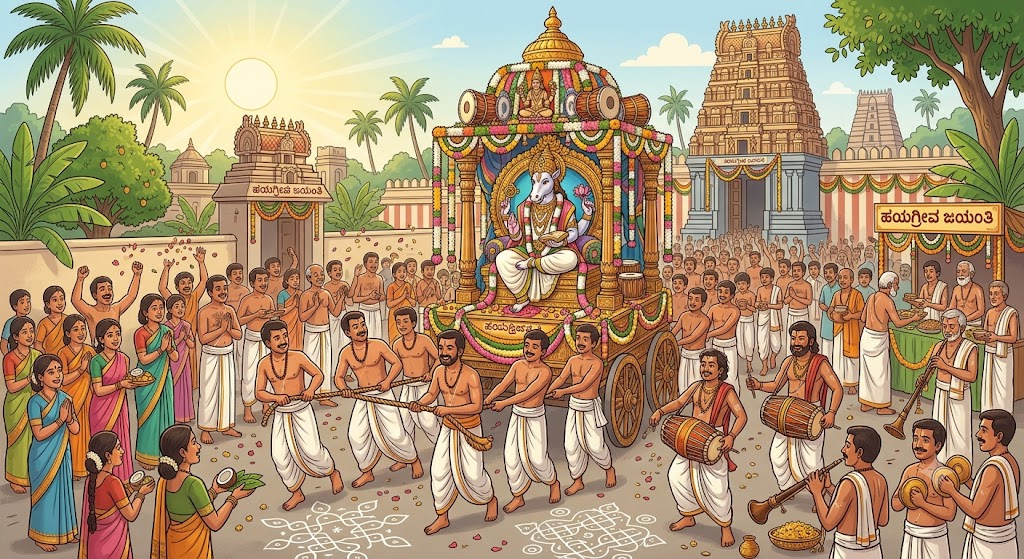
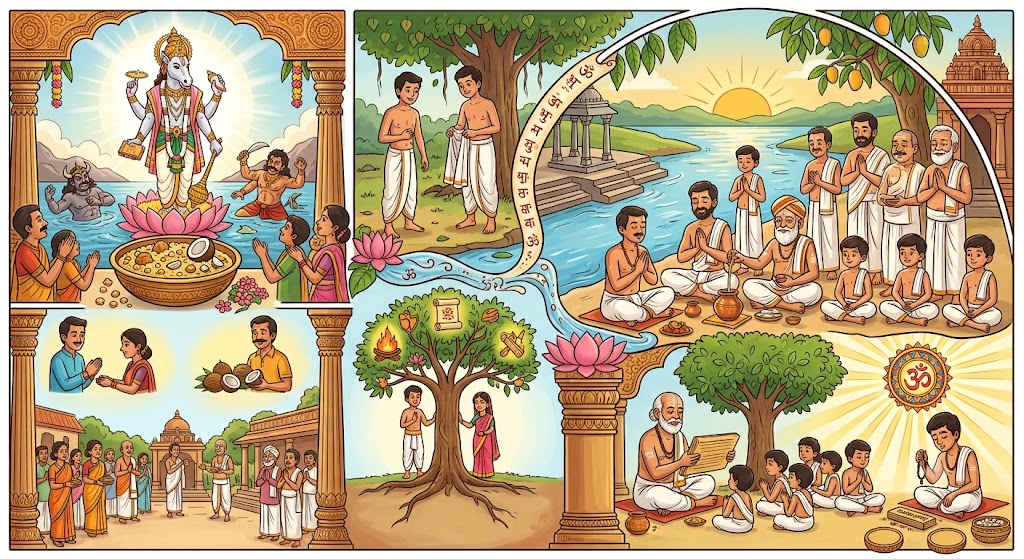
Upakarma day holds immense spiritual significance because it coincides with Hayagriva Jayanti, divine appearance day of Hayagriva, who is unique horse-headed incarnation of Bhagwan Vishnu representing supreme knowledge, speech, and wisdom. According to sacred scriptures, when demons Madhu and Kaitabha stole holy Vedas from Brahma and hid them deep within ocean, darkness enveloped entire creation. Bhagwan Vishnu then assumed form of Hayagriva, featuring brilliant white body resembling full moon and radiant face of horse, to defeat demons and restore Vedas back to Brahma. Because Vedas were restored on Shravana Poornima, this day is celebrated as birthday of Hayagriva.
In Madhwa tradition of Karnataka, devotion to Hayagriva holds profound place, especially through legacy of Maharshi Vadiraja Tirtha of Sode Matha. Maharshi Vadiraja Tirtha was renowned for his deep devotion to Hayagriva, to whom he offered boiled horse gram dish called Hayagriva Maddi every day. Hayagriva would appear in form of white horse, place his forelegs on shoulders of Maharshi Vadiraja Tirtha, and consume sweet dish. Even today, on Upakarma morning, devotees across Karnataka prepare special Hayagriva Maddi using chana dal, jaggery, coconut, and cardamom as prasadam. Devotees offer special pujas, recite Sri Hayagriva Stotram composed by Sri Vedanta Desika or Maharshi Vadiraja Tirtha, and pray for sharp memory, academic excellence, and ultimate spiritual knowledge.
Essence and Significance of Upakarma
Vedic knowledge requires discipline, constant self-study, and devotion. Over year, due to daily worldly life, mind accumulates impurities, and mistakes occur knowingly or unknowingly in daily duties. Upakarma acts as annual reset button. Through specific rituals, practitioner seeks forgiveness for past lapses, cleanses body and mind, and resolves to live life guided by Dharma.
All Set for Upakarma
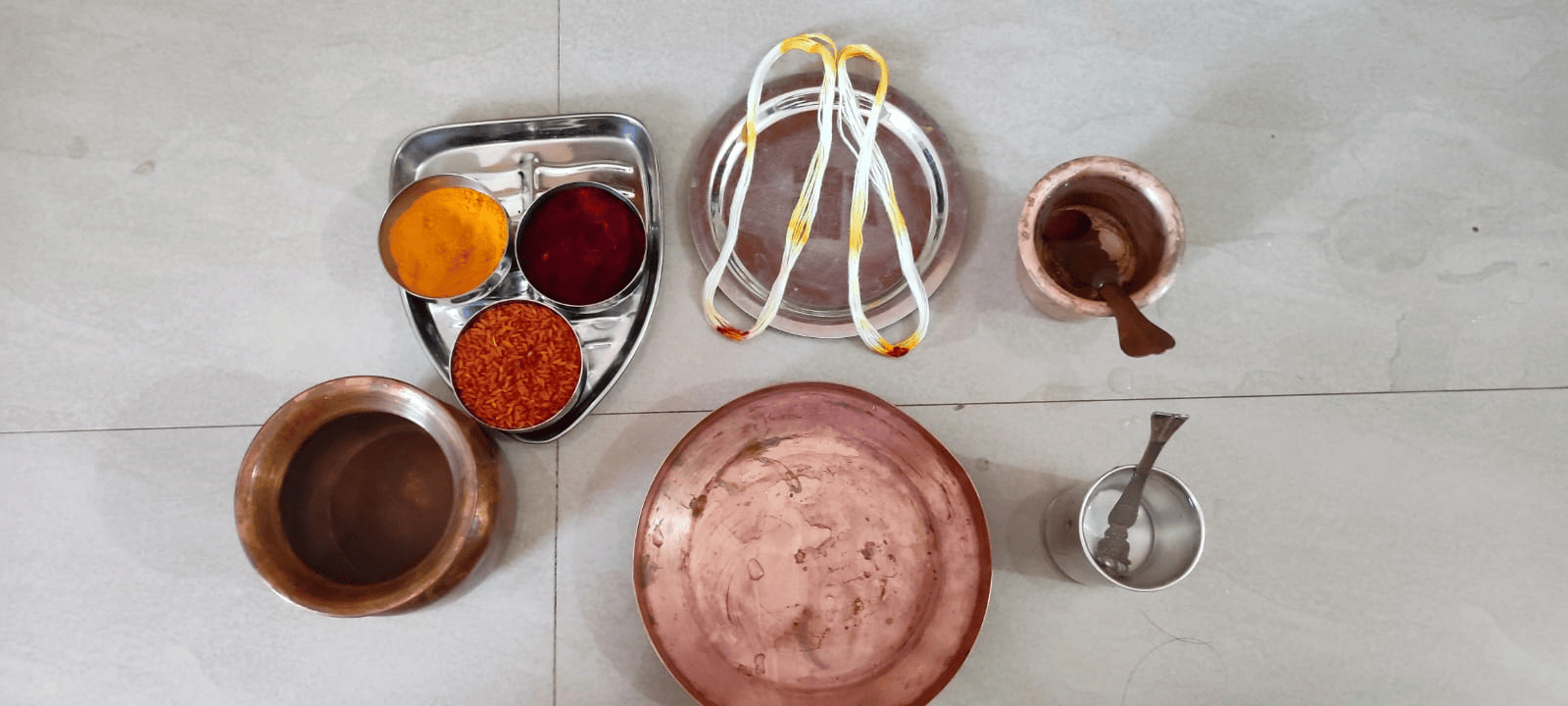
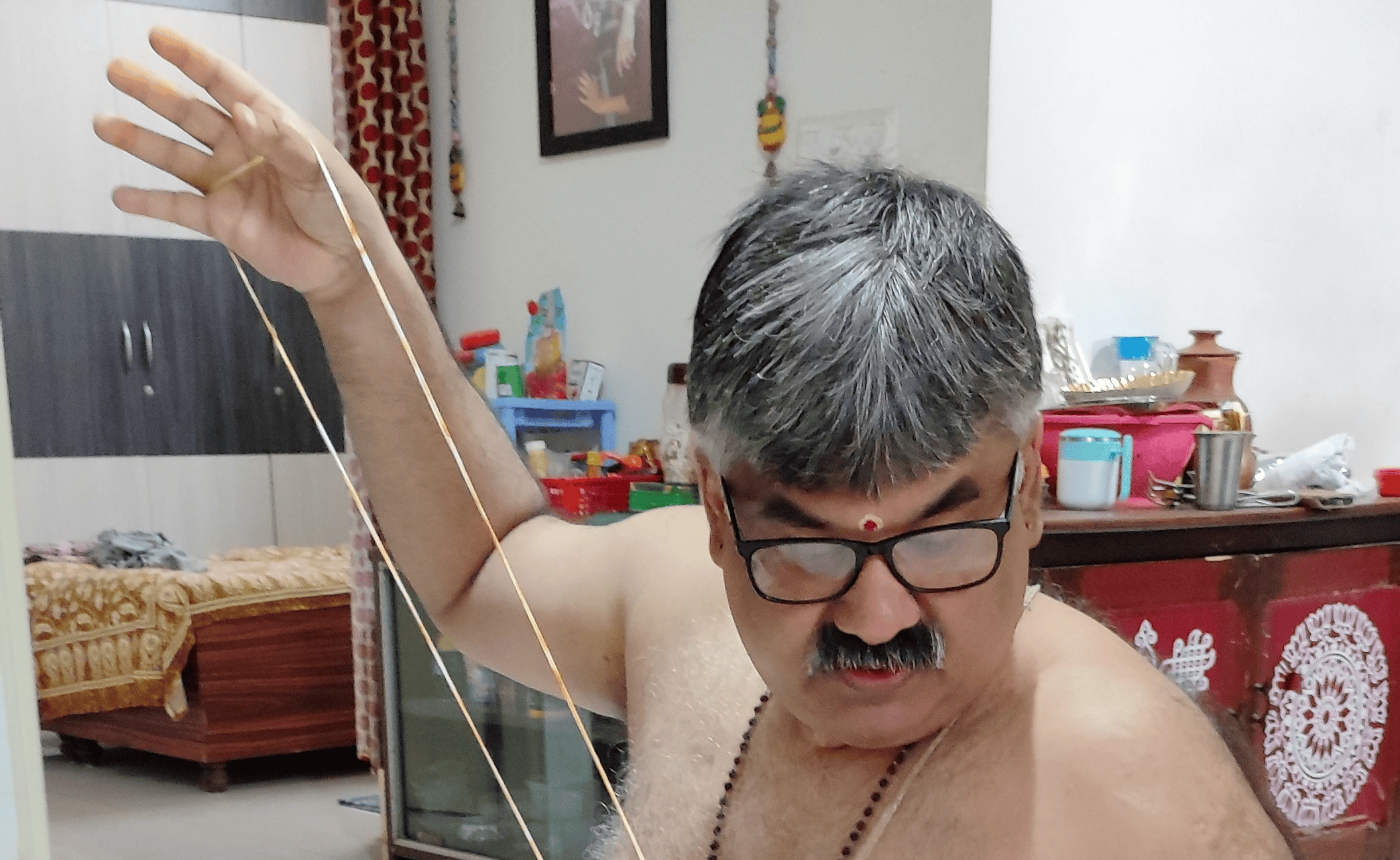
Core event of Upakarma is Yajnopavita Dharana, wearing of new sacred thread, called Janivara in Kannada. Three main strands of thread represent three debts every human owes, debt to Gods, debt to Rishis, and debt to Pitrus (Ancestors). For married householders, two sets of threads are worn, second set representing responsibility towards spouse.
Diversity of Upakarma Traditions Across India
Upakarma is celebrated across different parts of India, but timing and regional names vary depending on Veda branch followed:
Yajurveda Practice: Followers of Krishna Yajurveda and Shukla Yajurveda observe Upakarma on Full Moon day of Shravana month (Shravana Poornima). This day often coincides with Raksha Bandhan in North India and Narali Poornima in Coastal Maharashtra.
Rigveda Practice: Rigvedi followers observe ritual on Shravana Poornima or when Shravana Nakshatra prevails in Shravana month.
Samaveda Practice: Followers of Samaveda observe Upakarma on Hasta Nakshatra day in Bhadrapada month, which usually occurs around Ganesh Chaturthi.
Karnataka and Regional Traditions: In Karnataka, ritual is deeply woven into routines of Smartha, Madhwa, and Srivaishnava communities. While core rituals remain aligned across South India, Karnataka traditions strongly emphasize home preparations, traditional sacred matha visits, and specific offerings like Hayagriva Prasadam.
Step-by-Step Yajurvedi Upakarma Ritual in Karnataka Tradition
For Yajurvedi practitioners in Karnataka, Upakarma morning is filled with intense devotion, strict discipline, and continuous mantra chanting under guidance of family Purohit or elders in community. Ceremony typically follows structured series of steps:
Morning Purificatory Bath and Sandhyavandane
Day begins early with ritual bath in holy rivers like Kaveri, Tungabhadra, Sharavathi, or at home. Practitioner wears traditional silk dhoti or unstitched clean cotton veshti, applies sacred traditional marks like Gopichandana along with Angara-Akshate for Madhwas or Bhasma for Smarthas, and performs morning Sandhyavandane along with Samitadhana for brahmacharis (unmarried males).
Kamokarshith Japa (Atonement Ritual)
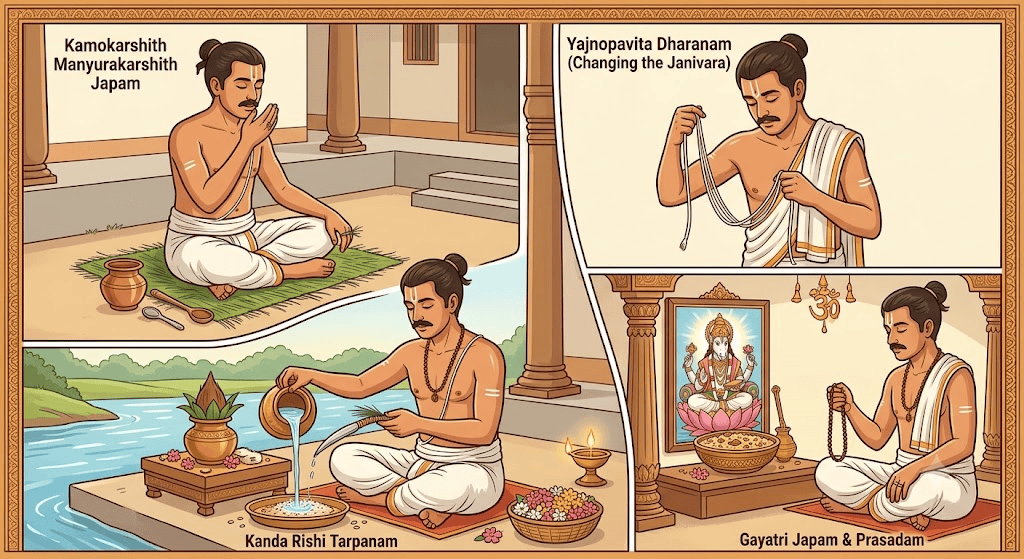
Before renewing sacred thread, practitioner recites Kamokarshith Manyurakarshith Japa. This prayer acknowledges that wrong acts were committed under influence of Kama (desire) and Krodha or Manyu (anger). Reciting this mantra helps mind detach from ego and accept personal shortcomings with humility.
Maha Sankalpa
Purohit leads community in chanting Maha Sankalpa, elaborate declaration of time, space, and cosmic coordinates. Maha Sankalpa traces geographical position starting from creation of universe by Brahma down to present day, location in Jambudweepe Bharata Varshe, and current year. Practitioner resolves to perform Upakarma for destruction of all accumulated sins and for pleasure of Shriman Narayana.
Yajnopavita Dharana (Changing Janivara)
Practitioner holds new Janivara in hands, recites Yajnopavita Dharana Mantra invoking Brahma, Bhagwan Vishnu, and Bhagwan Shiva, and wears new thread over left shoulder crossing down to right hip. Old worn-out thread is then discarded into sacred water body or under tree while chanting specific removal mantra.
Kanda Rishi Tarpane
For Yajurvedins, offering oblations to Kanda Rishis is essential aspect of day. Practitioner changes position of sacred thread to Nivita (hanging around neck like necklace) and offers water mixed with sesame seeds and raw rice to ancient seers including Maharshi Prajapati, Maharshi Soma, Maharshi Agni, Maharshi Visvedevas, and Maharshi Vaisampayana who revealed different sections (Kandas) of Yajurveda.
Vedarambha (Re-commencement of Vedic Study)
After Rishi Tarpane, priest initiates chanting of first verses of Yajurveda Samhita, Brahmana, Aranyaka, and Upanishads. This symbolic commencement ensures continuity of ancient oral tradition from generation to generation.
Here are the opening verses traditionally recited during the Vedarambham (re-commencement of Vedic study) for Krishna Yajurveda followers:
(Śaṁ no mitraḥ śaṁ varuṇaḥ | Śaṁ no bhavatvaryamā | Śaṁ na indro bṛhaspatiḥ | Śaṁ no viṣṇururukramaḥ || Namo brahmaṇe | Namaste vāyo | Tvameva pratyakṣaṁ brahmāsi | Tvameva pratyakṣaṁ brahma vadiṣyāmi | Ṛtaṁ vadiṣyāmi | Satyaṁ vadiṣyāmi | Tanmāmavatu | Tadvaktāramavatu | Avatu mām | Avatu vaktāram ||
Gayatri Japa (Following Day)
Upakarma observance is complete only after Gayatri Japa, which is observed on the day following Upakarma (Pratipada tithi of the Krishna Paksha in Shravana month). On this morning, after routine purificatory rituals and Sandhyavandane, practitioners dedicate themselves to chanting the sacred Gayatri Mantra, usually 1008 times (or a minimum of 108 times). This intense japa serves to recharge spiritual energy, enhance mental clarity, and purify the intellect for the year ahead. Since traditional Vedic study is suspended on Pratipada a period known as Gayatri Pratipada or Anadhyayana (non-learning day), no new lessons are initiated. Instead, the day is reserved entirely for japa, reflection, and honoring the divine source of knowledge embodied in the Gayatri Mantra.
Ritual Steps for Gayatri Japa Morning
Pratah Snana and Sandhyavandane
Practitioners wake up early during Brahma Muhurta, take a purificatory bath, and put on clean traditional attire (veshti/dhoti). The ritual begins with the standard morning Sandhyavandane, including Arghya Pradana.
Mukhya Sankalpa
Before beginning the japa, the practitioner holds a few drops of water in the right palm (or takes akshata and water) and recites the specific Sankalpa. The declaration states the time, place, and intent: seeking the grace of Gayatri, purifying the mind, and gaining spiritual intellect by performing the Gayatri Japa to the specified count (usually 1008 or 108 times).
The practitioner invokes the presence of Gayatri into the heart and mind by reciting the Gayatri Avahana mantra (Āyātu varadā devī…), visualizing the divine light of the mantra.
Specific mudras and Nyasa mantras are performed to dedicate different parts of the body to the deities of the mantra. This is followed by meditatative contemplation (Dhyana) on Gayatri, contemplating Her effulgent, multi-faceted form that grants supreme wisdom.
Kara Nyasa
ॐ तत्सवितुः अङ्गुष्ठाभ्यां नमः (Oṁ tatsavituḥ aṅguṣṭhābhyāṁ namaḥ) — Touch forefingers to the thumbs.
वरेण्यं तर्जनीभ्यां नमः (Vareṇyaṁ tarjanībhyāṁ namaḥ) — Touch thumbs to the index fingers.
भर्गो देवस्य मध्यमाभ्यां नमः (Bhargo devasya madhyamābhyāṁ namaḥ) — Touch thumbs to the middle fingers.
धीमहि अनामिकाभ्यां नमः (Dhīmahi anāmikābhyāṁ namaḥ) — Touch thumbs to the ring fingers.
धियो यो नः कनिष्ठिकाभ्यां नमः (Dhiyo yo naḥ kaniṣṭhikābhyāṁ namaḥ) — Touch thumbs to the little fingers.
प्रचोदयात् करतल करपृष्ठाभ्यां नमः (Pracodayāt karatala karapṛṣṭhābhyāṁ namaḥ) — Run palms over the back of each hand.
Anga Nyasa
ॐ तत्सवितुः हृदयाय नमः (Oṁ tatsavituḥ hṛdayāya namaḥ) — Touch the chest/heart with the right palm.
वरेण्यं शिरसे स्वाहा (Vareṇyaṁ śirase svāhā) — Touch the top of the head with the fingertips.
भर्गो देवस्य शिखायै वषट्( Bhargo devasya śikhāyai vaṣaṭ) — Touch the back of the head (tuft region) with the thumb.
Using a Japa Mala (often Tulasi or Rudraksha beads) or counting on fingers (Kara Mala), the practitioner chants the Gayatri Mantra silently or in a low whisper (Upanshu).
Count: The prescribed ideal count is 1008 times. If time or health constraints exist, 108 times is the accepted minimum.
Posture: The japa is performed while sitting facing East (or North) on a clean mat (Darba mat or cloth seat).
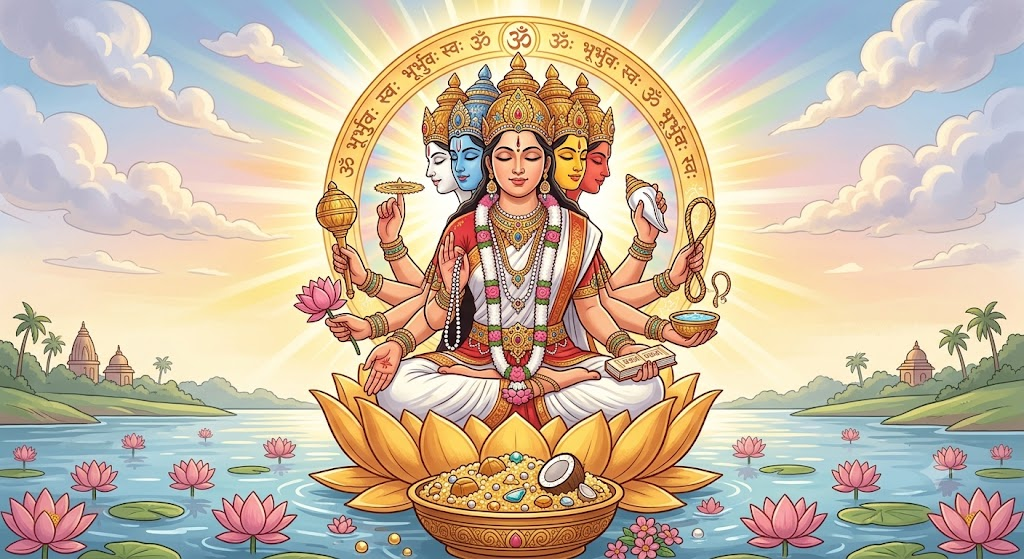
The depiction of Panchamukhi Gayatri Devi above symbolizes personification of sacred Gayatri Mantra as divine source of wisdom and supreme intellect. Her five faces represent five cosmic elements (Pancha Mahabhutas), five life forces (Pancha Pranas), and five sheaths of human consciousness (Pancha Koshas), while her ten arms hold sacred attributes, such as scriptures, a lotus, conch, discus, water pot, and japa beads, all of which embody protection, purificatory discipline, and spiritual enlightenment. Seated in padmasana upon a serene lotus amidst calm waters, she is enveloped by a radiant solar halo inscribed with the Gayatri Mantra, signifying divine light of Savita (Bhagwan Surya) that dispels ignorance and illuminates the human mind during japa meditation.
Gayatri Upasthana
Upon completing the count, the practitioner recites the Gayatri Upasthana mantra (Uttame śikhare devī…) to bid a reverent farewell to the invoked form, offering gratitude.
Water is then released into a vessel with a closing prayer, dedicating all the fruits of the japa to Shriman Narayana (Kāyena vācā manasendriyairvā… Śrīman Nārāyaṇāyeti samarpayāmi).