यस्य स्मरणमात्रेण जन्मसंसारबन्धनात् ।
विमुच्यते नमस्तस्मै विष्णवे प्रभविष्णवे ॥
Indira Ekadashi is observef during Krishna Paksha (dark fortnight) of Ashwin month (September-October) according to Amanta calendar or Bhadrapada month according to Purnimanta calendar. It occurs during Pitru Paksha, sacred fortnight dedicated to ancestors. Devotees dedicate this day to worship Bhagawan Vishnu to grant spiritual liberation and heavenly abode to deceased ancestors while cleansing personal sins and negative karma.
Meaning and Significance of Indira Ekadashi
In Sanskrit, Indira refers to Goddess Lakshmi and divine prosperity, while also carrying connection to King Indrasena who first demonstrated power of this sacred fast. Therefore, Indira Ekadashi translates to 11th day that brings divine grace, ancestral peace, and spiritual liberation.
Human life carries subtle obligations toward ancestors, known as Pitru Rina. Unfulfilled desires or sins of departed ancestors can sometimes cause obstacles and hardships for living generations. Observing fast on Indira Ekadashi during Pitru Paksha with pure heart acts as powerful spiritual offering. Scriptures state that observing this fast and transferring its spiritual merit frees ancestors from lower realms like Yamaloka, guiding them directly to Vishnu Loka while bestowing peace and prosperity on family.
Legend associated with Indira Ekadashi
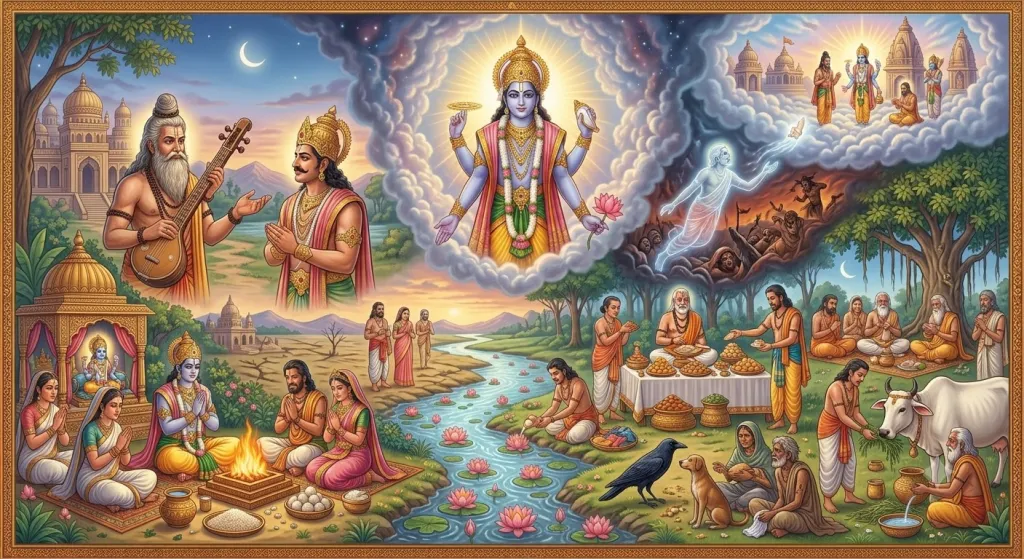
Scriptures describe sacred story narrated by Bhagawan Krishna to King Yudhishthira, involving pious King Indrasena who ruled kingdom of Mahishmati. King Indrasena was virtuous ruler, deeply devoted to Bhagawan Vishnu, and looked after his subjects with love and justice. His kingdom enjoyed peace, abundance, and spiritual harmony.
One day, divine sage Narada visited royal court of King Indrasena. King welcomed sage with great respect and worshiped him. Sage Narada informed king that during his journey to Yamaloka, he met father of King Indrasena. Sage revealed that due to some mistake committed in past life, father of king was stuck in court of Yamaraja and undergoing suffering. Father of king had requested Sage Narada to send message to his son Indrasena to observe Indira Ekadashi fast and donate its merit so that he could break free from Yamaloka.
Hearing about suffering of his father, King Indrasena was overcome with sorrow and humbly asked Sage Narada for exact procedure to observe Indira Ekadashi fast. Sage Narada instructed king to take bath in morning of Ashvina Krishna Dashami, perform Shraddha rituals for ancestors, and prepare for fast. On Ekadashi day, king was advised to observe strict fast, worship Bhagawan Shaligram or Vishnu form with devotion, offer prayers, and keep night vigil. Sage further asked king to perform Shraddha rites again on Ekadashi, feed righteous Brahmins, and offer spiritual merit of fast to his father.
King Indrasena along with his family and ministers strictly followed instructions of Sage Narada on Indira Ekadashi. They observed fast with deep faith and dedicated all spiritual virtue to departed father. By divine grace of Lord Hari, father of king was instantly liberated from Yamaloka, boarded divine chariot, and ascended to Vaikuntha Dham. King Indrasena ruled righteously for many years and eventually attained supreme abode of Bhagawan Vishnu.
Rituals to be performed on Indira Ekadashi
Devotee must wake up early in morning during Brahma Muhurta and take ritual bath using clean water without using soap, shampoo, or such cosmetic products.
Puja area should be cleaned thoroughly and idol or photo of Bhagawan Vishnu, specifically Shaligram or Hrishikesha form, should be placed respectfully.
Light ghee lamp, offer fresh yellow flowers, sandalwood paste, incense, and Tulsi leaves to Bhagwan Vishnu.
Chant Vishnu Sahasranama, Hare Krishna Mahamantra, or Om Namo Bhagavate Vasudevaya continuously throughout day.
Listen to or read Indira Ekadashi Katha with family members in peaceful state of mind.
Perform Tarpan and Shraddha rituals in honor of deceased ancestors, offering prayers to Bhagawan Vishnu for their eternal peace and liberation.
Offer your respects to parents and other elders, especially Guru, seeking their heartfelt blessings on this sacred morning.
Observe fast during entire day according to individual health capacity. Healthy individuals can observe strict fast without water or taking only water. Milk, curd, and fruits can be consumed if complete fasting is difficult due to health reasons. Rice, wheat, barley, lentils, pulses, and all food grains must be avoided strictly. Heavy spices, regular salt, garlic, onion, tea, coffee, outside processed food, and alcohol must be strictly avoided.
Perform evening Aarti with devotion, offer special Naivedya to Bhagwan Vishnu, feed righteous Brahmins or needy people, and maintain noble thoughts, avoiding anger, backbiting, falsehood, or harsh speech.
Break fast next day on Dwadashi tithi during scheduled Parana time. Fast should be broken after sunrise once Hari Vasara period concludes. Offer naivedya to Bhagwan Vishnu, perform short prayer, and break fast by consuming prasada, water, or fruits before eating regular food.
PS: Article re-formatted into blocks and Header Image changed